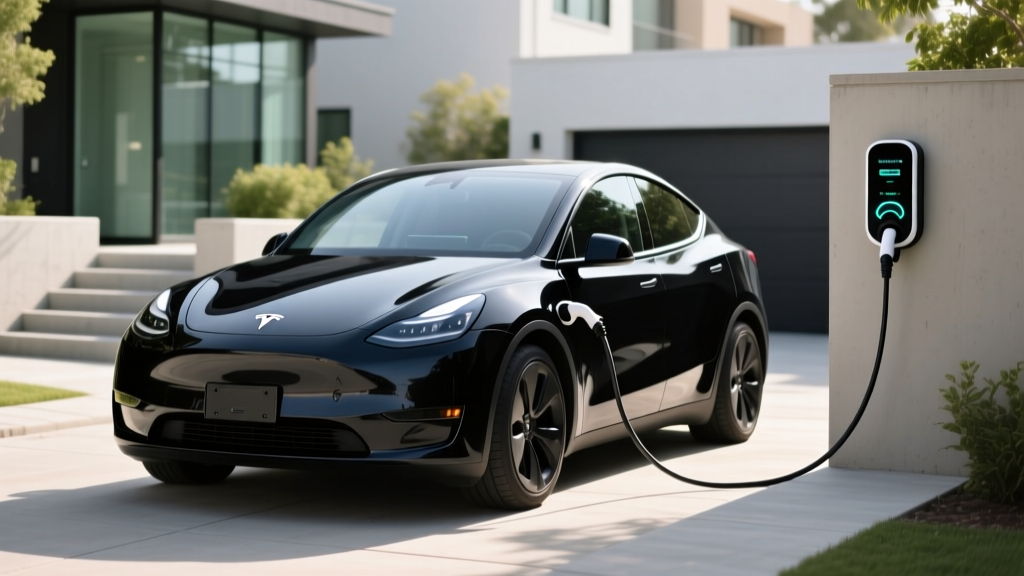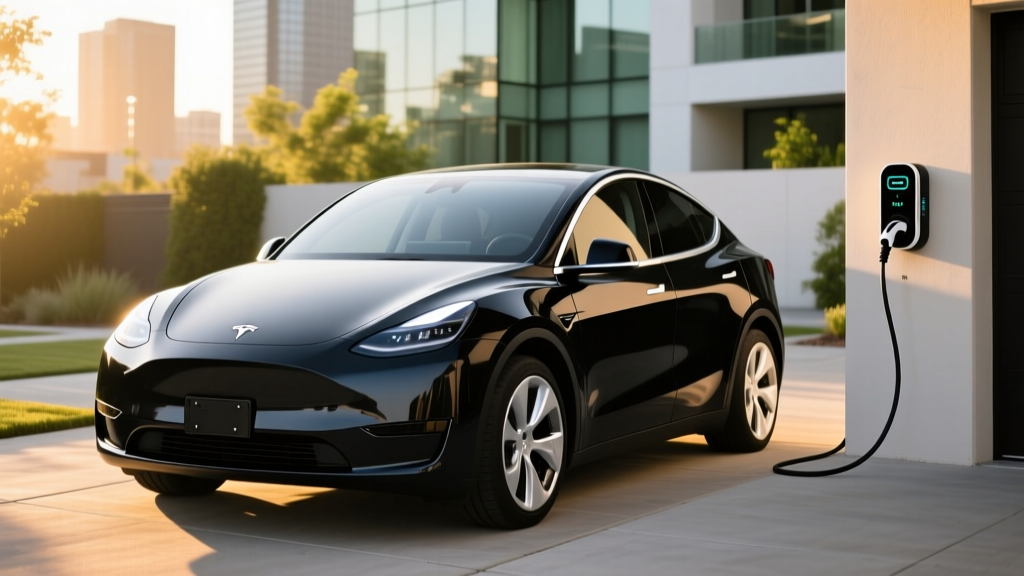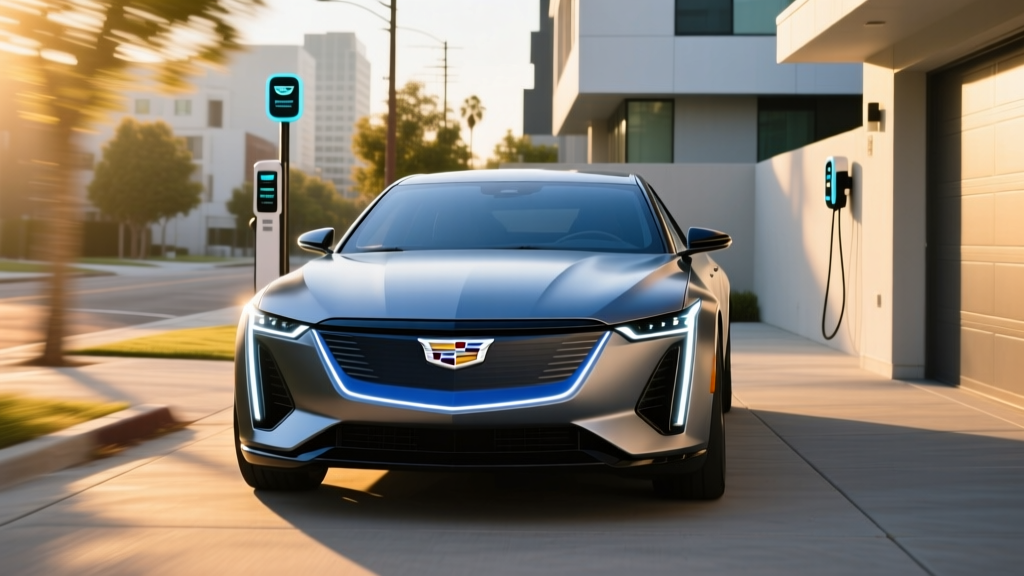
2026 Cadillac Optiq: Compact Luxury EV With Lease-Friendly Pricing
The Cadillac Optiq slots into GM's Ultium-based EV lineup as a compact luxury crossover, sitting below the Lyriq in both size and price. For 2026, the Optiq targets buyers who want Cadillac styling and a premium cabin without stepping up to midsize SUV pricing. With lease deals emerging as a popular path into GM's electric portfolio — especially given shifting federal tax credit rules — understanding the Optiq's real-world value proposition requires a hard look at its range, charging behavior, and total cost.
This review covers the 2026 Cadillac Optiq with exact specs, real-world range expectations, charging-curve realities, and a breakdown of current lease incentives versus outright purchase. If you're researching Optiq lease deals, the numbers below will help you evaluate whether the monthly payment actually reflects the vehicle's capabilities.
Range, Battery, and Real-World Efficiency
The 2026 Cadillac Optiq is equipped with a 102 kWh usable Ultium battery pack using NMC (nickel-manganese-cobalt) chemistry. GM's Ultium platform uses a modular cell architecture with pouch cells arranged horizontally, which helps keep the floor flat and maximizes interior space. NMC chemistry offers higher energy density than LFP, which translates to more range in a smaller physical package — important for a compact crossover where packaging is at a premium.
Real-World Expectation: Expect approximately 255–275 miles in mixed highway driving at 70 mph. In cold weather (below 30°F), range can drop 15–25%, putting winter highway range closer to 225–245 miles. City driving with regenerative braking recovers some efficiency, often yielding results near or slightly above the EPA sticker.
The EPA rates the Optiq at approximately 89 MPGe combined, which translates to roughly 35 kWh per 100 miles. That's competitive with the BMW iX3 and slightly behind the Tesla Model Y Long Range (which achieves around 28 kWh/100mi). The Optiq's heavier curb weight — approximately 4,800 lbs — and luxury-focused sound insulation contribute to the higher energy consumption relative to lighter competitors.
| Spec | Value |
|---|---|
| Battery (usable) | 102 kWh, NMC chemistry |
| EPA Range (RWD) | 300 miles |
| EPA Range (AWD) | |
| Efficiency | 89 MPGe / ~35 kWh/100mi |
| Motor (RWD) | Single rear motor, 340 hp |
| Motor (AWD) | Dual motor, 400 hp |
| 0–60 mph (AWD) | 5.1 seconds |
| Max DC Fast Charge | 190 kW |
| 10–80% DC Charge Time | ~27 minutes |
| Level 2 Charge Rate | 11.5 kW (~35 mi/hr) |
| Cargo Volume (rear seats up) | 28.0 cu ft |
| Cargo Volume (rear seats folded) | 58.5 cu ft |
| Rear Legroom | 38.2 inches |
| Battery Warranty | 8 years / 100,000 miles |
| Base MSRP (Luxury RWD) | $54,990 |
Charging Speed: DC Fast, Level 2, and the Curve Reality
The Optiq supports DC fast charging at a peak rate of 190 kW via its CCS connector (NACS adapter available for Tesla Supercharger access). On paper, that's solid for the compact luxury segment. In practice, the charging curve tells a more nuanced story.
GM's Ultium packs are known for sustaining peak charge rates through the 20–60% state-of-charge window, then tapering progressively. At 190 kW peak, you'll see that rate for roughly the first 10–15 minutes when arriving at a 350 kW-capable charger with a low state of charge. Above 60% SoC, the rate drops to approximately 120 kW, and above 80% it falls below 50 kW. This is typical behavior — lithium-ion chemistry requires tapering to protect cell health — but it means the advertised 10–80% time of roughly 27 minutes assumes optimal battery preconditioning and a charger capable of delivering sustained power.
| Charging Level | Power (kW) | Miles Added per Hour | Notes |
|---|---|---|---|
| Level 1 (120V) | 1.4 kW | ~4 mi/hr | Emergency/trickle only |
| Level 2 (240V, 48A) | 11.5 kW | ~35 mi/hr | Full charge in ~9 hours |
| DC Fast (peak) | 190 kW | ~500 mi/hr (peak) | 10–80% in ~27 min |
For home charging, the 11.5 kW onboard charger is a strong point. With a 48-amp Level 2 wall connector on a 60-amp circuit, you'll add roughly 35 miles of range per hour — enough to fully replenish the 102 kWh pack overnight in about 9 hours. If your home electrical panel supports only a 40-amp circuit (32A charging), expect roughly 7.7 kW and about 23 miles per hour, which still covers most daily driving needs.
One practical note for lease shoppers: GM has partnered with EVgo and Electrify America to offer complimentary charging credits on some lease programs. Confirm with your dealer whether current Optiq lease deals include any public charging bundles, as these can offset the higher per-session cost of DC fast charging if you lack home charging access.
Performance, Ride, and Daily Drivability
The Optiq offers two powertrain configurations. The base Luxury trim uses a single rear-mounted motor producing 340 horsepower and 325 lb-ft of torque, delivering a 0–60 mph time of approximately 6.5 seconds. The available Sport AWD trim adds a front motor for a combined 400 hp and 355 lb-ft, cutting the 0–60 time to 5.1 seconds.
Acceleration is smooth and immediate, as expected from an EV, but the Optiq isn't tuned as a performance vehicle. The suspension prioritizes ride comfort over cornering agility, with well-damped responses to potholes and expansion joints. The steering is light and precise at parking-lot speeds but lacks the feedback enthusiasts expect. This is a luxury cruiser, not a sport sedan in crossover clothing.
Regenerative braking offers two modes: a mild setting that mimics a conventional automatic transmission's coasting behavior, and a stronger one-pedal mode that brings the vehicle to a complete stop without touching the brake pedal. The transition between regen and friction braking is well-calibrated — no abrupt grabbiness at low speeds, which is a common complaint in some competitors.
For towing, the Optiq is rated at 1,500 lbs when properly equipped. That's enough for a small utility trailer or a pair of dirt bikes, but it falls well short of the Ford Mustang Mach-E (which isn't rated for towing) and the Hyundai Ioniq 5 (not rated either). If towing matters, you'll need to look at the larger Lyriq or a midsize electric SUV.
Interior, Tech, and Driver Assistance
The Optiq's cabin uses a 33-inch curved LED display that spans the driver cluster and infotainment touchscreen, running Google Built-In with native Google Maps navigation, Google Assistant voice control, and access to the Play Store for apps. The system is responsive, though some users report that the touchscreen's haptic feedback could be more tactile — you sometimes need to glance down to confirm a press registered.
Wireless Apple CarPlay and Android Auto are standard, along with wireless phone charging, a 19-speaker AKG audio system (available on premium trims), and a panoramic fixed glass roof. Rear-seat passengers get USB-C ports and decent headroom, though the sloping roofline cuts into cargo height for taller items.
On the driver-assistance front, the Optiq comes standard with GM's Super Cruise-capable hardware, but active Super Cruise functionality (hands-free driving on mapped divided highways) requires a subscription after the initial trial period. This is an SAE Level 2 system — you must remain attentive and keep your eyes on the road. The driver-monitoring camera will issue warnings and eventually disengage the system if it detects inattention. Super Cruise covers over 750,000 miles of compatible roads in North America, and its hands-free capability is genuinely useful on long interstate drives, but it does not handle city streets, construction zones, or unmapped roads.
Pricing, Lease Deals, and Federal Tax Credit Eligibility
The 2026 Cadillac Optiq starts at $54,990 for the Luxury RWD trim, including destination. The Sport AWD trim starts at $59,990. Fully loaded examples with premium paint, upgraded wheels, and the AKG audio package can push the as-tested price above $65,000.
For lease deals, Cadillac has been offering competitive money factors and residual values that make leasing an attractive alternative to purchasing, especially given the rapid depreciation EVs have experienced in the 2024–2025 market correction. Current Optiq lease programs typically feature 36-month terms with 10,000 or 12,000 annual miles, with monthly payments in the $550–$750 range depending on trim, down payment, and regional incentives. Some dealers are advertising sign-and-drive deals with minimal or zero down for well-qualified lessees.
The critical question for buyers is federal tax credit eligibility. Under IRS §30D rules for 2026, the Optiq faces several potential hurdles:
- MSRP Cap: SUVs must have an MSRP at or below $80,000. The Optiq qualifies — its highest trim stays under this threshold.
- Buyer Income Cap: Modified adjusted gross income must not exceed $150,000 (single), $225,000 (head of household), or $300,000 (joint). If you exceed these, you are ineligible.
- Battery Sourcing: A percentage of critical minerals must be sourced from the US or free-trade-agreement countries, and battery components must be manufactured or assembled in North America. GM's Ultium batteries are assembled in the US (Lansing, MI and Spring Hill, TN plants), but critical-mineral sourcing compliance varies by model year and cell supplier. Confirm with your dealer whether the specific Optiq VIN qualifies for the full $7,500, partial credit, or no credit.
- Point-of-Sale Transfer: If eligible, you can transfer the credit to the dealer at purchase, reducing the sale price directly. For leases, the credit technically goes to the lessor (GM Financial), who may or may not pass the savings through as a capitalized-cost reduction. Always ask the dealer whether the lease payment reflects the tax credit.
| Scenario | Base MSRP | Federal Credit | Effective Price |
|---|---|---|---|
| Luxury RWD (full credit) | $54,990 | −$7,500 | $47,490 |
| Luxury RWD (no credit) | $54,990 | $0 | $54,990 |
| Sport AWD (full credit) | $59,990 | −$7,500 | $52,490 |
| Lease (36 mo, $5k down, credit applied) | — | Varies | ~$575–$650/mo |
Leasing can be advantageous if the tax credit is passed through as a cap-cost reduction, effectively lowering your monthly payment. However, if GM Financial does not pass the credit to lessees, you're paying full MSRP spread over the lease term. Always request a lease worksheet showing exactly how the credit is applied before signing.
How the Optiq Compares to Key Competitors
The Optiq's most direct competitors include the BMW iX3, Genesis GV60, Tesla Model Y, and its corporate cousin the Chevrolet Equinox EV. Here's how they stack up on the metrics that matter:
| Model | EPA Range | DC Charge (10–80%) | Base MSRP | Cargo (cu ft) |
|---|---|---|---|---|
| 2026 Cadillac Optiq (RWD) | 300 mi | ~27 min @ 190 kW | $54,990 | 28.0 |
| 2026 BMW iX3 | 285 mi | ~30 min @ 150 kW | $56,000 | 28.7 |
| 2026 Genesis GV60 (Std Range) | 264 mi | ~18 min @ 240 kW | $53,350 | 24.0 |
| 2026 Tesla Model Y LR | 330 mi | ~25 min @ 250 kW | $48,990 | 30.2 |
| 2026 Chevy Equinox EV 3RS | 319 mi | ~30 min @ 150 kW | $43,900 | 26.4 |
The Optiq holds its own on range and luxury appointments but concedes ground on charging speed to the GV60 and on value to the Model Y and Equinox EV. If fast public charging is a priority for road trips, the Genesis GV60's 800V architecture (enabling 240 kW peak charging) is meaningfully quicker. If maximizing range-per-dollar matters, the Tesla Model Y Long Range remains the segment benchmark.
Pros
- 300-mile EPA range is competitive for the class
- Comfortable, well-insulated ride quality
- 33-inch curved display is visually impressive
- Super Cruise availability for hands-free highway driving
- Strong home Level 2 charging at 11.5 kW
- MSRP under the $80K federal credit cap
Cons
- DC fast charging at 190 kW trails 800V competitors
- Higher energy consumption (35 kWh/100mi) than rivals
- Cargo space slightly below segment average
- Limited towing capacity (1,500 lbs)
- Tax credit eligibility depends on battery sourcing — confirm per VIN
- Super Cruise requires ongoing subscription after trial
Who Should Lease the Cadillac Optiq?
The Optiq makes the most sense for luxury-oriented commuters who drive 30–60 miles daily, have access to Level 2 home charging, and value ride comfort and cabin refinement over outright performance or maximum cargo space. It's well-suited to professionals who want a premium badge, a quiet highway ride with Super Cruise assistance, and the ability to wake up to a full battery every morning without visiting a gas station.
It's less ideal for frequent road-trippers who rely on public DC fast charging (the 190 kW peak is adequate but not class-leading), for families who need maximum cargo volume, or for buyers in regions with extreme cold where the NMC battery's range loss will be more pronounced than an LFP-equipped vehicle with preconditioning.
If you're comparing Optiq lease deals against purchasing, leasing makes particular sense if you want to hedge against EV depreciation risk, plan to upgrade within 3 years, and your dealer is passing the federal tax credit through as a cap-cost reduction. If the credit isn't applied to the lease, purchasing with the point-of-sale credit transfer may yield better economics — run both scenarios on a spreadsheet before committing.
Frequently Asked Questions
What is the real-world range of the 2026 Cadillac Optiq?
The EPA estimates 300 miles for the RWD trim and approximately 285 miles for AWD. In real-world highway driving at 70 mph, expect 255–275 miles. In cold weather below 30°F, range can drop to 225–245 miles due to battery chemistry limitations and cabin heating demand.
How fast does the Optiq charge at home and on the road?
At home on a 240V Level 2 charger (48A), the Optiq charges at 11.5 kW, adding about 35 miles per hour and fully recharging in roughly 9 hours. On DC fast chargers, it peaks at 190 kW and reaches 10–80% in approximately 27 minutes under optimal conditions with battery preconditioning.
Does the 2026 Cadillac Optiq qualify for the $7,500 federal EV tax credit?
It may, but eligibility depends on several factors under IRS §30D rules. The Optiq's MSRP is under the $80,000 SUV cap. Your income must be below the threshold ($150K single / $300K joint). Battery critical-mineral sourcing and North American assembly requirements must be met for the specific VIN. Always confirm with your dealer and consult a tax professional.
Is leasing the Optiq better than buying?
Leasing can be advantageous if the dealer passes the federal tax credit through as a capitalized-cost reduction, lowering your monthly payment. It also hedges against EV depreciation. However, if the credit isn't applied to the lease, buying with a point-of-sale credit transfer may save more. Request detailed worksheets for both scenarios.
How does the Optiq compare to the Tesla Model Y?
The Model Y Long Range offers more range (330 mi EPA), faster DC charging (250 kW peak), a larger Supercharger network, and a lower starting price ($48,990). The Optiq counters with a more luxurious interior, a smoother ride, Super Cruise hands-free capability, and traditional luxury-brand dealership service. Choose the Model Y for efficiency and value; choose the Optiq for comfort and premium feel.
What is the battery warranty on the Cadillac Optiq?
GM covers the Ultium battery pack for 8 years or 100,000 miles, whichever comes first. The warranty guarantees the battery will retain a minimum percentage of its original capacity (typically 60–70%, though exact retention threshold should be confirmed in your purchase documentation). The powertrain is also covered for 8 years/100,000 miles.