Quick Verdict: Is the Cadillac Optiq a Smart Lease in 2026?
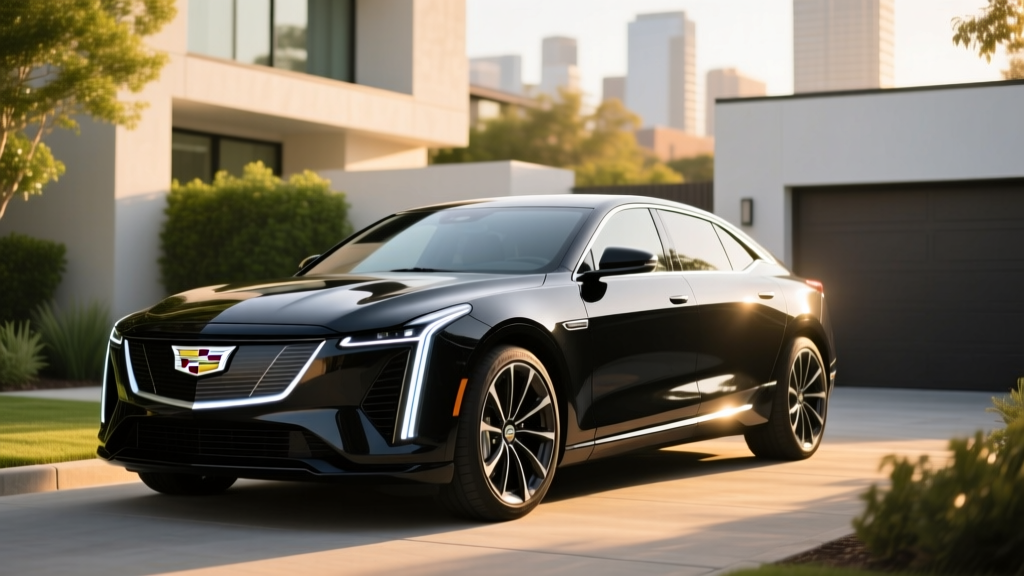
The 2026 Cadillac Optiq is the brand's entry into the compact luxury electric SUV segment, slotting below the Lyriq and built on GM's Ultium platform. For shoppers searching for Cadillac Optiq EV lease deals in September, the timing aligns with end-of-summer sales events and the final weeks of the 2026 model-year transition. But before you sign a 36-month lease, you need to understand the total cost of ownership — not just the monthly payment.
EPA Range: 305 miles (estimated for AWD Luxury trim, 85 kWh usable battery, NMC chemistry)
Real-World Expectation: ~250–275 miles at sustained highway speeds (70+ mph); ~210–230 miles in cold weather (below 32°F) due to battery heating demands and reduced regenerative braking efficiency.
2026 Cadillac Optiq: Key Specs at a Glance
Before we break down costs, here are the numbers that matter for the 2026 Optiq. Specs below reflect the most current GM data available for the U.S. market.
| Spec | Value |
|---|---|
| Battery Capacity (Usable) | 85 kWh (NMC, Ultium platform) |
| EPA Range (AWD Luxury) | 305 miles (est.) |
| MPGe (Combined) | 89 MPGe (est.) |
| DC Fast Charge Peak | 190 kW (10–80% in ~27 min) |
| Level 2 Charge Rate | 11.5 kW (7.5 hrs, 0–100%) |
| Connector | NACS (native Tesla Supercharger access) |
| Horsepower (Dual Motor AWD) | 340 hp / 355 lb-ft torque |
| 0–60 mph | 5.8 seconds (est.) |
| Cargo Volume | 26.0 cu ft (rear seats up) / 57.0 cu ft (folded) |
| Base MSRP (Luxury AWD) | $54,990 (incl. destination) |
| Battery/Powertrain Warranty | 8 years / 100,000 miles |
5-Year Total Cost of Ownership Breakdown
The monthly lease payment is only part of the picture. Here's what owning or leasing a Cadillac Optiq actually costs over five years, compared to a similarly priced gas-powered luxury compact SUV (we used the BMW X3 xDrive30i as a baseline at ~$50,000 MSRP, 27 MPG combined).
| Cost Category | Cadillac Optiq (5 Yrs) | BMW X3 Gas (5 Yrs) |
|---|---|---|
| Purchase/Lease Cost (net of incentives) | $26,500 (lease total, after credit) | $27,000 (lease total) |
| Fuel / Charging (60,000 miles) | $3,420 | $7,890 |
| Maintenance | $1,800 | $4,200 |
| Insurance (5 yrs) | $11,250 | $9,500 |
| Depreciation (if purchased) | ~48% over 5 yrs | ~42% over 5 yrs |
| Total (Lease Scenario, 5 Yrs) | $42,970 | $48,590 |
Assumptions: 12,000 miles/year, $0.14/kWh average electricity cost (mix of home and public), $3.50/gallon gas, $15/mo home charging infrastructure amortized. Insurance averages from industry data. Actual costs vary by region, driving habits, and utility rates. Source: fueleconomy.gov and manufacturer data.
Federal Tax Credit: Do You Qualify for §30D?
The federal EV tax credit under IRS §30D remains a major factor in EV affordability — but eligibility is far from guaranteed. For 2026, the rules are stringent and have tightened since the credit was restructured.
§30D Credit Eligibility Checklist (2026 Model Year):
- Maximum Credit: Up to $7,500 ($3,750 for critical minerals + $3,750 for battery component sourcing)
- MSRP Cap: SUVs/crossovers must be under $80,000 MSRP (Optiq qualifies at $54,990 base)
- Buyer Income Cap (MAGI): $150,000 single / $225,000 head of household / $300,000 joint filers
- Battery Sourcing: Critical minerals and battery components must meet phased-in percentages from U.S. or FTA-partner countries — GM's Ultium battery sourcing is evolving; confirm with dealer at point of sale
- Point-of-Sale Transfer: You can transfer the credit to the dealer at purchase/lease to reduce the upfront price — the dealer then claims it. This applies to leases as well, where the lessor (GM Financial) captures the credit and ideally passes savings to you via a lower capitalized cost
- Final Assembly: Must be assembled in North America (Optiq is built at GM's Spring Hill, TN plant — qualifies)
State & Utility Incentives: Beyond the federal credit, many states and utilities offer additional rebates. California's CVRP (up to $2,000 for income-qualified buyers), Colorado's $5,000 state credit, and utility rebates for home charger installation ($300–$1,500 depending on your provider) can stack. These vary significantly by ZIP code — check the AFDC incentive database for your specific location.
Charging vs. Gas: The Per-Mile Math
This is where the Optiq pulls ahead decisively — if you can charge at home. Here's the exact cost-per-mile comparison.
| Metric | Cadillac Optiq | BMW X3 (Gas) |
|---|---|---|
| Energy Cost | $0.14/kWh (home avg) | $3.50/gallon |
| Efficiency | 3.6 miles/kWh (89 MPGe) | 27 MPG combined |
| Cost Per Mile | $0.039 | $0.130 |
| Annual Cost (12,000 mi) | $468 | $1,556 |
| 5-Year Cost (60,000 mi) | $2,340 (home only) | $7,780 |
The caveat: If you rely primarily on DC fast charging at public stations, your cost per kWh jumps to $0.30–$0.48 (Electrify America, EVgo, etc.). At $0.38/kWh average, your cost per mile rises to ~$0.106 — still below gas, but the savings gap narrows significantly. Home Level 2 charging is essential to maximizing EV economics.
Charging speed reality: The Optiq peaks at 190 kW on DC fast chargers, but that peak is sustained only between roughly 10–45% SoC. Above 60%, the charge curve tapers sharply. Expect a realistic 10–80% session in about 27 minutes at a 350 kW-capable station, and closer to 35 minutes at a 150 kW station. Preconditioning the battery (via the Optiq's navigation-routed charging) is critical in cold weather to hit these numbers.
Maintenance Savings: Fewer Parts, Lower Bills
EVs eliminate the most frequent maintenance items on gas vehicles. Here's the side-by-side:
| Maintenance Item | Gas Vehicle (5 Yrs) | Cadillac Optiq EV |
|---|---|---|
| Oil Changes (5 @ $75) | $375 | $0 |
| Transmission Fluid | $150 | $0 (single-speed reducer) |
| Spark Plugs | $300 | $0 |
| Brake Pads (2 replacements) | $600 | $0–$200 (regen braking saves 70%+ of pad wear) |
| Engine Air Filter | $125 | $0 |
| Cabin Air Filter (3x) | $150 | $150 |
| Tire Rotation (5x) | $250 | $300 (EV tires are heavier-duty, slightly pricier) |
| Tire Replacement (1 set) | $800 | $1,100 (EV-optimized tires, higher load rating) |
| Coolant/Fluid Service | $200 | $100 |
| Total 5-Year Maintenance | $2,950 | $1,850 |
Net savings: ~$1,100 over five years. The bigger win is time — fewer dealer visits, no oil change scheduling. However, EV tires wear faster due to instant torque and heavier vehicle weight (the Optiq is ~4,800 lbs). Budget for premium EV-rated rubber.
Insurance: The Hidden EV Cost Premium
Here's the uncomfortable truth: EVs typically cost 15–25% more to insure than equivalent gas vehicles. For the Optiq, expect annual premiums in the $2,000–$2,500 range depending on your state, driving record, and coverage level — compared to ~$1,700–$2,000 for a gas X3.
Why the premium?
- Repair costs: Battery pack replacement ($15,000–$22,000 out of warranty) and specialized high-voltage training for body shops drive up claim severity
- Higher vehicle MSRP: Even at $54,990, the Optiq is in the luxury insurance tier
- Parts availability: Ultium platform parts are still ramping in the aftermarket supply chain
- Total-loss thresholds: Minor battery damage can trigger a total-loss declaration, increasing insurer risk
How to reduce premiums: Shop quotes from EV-friendly insurers (Geico, Progressive, and Tesla Insurance competitors now offer usage-based EV policies). Bundling home and auto, maintaining a clean record, and opting for higher deductibles ($1,000 vs. $500) can each shave 5–10% off your rate. Get at least three quotes before delivery day.
Depreciation & Resale Value: What the Optiq Will Be Worth
EV depreciation has been a sore spot — early models like the Chevy Bolt and Nissan Leaf lost 50–60% of value in three years due to rapid tech obsolescence, battery concerns, and Tesla price cuts reshaping the market. The 2026 landscape is different but still evolving.
Current EV depreciation trends (2026):
- Luxury EVs average 45–50% depreciation over 5 years, compared to ~40% for luxury gas SUVs
- GM's Ultium platform vehicles (Lyriq, Blazer EV) have shown ~42–47% depreciation at the 3-year mark based on early auction data — slightly better than the segment average
- The Optiq's NACS connector (native Supercharger access) is a resale positive — it eliminates the CCS-to-NACS adapter hassle that depresses values on older CCS-equipped EVs
- Battery health reporting (via GM's Ultifi software platform) gives future buyers confidence in State of Health (SoH), which supports resale
If you lease: Depreciation is GM Financial's problem, not yours. The lease residual is set at signing. If the Optiq depreciates faster than expected, you simply walk away at lease-end. If it holds value better, you miss the equity upside — but you also avoid the risk. For a new platform in a competitive segment, leasing transfers the depreciation uncertainty to the lessor, which is often the smart play.
September Lease Strategy: Maximizing Your Deal
September is a transition month in the auto industry — 2027 model-year vehicles are arriving, and dealers are motivated to clear 2026 inventory. Here's how to structure the best Optiq lease:
- Target the Luxury AWD trim at $54,990 MSRP — it includes the full ADAS suite (Super Cruise hands-free driving on mapped highways), 33-inch diagonal LED display, and 19-inch wheels. Avoid the Sport trim ($58,990) if your goal is staying well under the $80,000 MSRP credit cap with options.
- Confirm §30D eligibility with the dealer. The point-of-sale transfer should reduce the capitalized cost by $7,500 (if the Optiq meets both critical-mineral and battery-component thresholds for 2026). Ask for the IRS compliance letter in writing.
- Negotiate the money factor. GM Financial's base money factor for well-qualified lessees (740+ credit) typically hovers around 0.00200–0.00250 (equivalent to ~4.8–6.0% APR). In September, dealers may have access to subvented rates — ask explicitly.
- 36-month / 36,000-mile lease is the sweet spot. Extending to 48 months increases maintenance risk as the vehicle ages. Staying under 12,000 miles/year keeps the residual high.
- Stack incentives: Federal credit (via POS transfer) + state rebate + utility charger rebate + any GM loyalty/conquest cash = potentially $10,000–$12,000 in total incentives off an equivalent purchase.
Frequently Asked Questions
How much does it really cost to own a Cadillac Optiq over 5 years?
Based on our analysis, a 5-year lease scenario totals approximately $42,970 including lease payments, charging, maintenance, and insurance. That's roughly $5,600 less than a comparable gas luxury SUV over the same period, primarily driven by fuel savings ($4,470 saved) and lower maintenance ($1,100 saved), partially offset by higher insurance (~$1,750 more).
Do I qualify for the $7,500 federal EV tax credit on the Optiq?
You may. The Optiq's MSRP ($54,990) is well under the $80,000 SUV cap, and it's assembled in North America. You must also meet income limits ($150K single / $300K joint MAGI) and the vehicle must satisfy 2026 battery-sourcing requirements for both critical minerals and battery components. Confirm eligibility at the point of sale — the dealer should provide documentation. Rules change annually, so verify on IRS.gov before signing.
How much do I save on fuel with the Optiq vs. gas?
At $0.14/kWh (national average home electricity) and 89 MPGe combined, the Optiq costs about $0.039 per mile to drive — versus $0.130 per mile for a 27 MPG gas SUV at $3.50/gallon. Over 60,000 miles, that's a savings of approximately $5,440. If you rely on public DC fast charging at $0.38/kWh, savings narrow to roughly $1,440 over 60,000 miles.
Are EVs more expensive to insure than gas cars?
Yes, typically 15–25% more. The Optiq will likely cost $2,000–$2,500 annually to insure versus $1,700–$2,000 for a gas equivalent. Higher repair costs, battery replacement risk, and luxury-segment pricing all contribute. Shop at least three quotes and ask about EV-specific discounts.
How well does the Cadillac Optiq hold its value?
Luxury EVs currently depreciate ~45–50% over five years, slightly worse than gas luxury SUVs (~40%). However, the Optiq's native NACS connector, Ultium platform, and Super Cruise capability provide some future-proofing. If you lease, depreciation risk is borne by GM Financial — you walk away at term-end regardless of market value.
Can I charge the Optiq at Tesla Superchargers?
Yes. The 2026 Optiq comes with a native NACS charge port, giving it direct access to the Tesla Supercharger network (17,000+ stalls in the U.S.) without any adapter. This is a significant advantage over older CCS-equipped EVs that require a third-party adapter for Supercharger access.
What is the real-world range of the Cadillac Optiq?
The EPA estimate is 305 miles (AWD Luxury, 85 kWh battery). In real-world highway driving at 70–75 mph, expect 250–275 miles. In freezing temperatures, range can drop to 210–230 miles due to cabin heating load and reduced battery efficiency. Always plan road trips around 200–220 miles between charge stops for a comfortable buffer.
Disclaimer: All pricing, specifications, and tax credit details reflect 2026 model-year information available at time of publication. IRS §30D eligibility rules are subject to change. Consult a tax professional for personal credit eligibility. State and local incentives vary by jurisdiction — verify with official sources. Source data: EPA fueleconomy.gov, IRS.gov, GM Newsroom.