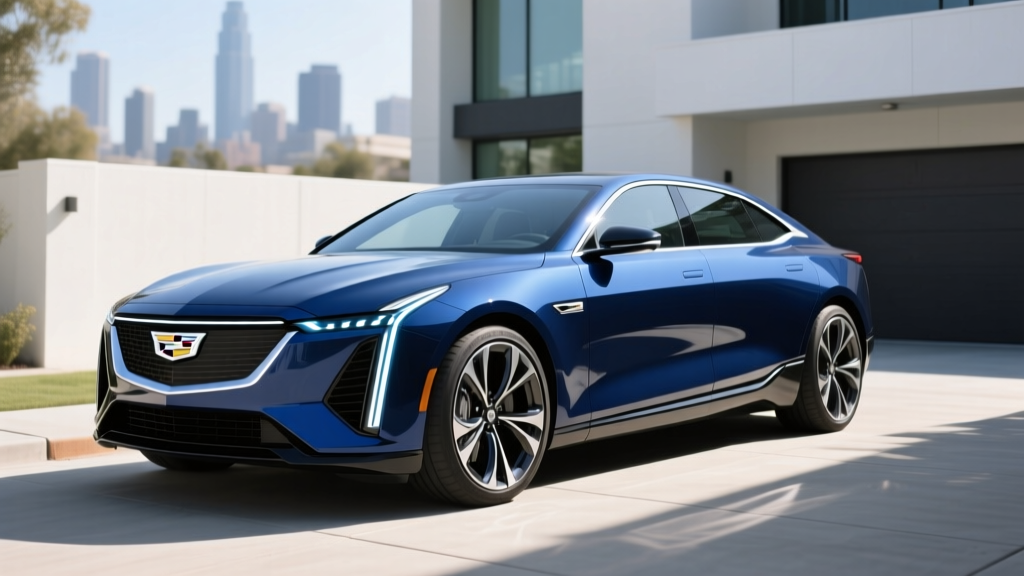
If you've been scanning luxury EV lease deals, the headline is hard to ignore: a Cadillac Optiq lease $299 per month. For a premium electric SUV wearing the Crest badge, that monthly payment undercuts many mainstream EVs and raises a critical question — what are you actually getting for the money? We've spent time analyzing the 2026 Optiq's specs, charging behavior, real-world range, and total cost picture to determine whether this lease is genuinely compelling or just cleverly structured marketing.
The Optiq slots into Cadillac's EV lineup as the entry-point luxury crossover — smaller than the Lyriq, aimed squarely at the Audi Q4 e-tron, BMW iX1, and Genesis GV60 crowd. But with GM's Ultium platform underpinning it and a lease price that rivals a well-equipped Tesla Model Y, the Optiq demands a closer look.
2026 Cadillac Optiq: Core EV Specifications
| Specification | 2026 Cadillac Optiq |
|---|---|
| EPA Estimated Range | 306 miles (Luxury FWD) |
| Battery Capacity | 102 kWh usable (NMC, Ultium platform) |
| Drivetrain | RWD (single motor) or AWD (dual motor) |
| Horsepower | 340 hp (RWD) / 500 hp (AWD Sport) |
| 0-60 mph | 6.0 sec (RWD) / 4.5 sec (AWD) |
| Max DC Fast Charge | 150 kW peak |
| 10-80% DC Charge Time | ~30 minutes |
| Level 2 Home Charging | 11.5 kW onboard (~31 mi/hr) |
| MPGe (Combined) | 89 MPGe (RWD Luxury) |
| Efficiency | 34 kWh/100 mi |
| Base MSRP | $52,990 (Luxury FWD) |
| AWD Sport MSRP | $58,490 |
| Battery Warranty | 8 years / 100,000 miles |
| Vehicle Warranty | 4 years / 50,000 miles |
Range Reality: What the EPA Number Doesn't Tell You
The rear-wheel-drive Luxury trim carries an EPA-estimated 306 miles of range from its 102 kWh Ultium battery pack. That's a solid number on paper — enough for most daily commutes with substantial buffer. But EPA range is measured under controlled conditions that rarely mirror your actual driving.
- City / mixed driving (mild weather): ~280–300 miles — regenerative braking helps recover energy in stop-and-go traffic
- Highway (70+ mph sustained): ~245–265 miles — aerodynamic drag increases consumption significantly above 65 mph
- Cold weather (below 30°F): ~220–250 miles — battery chemistry loses efficiency and cabin heating draws from the pack
- Worst-case (highway + cold + hills): ~200–220 miles — plan charging stops conservatively on winter road trips
The Optiq uses NMC (nickel manganese cobalt) chemistry within GM's Ultium architecture. NMC offers strong energy density — which is how Cadillac fits 102 kWh of usable capacity into a compact crossover footprint — but it is more temperature-sensitive than LFP (lithium iron phosphate). In practice, this means you'll see more range fluctuation seasonally than you would with an LFP-equipped vehicle like the Tesla Model Y Standard Range. The Optiq's thermal management system actively conditions the battery, mitigating extreme losses, but physics is physics: cold weather and high speeds will cut into your range.
For context, the Audi Q4 e-tron (86 kWh usable) returns an EPA 265 miles, while the Genesis GV60 (77.4 kWh) lands at 264 miles. The Optiq's larger battery gives it a meaningful range advantage in this segment.
Charging Speed: DC Fast Charging and Home Setup
Charging speed is where the Optiq's story gets nuanced. The peak DC fast-charge rate is 150 kW, which is adequate but not class-leading. Competitors like the Hyundai Ioniq 5 (peak 240 kW) and Genesis GV60 (peak 240 kW on 800V architecture) charge considerably faster at compatible stations.
| Charging Level | Power | Rate / Time | Notes |
|---|---|---|---|
| Level 1 (120V household) | ~1.4 kW | ~3–4 mi/hr | Emergency / trickle only |
| Level 2 (240V home) | 11.5 kW | ~31 mi/hr (full in ~10 hrs) | Overnight top-up ideal |
| DC Fast Charge (peak) | 150 kW | 10–80% in ~30 min | Tapers above 80% SoC |
| DC Fast Charge (sustained avg) | ~100–110 kW | ~180 mi in 30 min | Real-world average on 150+ kW station |
Here's the charging-curve reality that spec sheets omit: the Optiq will hit 150 kW only at a low state of charge (around 10-20% SoC) on a compatible 150+ kW charger. As the battery fills, the charge rate tapers — by 60% SoC you'll likely see 90-100 kW, and above 80% it drops to under 50 kW. This is normal behavior for NMC packs protecting cell longevity, but it means a 10-80% session takes about 30 minutes, not the "add 200 miles in 10 minutes" marketing some brands imply.
For home charging, the 11.5 kW onboard charger is a strong point. On a properly installed 48-amp Level 2 circuit (NEMA 14-50 or hardwired), you'll recover roughly 31 miles of range per hour, meaning a full charge from near-empty takes about 10 hours. Most owners will plug in overnight and wake up to a full battery every morning — which is how EV ownership actually works in practice. A Level 2 installation typically runs $800–$2,000 depending on your electrical panel, run length, and local permitting, so factor that into your budget.
Lease Pricing, MSRP, and the $299/Month Breakdown
Let's dissect the headline number. A Cadillac Optiq lease at $299 per month is typically structured as a 36-month lease with specific parameters that buyers need to understand before signing:
| Cost Factor | Detail |
|---|---|
| Advertised Lease | $299/mo for 36 months |
| Typical Due at Signing | $3,500–$4,500 (first month + cap cost reduction + fees) |
| Annual Mileage Allowance | 10,000 mi/yr (15k available at higher payment) |
| Trim Eligible | Luxury FWD (base trim) |
| Base MSRP | $52,990 |
| AWD Sport MSRP | $58,490 |
| Federal Lease Credit (via lessor) | Up to $7,500 passed through as cap reduction |
| Estimated Effective Cost (36 mo) | ~$14,264–$18,264 total out-of-pocket |
The $299 figure generally applies to the base Luxury FWD trim with a cap cost reduction applied at signing — often $3,500 to $4,500 out of pocket (covering first month's payment, acquisition fee, and down payment). That due-at-signing amount significantly affects the effective monthly cost: amortize $4,500 over 36 months and you're effectively paying closer to $424/month all-in.
Critically, leased EVs may benefit from the federal $7,500 tax credit through the leasing company (the lessor claims the §30D credit and typically passes it through as a cap cost reduction). This is how Cadillac can offer such aggressive lease rates — the $7,500 effectively subsidizes the lease. However, this "lease loophole" means you don't need to personally meet the MSRP caps, buyer income limits, or battery-sourcing requirements that apply to purchases. The lessor handles compliance. Just confirm with your dealer that the credit is being applied to your specific lease agreement.
If you purchase instead of lease, §30D eligibility requires the vehicle MSRP to be under $80,000 for SUVs (the Optiq qualifies), your modified adjusted gross income to fall under $150,000 (single) or $300,000 (joint), and the battery to meet critical-mineral and component-sourcing thresholds that shift annually. Always verify current-year rules on IRS.gov or with a tax professional before committing.
Performance, Ride, and Interior Quality
The RWD Optiq pushes 340 horsepower to the rear wheels, delivering a 0-60 mph time around 6.0 seconds. That's quick enough for confident highway merging and passing, though it won't pin you to the seat. The AWD Sport variant bumps output to 500 hp with a dual-motor setup, cutting 0-60 to roughly 4.5 seconds — genuine performance territory that rivals the Audi Q4 55 e-tron.
Ride quality is where the Optiq earns its luxury badge. GM's Ultium platform places the battery low and centrally, yielding a low center of gravity that keeps body roll well-controlled. The suspension tuning leans comfort-oriented — it absorbs broken pavement and expansion joints with the composure you'd expect from a Cadillac, not the firm sport-sedan stiffness of the BMW iX1. Steering is light and precise if somewhat numb, which suits the grand-touring character.
Inside, the Optiq features a 33-inch curved LED display spanning the instrument cluster and infotainment touchscreen, running Google Built-In (Google Maps, Google Assistant, and Play Store apps natively). Wireless Apple CarPlay and Android Auto are standard. Material quality is a step up from the Lyriq's already-solid cabin — soft-touch surfaces, available leather with contrast stitching, and genuine aluminum trim on higher trims. Ambient lighting with 126 color options adds personality.
Cargo space measures approximately 26 cubic feet behind the second row and 57 cubic feet with the rear seats folded. Rear legroom sits at about 38 inches — adequate for adults on longer trips, though the sloping roofline cuts into headroom for passengers over six feet. There is no front trunk (frunk); the space under the hood houses electronics and HVAC components.
Driver Assistance and Tech Features
The Optiq comes equipped with Cadillac's Super Cruise on available trims — a Level 2 hands-free driving system on pre-mapped divided highways. It's crucial to understand what this means:
In practice, Super Cruise is one of the best-executed Level 2 systems available. Lane centering is smooth and confident, the driver-monitoring camera works reliably even with sunglasses, and the system handles moderate curves and lane changes (on higher trims with automatic lane change) competently. It dramatically reduces fatigue on long highway drives — but it will not navigate construction zones, unmapped roads, or city streets autonomously.
Standard driver assists include automatic emergency braking with pedestrian detection, lane-keep assist, blind-spot monitoring, rear cross-traffic alert, and adaptive cruise control. A 360-degree camera system and automatic parking assist are available on Premium Luxury and Sport trims.
Pros, Cons, and the Verdict
- 306-mile EPA range leads the compact luxury EV segment
- 102 kWh battery provides genuine road-trip capability
- $299/mo lease is remarkably accessible for a luxury EV
- Super Cruise hands-free driving (available) is best-in-class
- Comfortable, quiet ride quality befitting the Cadillac brand
- 33-inch curved display with Google Built-In is intuitive
- 11.5 kW Level 2 charging fully replenishes overnight
- 150 kW peak DC charging trails 800V rivals (Ioniq 5, GV60)
- No front trunk (frunk) for additional storage
- Sloping roofline compromises rear headroom for tall passengers
- $299 lease requires $3,500+ due at signing
- NMC battery more sensitive to cold-weather range loss than LFP
- AWD Sport trim significantly raises the price and monthly payment
- Relatively new model — limited long-term reliability data
Who Should Lease the Cadillac Optiq?
- You want a luxury EV with strong range at a mainstream monthly payment
- Your commute is under 80 miles round-trip with regular highway segments (Super Cruise territory)
- You can install Level 2 charging at home and want overnight convenience
- You value ride comfort and cabin quietness over sport handling
- You want to avoid long-term battery-depreciation risk (leasing transfers that to the lessor)
- You regularly road-trip 400+ miles and need the fastest possible DC charging (consider Ioniq 5 or GV60)
- You need maximum cargo space or tow capacity (the Lyriq or EV6 offer more utility)
- You want LFP chemistry for maximum longevity and cold-weather resilience
- You prefer a sporty, engaging driving experience (BMW iX1 or Genesis GV60)
The Cadillac Optiq at $299/month fills a genuine gap in the market: a true luxury EV with over 300 miles of range, premium materials, and advanced driver assistance, at a monthly cost that competes with non-luxury alternatives. The lease structure — with the federal credit passed through the lessor — makes it one of the most accessible entry points into premium electric driving in 2026.
Just go in with clear eyes about the total out-of-pocket cost, the 150 kW charging ceiling, and the real-world range you'll actually experience. If those parameters fit your driving life, the Optiq lease is one of the strongest value propositions in the current EV market.
Frequently Asked Questions
What is the real-world range of the Cadillac Optiq?
The EPA estimates 306 miles for the RWD Luxury trim. In real-world driving, expect 280–300 miles in mild city/mixed conditions, 245–265 miles on sustained highway driving, and 220–250 miles in cold weather below 30°F. The 102 kWh NMC battery provides a strong buffer, but highway speeds and cold temperatures significantly impact range.
How fast does the Optiq charge at home and on the road?
At home on a 240V Level 2 charger, the Optiq charges at 11.5 kW, adding roughly 31 miles per hour — a full charge takes about 10 hours. On DC fast chargers, it peaks at 150 kW, reaching 10-80% in approximately 30 minutes. The charge rate tapers above 80% SoC to protect battery health.
How much does the Optiq cost after tax credits?
The base MSRP is $52,990. When leased, the federal $7,500 credit is typically claimed by the leasing company and applied as a cap cost reduction, which is how the $299/mo lease is achievable. If purchasing, eligibility depends on your income (under $150K single / $300K joint), the vehicle's battery sourcing compliance, and other IRS §30D requirements.
Does the Cadillac Optiq qualify for the federal EV tax credit?
For leases, yes — the lessor claims the commercial clean vehicle credit and passes savings to you through the lease terms, bypassing individual income and sourcing restrictions. For purchases, the Optiq's MSRP is under the $80,000 SUV cap, but you must meet income limits and the battery must satisfy annual critical-mineral and component-sourcing thresholds. Verify current-year rules at IRS.gov before purchasing.
Is the Optiq worth it versus the Audi Q4 e-tron or Genesis GV60?
The Optiq wins on range (306 vs. 265 mi for Q4, 264 mi for GV60) and lease affordability. The GV60 charges faster (240 kW peak on 800V architecture) and offers a more distinctive interior. The Q4 e-tron provides Audi's build quality and dealer network. If range and monthly cost are your top priorities, the Optiq has a compelling edge. If charging speed or sporty dynamics matter more, the GV60 deserves a test drive.
What is the battery warranty on the Optiq?
Cadillac covers the Ultium battery pack for 8 years or 100,000 miles, whichever comes first. This warranty covers defects and capacity loss below a specified retention threshold (typically 60-70% of original capacity, per Cadillac's official terms). The vehicle limited warranty is 4 years / 50,000 miles.