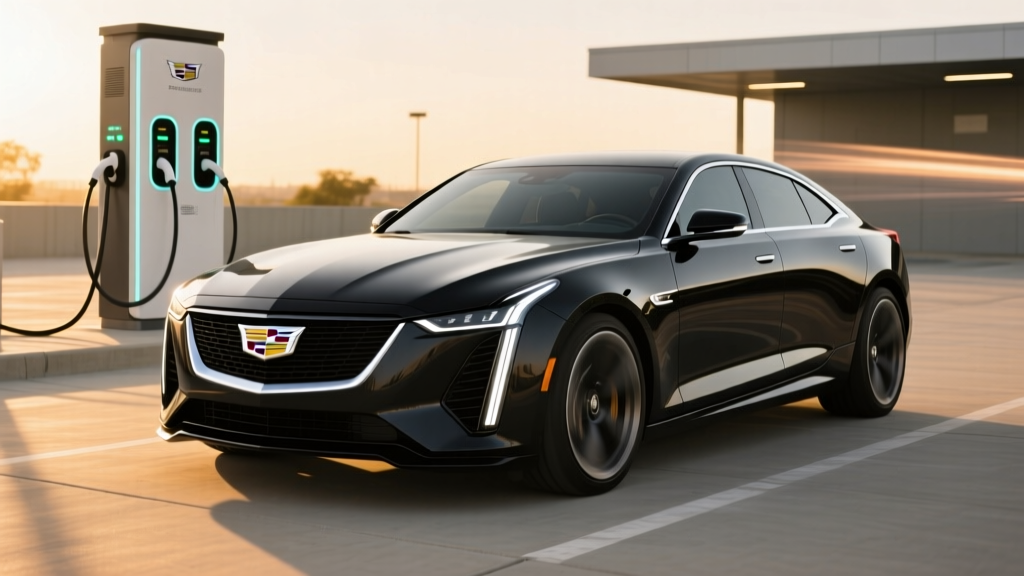
The Cadillac Optiq arrives as GM's compact luxury electric crossover, slotting below the Lyriq and targeting buyers who want Cadillac styling and Ultium-platform engineering without stepping up to midsize pricing. Built on the same BEV3 architecture that underpins the Lyriq and Blazer EV, the Optiq promises a blend of premium materials, strong acceleration, and competitive range. But with the compact luxury EV segment crowded by the Tesla Model Y, BMW iX3, Genesis GV60, and Audi Q4 e-tron, the Optiq needs to deliver on more than just badge prestige. Here's everything we know about its real-world performance, charging behavior, and ownership economics for the 2026 model year.
Cadillac Optiq 0-60, Horsepower, and Drivetrain Breakdown
The headline number for performance-minded shoppers is the Cadillac Optiq 0-60 mph time of approximately 5.0 seconds in the Sport AWD trim, which pairs dual electric motors for a combined output of 360 horsepower and an estimated 360 lb-ft of torque. That puts it squarely in the quick-compact-crossover category — roughly on par with the BMW iX3 and quicker than the Audi Q4 55 e-tron, though a step behind the Tesla Model Y Performance's 3.5-second sprint.
The base Luxury 2WD trim runs a single rear-mounted motor producing 300 hp and achieves a 0-60 time in the 6.2-second range. Rear-wheel drive gives this version a slight efficiency edge and a lower starting price, though AWD is the volume play for snow-belt buyers.
| Trim | Drivetrain | Horsepower | Torque (lb-ft) | 0-60 mph |
|---|---|---|---|---|
| Luxury 2WD | RWD (single motor) | 300 hp | 325 | ~6.2 sec |
| Sport AWD | AWD (dual motor) | 360 hp | 360 | ~5.0 sec |
On the road, the Ultium platform's low center of gravity keeps body roll well-managed through corners, and the torque-vectoring AWD system (on dual-motor trims) can shift power between front and rear axles in milliseconds. The regenerative braking system offers a one-pedal driving mode with adjustable regen intensity through the steering-wheel paddles — a feature Cadillac has refined since the Lyriq's launch.
EPA Range, Battery Capacity, and Real-World Expectations
The 2026 Optiq uses a 85 kWh usable lithium-ion battery pack built on GM's Ultium platform with NMC (nickel manganese cobalt) chemistry. NMC offers higher energy density than LFP, which is why GM selected it for a vehicle in this size and range class — it allows more range in a physically smaller pack.
Real-World Expectations:
- City/mixed driving (65°F): ~280–305 mi — regen-heavy city routes help the Optiq approach its sticker number
- Highway (75 mph sustained): ~250–270 mi — aerodynamic drag cuts efficiency at speed
- Cold weather (20°F, cabin heat on): ~215–245 mi — NMC chemistry loses 15–25% capacity in freezing temps; the heat pump helps but can't eliminate the drop
The Optiq includes a standard heat pump for cabin heating, which is critical for preserving range in cold climates. Without one, resistive heating can consume 3–5 kW continuously; the heat pump cuts that to roughly 1–2 kW. If you live above the 37th parallel, this is a meaningful advantage over competitors still using resistive elements.
Efficiency comes in at an estimated 95 MPGe combined (approximately 35 kWh/100 mi) for the RWD trim, with the AWD version dipping to about 90 MPGe combined. These figures are competitive but not class-leading — the Tesla Model Y Long Range AWD still holds the efficiency crown at 117 MPGe.
DC Fast Charging and Home Level 2 Speeds
Charging speed is where the Optiq shows its Ultium-platform maturity. The pack supports a peak DC fast-charge rate of 190 kW, which is solid for this segment but below the Hyundai Ioniq 5's 240 kW peak. More importantly, the charge curve matters: the Optiq sustains strong charging power through the 20–60% SoC window before tapering above 80%.
| Charging Level | Power / Rate | Speed (miles added per hour) | Notes |
|---|---|---|---|
| Level 1 (120V household) | ~1.4 kW | ~4 mi/hr | Emergency/trickle only |
| Level 2 (240V, 48A home charger) | 11.5 kW | ~34 mi/hr | Full charge in ~8 hours overnight |
| DC Fast Charge (peak) | 190 kW | — | 10–80% in ~27 minutes |
| DC Fast Charge (sustained avg) | ~130 kW | — | Average across the 10–80% curve |
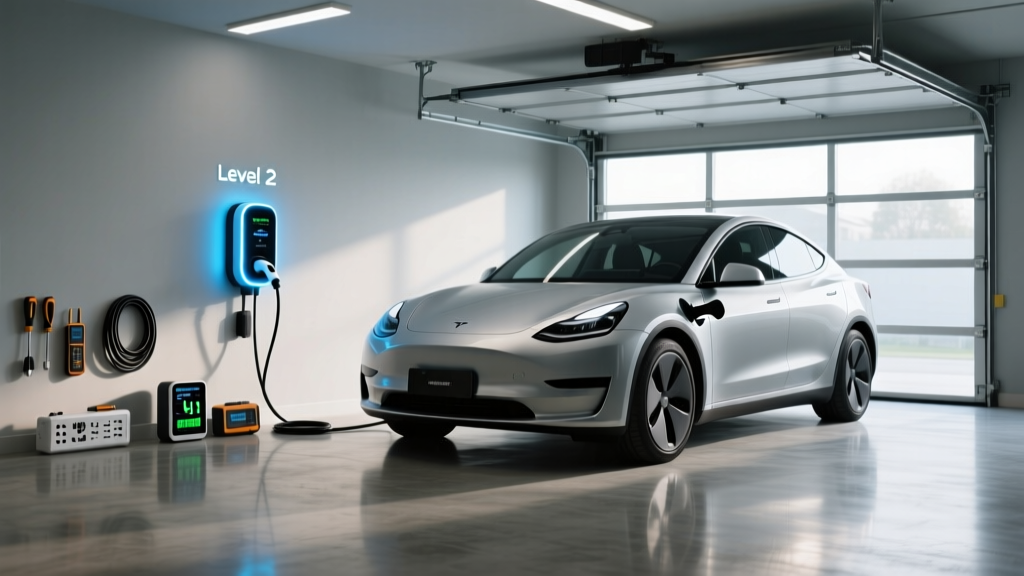
At home on a Level 2 wall connector wired to a 60A circuit (delivering 48A continuous to the vehicle), the Optiq adds roughly 34 miles of range per hour. A full overnight session easily replenishes a day's worth of driving. If your electrical panel supports a 200A service with available headroom, installation typically runs $800–$2,000 for the charger, wiring, and permit — though older homes with 100A panels may need a $2,000–$4,000 panel upgrade.
On public DC fast chargers, preconditioning the battery (via navigation-routed preconditioning, which the Optiq supports) is essential. Arriving at a charger without preconditioning in cold weather can push that 10–80% time from 27 minutes out past 40 minutes. The Optiq's navigation system will automatically begin warming the battery when a charging station is set as your destination.
Interior Space, Cargo, and Technology
Cadillac positions the Optiq as a compact luxury crossover, and the interior dimensions reflect that. Front-seat passengers get an estimated 40.5 inches of legroom, while rear-seat riders have approximately 37.8 inches — adequate for adults on shorter trips but tighter than the Lyriq's 39.6-inch rear legroom. Cargo volume behind the rear seats is approximately 26 cubic feet, expanding to an estimated 57 cubic feet with the 60/40 split rear seats folded. There is no front trunk (frunk); the space under the hood houses power electronics and the HVAC system.
The centerpiece of the cabin is Cadillac's 33-inch LED advanced display, a curved panel that spans the driver cluster and infotainment touchscreen in a single piece of glass. It runs Google Built-In (Google Maps, Google Assistant, Play Store apps natively), which means navigation is strong but you're locked into the Google ecosystem. Wireless Apple CarPlay and Android Auto are standard.
On the driver-assistance front, the Optiq comes with Super Cruise availability on mapped divided highways — Cadillac's hands-free Level 2 system. This is a genuine differentiator in the compact luxury EV space, where most competitors offer only hands-on lane-centering. However, Super Cruise remains a Level 2 SAE system: you must keep your eyes on the road, and the driver-monitoring camera will alert and disengage if you look away for too long. It is not autonomous driving.
Additional tech highlights include a standard head-up display, a 19-speaker AKG audio system (on Sport trims), ambient lighting with 126 color options, and over-the-air update capability for powertrain and infotainment refinements post-purchase.
Pricing, Trim Levels, and Federal Tax Credit Eligibility
The 2026 Cadillac Optiq launches with two primary trims. Pricing reflects Cadillac's attempt to undercut European rivals while staying above mainstream-brand EVs:
| Trim | Base MSRP | As-Tested (typical options) | §30D Credit Eligible? |
|---|---|---|---|
| Luxury 2WD | $54,090 | $57,500–$60,000 | Potentially (see below) |
| Sport AWD | $59,090 | $63,000–$67,000 | Potentially (see below) |
Federal tax credit eligibility under IRS §30D is not automatic. The Optiq must clear several hurdles:
- MSRP cap: SUVs/crossovers must have an MSRP at or below $80,000. Both Optiq trims clear this threshold.
- Buyer income cap: Modified AGI must not exceed $150,000 (single), $225,000 (head of household), or $300,000 (married filing jointly).
- Battery sourcing: A percentage of critical minerals and battery components must be sourced from the U.S. or free-trade-agreement partners. GM has been aggressively re-shoring Ultium battery supply chains, and the Optiq's battery is assembled in the U.S. (Lansing, MI), but the exact critical-mineral percentage can vary by production batch. Verify the specific VIN's eligibility at fueleconomy.gov before purchasing.
- Point-of-sale transfer: As of 2024, buyers can transfer the credit to the dealer at purchase, reducing the out-of-pocket cost immediately rather than waiting to claim it on their tax return.
If you qualify for the full $7,500 credit, the effective price of the Luxury 2WD drops to approximately $46,590 — competitive with a well-equipped Tesla Model Y Long Range and significantly less than a comparably trimmed BMW iX3. Always confirm eligibility with a tax professional and check the VIN against the IRS database, as sourcing requirements tighten annually.
Warranty, Ownership Costs, and Long-Term Battery Outlook
GM backs the Optiq with a competitive warranty package:
- Battery and powertrain: 8 years / 100,000 miles (whichever comes first), covering capacity loss below 60% of original
- Bumper-to-bumper: 4 years / 50,000 miles
- Corrosion: 6 years / unlimited miles
- Roadside assistance: 6 years / 70,000 miles
The 60% capacity-retention threshold in the battery warranty is industry-standard (Tesla uses the same floor), though some buyers wish for a 70% guarantee. In practice, GM's Ultium NMC packs have shown degradation curves similar to the Bolt EV and Lyriq: roughly 5–8% loss over the first 50,000 miles, then a much slower decline. Most owners will never approach the warranty threshold under normal use.
Insurance premiums for the Optiq are expected to land in the $1,800–$2,400/year range depending on your state, driving record, and trim — somewhat higher than a gas-powered compact luxury crossover due to EV repair costs and higher vehicle values. Get quotes before purchasing; EV insurance varies widely by carrier.
Maintenance costs are minimal: no oil changes, no transmission fluid, no spark plugs. Expect cabin air filter replacement every 15,000–20,000 miles, tire rotation every 7,500 miles, and brake fluid checks every 2 years. Regenerative braking significantly extends brake pad life — many EV owners go 80,000+ miles on original pads.
How the Optiq Compares to Key Rivals
| Spec | Cadillac Optiq Sport AWD | Tesla Model Y LR AWD | BMW iX3 | Genesis GV60 AWD |
|---|---|---|---|---|
| EPA Range | 293 mi | 330 mi | 285 mi | 289 mi |
| 0-60 mph | ~5.0 sec | 4.8 sec | 6.6 sec | 5.5 sec |
| Peak DC Charge kW | 190 kW | 250 kW | 150 kW | 240 kW |
| 10–80% DC Time | ~27 min | ~20 min | ~34 min | ~18 min |
| Base MSRP | $59,090 | $48,990 | $62,500 | $60,500 |
| Hands-Free Highway Assist | Super Cruise (yes) | FSD Supervised (no)* | No | No |
*Tesla FSD Supervised requires hands on wheel and active supervision; it is not a hands-free system on public roads.
The Optiq's strongest competitive advantage is Super Cruise availability and its genuinely premium interior materials — areas where the Model Y falls short. Its weakest point is DC charging speed: the 190 kW peak and 27-minute 10–80% time lag behind the Ioniq 5 platform vehicles and Tesla's Supercharger network efficiency. If you road-trip frequently and rely on public charging, this gap matters.
Pros, Cons, and Who Should Buy the Cadillac Optiq
Pros
- Super Cruise hands-free driving on 750,000+ miles of mapped highways
- Genuinely premium interior with 33-inch curved display and AKG audio
- Competitive 0-60 time (5.0 sec AWD) with smooth, quiet power delivery
- Heat pump standard — better cold-weather range retention
- Under $80K MSRP cap keeps federal tax credit eligibility open
- Strong 8-yr/100,000-mi battery warranty
Cons
- 190 kW peak DC charge rate is midpack — 27-min 10–80% trails rivals
- No frunk (front trunk) for additional cargo
- Rear legroom (37.8 in) is tighter than the Lyriq and some competitors
- Google Built-In infotainment may not suit Apple-centric users
- NMC battery chemistry degrades more in extreme cold than LFP alternatives
- No federal tax credit guarantee — VIN-specific sourcing must be verified
Choose the Cadillac Optiq If:
- You value hands-free highway driving (Super Cruise) and a luxury-branded interior
- You charge primarily at home and road-trip 2–3 times per year (not weekly)
- You want a compact luxury EV that's priced below European rivals
- You live in a climate with cold winters and want a heat pump-equipped EV
Look Elsewhere If:
- Fastest possible DC charging is a priority (consider Ioniq 5 or GV60)
- You need maximum range per dollar (the Model Y Long Range wins decisively)
- You want a frunk or maximum rear-seat space (step up to the Lyriq)
- You prefer a non-Google infotainment ecosystem
Frequently Asked Questions
What is the real-world range of the Cadillac Optiq?
The EPA rates the Optiq Luxury 2WD at 303 miles and the Sport AWD at 293 miles. In real-world mixed driving at moderate temperatures, expect 280–305 miles. Highway-only driving at 75 mph drops this to 250–270 miles, and freezing winter conditions can reduce range to 215–245 miles. The standard heat pump helps mitigate cold-weather losses compared to EVs without one.
How fast does the Optiq charge at home and on DC fast chargers?
On a Level 2 home charger (240V, 48A), the Optiq charges at up to 11.5 kW, adding roughly 34 miles of range per hour — a full overnight charge covers most daily needs. On DC fast chargers, it peaks at 190 kW with a 10–80% time of approximately 27 minutes under ideal conditions. Always use battery preconditioning (automatic via navigation routing) to achieve peak charge speeds.
Does the Cadillac Optiq qualify for the $7,500 federal EV tax credit?
It potentially qualifies. Both trims fall under the $80,000 SUV MSRP cap. However, eligibility also depends on your income (AGI limits apply), and the battery's critical-mineral and component sourcing must meet IRS thresholds that tighten each year. The Optiq's Ultium battery is U.S.-assembled, but verify the specific VIN at fueleconomy.gov and consult a tax professional before relying on the credit.
Is the Optiq worth buying over the Tesla Model Y or BMW iX3?
It depends on your priorities. The Optiq offers a more luxurious interior, Super Cruise hands-free driving, and a quieter ride than the Model Y, but the Tesla wins on range (330 mi), charging speed (250 kW peak), and price ($48,990). Against the BMW iX3, the Optiq is less expensive, charges faster, and offers Super Cruise — making it the stronger value in that matchup. If interior quality and hands-free highway driving are your top criteria, the Optiq makes a compelling case.
What is the Cadillac Optiq 0-60 time?
The 2026 Cadillac Optiq Sport AWD achieves a 0-60 mph time of approximately 5.0 seconds with its 360-hp dual-motor setup. The base Luxury 2WD with its 300-hp single motor does the sprint in about 6.2 seconds. Both versions deliver instant electric torque with no turbo lag or gear-shift delays.
How long will the Optiq's battery last?
GM warranties the Ultium battery for 8 years or 100,000 miles against capacity loss below 60%. Based on data from earlier Ultium vehicles and similar NMC packs, expect roughly 5–8% degradation over the first 50,000 miles, with a much slower decline thereafter. Most EV batteries retain 85–90% of original capacity at 100,000 miles when properly maintained — avoid routinely charging to 100% or letting the pack sit at 0% for extended periods.