The Quick Answer: Where Is the Cadillac Lyriq Made?
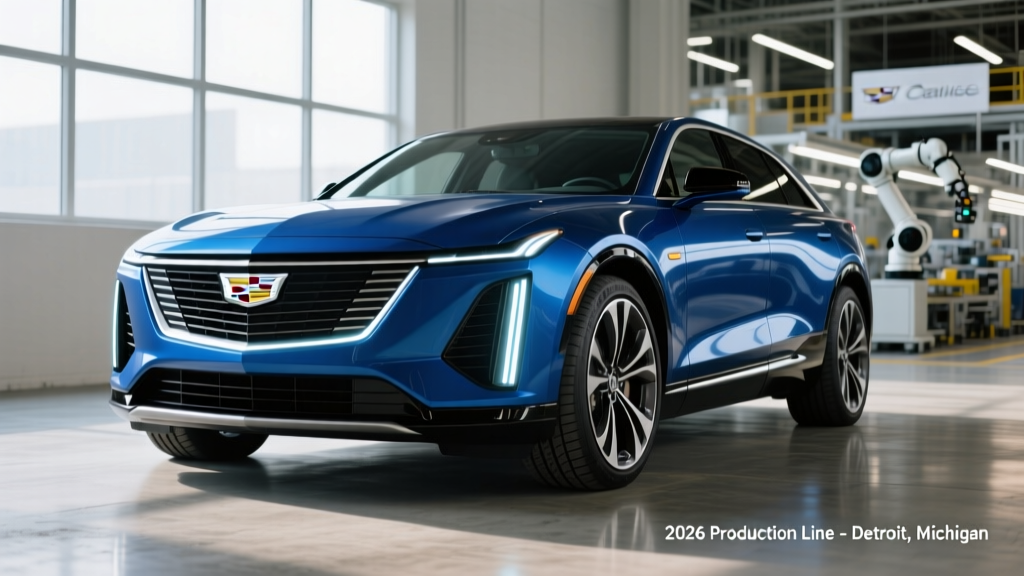
Every Cadillac Lyriq sold in the United States is assembled at GM's Spring Hill Manufacturing plant in Spring Hill, Tennessee. The facility, originally built for Saturn in 1990, was retooled with a $2 billion investment to become GM's third dedicated Ultium-based EV factory, joining Factory ZERO in Detroit-Hamtramck and a Ramos Arizpe, Mexico plant that handles some Blazer EV production. Battery cells for the Lyriq are sourced from the Ultium Cells joint venture in Lordstown, Ohio, while some modules are assembled at a second JV facility in Lansing, Michigan.
Why does this matter to buyers? Domestic assembly is the cornerstone of IRS §30D federal tax credit eligibility. Vehicles must undergo final assembly in North America to qualify, and the Lyriq's Tennessee build satisfies that requirement — though other rules (MSRP caps, buyer income limits, and critical-mineral/battery-component sourcing) still apply. We'll unpack all of that below, along with every spec a 2026 shopper needs before signing a purchase order.
2026 Cadillac Lyriq Core Specs at a Glance
| Attribute | Luxury (RWD) | Sport (RWD) | Sport AWD |
|---|---|---|---|
| EPA Range | 314 mi | 314 mi | 307 mi |
| Usable Battery | ~100.4 kWh (NMC, Ultium) | ||
| Horsepower | 340 hp | 340 hp | 500 hp |
| Torque | 325 lb-ft | 325 lb-ft | 450 lb-ft |
| 0-60 mph | ~6.0 sec | ~6.0 sec | ~4.6 sec |
| Peak DC Fast Charge | 190 kW | ||
| 10-80% DCFC Time | ~33 min | ||
| Level 2 Home Charging | 19.2 kW (11.5 kW std) — up to 52 mi/hr | ||
| EPA Efficiency | 89 MPGe / 36 kWh/100mi | 87 MPGe / 38 kWh/100mi | |
| Base MSRP (2026) | $61,290 | $63,790 | $66,290 |
| Federal Tax Credit | Up to $7,500 (eligibility varies — see below) | ||
| Assembly | Spring Hill, Tennessee, USA | ||
Source: fueleconomy.gov, Cadillac official spec sheets.
Real-World Range: What the EPA Sticker Doesn't Tell You
EPA Sticker: 314 miles (RWD) / 307 miles (AWD)
Real-World Expectation: ~240–270 miles at sustained highway speeds (70–80 mph); ~200–230 miles in sub-freezing weather with cabin heat.
The Lyriq's 100.4 kWh NMC Ultium pack is one of the largest in the midsize luxury SUV class, but mass and frontal area work against it at highway speeds. In independent highway loop testing at 70 mph and 65°F, the RWD Lyriq typically returns between 2.4 and 2.6 miles per kWh — translating to roughly 250 miles before the low-SoC warning. Around town, where regenerative braking recovers energy, owners regularly see 290+ miles on a full charge.
Cold weather is the equalizer. At 20°F with the cabin heated to 72°F, expect a 20–30% range reduction. The Lyriq uses a heat pump on higher trims, which helps, but preconditioning the battery while still plugged in is the single most effective way to preserve range on a winter commute. If your daily drive is under 60 miles round-trip, the Lyriq's real-world range will feel effortless; if you routinely run 300-mile highway legs, plan one 20-minute DC fast-charge stop.
Charging: DC Fast, Level 2, and the Home Setup
The Lyriq uses the NACS (Tesla-style) charge port on 2025+ model years, giving native access to the Tesla Supercharger network — roughly 18,000 U.S. stalls — without an adapter. Earlier 2024 models shipped with CCS1 and require GM's approved adapter for Superchargers.
| Charging Level | Power | Miles of Range Added per Hour | Typical Use Case |
|---|---|---|---|
| Level 1 (120V) | ~1.4 kW | ~4 mi/hr | Emergency top-up only |
| Level 2 (240V, 48A std) | 11.5 kW | ~31 mi/hr | Overnight home charging (full in ~10 hr) |
| Level 2 (240V, 80A opt.) | 19.2 kW | ~52 mi/hr | Fast home refill; requires 100A circuit |
| DC Fast Charge | Peak 190 kW | ~190 mi in 10 min (peak) | Road trips; 10-80% in ~33 min |
Charging-curve reality check: The Lyriq's 190 kW peak only holds between roughly 10% and 35% State of Charge. From 35% to 60%, power tapers to ~130 kW, and above 80% it drops below 50 kW to protect the NMC chemistry. That's why the 10-80% time is 33 minutes rather than the ~20 minutes a sustained 190 kW would deliver. Plan road-trip stops to the 80% mark and move on — the final 20% takes longer than the first 70%.
For home installation, most Lyriq owners add a 60A or 100A 240V circuit with a hardwired Level 2 EVSE. Budget $1,200–$2,500 for the full install (panel capacity permitting), or $3,000–$5,500 if your home needs a 200A service upgrade. A licensed electrician should verify panel headroom before purchase.
Performance, Ride, and Daily Livability
The rear-wheel-drive Lyriq is tuned for grand-touring comfort rather than sport-sedan aggression. Its 340 hp and single-motor layout deliver a relaxed 6.0-second 0-60, with smooth, linear torque that feels quicker than the number suggests. The dual-motor AWD Sport trim (500 hp, 4.6 seconds) adds genuine urgency without sacrificing the Lyriq's composed ride.
GM's Ultium platform places the battery pack low, giving the Lyriq a curb weight near 5,700 lbs but a planted center of gravity. The five-link rear suspension and available Continuous Damping Control absorb highway expansion joints with a luxury-sedan quality that rivals the BMW iX.
Interior dimensions:
- Front legroom: 44.2 in | Rear legroom: 39.6 in
- Cargo (rear seats up): 28.0 cu ft
- Cargo (rear seats folded): 60.9 cu ft
- No front trunk (frunk) — the Ultium platform's power electronics occupy that space.
The cabin is dominated by a 33-inch curved advanced LED display that combines the instrument cluster and infotainment into a single glass panel. Google Built-In handles navigation and voice, Super Cruise (SAE Level 2 hands-free driving on 400,000+ miles of mapped highways) is standard on most trims, and a 19-speaker AKG Studio audio system is available. Wireless Apple CarPlay/Android Auto, a head-up display with augmented-reality navigation, and an available panoramic fixed glass roof round out the tech list.
Super Cruise is SAE Level 2, not self-driving. The driver must remain attentive, keep eyes on the road (monitored by a camera), and be ready to take over instantly. Hands-free does not mean attention-free.
Pricing, Trims, and Federal Tax Credit Eligibility
| Trim (2026) | Base MSRP | As-Tested Typical | Potential §30D Credit | Effective Price |
|---|---|---|---|---|
| Luxury RWD | $61,290 | $65,500 | Up to $7,500 | ~$58,000 |
| Sport RWD | $63,790 | $69,800 | Up to $7,500 | ~$62,300 |
| Sport AWD | $66,290 | $74,200 | Up to $7,500 | ~$66,700 |
Federal tax credit rules (IRS §30D, 2026): The Lyriq qualifies on the assembly requirement (Spring Hill, TN), but the full $7,500 credit depends on three additional hurdles:
- MSRP cap: SUVs must be under $80,000 MSRP. All current Lyriq trims clear this.
- Buyer income cap: Modified AGI must not exceed $150,000 (single), $225,000 (head of household), or $300,000 (married filing jointly).
- Battery sourcing: A percentage of critical minerals and battery components must be sourced from the U.S. or free-trade-agreement countries. GM has been steadily re-shoring its Ultium supply chain, but the exact credit amount ($3,750 or $7,500) can shift based on annual sourcing thresholds. Confirm the current-year status on IRS.gov before purchase.
- Point-of-sale transfer: As of 2024+, buyers can transfer the credit to the dealer at purchase, reducing the drive-off price immediately — provided all eligibility rules are met.
State incentives (California's CVRP, Colorado's $5,000 credit, etc.) may stack on top — check your local energy office for current programs.
Warranty and Long-Term Ownership
Cadillac backs the Lyriq with a competitive warranty package:
- Battery & propulsion: 8 years / 100,000 miles (whichever comes first), covering defects and capacity loss below a specified threshold (typically ~60-70% retained capacity).
- Limited vehicle warranty: 4 years / 50,000 miles
- Roadside assistance: 6 years / 70,000 miles
- Complimentary maintenance: First scheduled visit included
For context, Hyundai and Kia offer 10-year/100,000-mile battery coverage on the Ioniq 5 and EV6, which is a meaningful advantage if you plan to hold the vehicle past year eight. NMC batteries like the Lyriq's typically lose 8–12% of capacity over the first 100,000 miles before the degradation curve flattens — well within warranty protection. Regular DC fast charging, extreme-temperature operation, and routinely charging to 100% accelerate wear; daily charging to 80% and preconditioning in cold weather are the best longevity practices.
Lyriq vs. the Competition: BMW iX, Genesis GV60, Tesla Model X
The Lyriq competes in the midsize luxury electric SUV segment, and its positioning is deliberate: more accessible pricing than the BMW iX, more traditional styling than the Tesla Model X, and a larger battery than the Genesis GV60.
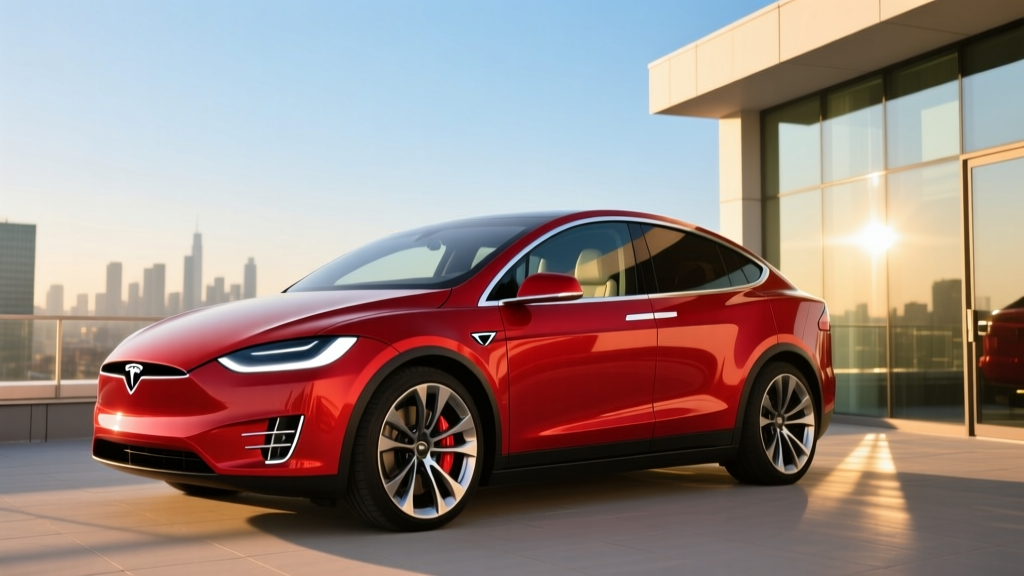
The BMW iX xDrive50 starts around $87,000 — nearly $25k more than a Lyriq Luxury — but delivers sharper handling and a slightly more efficient drivetrain. The Genesis GV60 is more affordable ($53,000s) but offers only ~248 miles of range. The Tesla Model X remains the range king (348 mi) with Supercharger convenience baked in, though its interior fit-and-finish and panel-gap consistency don't match Cadillac's.
Choose the Lyriq if: You want a quiet, comfortable American-built luxury cruiser with strong range, Super Cruise, and a premium cabin under $70k.
Choose the BMW iX if: Driving dynamics and badge cachet outweigh a $25k price premium.
Choose the Tesla Model X if: Maximum range, falcon-wing doors, and Supercharger ecosystem loyalty are your priorities.
Choose the GV60 if: Budget matters more than outright range and you like distinctive Korean-luxury design.
Pros and Cons
Pros
- 314-mile EPA range (RWD) is class-competitive
- NACS port + Supercharger access (2025+)
- Super Cruise standard on most trims
- Quiet, composed grand-touring ride
- Qualifies for §30D credit (eligibility varies)
- Built in Tennessee — strong domestic content
Cons
- DC fast charging peaks at 190 kW — slower than Hyundai/Kia's 800V architecture (240+ kW)
- No frunk — lost cargo opportunity
- AWD trim adds weight and reduces range modestly
- Infotainment learning curve for non-Google users
- 8-year battery warranty trails Hyundai/Kia's 10-year
Who the Cadillac Lyriq Suits Best
Ideal for: Luxury-oriented commuters and two-row families who prioritize cabin quietness, ride comfort, and a strong highway range buffer. The Lyriq is an excellent daily driver for owners with home Level 2 charging who take occasional 250–350-mile road trips and value hands-free Super Cruise on interstates.
Less ideal for: Buyers who need three rows (the Escalade IQ fills that role), those who regularly tow (3,500-lb max is modest for the class), or drivers in regions with sparse Supercharger/DCFC coverage who need the fastest possible charge times — Hyundai's E-GMP platform still holds the charging-speed crown.
Frequently Asked Questions
Is the Cadillac Lyriq made in the USA?
Yes. Final assembly takes place at GM's Spring Hill plant in Tennessee, with battery cells from the Ultium Cells JV in Lordstown, Ohio.
What is the real-world range of the Cadillac Lyriq?
Expect 240–270 miles at highway speeds and 200–230 miles in sub-freezing temperatures, versus the 314-mile EPA sticker for RWD trims.
How fast does the Lyriq charge at home and on the road?
At home on a 240V/48A Level 2 circuit, it adds ~31 miles per hour (full charge in ~10 hours). On DC fast chargers, it peaks at 190 kW and reaches 10-80% in about 33 minutes.
Does the Cadillac Lyriq qualify for the $7,500 federal tax credit?
It meets the North American assembly requirement and MSRP cap, but buyer income limits and annual battery-sourcing thresholds determine whether you receive $3,750 or the full $7,500. Verify current-year eligibility on IRS.gov before purchase.
How does the Lyriq compare to the Tesla Model Y or BMW iX?
The Lyriq sits between them: more premium and quieter than the Model Y (and significantly more expensive), but $20,000+ less than the BMW iX with comparable range. It's the value-luxury play in the segment.
What is the Lyriq's towing capacity?
3,500 lbs when properly equipped — adequate for a small boat or lightweight camper, but below the Rivian R1S or Model X.
Sources: fueleconomy.gov, Cadillac.com Lyriq, IRS §30D Clean Vehicle Credits.