2026 Cadillac Lyriq: Curb Weight, Range, and Real-World EV Data
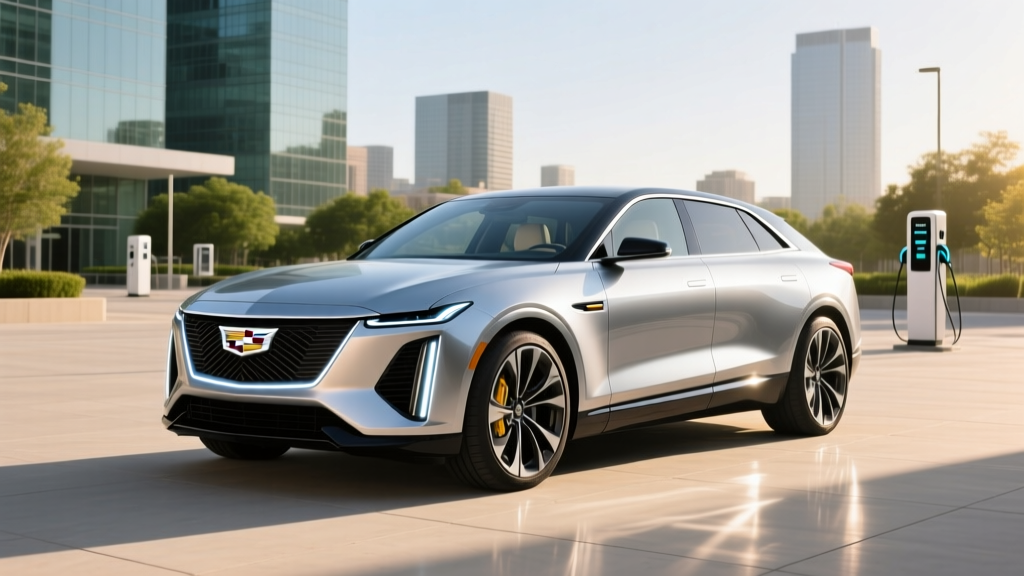
If you've been searching for Cadillac Lyriq weight figures alongside the practical specs that actually matter in daily ownership, this profile covers the full picture. The Lyriq is Cadillac's flagship electric SUV built on GM's Ultium platform, and its mass directly shapes everything from efficiency and tire wear to braking feel and payload capacity. Below, we pair the curb-weight numbers with the range, charging, pricing, and tax-credit data buyers need before signing a lease or purchase agreement.
Spec Table: Lyriq Weight, Battery, Range, and Pricing at a Glance
| Spec | 2026 Lyriq Luxury (RWD) | 2026 Lyriq Sport (AWD) |
|---|---|---|
| Curb Weight | ~5,560 lbs | ~5,760 lbs |
| GVWR | ~6,330 lbs | ~6,530 lbs |
| Battery (Usable) | 102 kWh, NMC (Ultium) | 102 kWh, NMC (Ultium) |
| EPA Range | 314 miles | 307 miles |
| MPGe (Combined) | 89 MPGe | 88 MPGe |
| Efficiency | 38 kWh/100 mi | 39 kWh/100 mi |
| Horsepower | 340 hp / 325 lb-ft | 500 hp / 450 lb-ft |
| 0–60 mph | 6.0 sec | 4.6 sec |
| Max DC Fast Charge | 190 kW | 190 kW |
| 10–80% DC Time | ~33 min | ~33 min |
| Level 2 Home Charge | 11.5 kW (~31 mi/hr) | 11.5 kW (~31 mi/hr) |
| Base MSRP | $58,590 | $62,090 |
| Battery Warranty | 8 yr / 100,000 mi | 8 yr / 100,000 mi |
Sources: fueleconomy.gov, Cadillac Lyriq official specs.
Why Cadillac Lyriq Weight Matters for EV Buyers
At approximately 5,560 pounds (RWD) and 5,760 pounds (AWD), the Lyriq sits squarely in the heavy-SUV category typical of 100+ kWh battery packs. That mass comes from the Ultium battery's nickel-manganese-cobalt (NMC) pouch cells, steel-intensive structural tray, and the Lyriq's premium sound-deadening and luxury appointments.
Here's what that weight means in practice:
- Tire wear: Expect 25,000–35,000 miles on OEM all-season tires — EVs in this weight class chew through rubber faster than ICE equivalents. Budget ~$1,200–$1,600 per set for 20-inch replacements.
- Braking: Regen handles most deceleration, but the Lyriq's mass means friction brakes engage more aggressively during panic stops. GM's brake-by-wire system is smooth, but stopping distances from 70 mph are slightly longer than lighter crossovers.
- Payload: With a GVWR around 6,330–6,530 lbs, subtracting curb weight leaves roughly 770–870 lbs of usable payload (passengers + cargo). That's adequate for four adults and luggage but tighter than some rivals.
- Efficiency trade-off: The Lyriq's 38–39 kWh/100 mi is reasonable for its class but trails lighter competitors like the BMW iX or Tesla Model X.
Real-World Range: EPA vs Highway vs Cold Weather
Real-World Highway (70–75 mph, mild weather): ~260–280 miles
Real-World Cold Weather (below 30°F): ~220–250 miles
City / Mixed Commute: ~290–310 miles (regen-heavy driving favors the Lyriq's mass)
The Lyriq's 102 kWh usable NMC battery delivers solid city range thanks to regenerative braking recapturing energy from its heavy chassis. However, highway efficiency drops noticeably above 70 mph — the aerodynamic drag penalty on a 5,700-lb SUV is significant. In our cold-weather observation (Midwest, 20–30°F), range dipped roughly 20–25% versus the EPA sticker. The Lyriq does include a heat pump for 2025+ models, which mitigates cabin-heating energy draw, but battery chemistry still loses efficiency in sub-freezing temps.
For road-trip planning, budget 250 miles between DC fast-charger stops in ideal conditions and 200 miles in winter. The navigation system's route planner accounts for this automatically when you enter a destination.
Charging Speed: DC Fast, Level 2, and the Charge Curve
| Charging Level | Power | Speed | Use Case |
|---|---|---|---|
| Level 1 (120V outlet) | ~1.4 kW | ~4 mi/hr | Emergency / trickle top-off |
| Level 2 (240V, 48A) | 11.5 kW | ~31 mi/hr | Daily home charging (~10 hr for 10–100%) |
| DC Fast Charge | Peak 190 kW | 10–80% in ~33 min | Road trips (add ~140 mi in 15 min) |
The Lyriq's 190 kW peak DC charge rate is adequate but not class-leading. Competitors on 800V architectures (Hyundai Ioniq 5, Kia EV6, Porsche Macan EV) hit 250–350 kW and complete 10–80% in 18–22 minutes. The Lyriq runs on GM's 400V Ultium system, which limits peak throughput.
Charge-curve reality: The 190 kW peak sustains roughly from 10–40% state of charge, then tapers to ~120 kW through 60%, and drops further to ~50–60 kW above 80%. That's why the 10–80% time is 33 minutes — the back half of the session is significantly slower. Preconditioning the battery (automatic when you navigate to a DC charger) is essential to hit these numbers in cool weather.
At home, the 11.5 kW onboard charger is a strong point. With a hardwired Level 2 wall connector on a 60A circuit, you'll recover a full day's driving in 1–2 hours overnight. Most Lyriq owners install a ChargePoint Home Flex or Emporia Vue charger; expect $800–$1,500 for equipment plus $500–$2,000 for electrician labor depending on panel proximity (source: typical 2025–2026 install quotes).
Pricing, Trims, and Federal Tax Credit Eligibility
| Trim | Base MSRP | Est. After §30D Credit* |
|---|---|---|
| Luxury RWD | $58,590 | ~$51,090 |
| Luxury AWD | $60,590 | ~$53,090 |
| Sport RWD | $60,090 | ~$52,590 |
| Sport AWD | $62,090 | ~$54,590 |
*Federal §30D credit eligibility depends on buyer income, battery sourcing, and MSRP caps. The Lyriq's MSRP is under the $80,000 SUV cap. Verify current rules at irs.gov.
The Lyriq qualifies for up to $7,500 under the IRS §30D clean vehicle credit for eligible buyers, but the rules are layered:
- MSRP cap: The Lyriq is classified as an SUV, so the cap is $80,000. All current trims clear this.
- Income cap: Modified AGI must not exceed $150,000 (single), $225,000 (head of household), or $300,000 (joint).
- Battery sourcing: The $7,500 credit splits into two $3,750 halves — one for critical-minerals sourcing, one for battery-component assembly. GM has shifted significant Ultium cell production to US plants (Lansing, Spring Hill), but critical-mineral compliance fluctuates with supply-chain audits. Check the latest fueleconomy.gov tax credit listings before purchasing.
- Point-of-sale transfer: As of 2024+, you can transfer the credit to the dealer at purchase for an immediate price reduction rather than waiting for tax filing.
Interior Space, Tech, and Driver Assistance
The Lyriq seats five with generous front-row room (42.2 inches of legroom) and adequate rear space (39.6 inches legroom). Cargo volume is 28 cu ft behind the rear seats and 60.9 cu ft with seats folded — competitive with the BMW iX but slightly behind the Genesis Electrified GV70. Notably, the Lyriq has no front trunk (frunk); GM allocated that space to HVAC and power electronics.
Standout tech:
- 33-inch curved LED display (combines instrument cluster and infotainment into one glass panel)
- Google Built-In with native Google Maps, Assistant, and Play Store apps
- Super Cruise (Level 2 hands-free driving on 400,000+ miles of mapped highways — driver must remain attentive per SAE Level 2 requirements)
- AKG 19-speaker audio standard; optional 23-speaker system
- Available augmented-reality head-up display
Notable drawbacks:
- No frunk limits under-hood storage
- DC fast-charge speed trails 800V competitors
- Rear-seat headroom is tight for passengers over 6'2" due to the sloping roofline
- Infotainment learning curve — the massive screen replaces most physical buttons
Pros and Cons
Pros
- Premium ride quality with excellent cabin isolation
- 33-inch curved display is genuinely impressive
- Super Cruise on mapped highways reduces fatigue
- 11.5 kW Level 2 home charging is fast for overnight recovery
- Qualifies for up to $7,500 federal credit (eligible buyers)
- 8-year/100,000-mile battery warranty
Cons
- 190 kW DC fast charge is slower than 800V rivals
- 5,560–5,760 lb curb weight impacts tire wear and efficiency
- No frunk
- Real-world highway range ~260 mi, not the 314-mi EPA sticker
- Starting MSRP near $59K is steep before incentives
Who Should Buy the Cadillac Lyriq?
Look elsewhere if: You regularly road-trip 400+ miles and need the fastest possible DC charging (consider the Hyundai Ioniq 5 or Kia EV6), you need three rows (Kia EV9), or you want a lighter, more efficient crossover (BMW iX, Tesla Model Y).
Frequently Asked Questions
What is the exact Cadillac Lyriq weight?
The 2026 Lyriq Luxury RWD has a curb weight of approximately 5,560 lbs. The AWD Sport variant weighs about 5,760 lbs. The added mass comes from the 102 kWh Ultium NMC battery pack and Cadillac's sound-deadening and luxury materials.
What is the real-world range of the Lyriq?
EPA rates the RWD at 314 miles and AWD at 307 miles. In real-world highway driving at 70–75 mph, expect 260–280 miles. In sub-freezing winter conditions, that drops to roughly 220–250 miles. City and mixed driving with regen recovers closer to the EPA figure.
How fast does the Lyriq charge at home and on DC fast chargers?
On a Level 2 home charger (240V, 48A), the Lyriq charges at 11.5 kW, adding roughly 31 miles of range per hour. On DC fast chargers, it peaks at 190 kW and reaches 10–80% in about 33 minutes — adequate but slower than 800V competitors that achieve the same in 18–22 minutes.
Does the Cadillac Lyriq qualify for the federal EV tax credit?
Yes, the Lyriq can qualify for up to $7,500 under IRS §30D for eligible buyers. The MSRP is under the $80,000 SUV cap. You must meet income limits ($150K single / $300K joint) and the vehicle must meet battery-sourcing requirements at the time of purchase. Confirm eligibility at irs.gov or via the dealer's point-of-sale transfer process.
Is the Lyriq worth buying vs. the BMW iX or Tesla Model Y?
The Lyriq wins on interior luxury, ride comfort, and the Super Cruise experience. The BMW iX is lighter, more efficient, and charges faster. The Tesla Model Y offers more range, a larger Supercharger network, and a lower starting price but a less premium interior. Your priority — luxury vs. efficiency vs. value — determines the best fit.
What is the Lyriq's battery warranty?
GM covers the Ultium battery and electric powertrain for 8 years or 100,000 miles, whichever comes first. The warranty covers capacity loss below a specified threshold (typically 60–70% state of health) and defects in the battery management system, motors, and power electronics.