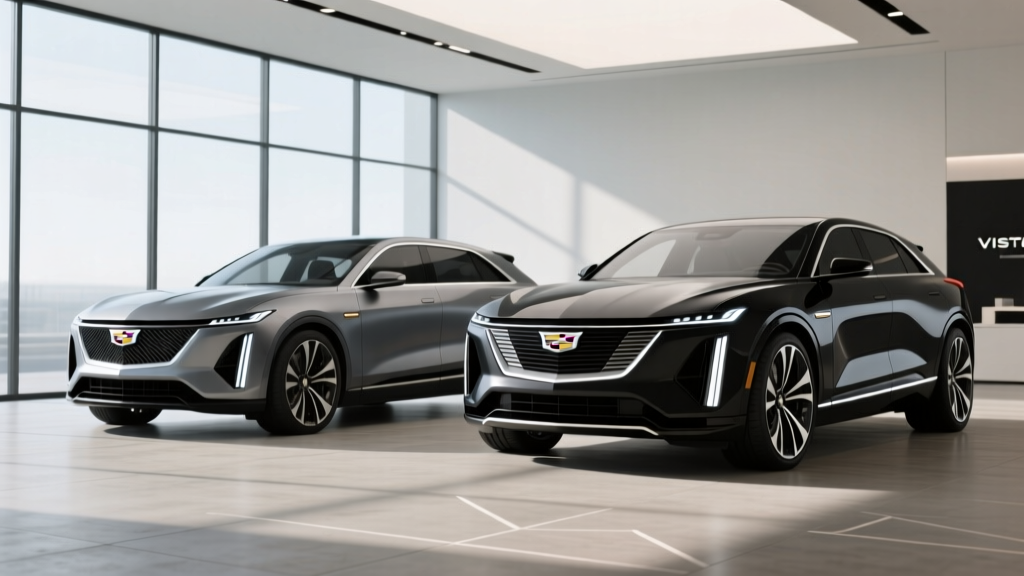
The Cadillac Lyriq and the larger three-row Vistiq represent General Motors' flagship electric SUVs in the luxury segment. But recent manufacturing adjustments — widely referred to as the Cadillac Lyriq Vistiq GM production pause — have left prospective buyers with questions about availability, delivery timelines, and whether these models still make sense in a rapidly evolving EV market. This review breaks down everything you need to know about the 2026 Lyriq and Vistiq, from real-world range and charging performance to pricing after federal tax credits, so you can make an informed decision whether you're ordering now or waiting for production to stabilize.
Understanding the GM Production Pause: What Buyers Need to Know
In early 2026, GM temporarily adjusted production cadences at its Spring Hill, Tennessee assembly plant (Lyriq) and delayed the Vistiq's ramp-up at the same facility. The reasons are multifaceted: supply-chain recalibration for Ultium battery cells, software validation for updated driver-assistance features, and a strategic effort to align build rates with dealer inventory levels. This is not a cancellation or a recall — it's a manufacturing pacing decision that affects order-to-delivery timelines.
For buyers, the practical impact is straightforward: expect longer lead times on custom orders (currently 8–14 weeks for the Lyriq, versus 4–6 weeks before the pause), and limited Vistiq availability at dealerships until Q3 2026. If you need a vehicle immediately, you may need to consider dealer stock or explore competitors. If you can wait, both models remain compelling luxury EVs with competitive specifications.
Cadillac Lyriq 2026: Range, Battery, and Real-World Efficiency
| Specification | RWD (Tech/Luxury) | AWD (Sport) |
|---|---|---|
| EPA Estimated Range | 314 miles | 307 miles |
| Battery Capacity (Usable) | 102 kWh (NMC) | 102 kWh (NMC) |
| Efficiency | 89 MPGe / 37 kWh/100mi | 87 MPGe / 38 kWh/100mi |
| Peak DC Fast Charge | 190 kW | 190 kW |
| 10–80% DC Charge Time | ~33 minutes | ~33 minutes |
| Level 2 Home Charging | 19.2 kW (52 mi/hr) | 19.2 kW (52 mi/hr) |
| 0–60 mph | 6.0 seconds | 4.6 seconds |
| Horsepower | 340 hp | 500 hp |
| Drivetrain | Rear-Wheel Drive | Dual-Motor AWD |
| Cargo Volume (rear seats up) | 28.0 cu ft | 28.0 cu ft |
| Cargo Volume (rear seats folded) | 60.9 cu ft | 60.9 cu ft |
| Base MSRP | $58,590 | $62,090 |
The 102 kWh Ultium battery pack uses nickel-manganese-cobalt (NMC) chemistry, which offers high energy density — essential for achieving over 300 miles in a luxury SUV with substantial sound insulation and features. NMC packs typically show 8–12% degradation over 100,000 miles based on GM's internal testing and third-party fleet data. For buyers prioritizing maximum longevity over energy density, note that GM has not offered an LFP (lithium iron phosphate) variant of the Lyriq, though LFP is appearing in some lower-cost GM models.
Charging Performance: DC Fast Charging and Home Setup
The Lyriq's 190 kW peak DC fast-charge rate is competitive but not class-leading. At a 350 kW Electrify America or EVgo station, the Lyriq will peak near 190 kW in the 10–30% state-of-charge window, then taper progressively. The 10–80% charge takes approximately 33 minutes under ideal conditions (preconditioned battery, warm ambient temperature). In colder weather or without preconditioning, add 5–10 minutes.
| Charging Level | Power (kW) | Miles of Range Added Per Hour | Typical Use Case |
|---|---|---|---|
| Level 1 (120V household) | 1.4 kW | ~4 miles/hr | Emergency / overnight trickle |
| Level 2 (240V, 48A) | 11.5 kW | ~31 miles/hr | Standard home charging |
| Level 2 (240V, 80A) | 19.2 kW | ~52 miles/hr | Upgraded home / workplace |
| DC Fast Charge | Up to 190 kW | ~700+ miles/hr (peak) | Road trips, public stations |
At home, the Lyriq's onboard charger supports up to 19.2 kW on a hardwired 80-amp Level 2 circuit. This is one of the fastest AC charge rates in the luxury EV SUV segment — a full overnight charge from 20% to 100% takes about 5 hours. However, achieving 19.2 kW requires a 100-amp dedicated circuit and appropriate electrical panel capacity. Many homes will need a panel upgrade ($1,500–$3,000) to support this. A more common 48-amp / 11.5 kW setup adds about 31 miles per hour, which is sufficient for most daily driving needs if you plug in overnight.
The Lyriq uses the CCS1 connector standard. GM has committed to transitioning to NACS (Tesla's connector) for future models, but 2026 Lyriq models ship with CCS. GM provides a NACS adapter for Supercharger access, though charging speeds on Superchargers are limited by the adapter's throughput (typically capped around 150 kW).
Cadillac Vistiq 2026: The Three-Row Option
The Vistiq slots above the Lyriq as Cadillac's three-row electric SUV, competing directly with the Rivian R1S, Tesla Model X, and the upcoming electric Volvo EX90. It shares the Ultium platform but stretches it for additional passenger and cargo capacity.
| Specification | AWD (Luxury) | AWD (Sport) |
|---|---|---|
| EPA Estimated Range | 300 miles (est.) | 290 miles (est.) |
| Battery Capacity (Usable) | 102 kWh (NMC) | 102 kWh (NMC) |
| Peak DC Fast Charge | 190 kW | 190 kW |
| 10–80% DC Charge Time | ~35 minutes | ~35 minutes |
| 0–60 mph | 5.5 seconds (est.) | 4.2 seconds (est.) |
| Horsepower | 420 hp (est.) | 600 hp (est.) |
| Passenger Capacity | 7 (2+3+2) | 7 (2+3+2) |
| Cargo (behind 3rd row) | ~15 cu ft (est.) | ~15 cu ft (est.) |
| Base MSRP | $72,000 (est.) | $78,000 (est.) |
Important note: As of mid-2026, the Vistiq is in limited production ramp-up. The specifications above reflect GM's published estimates and early build data; final EPA certification figures may differ. The production pause has delayed widespread dealer availability, with GM targeting broader inventory by Q3–Q4 2026. Buyers placing orders now should expect delivery timelines of 12–20 weeks.
Pricing, Trims, and Federal Tax Credit Eligibility
| Trim | MSRP | Est. Federal Credit (§30D) | Effective Price (if eligible) |
|---|---|---|---|
| Tech (RWD) | $58,590 | $7,500 | $51,090 |
| Luxury (RWD) | $63,590 | $7,500 | $56,090 |
| Sport (AWD) | $62,090 | $7,500 | $54,590 |
| Sport AWD (Loaded) | $72,000+ | $7,500 | $64,500+ |
The Lyriq qualifies for the full $7,500 federal EV tax credit under IRS §30D, provided the buyer meets all eligibility criteria. This credit can now be transferred to the dealer at point of sale, effectively reducing the purchase price upfront rather than waiting for a tax return. However, eligibility is not universal. Key requirements for 2026 include:
- Buyer income caps: Modified adjusted gross income must not exceed $300,000 (joint filers), $225,000 (head of household), or $150,000 (single filers).
- MSRP cap: The Lyriq, as an SUV, falls under the $80,000 MSRP cap (verified via the window sticker including mandatory options but excluding destination).
- Battery sourcing: A percentage of critical minerals and battery components must be sourced from the U.S. or free-trade-agreement countries. GM has confirmed the Lyriq's Ultium cells (manufactured in Ohio and Tennessee via the Ultium Cells joint venture) meet 2026 sourcing thresholds.
- Vehicle assembly: The Lyriq is assembled in Spring Hill, Tennessee, satisfying the North American final assembly requirement.
The Vistiq's tax credit status is more complex. If its MSRP exceeds $80,000 on higher trims (likely on the Sport with premium packages), those configurations would lose eligibility. Buyers targeting the credit should verify the specific build's window sticker against the fueleconomy.gov tax credit lookup tool before ordering.
Interior, Technology, and Driver Assistance
The Lyriq's cabin is where Cadillac's luxury aspirations are most visible. A 33-inch curved LED display spans the instrument cluster and infotainment screen, running Google Built-In with native Google Maps navigation, Google Assistant, and Play Store apps. The system is responsive, though early 2024 models had software bugs that GM has largely addressed through OTA updates in 2025–2026.
Standard features across trims include a panoramic glass roof with electrochromic dimming, a 19-speaker AKG audio system, heated and ventilated front seats, and a power liftgate. The Sport trim adds a more aggressive exterior treatment, 22-inch wheels (which reduce range by ~7 miles vs. 20-inch), and adaptive dampers.
Super Cruise — GM's hands-off-wheel Level 2 driver-assistance system — is standard on Luxury and Sport trims. It operates on over 750,000 miles of mapped divided highways in the U.S. and Canada. Unlike Tesla's Autopilot, Super Cruise uses a driver-facing camera to monitor eye attention rather than steering-wheel torque sensors, which makes for a more natural driving experience. However, it remains a Level 2 system: the driver must remain engaged and ready to take over at any time. It is not autonomous driving.
Notable drawbacks include the absence of a front trunk (frunk) — the Lyriq's Ultium platform packaging uses that space for HVAC and power electronics — and rear-seat legroom (39.6 inches) that trails the Genesis Electrified GV70 (41.1 inches). Cargo space is adequate but not class-leading for the segment.
Lyriq vs. Vistiq vs. Key Competitors: Which Should You Buy?
The production pause affects both models, but their value propositions differ. Here's how they stack up against each other and segment rivals:
| Model | EPA Range | Peak DC Charge | 0–60 mph | Base MSRP | Seating |
|---|---|---|---|---|---|
| Cadillac Lyriq AWD | 307 mi | 190 kW | 4.6 sec | $62,090 | 5 |
| Cadillac Vistiq AWD | ~300 mi (est.) | 190 kW | ~5.5 sec | ~$72,000 | 7 |
| BMW iX xDrive50 | 324 mi | 200 kW | 4.4 sec | $87,250 | 5 |
| Genesis Electrified GV70 | 236 mi | 240 kW | 4.5 sec | $67,850 | 5 |
| Rivian R1S (Dual-Motor) | 352 mi | 220 kW | 4.5 sec | $79,900 | 7 |
| Tesla Model X (Long Range) | 348 mi | 250 kW | 3.8 sec | $79,990 | 5/6/7 |
Warranty, Ownership Costs, and Long-Term Outlook
GM backs the Lyriq and Vistiq with a competitive warranty package:
- Battery & Powertrain: 8 years / 100,000 miles (whichever comes first), covering defects and capacity loss below 70% of original capacity.
- Bumper-to-Bumper: 4 years / 50,000 miles.
- Corrosion: 6 years / 100,000 miles.
- Roadside Assistance: 6 years / 70,000 miles.
The 70% battery capacity retention threshold is standard for the industry, though some competitors (like Hyundai/Kia at 70% over 10 years/100,000 miles) offer longer duration coverage. Real-world degradation data from 2024–2025 Lyriq fleet vehicles suggests approximately 4–6% capacity loss at 50,000 miles under normal use — well within warranty tolerance.
Insurance costs for the Lyriq average $2,200–$2,800 annually (varies by state, driving record, and coverage level), which is in line with luxury EV SUVs but higher than non-electric Cadillac XT5 coverage. Home charging at $0.14/kWh (national average) costs approximately $14.28 for a full 102 kWh charge, yielding a per-mile fuel cost of about $0.045 — roughly one-third the cost of premium gasoline in a comparable ICE SUV.
Pros and Cons at a Glance
- 314-mile EPA range (RWD) is competitive in the luxury SUV segment
- 19.2 kW Level 2 onboard charger enables fast home charging
- Super Cruise is one of the best Level 2 highway systems available
- Quiet, well-insulated cabin with premium materials
- Federal tax credit eligible ($7,500 point-of-sale) on most trims
- Strong 8-year/100,000-mile battery warranty
- Production pause extends order-to-delivery timelines significantly
- No front trunk (frunk) — lost cargo opportunity
- 190 kW peak DC charge rate trails some competitors (240–250 kW)
- Rear-seat legroom is tighter than some rivals
- Vistiq specs still preliminary; EPA certification pending
- CCS connector requires adapter for Tesla Supercharger access
Frequently Asked Questions
What is the real-world range of the 2026 Cadillac Lyriq?
The EPA estimates 314 miles for the RWD model and 307 miles for AWD. In real-world highway driving at 75 mph, expect 265–280 miles. In cold weather (below freezing), plan for 235–255 miles. City driving with regenerative braking can match or slightly exceed the EPA estimate.
How fast does the Lyriq charge at home and on the road?
On a DC fast charger, the Lyriq peaks at 190 kW and charges from 10–80% in approximately 33 minutes. At home on a 19.2 kW Level 2 charger (80-amp circuit), it adds about 52 miles of range per hour, fully charging overnight in roughly 5 hours from 20%. On a standard 48-amp Level 2 (11.5 kW), it adds about 31 miles per hour.
How much does the Cadillac Lyriq cost after the federal tax credit?
The base Tech RWD trim starts at $58,590. With the full $7,500 federal tax credit (applied at point of sale), the effective price drops to $51,090 — assuming you meet IRS income caps and the vehicle's battery sourcing qualifies. Higher trims and AWD configurations will cost more but remain under the $80,000 SUV MSRP cap.
Does the Cadillac Lyriq qualify for the $7,500 federal EV tax credit?
Yes, as of 2026, the Lyriq qualifies for the full $7,500 credit under IRS §30D, provided the buyer meets income limits ($300K joint / $150K single), the MSRP is under $80,000 (it is), and the vehicle passes battery critical-mineral and component sourcing requirements (GM has confirmed compliance). Always verify on fueleconomy.gov before purchasing, as rules can change.
Is the Cadillac Lyriq worth buying versus the BMW iX or Tesla Model X?
The Lyriq offers the best value proposition in the segment when the tax credit is applied — a well-equipped AWD Sport at ~$54,590 after credit undercuts the BMW iX by over $30,000 and the Model X by ~$25,000. However, the iX charges slightly faster (200 kW), has a longer EPA range (324 mi), and is more readily available. The Model X offers the longest range (348 mi) and Supercharger network access natively, but at a much higher price and with a less refined interior. If you prioritize comfort and value, the Lyriq wins. If you need immediate delivery or maximum range, consider the alternatives.
When will the Cadillac Vistiq be widely available?
GM targets broader Vistiq dealer inventory by Q3–Q4 2026 as the Spring Hill plant ramps production. Current lead times on custom orders are 12–20 weeks. Early builds are reaching dealers, but selection is limited. If you need a three-row EV immediately, the Rivian R1S or Tesla Model X are more readily available.
Does Super Cruise make the Lyriq a self-driving car?
No. Super Cruise is a Level 2 driver-assistance system per SAE classification. It provides hands-off-wheel steering, acceleration, and braking on mapped divided highways, but the driver must remain fully attentive, keep their eyes on the road, and be prepared to take over instantly. It does not drive itself in cities, in construction zones, or in adverse weather. No production vehicle sold to consumers in 2026 is fully self-driving.
Sources: EPA range and efficiency data via fueleconomy.gov; Cadillac Lyriq and Vistiq specifications from cadillac.com; IRS §30D tax credit rules from irs.gov.