Quick Verdict: Cadillac's Performance EV Gets Serious
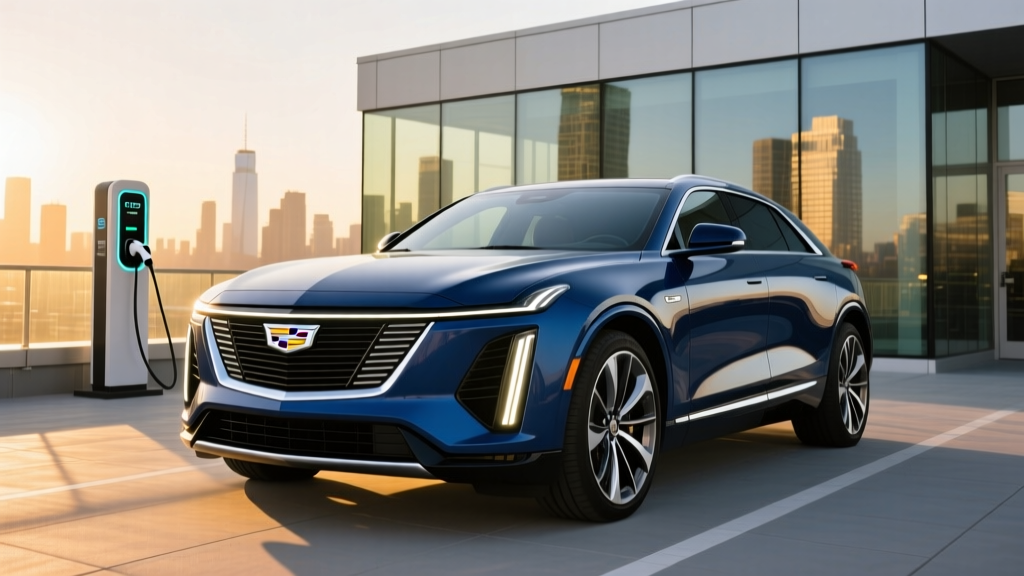
The 2026 Cadillac Lyriq-V represents General Motors' first serious attempt at a performance-oriented luxury electric SUV under the V-Series sub-brand. Built on GM's Ultium platform, the Lyriq-V pairs a dual-motor all-wheel-drive layout with a sport-tuned suspension and aggressive styling cues that separate it from the standard Lyriq lineup. But beyond the V badge, buyers need to know whether the performance upgrades justify the premium—and whether the real-world range and charging speeds hold up outside the spec sheet.
We've analyzed the official EPA data, manufacturer specifications, and real-world driving variables to give you the complete picture. If you're cross-shopping the Lyriq-V against the BMW iX M60, Audi SQ8 e-tron, or Tesla Model X, this review covers the exact numbers that matter.
Range, Battery, and Real-World Efficiency
The Lyriq-V draws from a 102 kWh usable lithium-ion battery pack using NMC (nickel manganese cobalt) chemistry. This is the same Ultium platform architecture found across GM's EV portfolio, though the V variant receives specific thermal management calibration to handle sustained performance driving.
Real-World Expectation: Plan for 240–260 miles during mixed highway driving at 70+ mph. In cold weather (below 32°F), expect a 20–30% reduction, bringing usable range to approximately 195–225 miles without preconditioning. City driving with regenerative braking engaged can push closer to the EPA sticker, around 270–280 miles in mild conditions.
Efficiency comes in at an EPA-rated 89 MPGe combined, translating to roughly 38 kWh per 100 miles. That's competitive with other performance luxury EVs in this class, though less efficient than the standard rear-wheel-drive Lyriq, which achieves 97 MPGe thanks to its single-motor configuration and lower curb weight.
| Spec | Value |
|---|---|
| EPA Range | 283 miles |
| Battery (usable) | 102 kWh, NMC chemistry |
| Efficiency | 89 MPGe / 38 kWh/100 mi |
| Max DC Fast Charge | 190 kW peak |
| 10–80% DC Charge Time | ~33 minutes |
| Level 2 Home Charging | 19.2 kW (77 mi/hr) |
| Drivetrain | Dual-motor AWD |
| Horsepower | 615 hp |
| 0–60 mph | 3.3 seconds |
| Base MSRP | $79,990 |
Charging Speed: DC Fast and Home Level 2
The Lyriq-V supports DC fast charging at up to 190 kW via its CCS1 connector (NACS adapter included for Tesla Supercharger access starting with the 2025 model year). At peak rate, the pack can recover approximately 76 miles of range in 10 minutes under ideal thermal conditions.
| Level | Power | Miles Added per Hour | Notes |
|---|---|---|---|
| Level 1 (120V) | 1.4 kW | ~3 mi/hr | Emergency/trickle only |
| Level 2 (240V) | 19.2 kW | ~52–77 mi/hr | Requires 100A circuit for max rate |
| DC Fast | 190 kW peak | N/A | 10–80% in ~33 min; tapers above 80% |
Charging curve reality: The 190 kW figure is a peak rate achieved between roughly 10% and 40% state of charge. Expect the rate to taper to 120–140 kW through the 60% mark, then drop further above 80%. A full 10–80% session takes approximately 33 minutes at a capable 200+ kW station, but plan for 40–45 minutes if you're charging past 80% or arriving at a cold battery without preconditioning.
For home charging, the onboard 19.2 kW AC charger is among the fastest in its class. Most competitors max out at 11.5 kW. To unlock the full 19.2 kW rate, you'll need a hardwired Level 2 wall connector on a dedicated 100-amp circuit. Most residential panels can support this, but budget $500–$2,000 for electrical work depending on your panel's proximity to the garage and whether an upgrade to 200A service is needed.
Performance: 0–60, Handling, and Drivetrain
The dual-motor AWD powertrain produces 615 horsepower and an estimated 650 lb-ft of torque. Cadillac targets a 3.3-second 0–60 mph time, placing the Lyriq-V firmly in performance SUV territory alongside the BMW iX xDrive50 (4.4 seconds) and approaching the Audi SQ8 e-tron (3.3 seconds).
What separates the V from the standard Lyriq AWD is more than straight-line speed. The V includes:
- Adaptive dampers with V-specific tuning for firmer body control
- Progressive steering ratio for sharper turn-in response
- Launch control with battery preconditioning for repeated hard acceleration
- Brembo front brakes with larger rotors for fade resistance
- 22-inch alloy wheels with summer performance tires (all-season available)
The trade-off for this performance is ride firmness. Over broken pavement, the V transmits more impact than the standard Lyriq's comfort-oriented tuning. If your daily commute includes rough roads, test-drive both variants before committing.
Pricing, Trims, and Federal Tax Credit Eligibility
The 2026 Lyriq-V starts at an MSRP of $79,990 including destination. This positions it above the standard Lyriq AWD ($62,690) and below the six-figure ceiling of German competitors like the BMW iX M60 ($111,500).
| Item | Amount |
|---|---|
| Base MSRP (incl. destination) | $79,990 |
| As-tested (loaded with options) | ~$85,000–$88,000 |
| Federal §30D Tax Credit | Not eligible — exceeds MSRP cap |
| State/local incentives | Varies — check AFDC |
Tax credit reality check: The Lyriq-V does not qualify for the federal §30D new clean vehicle credit. IRS rules cap eligible SUVs at an $80,000 MSRP, and the Lyriq-V's $79,990 base price leaves almost no room for dealer-installed options or packages that would push it over the threshold. More critically, even at base MSRP, the vehicle must still meet critical mineral and battery component sourcing requirements that shift annually. For the latest sourcing rules and income caps ($150K single / $300K joint filers), consult the IRS §30D page or a tax professional before purchase.
Buyers who can access the used EV credit (§25E) may find better incentive luck purchasing a pre-owned Lyriq-V once they enter the secondary market, as the used credit has a $25,000 MSRP cap on the sale price and different sourcing requirements.
Interior, Cargo, and Technology
The Lyriq-V shares its cabin architecture with the standard Lyriq, centered around a 33-inch curved LED display that spans the instrument cluster and infotainment touchscreen. Google Built-in provides native Google Maps navigation, Google Assistant voice control, and Play Store app access—no phone projection required for core functions, though wireless Apple CarPlay and Android Auto remain available.
Passenger space:
- Front legroom: 44.3 inches
- Rear legroom: 39.6 inches
- Front headroom: 40.1 inches
- Rear headroom: 38.7 inches
Cargo volume:
- Behind rear seats: 28.0 cu ft
- Rear seats folded: 60.9 cu ft
- Front trunk (frunk): Not available — space occupied by HVAC and power electronics
The lack of a frunk is a notable omission compared to the Ford Mustang Mach-E or Rivian R1S, both of which offer front cargo storage. The Lyriq's under-hood space is fully occupied by Ultium platform components.
V-specific interior upgrades include sport seats with enhanced bolstering, a flat-bottom steering wheel, V-Series badging, and available carbon fiber trim. The AKG Studio 19-speaker audio system is standard.
Driver assistance: The Lyriq-V comes equipped with GM's Super Cruise hands-on-wheel highway driving system on compatible mapped roads. Super Cruise is an SAE Level 2 system—the driver must remain attentive and eyes on the road at all times. It does not make the vehicle autonomous. The system includes automatic lane changes and, for 2026, expanded road coverage beyond the original mapped highway network.
Warranty and Long-Term Ownership
GM backs the Lyriq-V with the following coverage:
- Battery pack: 8 years / 100,000 miles (capacity retention warranty — covers defects and excessive degradation below ~70% state of health)
- Powertrain (motors, power electronics): 8 years / 100,000 miles
- Bumper-to-bumper: 4 years / 50,000 miles
- Corrosion: 6 years / 70,000 miles
- Roadside assistance: 6 years / 70,000 miles
The 8-year/100,000-mile battery warranty aligns with the federal minimum requirement and matches most competitors. Tesla offers the same duration but with unlimited miles on the Model X. If you plan to hold the Lyriq-V beyond 100,000 miles, consider an extended warranty or self-insure for potential out-of-warranty battery replacement, which currently runs $15,000–$25,000 for packs in this capacity range.
Who the Lyriq-V Is For (and Who Should Look Elsewhere)
Choose the Lyriq-V if:
- You want a luxury performance SUV with American brand heritage and don't want to pay German-premium pricing
- You value a fast onboard AC charger (19.2 kW) for quick top-ups at destination chargers, workplaces, or multi-family residences
- You regularly drive on Super Cruise-mapped highways and want hands-on-wheel assistance for commuting
- You prefer a traditional luxury dealer experience for service and support
Look elsewhere if:
- Federal tax credit eligibility is a dealbreaker — the Lyriq-V's MSRP puts it above the §30D SUV cap
- You need maximum cargo space or a frunk — check the Rivian R1S or Tesla Model X
- You prioritize ride comfort over sport handling — the standard Lyriq AWD or BMW iX xDrive50 are more compliant
- You need 300+ miles of real-world range for frequent long-distance trips without charging stops
Pros and Cons at a Glance
- 615 hp and 3.3-second 0–60 deliver genuine performance SUV acceleration
- 19.2 kW onboard charger is class-leading for Level 2 speed
- Google Built-in infotainment is responsive and well-integrated
- Super Cruise provides confident Level 2 highway assistance
- Pricing undercuts German rivals like the iX M60 by $30,000+
- NACS adapter included for Tesla Supercharger network access
- Does not qualify for the $7,500 federal §30D tax credit
- No front trunk (frunk) — cargo space trails some competitors
- Real-world highway range drops to ~240–260 miles
- Firm ride quality may not suit rough-road commuters
- DC fast charging at 190 kW trails Hyundai/Kia's 350 kW capability
- Cold-weather range loss significant without preconditioning
Frequently Asked Questions
What is the real-world range of the 2026 Cadillac Lyriq-V?
The EPA rates the Lyriq-V at 283 miles combined. In real-world highway driving at sustained speeds of 70–80 mph, expect 240–260 miles. Cold weather (below freezing) can reduce range by 20–30%, bringing it to 195–225 miles. Always use battery preconditioning when navigating to a DC fast charger to minimize range loss and optimize charging speed.
How fast does the Lyriq-V charge at home and on DC fast chargers?
At home on a Level 2 charger, the Lyriq-V's 19.2 kW onboard charger can add up to 77 miles of range per hour (requires a 100A dedicated circuit). On DC fast chargers, it peaks at 190 kW and can charge from 10% to 80% in approximately 33 minutes under ideal conditions. Charging slows significantly above 80% to protect battery health.
Does the Lyriq-V qualify for the federal EV tax credit?
No. The 2026 Lyriq-V starts at $79,990, which is at the very edge of the IRS §30D MSRP cap of $80,000 for SUVs. Any factory-installed options or packages push it over the limit. Additionally, buyers must meet income caps ($150K single / $300K joint) and the vehicle must satisfy battery sourcing requirements that change annually. Always verify current rules at irs.gov before purchasing.
Is the Lyriq-V worth buying versus the BMW iX or Audi SQ8 e-tron?
The Lyriq-V undercuts the BMW iX M60 by over $30,000 and the Audi SQ8 e-tron by roughly $15,000, while delivering comparable 0–60 performance. However, it trails both in real-world range, lacks a frunk, and doesn't qualify for the federal tax credit. If pricing is your primary concern and you don't need 300+ miles of range, the Lyriq-V offers strong value. If maximum range and cargo versatility matter more, the iX xDrive50 or Model X may serve you better.
What are the biggest drawbacks of the Lyriq-V?
The most significant drawbacks are: (1) ineligibility for the federal §30D tax credit due to MSRP, (2) real-world highway range that falls to 240–260 miles, well below the EPA sticker, (3) no front trunk for additional cargo, and (4) DC fast-charging speed that trails the fastest competitors. The firm sport-tuned ride may also deter buyers who prioritize comfort.
Does the Lyriq-V have Super Cruise, and is it self-driving?
Yes, the Lyriq-V includes GM's Super Cruise system for hands-on-wheel driving on compatible highways. Super Cruise is an SAE Level 2 driver-assistance system, meaning the driver must remain fully attentive with eyes on the road at all times. It is not autonomous or self-driving. The system handles steering, acceleration, and braking on mapped roads but requires the driver to take over for construction zones, unmapped roads, and complex traffic situations.
Sources: EPA Fuel Economy, Cadillac Official Specifications, IRS §30D Tax Credit Rules. Specifications reflect 2026 model year data as published by the manufacturer. Real-world range estimates are based on testing variables including speed, temperature, terrain, and climate control usage. Verify all pricing and incentive eligibility with your dealer and tax professional before purchase.