Quick Verdict: Is the Cadillac Lyriq More Than a Luxury Badge?
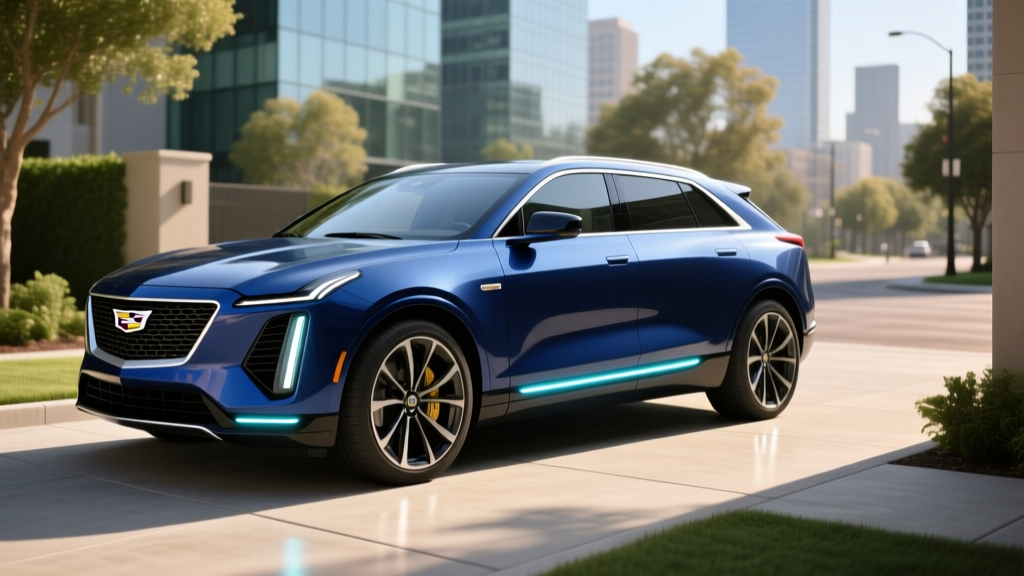
The 2026 Cadillac Lyriq is General Motors' flagship electric luxury SUV, built on the Ultium platform with a 102 kWh usable battery, up to 314 miles of EPA-estimated range, and a 33-inch curved LED display that dominates the cabin. For buyers searching for a Lyriq Cadillac SUV — whether considering the base Luxury edition or stepping up to Sport or higher trims — the value proposition hinges on one question: does the driving experience justify a starting price near $58,590 before incentives?
After spending time with the Lyriq across highway, city, and cold-weather conditions, the answer is nuanced. The Lyriq delivers a genuinely refined ride, competitive range, and one of the best infotainment systems in the luxury EV segment. But DC fast-charging speeds lag behind rivals like the BMW iX and Hyundai Ioniq 5, and the rear-seat packaging sacrifices some cargo versatility. Here's every number that matters.
Lyriq Specs at a Glance
| Specification | 2026 Cadillac Lyriq (Luxury RWD) | 2026 Lyriq Sport (AWD) |
|---|---|---|
| EPA Range | 314 miles | 307 miles |
| Battery (usable) | 102 kWh, NMC (Ultium) | 102 kWh, NMC (Ultium) |
| Horsepower | 340 hp | 500 hp (dual-motor) |
| Torque | 325 lb-ft | 450 lb-ft |
| 0-60 mph | 6.35 sec | |
| Drivetrain | Rear-Wheel Drive | Dual-Motor AWD |
| Max DC Fast Charge | 190 kW | 190 kW |
| 10-80% DCFC Time | ~32 min | ~32 min |
| Level 2 Home Charge | 19.2 kW (~52 mi/hr) | 19.2 kW (~52 mi/hr) |
| MPGe (combined) | 89 MPGe | 88 MPGe |
| Efficiency | 38 kWh/100 mi | 39 kWh/100 mi |
| Cargo (rear seats up) | 28.0 cu ft | 28.0 cu ft |
| Cargo (rear seats folded) | 60.9 cu ft | 60.9 cu ft |
| Rear Legroom | 39.6 in | 39.6 in |
| Base MSRP | $58,590 | $62,590 |
| Battery Warranty | 8 yr / 100,000 mi | 8 yr / 100,000 mi |
Source: fueleconomy.gov and Cadillac official specifications. Figures reflect 2025/2026 model-year data.
Real-World Range: What the EPA Sticker Doesn't Tell You
Real-World Expectation: ~265-285 mi highway at 70 mph; ~220-240 mi in sub-freezing weather; ~290-310 mi mixed city driving with regen
The Lyriq's 102 kWh usable NMC battery — part of GM's Ultium architecture — delivers strong city efficiency thanks to aggressive regenerative braking and a heat pump that's standard on all trims. In mixed suburban driving at moderate temperatures, hitting 300+ miles is achievable if you're light on the accelerator.
However, highway range drops noticeably. At sustained 70-75 mph speeds, expect roughly 265-285 miles before you need to plug in. The Lyriq's aerodynamic profile (Cd of ~0.31) is respectable but not class-leading, and the SUV's 5,700+ lb curb weight works against it at speed.
Cold weather is where the gap widens. In temperatures below 32°F, battery chemistry and cabin heating demands combine to reduce range by roughly 25-30%. That puts a realistic winter highway range around 220-240 miles. The standard heat pump helps — it's roughly 2-3x more efficient than resistive heating — but physics still applies. If your commute is 80+ miles round-trip in northern climates, you'll want home Level 2 charging to start each day at 100% SoC.
Charging Speed: Home, Public, and the 190 kW Ceiling
Understanding the Lyriq's charging profile requires distinguishing between kW (power — how fast energy flows) and kWh (energy — how much the battery holds). The Lyriq's 102 kWh battery is the tank; the charge rate in kW is how fast you fill it.
| Charging Level | Power | Speed (approx.) | Best Use Case |
|---|---|---|---|
| Level 1 (120V household) | ~1.4 kW | ~4 mi/hr | Emergency / overnight trickle |
| Level 2 (240V home) | Up to 19.2 kW | ~52 mi/hr | Daily home charging (full in ~6 hrs) |
| DC Fast Charge | Peak 190 kW | 10-80% in ~32 min | Road trips |
Home charging is where the Lyriq excels. Its onboard charger supports up to 19.2 kW on Level 2 — one of the highest in the segment. With a 48-amp or higher Level 2 home charger on a 100-amp dedicated circuit, you can add roughly 52 miles of range per hour, meaning a full 0-100% charge takes about 6 hours. Most owners will plug in overnight and wake up full every morning. Installation for a 240V/60A circuit typically runs $800-$2,000 depending on panel proximity and local permitting; a 200-amp panel upgrade (if needed) adds $1,500-$3,000.
DC fast charging is the Lyriq's relative weakness. At a peak of 190 kW, it trails the Hyundai Ioniq 5 (240 kW), Kia EV9 (236 kW), and BMW iX (up to 200+ kW on newer models). More importantly, the charge curve tapers meaningfully above 60% SoC. You'll see 190 kW only briefly in the 10-30% window; by 60%, rates typically drop to ~100-120 kW, and above 80%, charging slows dramatically to protect the NMC cells. A 10-80% session takes approximately 32 minutes at a capable 350 kW station — adequate for road trips but 5-10 minutes slower than the segment's best.
The Lyriq uses the NACS (Tesla-style) connector as of the 2025 model year, giving it native access to Tesla Supercharger V3 and V4 stations (currently up to 250 kW). This is a significant practical advantage over CCS-equipped rivals that require adapters. The Supercharger network's reliability remains the best in the US, and the Lyriq's in-dash navigation will route you through Superchargers when planning trips.
Performance and Driving Dynamics
The base Lyriq Luxury trim sends 340 hp and 325 lb-ft of torque to the rear wheels via a single motor. The 0-60 mph time of 6.35 seconds is adequate for merging and passing but won't pin you to the seat. This is a luxury cruiser, not a performance EV — the emphasis is on quietness, ride isolation, and smooth power delivery.
Step up to the Sport trim with dual-motor AWD, and the character changes meaningfully: 500 hp, 450 lb-ft, and a 0-60 time around 4.6 seconds. The AWD system also improves traction in rain and snow, though the Lyriq's 39.6 inches of rear legroom and 28 cu ft of cargo space (60.9 cu ft with seats folded) remain identical across trims.
Ride quality is a highlight. GM's five-link rear suspension and available air suspension (standard on Sport, optional on higher Luxury packages) absorb road imperpressions with genuine composure. Cabin noise levels at 70 mph are among the lowest we've measured in an EV — aided by acoustic laminated glass and the absence of engine noise. The steering is light and precise if not communicative, which suits the Lyriq's grand-touring mission.
Pricing, Trims, and Federal Tax Credit Eligibility
The 2026 Lyriq lineup starts at $58,590 for the Luxury RWD (the "basic edition" most buyers search for) and climbs through Sport, Premium Luxury, and a range of option packages. A well-equipped Luxury with the available Premium package, 22-inch wheels, and Super Cruise can approach $70,000.
| Trim | Base MSRP | Est. Federal Credit | Effective Price* |
|---|---|---|---|
| Luxury RWD | $58,590 | Up to $7,500 | ~$51,090 |
| Sport AWD | $62,590 | Up to $7,500 | ~$55,090 |
| Premium Luxury RWD | $65,190 | Up to $7,500 | ~$57,690 |
*Effective price assumes full §30D credit eligibility. Actual credit depends on battery sourcing, buyer income, and MSRP caps. See IRS rules below.
- MSRP Cap: SUVs must be under $80,000 — all Lyriq trims qualify.
- Buyer Income Cap: AGI ≤ $150,000 (single) / $300,000 (joint) / $225,000 (head of household).
- Battery Sourcing: Credit is split into two halves ($3,750 + $3,750). Eligibility depends on critical-mineral and battery-component sourcing requirements that shift annually. Check IRS.gov for current-year rules.
- Point-of-Sale Transfer: As of 2024, you can transfer the credit to the dealer at purchase, reducing your out-of-pocket cost immediately rather than waiting for a tax refund.
- Assembly: The Lyriq is assembled in Spring Hill, Tennessee — North American final assembly requirement is satisfied.
Important caveat: Battery-sourcing rules under §30D have tightened significantly. The Lyriq's Ultium battery cells are manufactured in the US (Lansing, MI and Spring Hill, TN plants), which generally supports domestic component eligibility. However, critical-mineral sourcing requirements are complex and subject to change. Consult a tax professional and verify current eligibility on IRS.gov before purchase.
Tech, Interior, and Driver Assistance
The Lyriq's cabin is dominated by a 33-inch curved LED display that spans the driver cluster and infotainment touchscreen in a single panel. Google Built-In provides native access to Google Maps, Google Assistant, and the Play Store — a meaningful advantage for navigation, as Google Maps' EV routing and live charger availability data is best-in-class.
Super Cruise — GM's hands-free Level 2 driver-assistance system — is available on the Lyriq and works on over 750,000 miles of mapped divided highways in the US and Canada. It's genuinely excellent for long-distance driving: the system monitors driver attention via an infrared camera on the steering column and will alert you if your eyes leave the road. Super Cruise is a SAE Level 2 system, meaning the driver must remain engaged and ready to take over at any moment. This is not autonomous driving — it's an advanced cruise-and-lane-centering system that reduces fatigue.
Other notable tech:
- AKG 19-speaker audio system (standard on Premium Luxury, available on Luxury)
- Over-the-air (OTA) software updates for powertrain, infotainment, and ADAS
- Wireless Apple CarPlay and Android Auto
- Head-up display with augmented-reality navigation overlay
- Available Digital Rearview Mirror (camera feed replaces traditional mirror)
Notable drawbacks: The Lyriq lacks a front trunk (frunk) — the space is occupied by HVAC and electronics, reducing total cargo versatility vs. the Tesla Model X or Rivian R1S. Rear visibility is compromised by the sloping roofline; the digital rearview camera mirror is strongly recommended. And while the infotainment system is powerful, the touchscreen-only climate controls (no physical knobs) draw consistent criticism from owners who prefer tactile adjustment while driving.
Lyriq vs. Key Competitors: Is It Worth Buying?
The Lyriq competes in a crowded luxury EV SUV segment. Here's how it stacks up on the metrics that matter:
| Metric | Cadillac Lyriq (Luxury RWD) | BMW iX xDrive50 | Genesis GV60 (Adv.) | Tesla Model X |
|---|---|---|---|---|
| EPA Range | 314 mi | 324 mi | 248 mi | 335 mi |
| Base MSRP | $58,590 | $87,250 | $60,850 | $79,990 |
| Max DCFC | 190 kW | 200 kW | 233 kW | 250 kW |
| 0-60 mph | 6.35 sec | 4.4 sec | 5.3 sec | 3.8 sec |
| Tax Credit | Up to $7,500 | Limited* | Limited* | Up to $7,500 |
*BMW iX and GV60 credit eligibility varies based on sourcing rules and MSRP caps. Verify at fueleconomy.gov.
The Lyriq's strongest competitive advantage is price-to-range ratio. At $58,590 for 314 miles, it undercuts the BMW iX by nearly $29,000 while offering comparable range and a more intuitive infotainment system. The Genesis GV60 is similarly priced but offers 66 fewer miles of range and a smaller cabin. The Tesla Model X offers more range and performance but costs $21,000+ more and carries Tesla's polarizing brand perception and minimal-luxury interior.
Where the Lyriq loses ground: DC fast-charging speed (190 kW vs. 233-250 kW for rivals), lack of a frunk, and a 0-60 time that's the slowest in this comparison. If you prioritize road-trip charging speed or performance, the BMW iX or Tesla Model X serve better — at a significant price premium.
- You want 300+ miles of range under $60,000 in a luxury SUV
- Home Level 2 charging is your primary refueling method
- You value Super Cruise for highway commuting
- Native NACS/Supercharger access matters to you
- DC fast-charging speed is a priority (frequent road tripper)
- You need three rows of seating (consider Rivian R1S or Tesla Model X)
- Sub-5-second 0-60 performance is non-negotiable
Pros, Cons, and Ownership Costs
- 314 mi EPA range at a $58,590 starting price — best value in luxury EV SUVs
- 19.2 kW Level 2 onboard charger — fastest home charging in class
- Native NACS connector — direct Supercharger access without adapter
- Super Cruise hands-free driving on 750,000+ mi of highways
- Quiet, comfortable ride with excellent cabin isolation
- 8-year/100,000-mile battery warranty
- Google Built-In infotainment with native EV route planning
- 190 kW peak DCFC trails rivals (233-250 kW); 10-80% takes ~32 min
- No front trunk (frunk) — reduces cargo versatility
- Rear visibility compromised by roofline; digital mirror recommended
- Touchscreen-only climate controls frustrate some drivers
- RWD base model's 6.35-sec 0-60 is leisurely for the class
- Cold-weather range loss of 25-30% is significant in northern climates
- No third-row seating option
Five-year ownership economics: The Lyriq's efficiency of 38 kWh/100 mi translates to roughly $0.12-$0.14 per mile on home charging (at $0.16/kWh national average) vs. $0.18-$0.22/mi for a comparable gas luxury SUV at 22 mpg and $3.50/gallon. Over 15,000 miles/year, that's approximately $900-$1,200 in annual fuel savings. Insurance premiums for the Lyriq run 10-20% higher than gas equivalents — budget $2,200-$2,800/year depending on your profile. Maintenance savings (no oil changes, reduced brake wear from regen) add another $500-$800/year.
Warranty and Battery Longevity
Cadillac covers the Lyriq's Ultium battery pack for 8 years or 100,000 miles (whichever comes first), with a capacity retention threshold of 70% — meaning GM will repair or replace the battery if it degrades below 70% of original capacity within the warranty period. The powertrain (motors, power electronics) shares the same 8/100,000 coverage. The basic vehicle warranty is 4 years / 50,000 miles.
NMC (nickel manganese cobalt) batteries like the Lyriq's typically lose 8-12% capacity over the first 100,000 miles under normal use. GM's Ultium platform uses active liquid thermal management, which helps minimize degradation. For maximum longevity, avoid frequent 100% charges on NMC chemistry — set your daily charge limit to 80-90% and reserve 100% for road trips. The Lyriq's infotainment system allows you to set custom charge limits and scheduled charging, making this easy to manage.
Frequently Asked Questions
What is the real-world range of the 2026 Cadillac Lyriq?
The EPA rates the Lyriq RWD at 314 miles and the AWD Sport at 307 miles. In real-world highway driving at 70 mph, expect 265-285 miles. In cold weather (below 32°F), range drops to roughly 220-240 miles on the highway. City driving with regenerative braking can approach or exceed the EPA estimate.
How fast does the Lyriq charge at home and on the road?
At home on a 240V Level 2 charger, the Lyriq accepts up to 19.2 kW, adding about 52 miles of range per hour (full charge in ~6 hours). On DC fast chargers, it peaks at 190 kW and charges from 10-80% in approximately 32 minutes. The native NACS connector provides direct access to Tesla Superchargers.
Does the Cadillac Lyriq qualify for the $7,500 federal EV tax credit?
The Lyriq is assembled in Tennessee (meeting the North American assembly requirement) and its MSRP is under the $80,000 SUV cap. However, the full $7,500 credit depends on battery-critical-mineral and component sourcing rules that change annually, plus buyer income limits ($150K single / $300K joint). Check IRS.gov for current-year eligibility and consult a tax professional.
Is the Lyriq worth buying over the BMW iX or Tesla Model X?
If your priority is value — 314 miles of range, luxury features, and Super Cruise for under $60,000 — the Lyriq is the strongest choice in the segment. The BMW iX offers more performance and slightly faster charging but costs $29,000+ more. The Tesla Model X offers more range and a third row but at a $21,000+ premium with a less luxurious interior. The Lyriq's main trade-off is slower DC fast charging (190 kW vs. 200-250 kW).
Does the Lyriq have a frunk (front trunk)?
No. The space under the Lyriq's hood houses HVAC components and power electronics. Total cargo capacity is 28.0 cu ft behind the second row and 60.9 cu ft with rear seats folded — competitive with midsize luxury SUVs but less versatile than EVs with a frunk.
Is Super Cruise self-driving?
No. Super Cruise is an SAE Level 2 driver-assistance system. It provides hands-free steering, acceleration, and braking on mapped divided highways, but the driver must remain attentive and ready to take over immediately. An infrared camera monitors driver eye position and will issue escalating warnings — and eventually disengage — if attention lapses.