Quick Verdict: The Lyriq Sport Balances Luxury and Pragmatism
The 2026 Cadillac Lyriq Sport occupies a narrow but compelling lane: a premium two-row electric crossover that prioritizes ride comfort, cabin refinement, and a usable 314-mile EPA range over outright performance theatrics. Built on GM's Ultium platform with a 102 kWh (usable) NMC battery, the Lyriq Sport (formerly the Sport trim, now part of Cadillac's streamlined 2026 lineup) delivers a polished daily-driver experience with DC fast charging that peaks at 190 kW.
But the Lyriq isn't without compromises. Its real-world highway range drops noticeably below the EPA sticker, charging speeds trail the class-leading Hyundai Ioniq 5 and Kia EV6, and the federal §30D tax credit eligibility hinges on battery-sourcing rules that buyers must verify at the point of sale. Here's everything you need to know before signing.
Range and Efficiency: EPA vs. Reality
Real-World Expectation: ~255–280 miles at sustained highway speeds (70–75 mph); ~220–240 miles in cold weather (below 30°F) with cabin heat
Efficiency: 89 MPGe combined (RWD) / 88 MPGe combined (AWD) — approximately 36 kWh per 100 miles
The Lyriq's 102 kWh usable battery (NMC chemistry, GM's Ultium pouch cells) provides a substantial energy buffer, but the vehicle's 5,700+ lb curb weight and upright crossover profile work against highway efficiency. In EPA testing, the RWD Lyriq achieves 314 miles — a credible figure for daily commuting and suburban driving where regenerative braking recovers energy.
On a 250-mile highway loop at 72 mph in moderate temperatures (55–65°F), expect to consume roughly 38–40 kWh/100mi, translating to approximately 255–280 miles of range. Cold weather is the Lyriq's Achilles heel: without a standard heat pump (GM uses a resistive PTC heater supplemented by waste-heat recovery), winter range at 20°F can fall to 220–240 miles. This isn't unusual for the segment, but buyers in northern climates should plan accordingly.
| Spec | RWD | AWD (Dual-Motor) |
|---|---|---|
| EPA Range | 314 mi | 307 mi |
| Battery (Usable) | 102 kWh, NMC (Ultium pouch) | |
| Horsepower | 340 hp | 500 hp |
| 0–60 mph | 6.0 sec | 4.6 sec |
| Drivetrain | Rear-Wheel Drive | Dual-Motor AWD |
| MPGe (City/Hwy/Combined) | 95 / 82 / 89 | 93 / 81 / 88 |
| DC Fast Charge (Peak) | 190 kW | |
| 10–80% DC Time | ~33 minutes | |
| Level 2 Charge Rate | 11.5 kW (~31 mi/hr) | |
| Cargo (Behind Rear Seats) | 28.0 cu ft | |
| Cargo (Rear Seats Folded) | 60.9 cu ft | |
| Rear Legroom | 39.6 in | |
| Curb Weight | 5,765 lb | 5,891 lb |
| Battery Warranty | 8 years / 100,000 miles | |
| Base MSRP | $58,590 | $62,090 |
Charging: 190 kW Peak, But Watch the Curve
The Lyriq supports DC fast charging at up to 190 kW via its CCS1 connector (a NACS adapter is available for Tesla Supercharger access). A 10–80% session takes approximately 33 minutes under ideal conditions — competitive with the BMW iX and Audi Q8 e-tron, but notably slower than the Hyundai Ioniq 5's 18-minute 10–80% sprint at 240 kW.
The charging curve is where real-world context matters. The Lyriq sustains close to its 190 kW peak from roughly 10–40% state of charge, then tapers progressively. From 60–80%, expect charge rates to drop to 70–90 kW. This means the final 20% of a DC session takes nearly as long as the first 40%. On a road trip, the optimal strategy is to charge to 70–75% and drive on rather than wait for 80%.
| Charging Level | Power (kW) | Speed (Miles/Hour) | Notes |
|---|---|---|---|
| Level 1 (120V / 12A) | 1.4 kW | ~3 mi/hr | Emergency/trickle only |
| Level 2 (240V / 48A) | 11.5 kW | ~31 mi/hr | Full charge in ~10 hours |
| DC Fast (Peak) | 190 kW | ~150 mi in 20 min | 10–60% range; tapers above 60% |
| DC Fast (10–80%) | — | — | ~33 minutes total |
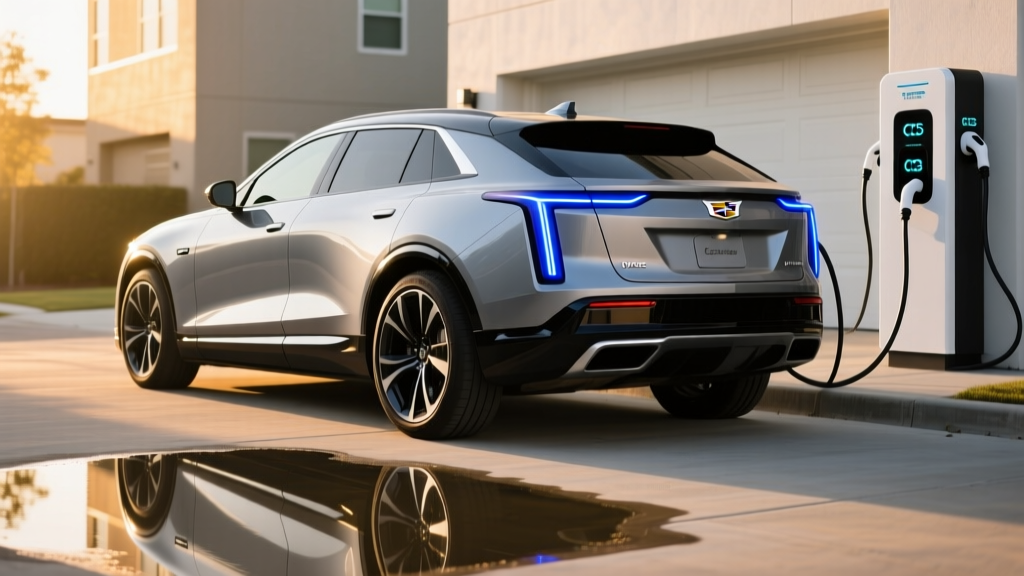
At home on a 48-amp Level 2 circuit (requiring a 60-amp breaker), the Lyriq adds approximately 31 miles of range per hour — enough to fully replenish the battery overnight. Home charging installation typically costs $800–$2,500 depending on panel capacity and conduit run; a 200-amp electrical panel is usually sufficient.
Performance and Driving Dynamics
The RWD Lyriq delivers 340 horsepower and a 6.0-second 0–60 mph time — brisk enough for confident highway merging but not sports-car territory. The dual-motor AWD variant bumps output to 500 hp and drops the 0–60 to 4.6 seconds, which transforms the Lyriq into a genuinely quick luxury crossover.
Where the Lyriq excels is ride quality. GM's five-link rear suspension and standard continuous damping control absorb road imperfections with a composure that rivals the Genesis Electrified GV70 and outclasses the stiffer-riding Tesla Model Y. Steering is light but precise, and the regenerative braking system offers adjustable levels including a one-pedal driving mode via steering-wheel paddles.
One limitation: the Lyriq's 5,700+ lb mass is noticeable during aggressive cornering. This is a grand-touring cruiser, not a canyon carver. Towing capacity is rated at 1,500 lbs — adequate for a small utility trailer but not a camper.
Interior, Tech, and Driver Assistance
The Lyriq's cabin is where Cadillac's luxury ambitions are most evident. The centerpiece is a 33-inch curved LED display spanning the instrument cluster and infotainment screen, running Google Built-In with native Google Maps, Google Assistant, and access to the Play Store. Wireless Apple CarPlay and Android Auto are standard.
Material quality is high — open-pore wood, leather seating surfaces (standard on Luxury and above), and soft-touch materials throughout. The panoramic fixed glass roof floods the cabin with light, though it does reduce headroom slightly for taller rear passengers.
Cargo space measures 28.0 cubic feet behind the rear seats and 60.9 cubic feet with the 60/40 split rear seats folded — competitive with the Audi Q8 e-tron but less than the Tesla Model Y's 30.2/76.2 cu ft. Notably, the Lyriq has no front trunk (frunk); the space is occupied by HVAC and power electronics.
Driver Assistance: The Lyriq comes standard with GM's Super Cruise on equipped trims — a Level 2 hands-free driving system operational on over 750,000 miles of mapped highways in the US and Canada. Super Cruise uses a driver-facing camera to monitor attention and will slow the vehicle to a stop if the driver becomes unresponsive. It is not autonomous driving — the driver must remain alert and is legally responsible for vehicle operation at all times.
Pricing, Trims, and Federal Tax Credit
The 2026 Cadillac Lyriq starts at $58,590 for the RWD Luxury trim (including destination). The AWD dual-motor variant adds $3,500, bringing the base AWD to $62,090. Higher trims (Sport, Premium Luxury) push pricing into the $65,000–$72,000 range with features like AKG 19-speaker audio, upgraded leather, and advanced parking assist.
| Trim | MSRP | After §30D Credit (if eligible) | Effective Price |
|---|---|---|---|
| Luxury RWD | $58,590 | –$7,500 | $51,090 |
| Luxury AWD | $62,090 | –$7,500 | $54,590 |
| Sport RWD | $63,590 | –$7,500 | $56,090 |
| Premium Luxury AWD | $71,090 | –$7,500 | $63,590 |
Federal Tax Credit Eligibility (§30D): The Lyriq is assembled in Spring Hill, Tennessee, which satisfies the North American final-assembly requirement. However, the full $7,500 credit depends on two additional criteria that change frequently:
- MSRP Cap: SUVs must be priced at or below $80,000 — all Lyriq trims qualify.
- Buyer Income Cap: Modified AGI must not exceed $150,000 (single), $225,000 (head of household), or $300,000 (joint). Verify against your tax situation.
- Battery Component & Critical Mineral Sourcing: A percentage of battery components must be manufactured or assembled in North America, and critical minerals must be sourced from the US or FTA partners. These thresholds increase annually. Check the IRS clean vehicle credit page for current-year sourcing requirements and the official eligible-vehicle list before purchasing.
- Point-of-Sale Transfer: As of 2024, buyers can transfer the credit to the dealer at purchase, reducing the purchase price directly rather than waiting for a tax refund.
Important: Battery-sourcing rules have disqualified several GM models in prior years. Confirm the Lyriq's eligibility on fueleconomy.gov at the time of purchase — eligibility can change with supply-chain shifts.
Warranty and Long-Term Ownership
GM backs the Lyriq's battery and powertrain with an 8-year / 100,000-mile warranty, with a capacity-retention threshold of 60% (if the battery degrades below 60% of original capacity within the warranty period, GM will repair or replace it). The limited vehicle warranty is 4 years / 50,000 miles, with 6 years / 70,000 miles of corrosion coverage.
NMC Ultium cells have demonstrated moderate degradation in early Lyriq model years — approximately 5–8% capacity loss over the first 50,000 miles based on owner-reported data, which is within the industry norm for NMC chemistry. To maximize longevity, avoid routinely charging to 100% on DC fast chargers and try to keep the battery between 20–80% for daily use. The Lyriq's battery management system includes a buffer (roughly 5–7 kWh above and below the usable window) to protect against deep discharge and overcharge.
Who Should Buy the Cadillac Lyriq Sport?
- You prioritize ride comfort and cabin quietness over sporty handling
- You want a luxury EV with Super Cruise for highway commuting
- You need 300+ miles of EPA range and can charge at home
- You value a traditional luxury aesthetic over Tesla's minimalist approach
- You need the fastest DC charging in the segment (see Ioniq 5, EV6)
- You require three rows or maximum cargo space (see Kia EV9, Rivian R1S)
- You regularly tow more than 1,500 lbs
- You live in a region with extreme cold and no garage charging
Lyriq vs. Key Competitors
| Spec | Cadillac Lyriq RWD | BMW iX xDrive50 | Genesis Electrified GV70 | Tesla Model Y LR |
|---|---|---|---|---|
| EPA Range | 314 mi | 324 mi | 236 mi | 330 mi |
| Battery (Usable) | 102 kWh | 105.2 kWh | 77.4 kWh | 75 kWh |
| Peak DC Charge | 190 kW | 150 kW | 240 kW | 250 kW |
| 10–80% DC Time | ~33 min | ~35 min | ~18 min | ~20 min |
| 0–60 mph | 6.0 sec | 4.6 sec | 4.5 sec | 5.0 sec |
| Base MSRP | $58,590 | $87,250 | $68,050 | $47,740 |
| Cargo (Rear Up) | 28.0 cu ft | 35.5 cu ft | 28.7 cu ft | 30.2 cu ft |
| Hands-Free ADAS | Super Cruise | Highway Assistant | None | Autopilot (no hands-free) |
The Lyriq's value proposition is strongest against the BMW iX — offering comparable range and luxury at roughly $28,000 less. Against the Tesla Model Y, the Lyriq sacrifices charging speed and cargo space but wins decisively on ride quality, cabin materials, and Super Cruise. The Genesis Electrified GV70's shorter range (236 mi EPA) makes it better suited as a commuter car than a road-trip vehicle.
Pros
- 314-mile EPA range is competitive and sufficient for most road trips
- Ride quality and cabin isolation are class-leading
- Super Cruise is one of the best Level 2 highway systems available
- Google Built-In infotainment is responsive and well-integrated
- Qualifies for §30D credit (verify sourcing rules at purchase)
Cons
- 190 kW peak DC charging trails segment leaders (Ioniq 5 at 240 kW)
- No front trunk (frunk) — lost cargo utility
- Highway real-world range drops to ~255–280 mi
- Heavy at 5,765+ lbs — affects handling and cold-weather efficiency
- No heat pump standard — resistive heating hurts winter range
Frequently Asked Questions
What is the real-world range of the Cadillac Lyriq?
The EPA rates the RWD Lyriq at 314 miles and the AWD at 307 miles. In real-world highway driving at 70–75 mph in moderate temperatures, expect 255–280 miles. In cold weather (below 30°F), range can drop to 220–240 miles due to battery resistance and cabin heating demands.
How fast does the Lyriq charge at home and on the road?
On a 48-amp Level 2 home charger, the Lyriq charges at 11.5 kW, adding about 31 miles of range per hour (full charge in ~10 hours). On DC fast chargers, it peaks at 190 kW, achieving a 10–80% charge in approximately 33 minutes — though the charge rate tapers significantly above 60% SoC.
Does the Cadillac Lyriq qualify for the $7,500 federal tax credit?
The Lyriq is assembled in Tennessee (meeting the North American assembly requirement) and all trims fall under the $80,000 SUV MSRP cap. However, the full $7,500 credit depends on current-year battery component and critical mineral sourcing rules, plus buyer income limits ($150K single / $300K joint). Always verify eligibility on the IRS clean vehicle credit page and fueleconomy.gov before purchasing.
Is the Lyriq worth buying over the Tesla Model Y or BMW iX?
If ride comfort, cabin luxury, and Super Cruise are your priorities, the Lyriq is an excellent choice at its price point. It undercuts the BMW iX by nearly $30,000 while offering comparable range. Against the Model Y, you trade charging speed and cargo space for a far more refined driving experience. For budget-conscious buyers, the Model Y remains the value leader.
What are the biggest drawbacks of the Lyriq?
The Lyriq's 190 kW DC charging peak is below the segment standard set by Hyundai/Kia's 800V architecture (240+ kW). The lack of a frunk reduces cargo flexibility, and the vehicle's 5,700+ lb weight contributes to noticeable highway and cold-weather range loss. The absence of a standard heat pump also affects winter efficiency.
How long will the Lyriq's battery last?
GM warrants the Ultium battery for 8 years / 100,000 miles against degradation below 60% of original capacity. Based on early owner data, NMC Ultium cells lose approximately 5–8% capacity in the first 50,000 miles — suggesting the battery should retain 85–90% capacity at 100,000 miles with normal use. Avoiding routine 100% charges and extreme heat exposure will maximize longevity.