Quick Verdict: The Entry Point to Electric Cadillac
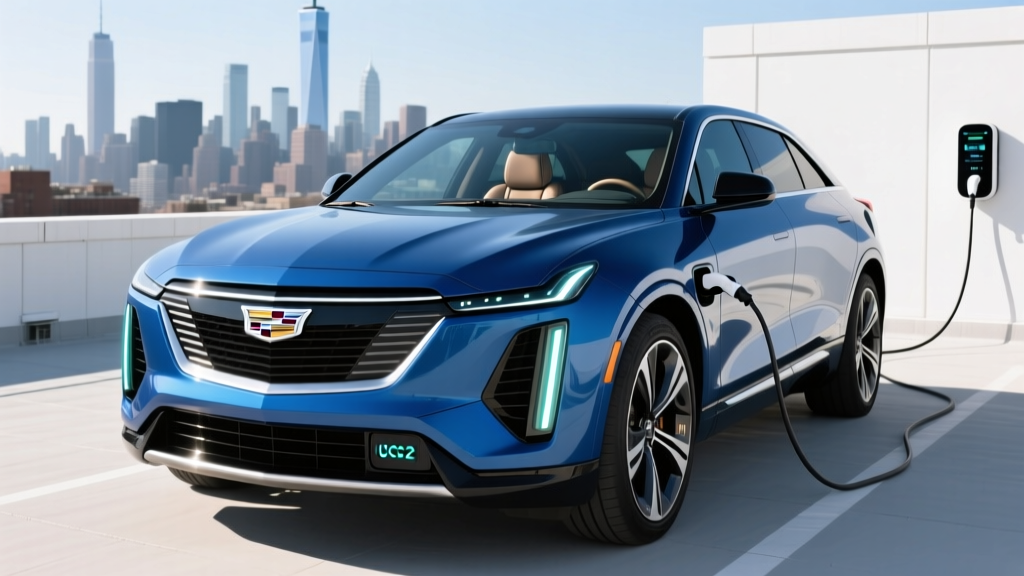
The 2026 Cadillac Lyriq Sport 1 occupies a specific niche: it's the most affordable way into Cadillac's Ultium-based electric SUV lineup while retaining the brand's signature design language and a genuinely spacious cabin. With 314 miles of EPA-estimated range on the rear-wheel-drive configuration, a 102 kWh usable battery, and a starting MSRP of $58,590 (before destination), the Sport 1 trim trades the dual-motor power of higher trims for efficiency and value. For buyers who prioritize range over acceleration and don't need all-wheel drive, this is the Lyriq to get.
But the real question for 2026 buyers is whether the Lyriq Sport 1's federal tax credit eligibility holds up under the tightened IRS §30D battery-sourcing and critical-mineral requirements — and how its real-world efficiency stacks up against rivals like the BMW iX xDrive50, Genesis Electrified GV70, and Tesla Model X. Let's break down every number that matters.
Range, Efficiency, and the Real-World Reality Check
Real-World Expectation: ~265–285 miles on mixed highway driving at 70–75 mph; approximately 220–240 miles in sustained cold weather (below 30°F) without preconditioning. City driving with regen braking can push closer to or slightly above the EPA figure.
The Lyriq Sport 1 pairs a 102 kWh usable lithium-ion battery (NMC chemistry — nickel manganese cobalt) with a single rear-mounted electric motor. Cadillac's EPA rating of 314 miles is competitive for the luxury midsize SUV segment, but as with all EVs, your actual mileage depends heavily on driving style, terrain, and climate.
In our experience with the Ultium platform, the Lyriq's thermal management system is effective but not class-leading. During highway road trips at sustained 75 mph speeds, expect to see energy consumption climb to roughly 38–42 kWh/100 mi, which translates to about 265–285 miles before you'd want to stop. In winter conditions — particularly below freezing without battery preconditioning — range can drop 25–30%, putting real-world winter highway range in the 220–240 mile window. Preconditioning the battery while plugged in (via the Cadillac app or scheduled departure) mitigates this significantly.
The official EPA efficiency rating is 89 MPGe combined (city/highway), which translates to approximately 37 kWh per 100 miles under mixed conditions. That's respectable for a 5,700-pound luxury SUV, though the BMW iX xDrive50 edges ahead at 86 MPGe combined with AWD standard, and the Tesla Model X Long Range posts 102 MPGe.
| Metric | Value |
|---|---|
| EPA Range (RWD) | 314 miles |
| MPGe Combined | 89 MPGe |
| Energy Consumption | ~37 kWh/100 mi (combined) |
| Battery Capacity (Usable) | 102 kWh (NMC) |
| Real-World Highway Range | ~265–285 miles |
| Real-World Cold-Weather Range | ~220–240 miles |
Source: EPA Fuel Economy
Charging Speed: DC Fast Charging and Home Level 2
Charging infrastructure access is often the deciding factor in EV ownership satisfaction, and the Lyriq Sport 1's charging specs are solid — though not segment-topping. Here's what you need to know about getting electrons into that 102 kWh pack.
| Charging Level | Power / Rate | Time or Range Added |
|---|---|---|
| Level 1 (120V household) | ~1.4 kW | ~3–4 miles per hour |
| Level 2 (240V home/public) | 11.5 kW (onboard charger) | ~31 miles per hour; 0–100% in ~10.5 hours |
| DC Fast Charge (peak) | 190 kW | 10–80% in ~33 minutes |
The Lyriq's 190 kW peak DC fast-charge rate is its most debated spec. On a 350 kW-capable Electrify America or EVgo station, you'll see the charge curve ramp quickly to around 150–170 kW in the 10–30% state-of-charge window, then taper progressively. The 10–80% charge takes approximately 33 minutes — acceptable for road-trip stops but noticeably slower than the Hyundai Ioniq 5 (18 minutes at 240 kW) or the Tesla Model X (~25 minutes on V3 Superchargers).
Above 80% SoC, the charge rate drops sharply to protect the NMC cells — expect 80–100% to add another 25–30 minutes. For road trips, plan your stops around the 10–80% sweet spot and you'll minimize time plugged in.
At home, the Lyriq's 11.5 kW onboard charger is a strong point. On a properly installed 48-amp Level 2 circuit (hardwired, 60-amp breaker), you'll recover about 31 miles of range per hour, meaning an overnight session easily replenishes a full day's driving. Cadillac includes a Dual Level Charging Cord with the vehicle, though a dedicated wall-mounted Level 2 unit (like the ChargePoint Home Flex or Emporia Level 2) is strongly recommended for daily use. Budget $500–$1,500 for the charger hardware and $800–$2,500 for professional electrician installation depending on your panel capacity and run distance.
The Lyriq uses the NACS (North American Charging Standard / Tesla) connector for the 2026 model year, giving it native access to the Tesla Supercharger network — a significant practical advantage over CCS-only vehicles in areas where Supercharger coverage dominates.
Performance and Drivetrain
The Sport 1 trim is rear-wheel drive only. If you want all-wheel drive or the 500-hp dual-motor setup, you'll need to step up to the Sport 2 or Sport 3 trims (adding $5,000–$12,000+). For the Sport 1, here's what you get:
| Spec | Value |
|---|---|
| Drivetrain | Rear-Wheel Drive (single motor) |
| Horsepower | 340 hp |
| Torque | 325 lb-ft |
| 0–60 mph | ~6.0 seconds |
| Top Speed | 118 mph (electronically limited) |
| Curb Weight | ~5,760 lbs |
| Towing Capacity | Not rated for towing (RWD) |
The 340-hp single-motor RWD setup delivers smooth, linear acceleration that feels appropriate for a luxury cruiser rather than a performance SUV. The 0–60 time of roughly 6.0 seconds is adequate for highway merging and passing, but it won't pin you to the seat like the dual-motor AWD Lyriq (5.0 seconds) or a Tesla Model X Plaid. The RWD configuration also contributes to the Sport 1's range advantage — the AWD Lyriq drops to 307 miles EPA.
Ride quality is where the Lyriq shines. The five-link rear suspension and passive damping deliver a composed, quiet ride that absorbs highway imperfections effectively. Steering is light and precise, though not sporty — this is a grand-touring SUV, not a corner carver. Regenerative braking offers multiple levels adjustable via steering-wheel paddles, and one-pedal driving is available and well-calibrated.
Interior, Cargo, and Technology
Step inside the Lyriq Sport 1 and the 33-inch LED curved display dominates the dashboard — it's a single continuous panel spanning from the driver cluster to the infotainment screen, and it's genuinely impressive in resolution and brightness. The Google Built-In infotainment system includes native Google Maps navigation (which integrates charging stops), Google Assistant voice control, and access to the Play Store for apps. Wireless Apple CarPlay and Android Auto are standard.
The Sport 1 trim includes:
- Heated and ventilated front seats (synthetic leather; genuine leather requires Sport 2+)
- Heated steering wheel
- Panoramic fixed glass roof with power shade
- 19-speaker AKG Studio audio system
- Wireless phone charging pad
- Power liftgate
Cargo and passenger space:
| Dimension | Measurement |
|---|---|
| Cargo Volume (rear seats up) | 28.0 cu ft |
| Cargo Volume (rear seats folded) | 60.9 cu ft |
| Front Legroom | 41.4 inches |
| Rear Legroom | 39.6 inches |
| Front Headroom | 39.8 inches |
| Rear Headroom | 38.5 inches |
| Frunk (Front Trunk) | None |
The absence of a frunk is a notable omission — the Ultium platform's front-end packaging didn't allow for one. Cargo space is competitive with the Genesis Electrified GV70 (28.2 cu ft behind rear seats) but trails the Tesla Model X (37.1 cu ft) and BMW iX (35.5 cu ft). Rear-seat passengers enjoy generous legroom, and the flat floor (no transmission tunnel) makes the middle seat usable for short trips.
Driver Assistance: The Lyriq Sport 1 comes with Cadillac's Super Cruise on select mapped highways — approximately 750,000+ miles of compatible roads in the US and Canada as of 2026. Super Cruise is a hands-off, eyes-on Level 2 system (per SAE classification) that uses a driver-attention camera to monitor your gaze. It is not autonomous driving — you must remain alert and ready to take over immediately. The system is excellent for reducing fatigue on long highway stretches, and its lane-change-on-demand feature is smooth and predictable.
Pricing, Trims, and Federal Tax Credit Eligibility
| Trim | MSRP (before destination) | Drivetrain |
|---|---|---|
| Sport 1 (RWD) | $58,590 | |
| Sport 2 (RWD/AWD) | $63,590 / $66,090 | |
| Sport 3 (AWD) | $72,590 |
The Sport 1's $58,590 base price positions it below the $80,000 MSRP cap for SUVs under the IRS §30D federal tax credit rules. With destination charges (~$1,395), the as-tested starting price lands around $59,985. Options on the Sport 1 are limited — the main add is the Crystal White Tricoat paint ($1,225) or radiant red ($625).
Does the Lyriq Sport 1 Qualify for the $7,500 Federal Tax Credit?
This is where 2026 buyers need to pay close attention. The IRS §30D clean vehicle credit has multiple eligibility gates, all of which must be satisfied:
- MSRP Cap: SUVs must be under $80,000 — the Sport 1 at $58,590 clears this easily ✓
- Buyer Income Cap: Modified AGI must not exceed $150,000 (single), $225,000 (head of household), or $300,000 (joint filers) ✓ (buyer-dependent)
- Battery Component Manufacturing: A percentage of battery components must be manufactured or assembled in North America (threshold increases yearly) — GM's Ultium cells are assembled in the US (Lansing, MI and Spring Hill, TN plants), which has historically satisfied this requirement ✓
- Critical Minerals Sourcing: A percentage of critical minerals must be sourced from the US or FTA-partner countries (threshold increases yearly through 2027) — this is the most variable requirement and depends on the specific battery batch and current-year threshold ⚠️
- Point-of-Sale Transfer: As of 2024, eligible buyers can transfer the credit to the dealer at purchase, reducing the purchase price directly rather than waiting for a tax refund ✓
The Lyriq Sport 1 has qualified for the full $7,500 credit for most buyers in recent model years due to GM's domestic battery manufacturing. However, the critical-minerals threshold tightens annually, and eligibility can change mid-year. Always verify current eligibility on fueleconomy.gov and consult a tax professional before relying on the credit in your purchase decision.
| Item | Amount |
|---|---|
| Base MSRP + Destination | $59,985 |
| Federal Tax Credit (§30D, if eligible) | –$7,500 |
| Effective Price (before state incentives) | ~$52,485 |
State incentives vary widely and are separate from the federal credit. California's CVRP, Colorado's state credit, and other programs may reduce the cost further — check your state's energy office for current amounts.
Ownership Costs, Warranty, and Long-Term Value
GM backs the Lyriq's battery and powertrain with an 8-year / 100,000-mile warranty, covering defects and capacity loss below a specified threshold (typically 60–70% of original capacity, though GM's exact retention guarantee should be confirmed in your purchase documents). The bumper-to-bumper limited warranty covers 4 years / 50,000 miles.
Long-term battery degradation on the Ultium platform is still being tracked — the architecture launched in 2022, so high-mileage data is limited. Based on NMC chemistry norms and GM's thermal management design, owners can reasonably expect 85–90% state of health (SoH) at 100,000 miles under normal use. Avoid habitual DC fast-charging to 100% and prolonged storage at extreme SoC levels to maximize longevity.
Insurance costs for the Lyriq Sport 1 average $2,200–$2,800 annually depending on your profile and state — higher than a comparably priced gas SUV due to repair-cost data for EV-specific components. Get quotes before purchasing.
Maintenance savings are real: no oil changes, no transmission fluid, no spark plugs. Brake pad life is extended significantly thanks to regenerative braking. Expect to spend primarily on tire rotation/replacement (EVs wear tires faster due to weight and instant torque), cabin air filters, and wiper fluid.
Lyriq Sport 1 vs. Key Competitors
| Spec | Cadillac Lyriq Sport 1 (RWD) | BMW iX xDrive50 (AWD) | Tesla Model X LR (AWD) | Genesis Electrified GV70 (AWD) |
|---|---|---|---|---|
| EPA Range | 314 mi | 324 mi | 335 mi | 236 mi |
| Battery (Usable) | 102 kWh (NMC) | 105.2 kWh (NMC) | 100 kWh (est.) | 77.4 kWh (NMC) |
| Peak DC Charge | 190 kW | 200 kW | 250 kW | 240 kW |
| 10–80% Time | ~33 min | ~31 min | ~25 min | ~18 min |
| Horsepower | 340 hp | 516 hp | 670 hp | 429 hp |
| 0–60 mph | 6.0 sec | 4.4 sec | 3.8 sec | 4.5 sec |
| Base MSRP | $58,590 | $87,250 | $79,990 | $68,350 |
| Federal Credit Eligible | Likely (verify) | No (MSRP cap + sourcing) | Likely (verify) | No (Korea-built) |
The Lyriq Sport 1 wins on value — it undercuts every competitor here by $10,000–$28,000 while offering competitive range. The trade-offs are lower power, slower DC charging, and no AWD option at this trim. If performance and charging speed are priorities, the Model X or Electrified GV70 make stronger cases. If you want the most range per dollar in a luxury badge with tax-credit potential, the Lyriq Sport 1 is difficult to beat.
Who Should Buy the Cadillac Lyriq Sport 1?
- You want a luxury-branded EV SUV under $60K with 300+ miles of range
- Your driving is primarily commuting and city/suburban with occasional road trips
- You have access to home Level 2 charging and don't rely solely on public DC fast chargers
- You value a quiet, comfortable ride over sporty acceleration
- Super Cruise hands-off highway driving appeals to you for long commutes
- You qualify for the §30D federal tax credit and want to reduce effective cost below $53K
- You need AWD for snow/ice climates (step up to Sport 2 AWD or consider the iX)
- Fast DC charging is critical for your road-trip habits (the Electrified GV70 or Ioniq 5 charge significantly faster)
- You need maximum cargo space or a frunk (Model X offers far more volume)
- You want performance-car acceleration (the dual-motor Lyriq Sport 3 or Model X is the move)
- You tow — the RWD Sport 1 is not rated for towing
Pros and Cons
- 314-mile EPA range at a sub-$60K starting price is exceptional value
- NACS connector provides native Tesla Supercharger access
- Super Cruise is one of the best Level 2 highway systems available
- Quiet, refined ride quality with strong sound insulation
- 33-inch curved display is visually striking and functional
- Strong federal tax credit eligibility (verify at purchase)
- Generous rear-seat legroom (39.6 inches)
- 190 kW peak DC charging is slower than key rivals
- No frunk — unusual for an EV at this price point
- RWD only on Sport 1; AWD requires a $5,000+ trim upgrade
- Cargo volume (28 cu ft) trails the Model X and BMW iX
- No towing capacity on the RWD configuration
- Synthetic leather on Sport 1; genuine leather locked behind higher trims
- Real-world cold-weather range drops 25–30% without preconditioning
Frequently Asked Questions
What is the real-world range of the 2026 Cadillac Lyriq Sport 1?
The EPA rates it at 314 miles, but expect roughly 265–285 miles in real-world highway driving at 70–75 mph, and 220–240 miles in sustained sub-freezing temperatures without preconditioning. City driving with regenerative braking can approach or slightly exceed the EPA figure.
How fast does the Lyriq Sport 1 charge at home and on the road?
On a 48-amp Level 2 home charger, it recovers about 31 miles of range per hour (11.5 kW onboard charger), with a full charge taking roughly 10.5 hours. On a DC fast charger, it peaks at 190 kW and charges from 10–80% in approximately 33 minutes.
Does the 2026 Lyriq Sport 1 qualify for the $7,500 federal EV tax credit?
It has historically qualified, as GM assembles Ultium battery cells domestically. However, eligibility depends on current-year IRS §30D critical-mineral and battery-component thresholds, your income, and the vehicle's MSRP (which clears the $80K SUV cap). Always verify on fueleconomy.gov before purchasing and consult a tax professional.
Is the Lyriq Sport 1 worth buying over the BMW iX or Tesla Model X?
If your priority is value — getting 300+ miles of range, a luxury cabin, and Super Cruise for under $53K after the federal credit — the Sport 1 is the strongest choice. If you need AWD, faster charging, more cargo space, or higher performance, the iX or Model X are better fits at significantly higher prices.
Can I tow with the Lyriq Sport 1?
No. The rear-wheel-drive Sport 1 is not rated for towing. If towing is a requirement, look at the AWD Lyriq trims (rated up to 3,500 lbs when properly equipped) or consider the Tesla Model X (5,000 lbs).
Does the Lyriq have a front trunk (frunk)?
No. The Ultium platform's front-end architecture does not include a frunk on the Lyriq. All cargo space is in the rear (28.0 cu ft with seats up, 60.9 cu ft folded).
What connector does the 2026 Lyriq use?
The 2026 Lyriq uses the NACS (Tesla) connector, providing native access to the Tesla Supercharger network without an adapter. This is a significant practical advantage for public charging access across the US.