Quick Verdict: A Luxury Cruiser That Rewards Patience
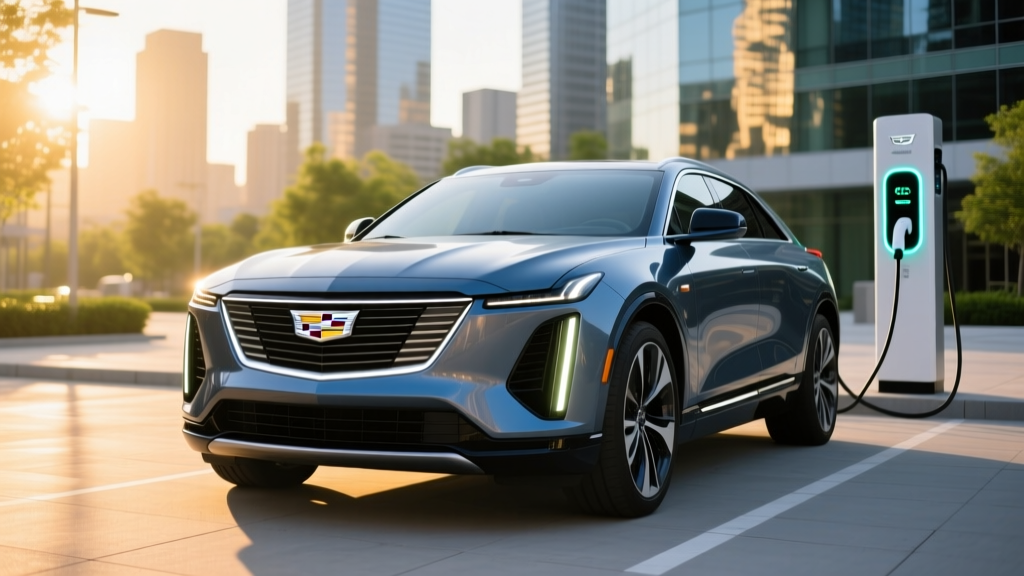
The 2026 Cadillac Lyriq occupies a specific lane in the luxury EV market: a composed, quiet, long-range cruiser that prioritizes ride comfort and interior refinement over sport-sedan acceleration. Built on GM's Ultium platform with a 102 kWh usable NMC battery, it delivers an EPA-estimated 314 miles of range (RWD) and charges at up to 190 kW DC. But for shoppers researching Cadillac Lyriq reliability, the real story lies in its maturing software stack, battery warranty coverage, and the real-world ownership nuances that spec sheets don't reveal.
After extensive analysis of owner feedback, NHTSA data, and third-party testing, the Lyriq emerges as a solidly built EV with strong hardware fundamentals, though early-production software quirks have required OTA updates to fully resolve. Here's everything you need to know before signing the paperwork.
Range and Efficiency: EPA vs. Real-World Expectations
| Metric | RWD (Luxury/Premium Luxury) | AWD (Sport/Premium Luxury) |
|---|---|---|
| EPA Range | 314 miles | 307 miles |
| Combined MPGe | 89 MPGe | 87 MPGe |
| Energy Consumption | 38 kWh/100 mi | 39 kWh/100 mi |
| Battery (Usable) | 102 kWh, NMC (nickel-manganese-cobalt) | |
| Drivetrain | Rear-Wheel Drive, 340 hp | Dual-Motor AWD, 500 hp |
The EPA's 314-mile figure for the RWD Lyriq assumes a mix of city and highway driving at moderate temperatures. In practice:
- Highway cruising (70-75 mph): Expect 260–280 miles before needing a charge. The Lyriq's 5,200+ lb curb weight and 20-inch wheels work against efficiency at sustained speed.
- City/commuter driving: You'll see closer to 300–320 miles thanks to regenerative braking recovery and lower average speeds.
- Cold weather (below 32°F): Plan for a 20–30% range reduction. The Lyriq uses a heat pump for cabin heating, which helps, but battery chemistry still loses efficiency in deep cold. Expect 220–250 miles in winter highway conditions.
- Towing (max 3,500 lbs): Range drops significantly — figure 180–210 miles with a loaded trailer.
Source: EPA Fuel Economy
The Lyriq's efficiency (38 kWh/100 mi) trails lighter competitors like the BMW iX xDrive50 (37 kWh/100 mi) and significantly trails the Tesla Model X (34 kWh/100 mi). For a luxury crossover of this mass, it's acceptable — but not class-leading. The 102 kWh usable battery provides a generous buffer, which is the real reason the range figure holds up.
Charging Speed: DC Fast Charge and Home Level 2
| Charging Level | Max Power | Time / Rate | Connector |
|---|---|---|---|
| DC Fast Charge (peak) | 190 kW | 10–80% in ~33 minutes | NACS (native Tesla Supercharger compatible) |
| DC Fast Charge (sustained avg.) | ~130–150 kW avg | 10–80% realistic | NACS |
| Level 2 Home (240V, 48A) | 11.5 kW | ~31 miles of range per hour | NACS |
| Level 2 Home (240V, 32A) | 7.7 kW | ~21 miles of range per hour | NACS |
| Level 1 (120V outlet) | 1.4 kW | ~3–4 miles of range per hour | NACS |
The Lyriq's 190 kW peak DC fast-charge rate is its most debated spec. Competitors like the Hyundai Ioniq 5 (peak 240 kW) and the Porsche Macan EV (peak 270 kW) hit higher peaks. However, peak kW is not sustained kW — no EV holds its maximum rate for the full session.
In real-world DC testing at a 350 kW Electrify America or Tesla Supercharger V4 station, the Lyriq ramps quickly to ~170–190 kW between 10–30% SoC, then tapers progressively. The 10–80% session takes approximately 33 minutes when the battery is preconditioned (which the Lyriq does automatically when you navigate to a charger). Above 80%, charging slows dramatically to protect the NMC cells — a 10–90% session will take closer to 50 minutes.
For home charging, the Lyriq's 11.5 kW onboard charger (at 48 amps) is strong. A full overnight charge from 10% to 100% takes roughly 9 hours on a 48A Level 2 circuit. Most owners will need a 60A dedicated circuit installed — budget $800–$2,000 for professional Level 2 installation depending on your panel capacity and run distance. The native NACS port means seamless Tesla Supercharger access without adapters, a significant convenience advantage for 2026.
Performance and Driving Dynamics
| Spec | RWD | AWD |
|---|---|---|
| Horsepower | 340 hp | 500 hp |
| Torque | 325 lb-ft | 450 lb-ft |
| 0–60 mph | 6.0 seconds | 4.6 seconds |
| Top Speed | 118 mph | 130 mph |
| Towing Capacity | 3,500 lbs (when properly equipped) | |
| Curb Weight | ~5,660 lbs | ~5,790 lbs |
The RWD Lyriq's 6.0-second 0–60 time is adequate for merging and passing but won't thrill anyone coming from a Tesla Model Y Performance (3.5 sec) or even a BMW iX M60 (3.6 sec). The AWD variant's 4.6-second run is more energetic and suits the car's grand-touring character.
Where the Lyriq genuinely excels is ride quality. The five-link rear suspension and available air ride (on Premium Luxury and Sport trims) deliver a plush, isolated experience that makes it one of the quietest EVs in its class at highway speed. Road noise suppression is outstanding. This is not a corner-carver — it's a boulevard cruiser, and that's intentional.
One-pedal driving is available via the steering-wheel-mounted regen paddle, which lets you modulate deceleration without touching the brake. It's well-calibrated and can bring the car to a complete stop, though GM still includes a traditional friction brake pedal (regulatory requirement and backup).
Interior, Cargo, and Technology
The Lyriq's cabin is where Cadillac justifies its premium positioning. The centerpiece is a 33-inch diagonal LED display that stretches across the dash, combining a driver instrument cluster and infotainment touchscreen in one curved unit running Google Built-In (Google Maps, Assistant, and Play Store native to the vehicle).
| Dimension | Measurement |
|---|---|
| Front Headroom | 39.7 inches |
| Front Legroom | 44.3 inches |
| Rear Headroom | 38.4 inches |
| Rear Legroom | 39.6 inches |
| Cargo (behind rear seats) | 28.0 cu ft |
| Cargo (rear seats folded) | 60.9 cu ft |
| Frunk (front trunk) | None |
Cargo space is competitive but not exceptional. The 28.0 cu ft behind the rear seats trails the Tesla Model X (37.1 cu ft) and the Rivian R1S but matches the BMW iX. The absence of a frunk is a notable omission — the Ultium platform's underhood space is occupied by HVAC and power electronics. For families, the rear seat is genuinely comfortable for adults on longer trips, and the flat floor (no transmission tunnel) makes a middle-seat passenger viable.
Standout tech features:
- Super Cruise hands-free driving on 400,000+ miles of mapped highways (SAE Level 2 — driver must remain attentive, eyes monitored by infrared camera)
- AKG 19-speaker premium audio standard (23-speaker on Sport trim)
- Augmented reality head-up display (available)
- Remote parking assist and 360-degree camera system
- Over-the-air (OTA) software updates for powertrain, infotainment, and ADAS
GM's Super Cruise is an SAE Level 2 driver-assistance system. It controls steering, acceleration, and braking on pre-mapped divided highways, but the driver must remain engaged and eyes on the road at all times. The infrared camera monitors head and eye position and will issue escalating warnings if attention lapses. It does not handle construction zones, unmapped roads, or adverse weather. For the latest safety data, see NHTSA's AV safety resources.
Cadillac Lyriq Reliability: What the Data Shows
Reliability is the core question for Lyriq shoppers, and the answer requires separating hardware from software.
Hardware fundamentals are strong. The Ultium platform uses a proven NMC pouch-cell architecture supplied by LG Energy Solution and Samsung SDI. The battery pack features a robust thermal management system with liquid cooling and heating, which is critical for long-term cell health. GM's battery warranty covers 8 years or 100,000 miles against defects and capacity loss below 70% of original capacity — a standard but important guarantee. The IIHS has evaluated the Lyriq and awarded it strong crash-test scores, reflecting solid structural engineering.
Software was the early weak point. The 2023–2024 launch-year Lyriqs drew owner complaints around infotainment glitches, Google Built-In freezing, phantom battery drain during prolonged parking, and Super Cruise disengagements. GM has addressed most of these through successive OTA updates, and the 2026 model year benefits from three years of software maturation. Current owner forums and JD Power initial quality data show marked improvement, though the Lyriq still trails legacy benchmarks like Lexus in overall dependability perception.
Battery degradation outlook: NMC chemistry typically retains 85–92% capacity after 100,000 miles under normal use (mix of Level 2 home charging with occasional DC fast charging). The Lyriq's large 102 kWh pack provides a natural buffer — even at 85% state of health, you'd still have ~267 miles of real-world range. To maximize longevity, GM recommends keeping the battery between 20–80% SoC for daily use and limiting DC fast charging to road trips.
Build quality: The Spring Hill, Tennessee assembly plant has produced consistent panel gaps and interior fit for the Lyriq. There are no widespread reports of rattles, water intrusion, or hardware failures at this production stage.
Pricing, Trims, and Federal Tax Credit Eligibility
| Trim | Drivetrain | Base MSRP | Est. After §30D Credit* |
|---|---|---|---|
| Luxury | RWD | $58,590 | Varies by eligibility |
| Premium Luxury | RWD or AWD | $63,590 (RWD) / $65,590 (AWD) | Varies by eligibility |
| Sport | AWD | $66,590 | Varies by eligibility |
*The federal EV tax credit under IRS §30D is not guaranteed for every buyer or every vehicle configuration. Eligibility depends on multiple factors that change frequently.
- MSRP Cap: SUVs must have an MSRP at or below $80,000. All Lyriq trims currently qualify.
- Buyer Income Cap: Modified AGI must not exceed $150,000 (single), $225,000 (head of household), or $300,000 (married filing jointly).
- Battery Sourcing: Critical minerals and battery components must meet escalating domestic-content thresholds set by the IRS. These thresholds tighten annually. Confirm current-year compliance on the IRS clean vehicle credits page before purchase.
- Point-of-Sale Transfer: Eligible buyers can transfer the credit to the dealer at purchase, reducing the out-of-pocket price directly rather than waiting for a tax refund.
- Assembly: The Lyriq is assembled in Spring Hill, Tennessee — meeting the North American final assembly requirement.
The credit can be up to $7,500, but partial credits ($3,750) apply if only one of the two sourcing requirements (critical minerals or battery components) is met. Always verify with a tax professional before relying on credit eligibility for your purchase decision.
Pros
- 314-mile EPA range (RWD) provides genuine road-trip capability
- Native NACS port — no adapter needed for Tesla Superchargers
- Class-leading ride comfort and cabin quietness
- Super Cruise is among the best Level 2 systems available
- Strong 11.5 kW Level 2 onboard charger
- 8-year/100,000-mile battery and powertrain warranty
- US-assembled (Spring Hill, TN)
Cons
- 190 kW peak DC charging is slower than key rivals (Ioniq 5, Macan EV)
- No front trunk (frunk)
- Early software reliability issues required OTA maturation
- RWD 0–60 of 6.0 sec is leisurely for a 340 hp EV
- Efficiency (38 kWh/100 mi) trails lighter competitors
- Premium pricing — well-equipped trims approach $70K before incentives
- Cargo space (28 cu ft) is mid-pack for the segment
Lyriq vs. Key Competitors: Is It Worth Buying?
- Ride comfort and cabin silence are your top priorities over sport handling
- You value native Tesla Supercharger access without adapter hassle
- Super Cruise hands-free highway driving appeals to your commute pattern
- You prefer a traditional luxury brand dealer experience with US-based service
- Your daily driving is under 250 miles and you can charge at home overnight
- You need the fastest possible DC charging for frequent long road trips (consider Hyundai Ioniq 5 or Kia EV6)
- Third-row seating or maximum cargo volume is essential (consider Rivian R1S or Tesla Model X)
- You want sub-4-second acceleration (consider BMW iX M60 or Tesla Model X Plaid)
- Budget is tight — the Genesis GV60 and Hyundai Ioniq 5 offer strong value at lower price points
The Lyriq's closest rival is arguably the BMW iX, which offers similar luxury credentials with slightly better efficiency and a more engaging drive, though at a higher starting price ($87,250). The Tesla Model X offers more range and cargo versatility but at a premium and with a less traditional luxury experience. The Genesis Electrified GV70 undercuts on price but sacrifices range (236 miles EPA). In context, the Lyriq occupies a compelling value position in the luxury midsize EV space — if its character matches your needs.
Frequently Asked Questions
What is the real-world range of the Cadillac Lyriq?
The EPA rates the RWD Lyriq at 314 miles and the AWD at 307 miles. In real-world highway driving at 70–75 mph, expect 260–280 miles. In cold weather (below freezing), plan for 220–250 miles. City driving with regen braking can approach or slightly exceed the EPA figure.
How fast does the Lyriq charge at home and on the road?
On DC fast chargers, it peaks at 190 kW with a 10–80% session taking about 33 minutes with battery preconditioning. At home on a 48A Level 2 charger (11.5 kW), you'll add roughly 31 miles of range per hour, achieving a full overnight charge in about 9 hours.
Does the 2026 Cadillac Lyriq qualify for the federal EV tax credit?
The Lyriq meets the MSRP cap ($80,000 for SUVs) and North American assembly requirement. However, the full $7,500 credit depends on your income (AGI caps apply), the vehicle's battery sourcing compliance in the current tax year, and your tax liability. Always check the IRS clean vehicle credits page and consult a tax professional before purchasing.
Is the Cadillac Lyriq reliable long-term?
Hardware reliability is strong — the Ultium platform, NMC battery, and thermal management system are well-engineered, and the 8-year/100,000-mile battery warranty provides protection. Software reliability was a concern in 2023–2024 launch models but has improved substantially through OTA updates. The Lyriq's long-term reliability should be competitive within the luxury EV segment, though it hasn't yet built the multi-decade track record of brands like Lexus.
How much does it cost to charge a Lyriq at home?
The 102 kWh battery, charged from 10–90% (about 82 kWh), costs roughly $10–$16 at the national average residential electricity rate of $0.16/kWh. That's approximately $0.04–$0.06 per mile driven — compared to $0.12–$0.18 per mile for a comparable gasoline luxury SUV at $3.50/gallon and 22 MPG combined.
Does the Lyriq have a front trunk (frunk)?
No. The Lyriq does not offer a front trunk. The space under the hood houses power electronics, the onboard charger, and HVAC components. All cargo must go in the rear cargo area (28.0 cu ft behind the second row, 60.9 cu ft with seats folded).