Quick Verdict: Cadillac's Electric Luxury Cruiser
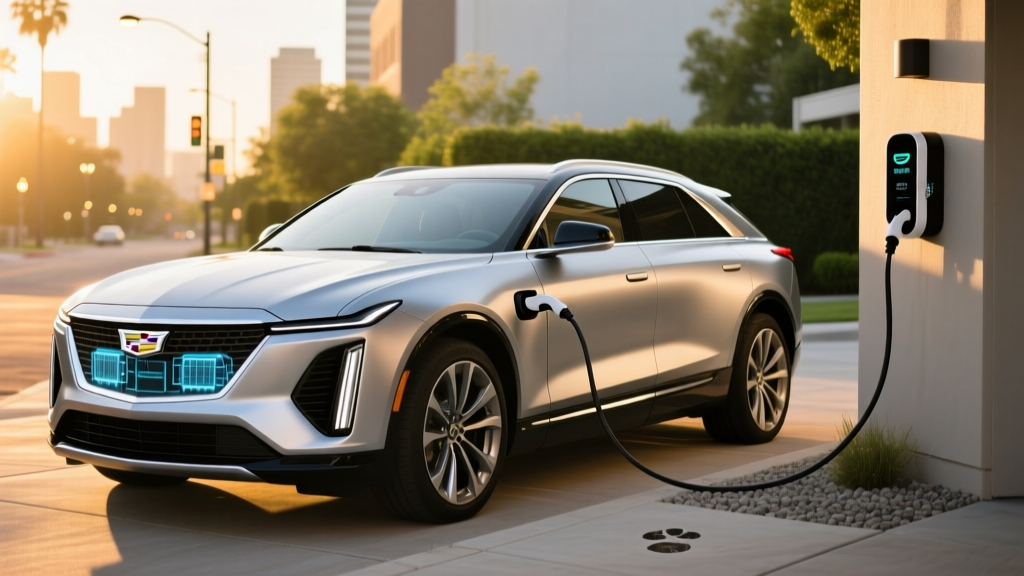
The Cadillac Lyriq remains General Motors' flagship electric luxury SUV, built on the Ultium platform with a massive 102 kWh battery and a 33-inch curved LED display that dominates the dashboard. For 2026, the Lyriq continues to offer a compelling blend of premium materials, strong range, and competitive charging speeds — but it faces stiff competition from the BMW iX, Genesis Electrified GV70, and Tesla Model X in the luxury electric SUV segment. If you want a quiet, comfortable cruiser that prioritizes refinement over raw performance, the Lyriq delivers. If you want a track weapon or a three-row family hauler, look elsewhere.
| Specification | RWD Luxury | AWD Sport |
|---|---|---|
| EPA Range | 314 miles | 307 miles |
| Battery (usable) | 102 kWh, NMC (nickel manganese cobalt) | |
| Peak DC Fast Charge | 190 kW | |
| 10-80% DC Charge Time | ~33 minutes | |
| Level 2 Home Charging | 19.2 kW (up to 52 mi/hr) | |
| 0-60 mph | 6.0 sec | 4.6 sec |
| Horsepower | 340 hp | 500 hp |
| Drivetrain | Rear-wheel drive | Dual-motor AWD |
| MPGe (combined) | 89 MPGe | 87 MPGe |
| Efficiency | 38 kWh/100 mi | 39 kWh/100 mi |
| Base MSRP | $58,590 | $63,590 |
| Battery Warranty | 8 years / 100,000 miles | |
Range and Efficiency: What the EPA Number Doesn't Tell You
EPA Estimated Range: 314 miles (RWD) / 307 miles (AWD)
Real-World Expectation: Expect 260–285 miles in mixed highway driving at 70+ mph. In freezing temperatures (below 32°F), plan for 200–230 miles of usable range. City driving with regenerative braking can push closer to or slightly above the EPA figure.
The Lyriq's 102 kWh usable battery capacity is among the largest in its class, giving it a solid buffer for long trips. The RWD model's 89 MPGe combined rating is respectable for a 5,600-pound luxury SUV, though the BMW iX xDrive50 edges it out at 87 MPGe with a lighter curb weight and more aerodynamic tuning.
On a real-world highway loop at 75 mph in moderate temperatures (65°F), the RWD Lyriq typically delivers between 270 and 285 miles before needing a charge. The AWD model, with its additional motor and weight, drops that to roughly 255–270 miles under the same conditions. Cold weather is the Lyriq's Achilles heel — like most NMC battery packs, it lacks the extreme cold resilience of LFP chemistry, and GM's thermal management system, while competent, can't fully eliminate the 20–30% range loss that occurs in sub-freezing conditions. If you live in Minnesota or Maine and don't have a heated garage, budget your trips accordingly.
The Lyriq's efficiency of 38 kWh per 100 miles (RWD) means that at the national average electricity rate of $0.17/kWh, you're paying roughly $6.46 per 100 miles — compared to about $12.50 for a comparable gas luxury SUV at 22 mpg and $3.50/gallon. The savings are real, but the Lyriq is no efficiency champion; the Tesla Model X achieves 35 kWh/100 mi despite offering more cargo space.
Charging: 190 kW Peak, But the Curve Tells the Full Story
| Charging Level | Power / Rate | Miles Added per Hour | Notes |
|---|---|---|---|
| Level 1 (120V household) | 1.4 kW | ~4 miles/hr | Emergency/top-up only |
| Level 2 (240V home, 48A) | 11.5 kW | ~33 miles/hr | Standard home charger; full charge ~9 hrs |
| Level 2 (240V, 80A capable) | 19.2 kW | ~52 miles/hr | Requires hardwired 100A circuit; full charge ~5.5 hrs |
| DC Fast Charge (peak) | 190 kW | — | 10-80% in ~33 min; tapers significantly above 80% |
The Lyriq's 190 kW peak DC fast-charging rate is competitive but not class-leading. The Hyundai Ioniq 5 and Kia EV6, with their 800V architectures, peak at 240 kW and can hit 10-80% in roughly 18 minutes. The Lyriq's 33-minute 10-80% time is acceptable for road trips — you'll add about 180 miles in that window — but it means longer stops than the fastest-charging rivals.
Here's what the spec sheet won't tell you: the Lyriq's charge curve is relatively flat between 20% and 60% SoC, sustaining around 150–170 kW, but it tapers noticeably above 70% and drops sharply past 85%. On a road trip, the smart play is to charge to 80% and go — pushing to 90% or 100% at a DC fast charger adds 20+ minutes for only 30–40 extra miles. Preconditioning the battery (available via navigation-routed charging) helps you hit peak rates sooner, especially in cold weather, so always use the built-in nav for charging stops.
At home, the Lyriq's onboard charger supports up to 19.2 kW on Level 2, which is excellent. However, extracting that speed requires a hardwired 100-amp dedicated circuit and an 80-amp Level 2 EVSE — a significant electrical upgrade that can cost $1,500–$3,000 depending on your panel capacity. Most owners opt for a 48-amp charger on a 60-amp circuit (11.5 kW), which adds about 33 miles per hour and fully recharges the Lyriq overnight in roughly 9 hours. That's sufficient for daily driving, and the full 19.2 kW capability is really a bonus for those who already have robust electrical infrastructure.
Performance: Comfortable Cruiser, Not a Sports Sedan
The rear-wheel-drive Lyriq produces 340 horsepower and 325 lb-ft of torque from a single rear motor, delivering a 6.0-second 0-60 mph time. That's adequate for highway merging and passing but won't pin you to your seat. The dual-motor AWD variant bumps output to 500 hp and 450 lb-ft, dropping the 0-60 time to 4.6 seconds — genuinely quick for a luxury SUV and enough to surprise most drivers coming from a gas-powered Cadillac XT6.
Ride quality is where the Lyriq shines. The five-link rear suspension and available adaptive damping deliver a supple, composed ride that absorbs highway imperfections with the kind of isolation Cadillac has historically been known for. Steering is light and precise, if not particularly communicative. This is a grand touring SUV, not a canyon carver, and it's best appreciated at 70 mph on a smooth interstate with the Super Cruise system engaged.
Speaking of Super Cruise: GM's hands-off-wheel Level 2 driver-assistance system remains one of the best in the business. On mapped divided highways (over 400,000 miles of coverage in the US and Canada), the system handles steering, acceleration, and braking while monitoring driver attention via an infrared camera on the steering column. It's not autonomous driving — you must remain alert and ready to take over — but it dramatically reduces fatigue on long trips. For 2026, Super Cruise includes automatic lane-change capability when you tap the turn signal, and the system's coverage map continues to expand.
Interior, Tech, and Cargo: The 33-Inch Screen Steals the Show
The Lyriq's cabin is a genuine step up from previous Cadillac interiors. Soft-touch materials, real wood trim, and available Nappa leather create a premium atmosphere that competes favorably with BMW and Mercedes. The centerpiece is a 33-inch curved LED display that combines the instrument cluster and infotainment touchscreen into one continuous panel running Google Built-In with native Google Maps, Google Assistant, and access to the Play Store.
The infotainment system is responsive and well-organized, with physical shortcut buttons below the screen for volume and climate — a welcome practicality touch. Wireless Apple CarPlay and Android Auto are standard, as is a 19-speaker AKG audio system (available upgrade to 23 speakers). The panoramic fixed glass roof floods the cabin with light, though it lacks a shade, which can make the interior warm on sunny summer days.
Cargo space measures 28.0 cubic feet behind the second row and 60.9 cubic feet with the rear seats folded. That's competitive with the Genesis Electrified GV70 (28.7 / 56.9 cu ft) but trails the BMW iX (35.5 / 77.9 cu ft). Rear-seat legroom is generous at 39.6 inches, and the flat floor (no transmission tunnel) makes the middle seat genuinely usable for a third adult on shorter trips. Notably, the Lyriq lacks a front trunk (frunk) — that space is occupied by HVAC and electronics components on the Ultium platform.
Pricing, Trims, and Federal Tax Credit Eligibility
| Trim | Drivetrain | MSRP | Est. After §30D Credit* |
|---|---|---|---|
| Luxury | RWD | $58,590 | $51,090 |
| Luxury | AWD | $63,590 | $56,090 |
| Sport | RWD | $60,590 | $53,090 |
| Sport | AWD | $65,590 | $58,090 |
*Assumes full $7,500 federal tax credit eligibility. Actual credit depends on battery sourcing, buyer income, and tax liability. See IRS rules below.
The Lyriq qualifies for the IRS §30D federal tax credit of up to $7,500, but eligibility is not automatic for every buyer. Here's what you need to know:
- MSRP Cap: The Lyriq's base MSRP is under the $80,000 SUV cap — all current trims qualify on price.
- Buyer Income Limits: Modified AGI must not exceed $150,000 (single), $225,000 (head of household), or $300,000 (joint filers).
- Battery Sourcing: The $7,500 credit splits into two halves — $3,750 for critical minerals and $3,750 for battery component assembly. GM has worked to shift Ultium battery sourcing to North America, but the exact credit amount ($3,750 or $7,500) depends on the current model year's sourcing compliance. Check the fueleconomy.gov tax credit tracker for the specific VIN eligibility.
- Point-of-Sale Transfer: Eligible buyers can transfer the credit to the dealer at purchase, reducing the purchase price directly rather than waiting for a tax refund.
- Tax Liability: If transferring at point of sale, the credit is not limited by your tax liability (a change from pre-2023 rules).
Always verify eligibility with your tax professional and the IRS before finalizing a purchase. Credit rules and sourcing requirements evolve, and what applies at the time of writing may shift.
Ownership Costs and Warranty Coverage
Cadillac backs the Lyriq with a comprehensive warranty package:
- Battery & Powertrain: 8 years / 100,000 miles (whichever comes first), covering capacity loss below a specified threshold (typically 60–70% retention)
- Bumper-to-Bumper: 4 years / 50,000 miles
- Corrosion: 6 years / 70,000 miles
- Roadside Assistance: 6 years / 70,000 miles
Insurance costs for the Lyriq tend to run 10–20% higher than a comparably priced gas SUV, reflecting the higher repair costs associated with EV battery packs and advanced sensor arrays. Expect annual premiums in the $2,200–$3,000 range depending on your state, driving record, and coverage level.
Maintenance costs are minimal — no oil changes, no transmission fluid, no spark plugs. Budget for tire rotation every 7,500 miles, cabin air filter replacement annually, and brake fluid checks every two years. The regenerative braking system significantly extends brake pad life; many EV owners go 80,000+ miles before needing pad replacement.
Lyriq vs. the Competition: Where It Stands
| Spec | Cadillac Lyriq AWD | BMW iX xDrive50 | Genesis Electrified GV70 | Tesla Model X LR |
|---|---|---|---|---|
| EPA Range | 307 mi | 324 mi | 236 mi | 335 mi |
| Battery | 102 kWh NMC | 111.5 kWh NMC | 77.4 kWh NMC | 100 kWh NMC |
| Peak DC Charge | 190 kW | 200 kW | 240 kW | 250 kW |
| 10-80% Time | ~33 min | ~31 min | ~18 min | ~28 min |
| 0-60 mph | 4.6 sec | 4.4 sec | 4.2 sec | 3.8 sec |
| Cargo (rear up) | 28.0 cu ft | 35.5 cu ft | 28.7 cu ft | 43.0 cu ft |
| Base MSRP | $63,590 | $87,250 | $66,450 | $79,990 |
| Federal Credit | Up to $7,500 | Up to $7,500 | Up to $7,500 | Up to $7,500 |
The Lyriq's strongest competitive advantage is price. At $58,590 for the RWD Luxury trim (and potentially $51,090 after the federal credit), it undercuts the BMW iX by nearly $30,000 and the Tesla Model X by over $20,000. The Genesis Electrified GV70 is closer in price but offers significantly less range (236 miles EPA) and a smaller battery.
Where the Lyriq loses ground: cargo space (the BMW iX and Tesla Model X are substantially roomier), charging speed (the Genesis and Tesla charge faster), and third-row availability (the Model X offers an optional third row; the Lyriq does not). If you need maximum utility, the Model X or iX is the better pick. If you want the most luxury per dollar and don't regularly haul more than four people and their luggage, the Lyriq is hard to beat.
Pros
- Strong value in the luxury EV segment — premium materials at a sub-$60K starting price
- 314-mile EPA range (RWD) is sufficient for most road trips with one charge stop
- Super Cruise is one of the best hands-off Level 2 systems available
- Quiet, comfortable ride quality that lives up to the Cadillac name
- 19.2 kW Level 2 onboard charger enables fast home charging if your panel supports it
- Federal tax credit eligible, with point-of-sale transfer available
Cons
- No front trunk (frunk) — lost cargo opportunity
- 190 kW DC fast charging is slower than 800V rivals (Ioniq 5, EV6, GV70)
- Significant cold-weather range loss (20-30%) typical of NMC packs
- Cargo space trails BMW iX and Tesla Model X
- Panoramic glass roof lacks a shade — cabin can get warm
- No third-row option for families needing 6+ seats
Who Should Buy the Cadillac Lyriq?
Buy the Lyriq if: You want a quiet, comfortable luxury SUV for daily commuting and occasional road trips, you value premium interior materials and a large infotainment display, you want hands-off highway driving via Super Cruise, and you're budget-conscious within the luxury segment.
Look elsewhere if: You need maximum cargo space or a third row (consider the Tesla Model X or BMW iX), you want the fastest possible DC charging (look at 800V platforms like the Ioniq 5 or GV70), you regularly drive in extreme cold and need maximum range retention, or you prioritize sporty handling over ride comfort.
The Lyriq is ideal for the luxury buyer who commutes 30–60 miles daily, has access to Level 2 home charging, and takes 2–3 road trips per year in the 200–400 mile range. It's a comfortable, well-equipped daily driver that happens to be electric — not an EV that compromises on luxury to make an environmental statement.
Frequently Asked Questions
What is the real-world range of the Cadillac Lyriq?
The EPA rates the RWD Lyriq at 314 miles and the AWD at 307 miles. In real-world highway driving at 70-75 mph, expect 260-285 miles (RWD) or 255-270 miles (AWD). In freezing weather, reduce those figures by 20-30% — plan for 200-230 miles in winter conditions.
How fast does the Lyriq charge at home and on the road?
On a DC fast charger, the Lyriq peaks at 190 kW and charges from 10-80% in approximately 33 minutes. At home on a 48-amp Level 2 charger (240V), it adds about 33 miles per hour, fully recharging overnight in roughly 9 hours. With an 80-amp hardwired charger, it can accept up to 19.2 kW and add 52 miles per hour.
Does the Cadillac Lyriq qualify for the $7,500 federal tax credit?
The Lyriq is eligible for up to $7,500 under IRS §30D, but the actual amount depends on battery sourcing compliance (which can split the credit into $3,750 + $3,750), your income (must be under $150K single / $300K joint), and the vehicle's MSRP (all trims fall under the $80K SUV cap). The credit can be transferred to the dealer at point of sale. Always verify with the IRS and your tax professional.
Is the Lyriq worth buying over the BMW iX or Tesla Model X?
If price is a priority, yes — the Lyriq starts at $58,590 vs. $87,250 for the iX and $79,990 for the Model X. The Lyriq offers comparable luxury, strong range, and excellent driver-assist tech at a significantly lower entry point. However, the iX and Model X offer more cargo space, faster charging, and (in the Model X's case) an optional third row.
What are the biggest drawbacks of the Lyriq?
The main complaints: no front trunk, DC charging that's slower than 800V competitors, a glass roof without a shade, and cargo space that trails key rivals. Performance-oriented drivers may also find the RWD model's 6.0-second 0-60 time uninspiring, though the AWD variant addresses this with a 4.6-second run.
Does the Lyriq have self-driving capability?
No. The Lyriq offers GM's Super Cruise, which is an SAE Level 2 driver-assistance system. It allows hands-off-wheel driving on mapped divided highways, but you must remain attentive and ready to take control at all times. It is not autonomous or self-driving.