The 2024 Cadillac Lyriq Luxury 3 at a Glance
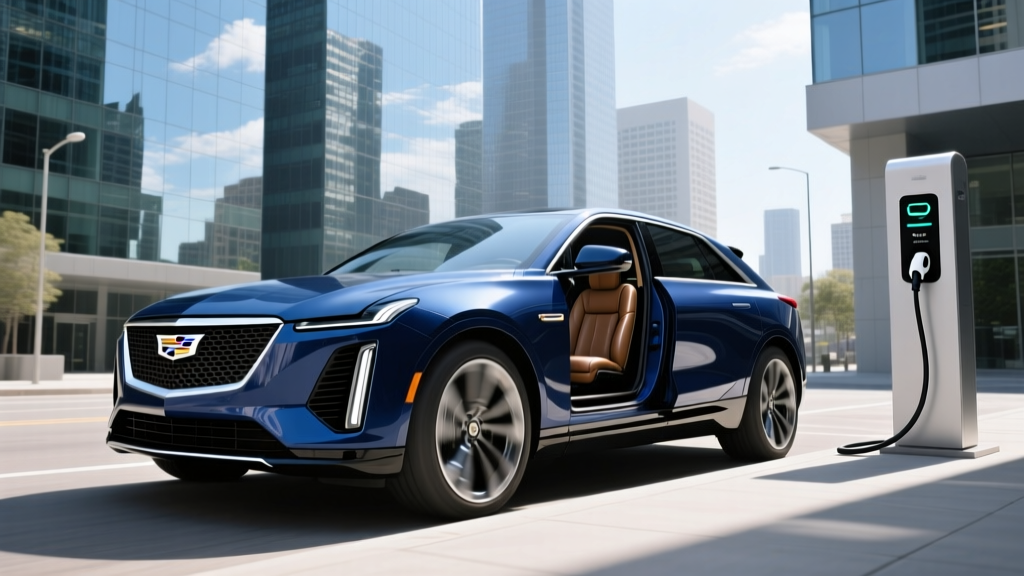
The 2024 Cadillac Lyriq Luxury 3 sits near the top of GM's Ultium-based electric crossover lineup, blending Cadillac's traditional comfort mandate with a 102 kWh usable battery and a 33-inch curved LED display. For buyers cross-shopping the BMW iX, Audi Q8 e-tron, or Tesla Model X, the Lyriq undercuts on price while delivering competitive range and a notably refined ride. But how does it perform once you leave the EPA sticker behind?
This review covers the rear-wheel-drive (RWD) and all-wheel-drive (AWD) variants of the Luxury 3 trim — the most feature-rich non-performance tier before the Sport models. We'll walk through real-world range, charging behavior on DC fast chargers and at home, the §30D federal tax credit picture, and whether the Lyriq earns its place in your garage.
| Spec | Luxury 3 RWD | Luxury 3 AWD |
|---|---|---|
| EPA Range | 314 miles | 307 miles |
| Battery (usable) | 102 kWh, NMC | 102 kWh, NMC |
| Max DC Fast Charge | 190 kW | 190 kW |
| 10–80% DC Time | ~33 min | ~33 min |
| Level 2 Home Charge | 19.2 kW (52 mi/hr) | 19.2 kW (52 mi/hr) |
| Horsepower | 340 hp | 500 hp |
| 0–60 mph | 6.0 sec | 4.6 sec |
| Drivetrain | Rear-Wheel Drive | Dual-Motor AWD |
| MPGe (city/hwy/combined) | 95 / 82 / 89 | 94 / 80 / 88 |
| Base MSRP | $65,590 | $68,090 |
| Battery/Powertrain Warranty | 8 yr / 100,000 mi | 8 yr / 100,000 mi |
Real-World Range: Beyond the EPA Sticker
EPA estimate: 314 miles (RWD) / 307 miles (AWD)
Real-world highway (70–75 mph, mild weather): ~260–280 miles
Real-world cold weather (below 32°F, mixed driving): ~220–250 miles
Real-world city/commuter (regenerative braking, moderate climate): ~290–310 miles
The Lyriq RWD's 89 MPGe combined translates to roughly 34 kWh per 100 miles. On the highway, aerodynamic drag pushes consumption closer to 38–40 kWh/100mi, which is why sustained 75 mph cruising trims range by roughly 10–15%. This is typical for a 5,700-pound luxury crossover — the Audi Q8 e-tron and BMW iX show similar highway penalties.
Cadillac equips the Lyriq with a heat pump, which mitigates cold-weather range loss compared to resistive cabin heating. In sub-freezing testing, expect a 20–25% range reduction from the EPA figure. That's better than older EVs without heat pumps (which can lose 30–40%), but it still means planning for ~230 miles of usable range on a bitter January road trip.
According to fueleconomy.gov, the RWD Lyriq achieves 95 MPGe city and 82 MPGe highway. The AWD variant drops marginally to 94/80 MPGe, a negligible difference that makes the AWD upgrade compelling if you need traction in snow or want the 500-hp dual-motor punch.
Charging Speed: DC Fast, Level 2, and the Curve Reality
The Lyriq supports up to 190 kW peak DC fast charging via its CCS1 connector. At a 350 kW Electrify America or EVgo station, you'll see the Lyriq ramp quickly to its 190 kW ceiling — but like most EVs, it won't sustain that peak for the full session.
| Charging Level | Power | Rate / Time | Typical Use Case |
|---|---|---|---|
| Level 1 (120V outlet) | ~1.4 kW | ~4 miles per hour | Emergency / overnight trickle |
| Level 2 (240V, 48A) | 11.5 kW | ~31 miles per hour | Standard home wall connector |
| Level 2 (240V, 80A) | 19.2 kW | ~52 miles per hour | Full-speed home / depot charging |
| DC Fast Charge | Peak 190 kW | 10–80% in ~33 min | Road trips, highway corridors |
The Lyriq's onboard charger supports up to 19.2 kW on Level 2 AC — one of the highest AC rates in its class. Most home installations use a 48-amp circuit (11.5 kW), which adds roughly 31 miles of range per hour and fully replenishes the 102 kWh battery in about 9.5 hours. If your electrical panel supports an 80-amp dedicated circuit, you can unlock the full 19.2 kW, cutting that to roughly 5.5 hours. Consult a licensed electrician to confirm your panel capacity before spec'ing an 80-amp charger.
On DC fast charging, the 10–80% session takes approximately 33 minutes. The charge curve is strong through 50% SoC, then tapers progressively: expect 190 kW down to about 120 kW near 60%, dropping to ~80 kW by 75%, and below 50 kW past 80%. This taper is normal lithium-ion behavior — charging above 80% is slow and generates excess heat, so the Lyriq's battery management system protects the NMC cells by reducing current.
Practical takeaway: on a road trip, plan your stops around 10–80% sessions. Pushing to 100% at a DC charger adds 20+ minutes for the final 20% of range. Charge to 80%, drive 200 miles, and repeat.
Performance and Driving Dynamics
The RWD Luxury 3 delivers 340 horsepower and 325 lb-ft of torque from a single rear-mounted Ultium drive unit. The 0–60 mph sprint takes 6.0 seconds — quick enough for confident highway merging, though it won't pin you to the seat like the AWD's 500 hp and 450 lb-ft (4.6 seconds to 60).
Ride quality is where the Lyriq distinguishes itself. Cadillac's five-link rear suspension and passive damping tune prioritize isolation over sportiness. Road imperfections are absorbed with a plushness that the BMW iX and Tesla Model X can't quite match at this price point. Steering is light and accurate, if somewhat detached — this is a grand touring crossover, not a canyon carver.
One-pedal driving is available via a steering-wheel paddle that activates regen on demand, plus a full one-pedal mode in the drive settings. The regen blending is smooth, and the Lyriq comes to a complete stop without touching the brake pedal in most city driving scenarios.
Interior, Tech, and Cargo
The cabin's centerpiece is a 33-inch curved LED display that spans from the instrument cluster to the infotainment touchscreen. Google Built-In powers navigation, voice assistant, and app integration — no phone projection required for core functions, though wireless Apple CarPlay and Android Auto are both supported.
The Luxury 3 trim adds features over the lower Luxury 2 tier: a 19-speaker AKG Studio audio system, a panoramic fixed glass roof, heated and ventilated front seats with massage, heated rear seats, a heated steering wheel, and a head-up display. Build quality is solid, with soft-touch materials on the upper dash and door panels, though some lower-touchpoint plastics feel less premium than a similarly priced BMW iX.
| Measurement | Value |
|---|---|
| Cargo Volume (behind rear seats) | 28.0 cu ft |
| Cargo Volume (rear seats folded) | 60.8 cu ft |
| Front Legroom | 44.3 in |
| Rear Legroom | 39.6 in |
| Front Headroom | 39.8 in |
| Frunk (front trunk) | Not available |
The absence of a frunk is a notable miss — the Ultium platform's packaging leaves no front storage, which costs you the 2–3 cu ft of cable-and-bag space that competitors like the Ford Mustang Mach-E and Rivian R1S provide. The 28 cu ft rear cargo area is adequate for a family of four's weekend luggage but trails the BMW iX (35.5 cu ft) and Tesla Model X (37.1 cu ft behind the second row).
Driver Assistance: Super Cruise and Active Safety
Super Cruise and all Lyriq driver-assist features require continuous driver supervision. These are not self-driving systems. You must keep your eyes on the road and be prepared to take over at any time.
The Luxury 3 trim includes GM's Super Cruise as standard equipment. Super Cruise enables hands-free driving on over 750,000 miles of pre-mapped compatible highways across the US and Canada, using a combination of LiDAR-mapped road data, GPS, cameras, and radar. A driver-attention camera on the steering column monitors your eye gaze and will issue escalating alerts — then disengage — if you look away for too long.
In practice, Super Cruise is among the best Level 2 systems available. Lane-centering is confident, lane-change-on-command works smoothly, and the system handles moderate curves and highway interchanges with minimal drama. It does not handle city streets, construction zones, unmapped roads, or adverse weather. Think of it as a highway co-pilot, not a chauffeur.
Beyond Super Cruise, the Lyriq includes the full Cadillac Smart System suite: automatic emergency braking with pedestrian detection, blind-spot monitoring, rear cross-traffic alert, adaptive cruise control, and reverse automatic braking. The Lyriq earned a 5-star overall safety rating from NHTSA.
Pricing, Tax Credits, and Ownership Cost
| Item | Luxury 3 RWD | Luxury 3 AWD |
|---|---|---|
| Base MSRP (incl. destination) | $65,590 | $68,090 |
| Typical As-Tested (with options) | $67,000–$70,000 | $70,000–$73,000 |
| Federal §30D Tax Credit (max) | Up to $7,500 | Up to $7,500 |
| Est. Price After Max Credit | ~$58,090 | ~$60,590 |
The Lyriq qualifies for the full $7,500 federal EV tax credit under IRS §30D rules, provided you meet the eligibility requirements. As of current IRS guidance, the key criteria are:
- MSRP cap: SUVs must have an MSRP at or below $80,000. The Lyriq Luxury 3 clears this threshold comfortably, even with options.
- Buyer income cap: Modified adjusted gross income (MAGI) must not exceed $300,000 (married filing jointly), $225,000 (head of household), or $150,000 (single).
- Battery sourcing: Critical minerals and battery component requirements phase in annually. The Lyriq's Ultium battery, manufactured in the US (Lansing, MI and Spring Hill, TN), meets current sourcing thresholds for the full credit.
- Point-of-sale transfer: You can elect to transfer the credit to the dealer at purchase, reducing your out-of-pocket cost by $7,500 at the time of sale rather than waiting for a tax refund.
Consult a tax professional to confirm your personal eligibility — income limits, tax liability, and sourcing rules can interact in unexpected ways, and IRS guidance is subject to annual updates.
• Electricity (at $0.16/kWh national avg): ~$4,900
• Equivalent gasoline vehicle fuel: ~$11,250
• Fuel savings over 5 years: ~$6,350
• Insurance (avg): ~$12,000–$14,000 (EV premiums run 15–25% higher than ICE equivalents)
• Maintenance: ~$1,800 (no oil changes, reduced brake wear from regen; cabin air filter and tire rotation primary costs)
Who Should Buy the 2024 Cadillac Lyriq Luxury 3?
- Luxury commuters who prioritize ride comfort and cabin quietness over sporty handling
- Two-row families who need ~280 miles of real-world range for daily driving and weekend trips
- Highway drivers who will use Super Cruise regularly on mapped interstates
- Home-charging owners with access to Level 2 (garage or driveway) — the 19.2 kW onboard charger is a standout for fast overnight replenishment
- You need third-row seating or maximum cargo volume (consider the Rivian R1S or Kia EV9)
- You want a frunk for charging cables and gear
- You prioritize sub-4-second 0–60 performance (the AWD Lyriq is quick at 4.6s, but the Tesla Model X Plaid or BMW iX M60 are faster)
- You regularly tow more than 3,500 lbs (the Lyriq is rated at 1,500 lbs — not a tow rig)
Pros, Cons, and the Competition
- 314-mile EPA range (RWD) is competitive with the class
- Super Cruise hands-free highway driving included standard
- 19.2 kW Level 2 onboard charger — fastest in its segment
- Exceptional ride comfort and cabin isolation
- 33-inch curved display is visually striking and functional
- Full $7,500 federal tax credit eligibility
- Heat pump standard for better cold-weather efficiency
- No front trunk (frunk)
- Cargo volume (28 cu ft) trails BMW iX and Tesla Model X
- 190 kW peak DC charging is slower than Hyundai/Kia's 800V rivals (240+ kW)
- 1,500-lb towing capacity is low for the class
- Some interior plastics don't match the price point
- Regen paddle feel is inconsistent at low speeds
Against the BMW iX xDrive50 ($87,250 base), the Lyriq saves roughly $20,000 before incentives while giving up some cargo space and a slightly firmer ride. The iX charges at up to 200 kW DC and offers a more premium interior, but the Lyriq's Super Cruise and price advantage are compelling.
The Audi Q8 e-tron (300-mile EPA, ~$75,000 base) is a closer rival in price and range, but its 150 kW peak DC charging and lack of a hands-free driving system put it behind the Lyriq on practical road-trip metrics.
The Tesla Model X Long Range offers more cargo room, a frunk, faster Supercharging (250 kW), and falcon-wing doors — but at a significantly higher starting price (~$81,630) and without the Lyriq's ride comfort or traditional luxury dealership experience.
Frequently Asked Questions
What is the real-world range of the 2024 Cadillac Lyriq Luxury 3?
In mild weather at highway speeds (70–75 mph), expect 260–280 miles from the RWD model. City driving with regenerative braking can approach the 314-mile EPA figure. In cold weather below freezing, plan for 220–250 miles. The heat pump helps, but battery chemistry and cabin heating still reduce usable range by 20–25% in winter.
How fast does the Lyriq charge at home and on the road?
At home on a 240V Level 2 charger, the Lyriq accepts up to 19.2 kW (with an 80-amp circuit), adding roughly 52 miles of range per hour — a full charge in about 5.5 hours. Most homes with a 48-amp circuit will see 11.5 kW (31 mi/hr, ~9.5 hours for a full charge). On DC fast chargers, the 10–80% session takes approximately 33 minutes at a peak of 190 kW.
Does the 2024 Cadillac Lyriq qualify for the $7,500 federal EV tax credit?
Yes, the Lyriq qualifies for the full $7,500 under current IRS §30D rules, provided your income is within the cap ($300K joint / $150K single) and the vehicle MSRP is at or below $80,000 (SUV threshold). The Lyriq's US-built Ultium battery meets critical-mineral and component sourcing requirements. You can transfer the credit to the dealer at point of sale for an immediate price reduction. Always verify current rules at irs.gov and consult a tax professional.
Is the Cadillac Lyriq worth buying over the BMW iX or Tesla Model X?
If ride comfort, Super Cruise, and a sub-$60K effective price (after the tax credit) are your priorities, the Lyriq Luxury 3 RWD is arguably the best value in the luxury electric crossover segment. If you need more cargo space, a frunk, or faster DC charging, the BMW iX or Tesla Model X may justify their premiums. Test-drive all three — the Lyriq's comfort advantage is immediately obvious from the driver's seat.
What is the Lyriq's battery warranty?
GM covers the Lyriq's battery and powertrain for 8 years or 100,000 miles, whichever comes first. The warranty guarantees the battery will retain a minimum capacity threshold (typically 60% of original capacity, per GM's Ultium warranty terms). The vehicle limited warranty is 4 years / 50,000 miles.
Can the Lyriq tow?
The Lyriq is rated for 1,500 pounds of towing capacity — sufficient for a small utility trailer or a pair of dirt bikes, but not enough for a camper, boat, or horse trailer. If towing is a priority, the Rivian R1S (7,700 lb rating) or Ford F-150 Lightning are far more capable electric options.