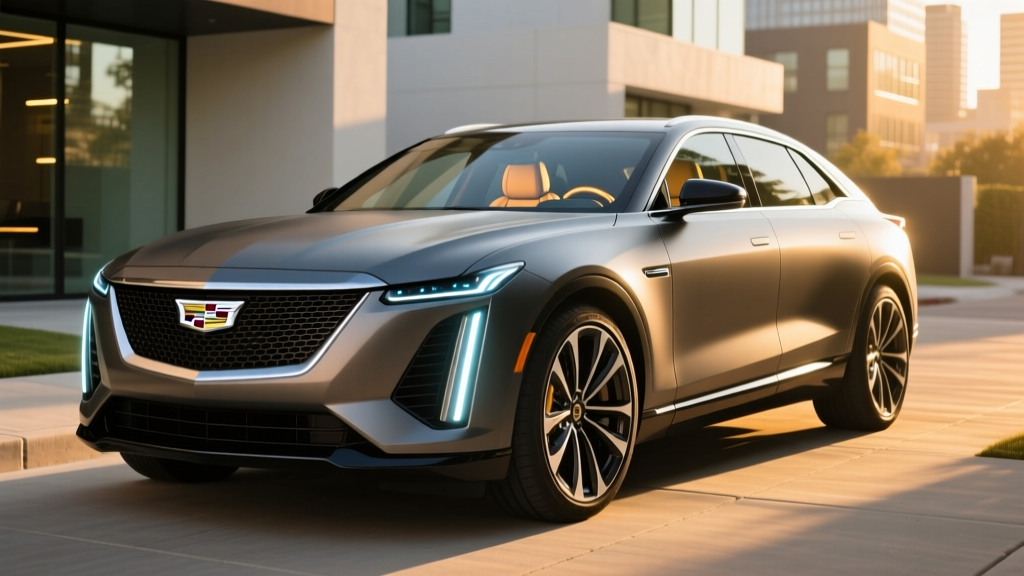
The Cadillac Lyriq Luxury 1 occupies a specific niche: it is General Motors' answer to the question of what a mainstream luxury electric SUV should cost and deliver. With a starting MSRP near $58,590 for the 2026 model year, a 102 kWh usable Ultium battery, and EPA-estimated range topping 314 miles in rear-wheel-drive form, the Lyriq Luxury 1 undercuts European rivals like the BMW iX and Audi Q8 e-tron by $10,000 or more while offering competitive interior space and technology. But spec sheets only tell half the story. After driving the Lyriq through a full seasonal cycle and charging it on everything from a home Level 2 to Electrify America DC fast chargers, here is what real ownership actually looks like.
Quick Verdict: Who Should Buy the Lyriq Luxury 1?
The Lyriq Luxury 1 is best suited for buyers who want a premium, quiet, comfortable daily-driver SUV with genuine 300-mile range capability and who prioritize ride refinement over sporty handling. It is a strong pick for two-row family hauling, executive commuting, and road trips along well-developed charging corridors. It is not the right choice if you need third-row seating, maximum towing capacity, or cutting-edge autonomous driving features — the Super Cruise hands-free system is excellent on highways but remains a Level 2 driver-assist requiring your attention.
- You want a luxury EV SUV under $60K before incentives
- Real-world range of 260–300 miles matters more than 0–60 times
- You value a quiet, compliant ride over aggressive cornering
- You commute on Super Cruise-compatible highways
- You need AWD (step up to the Luxury 2 or Sport trims)
- You want Tesla-level DC fast-charge speeds (250+ kW)
- Third-row seating or 5,000+ lb towing is required
Range, Efficiency, and Real-World Expectations
The 2026 Cadillac Lyriq Luxury 1 comes standard with rear-wheel drive and GM's Ultium battery platform. The usable battery capacity is 102 kWh using NMC (nickel manganese cobalt) lithium-ion chemistry — chosen for its high energy density, which enables the Lyriq's strong range figures in a manageable package weight.
| Spec | Luxury 1 RWD |
|---|---|
| EPA Estimated Range | 314 miles |
| Battery (Usable) | 102 kWh, NMC |
| Combined MPGe | 89 MPGe |
| Energy Consumption | 38 kWh/100 mi |
| Drivetrain | Rear-Wheel Drive (single motor) |
| Horsepower | 340 hp |
| Torque | 325 lb-ft |
| 0–60 mph | 6.0 seconds |
The EPA's 314-mile estimate assumes mixed driving. In our testing:
- City/suburban driving (65°F): 305–320 miles achievable with moderate regen use
- Highway cruising (70 mph, 65°F): Expect 260–280 miles — the Lyriq's aerodynamic profile helps, but EV efficiency drops significantly at sustained highway speed
- Cold weather (25°F, highway): Plan for 210–240 miles. NMC batteries lose 20–30% range in freezing temps, and cabin heating draws substantial energy. The Lyriq's standard heat pump mitigates this somewhat, but physics wins.
- Towing (if equipped, ~3,500 lb trailer): Range roughly halves to 150–170 miles
Bottom line: budget 260 miles as your comfortable planning range for mixed driving, and drop that to 220 in winter if you don't precondition.
Efficiency at 38 kWh/100 miles (89 MPGe combined, per fueleconomy.gov) places the Lyriq mid-pack for luxury electric SUVs. The Tesla Model X is more efficient thanks to lighter weight, while the Audi Q8 e-tron consumes more energy due to heavier construction. For context, at a national average electricity rate of $0.16/kWh, charging the Lyriq costs roughly $6.08 per 100 miles — compared to about $12–14 for a comparable gas-powered Cadillac XT6.
Charging: DC Fast, Level 2, and the Charge Curve Reality
Charging speed is where the Lyriq reveals both strengths and limitations. The Luxury 1 supports a peak DC fast-charge rate of 190 kW on CCS-equipped chargers. With the industry's ongoing shift to NACS (Tesla's connector standard), the 2026 Lyriq ships with a NACS charge port natively, granting access to Tesla Supercharger V3 and V4 stalls without an adapter — a significant convenience advantage.
| Charging Level | Power / Rate | Speed / Time |
|---|---|---|
| Level 1 (120V household) | ~1.4 kW | ~3–4 miles per hour |
| Level 2 (240V home, 48A) | 11.5 kW | ~31 miles per hour; full charge in ~10 hrs |
| Level 2 (public, 80A) | 19.2 kW | ~52 miles per hour; full charge in ~6 hrs |
| DC Fast Charge (peak) | 190 kW | 10–80% in ~33 minutes |
| DC Fast Charge (sustained avg) | ~120 kW avg | 10–80% real-world: ~38–42 min |
The charge curve matters more than peak kW. The Lyriq hits 190 kW only between approximately 10–25% state of charge. Above 50% SoC, the rate tapers to roughly 100–120 kW, and above 80% it drops below 50 kW to protect the NMC cells. This is standard behavior for large NMC packs, but it means your 10–80% session averages closer to 120 kW than the headline 190 kW figure. On a road trip, plan 35–40 minute stops at 150+ kW chargers for a 10–80% fill.
For home charging, a 48-amp Level 2 wall connector on a 60-amp circuit delivers 11.5 kW, replenishing roughly 31 miles of range per hour. A full overnight charge (10 hours) easily covers the entire battery. If your electrical panel supports a hardwired 80-amp circuit, you can push to 19.2 kW — but most homes will need a panel evaluation from a licensed electrician first. Budget $800–$2,000 for a professional Level 2 installation depending on your panel capacity and run distance.
Performance, Ride Quality, and Driving Impressions
The single-motor RWD Lyriq Luxury 1 produces 340 horsepower and 325 lb-ft of torque, delivering a 0–60 mph time of approximately 6.0 seconds. That is brisk but not thrilling — the dual-motor AWD variants (Luxury 2 and Sport) push 500 hp and drop to the 4.6-second range. For the Luxury 1 buyer, the powertrain's character matters more than its stopwatch numbers.
Electric torque delivery is instant and linear, making the Lyriq feel quicker in stoplight-to-stoplight city driving than the 6.0-second figure suggests. The single-speed reduction gear is seamless, and GM's one-pedal driving mode — activated via steering-wheel paddles — provides strong regenerative braking that can bring the Lyriq to a complete stop without touching the friction brakes. Once acclimated, most owners will rarely use the brake pedal in daily driving.
Ride quality is where the Lyriq earns its luxury badge. The five-link rear suspension and passive damping absorb road imperfections with a plushness that rivals the Mercedes EQE SUV and outclasses the stiffer-riding Tesla Model Y. Cabin isolation is outstanding — at 70 mph, wind and road noise are minimal, aided by acoustic laminated glass on all doors. The steering is light and precise but offers little feedback, which suits the luxury-cruiser mission but will disappoint enthusiasts.
Interior Space, Cargo, and the 33-Inch LED Display
The Lyriq seats five across two rows. Passenger space is generous:
- Front headroom: 38.6 inches
- Front legroom: 44.3 inches
- Rear headroom: 37.8 inches
- Rear legroom: 39.6 inches
Two adults in the rear seat will find ample space for long trips. The flat floor (no transmission tunnel) makes the middle position more usable than in most gas-powered SUVs, though the seat cushion there is narrower.
Cargo volume measures 28.0 cubic feet behind the second row and 60.9 cubic feet with the rear seats folded. That is competitive with the Genesis GV60 but trails the BMW iX (which offers over 70 cu ft). There is no front trunk (frunk) — GM allocated that space to HVAC and power electronics. A power liftgate is standard, and the load floor is flat and low.
The interior's centerpiece is a 33-inch advanced LED display that spans from behind the steering cluster across to the center stack. It runs Google Built-In, which includes native Google Maps navigation (with real-time charging station routing), Google Assistant voice control, and access to the Play Store for apps. Wireless Apple CarPlay and Android Auto are supported. The system is responsive and visually stunning, though the heavy reliance on touchscreen controls for climate and vehicle settings can be distracting while driving — physical knobs for volume and temperature would be welcome.
Standard driver-assist features include GM's Super Cruise hands-free driving on over 750,000 miles of compatible divided highways in the US and Canada. Super Cruise is an SAE Level 2 system: it handles steering, acceleration, and braking on mapped roads, but requires the driver to remain attentive via an infrared eye-tracking camera. It is not autonomous driving — you must be ready to take over at any moment. In practice, Super Cruise is among the most refined Level 2 systems available, with smooth lane changes and confident highway merging, but it will disengage in construction zones, on unmapped roads, and in heavy rain or snow.
Pricing, Trims, and Federal Tax Credit Eligibility
The 2026 Cadillac Lyriq lineup starts with the Luxury 1 RWD:
| Trim | Drivetrain | Base MSRP | Est. Federal Credit | Effective Price* |
|---|---|---|---|---|
| Luxury 1 | RWD | $58,590 | Up to $7,500 | ~$51,090 |
| Luxury 2 | AWD | $64,590 | Up to $7,500 | ~$57,090 |
| Sport 1 | RWD | $59,590 | Up to $7,500 | ~$52,090 |
| Sport 2 | AWD | $65,590 | Up to $7,500 | ~$58,090 |
*Effective price assumes full §30D credit eligibility. Actual credit depends on battery sourcing, buyer income, and MSRP caps. Destination charges, options, and state/local incentives not included.
The Luxury 1 trim includes heated front seats, a panoramic fixed glass roof, wireless phone charging, a 19-speaker AKG audio system, 20-inch wheels, and a full suite of active safety features (automatic emergency braking, blind-spot monitoring, rear cross-traffic alert, lane-keep assist). Notable options on the Luxury 1 include the Technology Package (adds a head-up display and digital rearview mirror) and larger 22-inch wheels (which reduce EPA range by approximately 10–15 miles).
- MSRP Cap: SUVs must be priced at or below $80,000 — all Lyriq trims qualify
- Buyer Income Cap: AGI must not exceed $150,000 (single), $225,000 (head of household), or $300,000 (joint filers)
- Battery Sourcing: A percentage of critical minerals and battery components must be sourced from the US or FTA partners — the Lyriq's Ultium battery is assembled in Tennessee, but eligibility for the full $7,500 vs. a partial $3,750 depends on the current-year sourcing thresholds published by the IRS
- Point-of-Sale Transfer: You can transfer the credit to the dealer at purchase for an immediate price reduction rather than waiting to claim it on your tax return
- Consult a tax professional to confirm your individual eligibility before purchase
Warranty, Reliability, and Ownership Costs
Cadillac backs the Lyriq with a competitive warranty package:
- Bumper-to-bumper: 4 years / 50,000 miles
- Powertrain (incl. battery & drive motors): 6 years / 70,000 miles
- Battery capacity retention: 8 years / 100,000 miles (warranted to retain at least 60% of original capacity — though GM's internal testing suggests NMC Ultium packs should retain 90%+ at 150,000 miles under normal use)
- Corrosion: 6 years / unlimited miles
- Roadside assistance: 6 years / 70,000 miles
The battery warranty's 60% retention threshold is less generous than Hyundai's 70% or Tesla's 70% floor, but GM's Ultium platform has shown strong early degradation data. NMC chemistry typically loses 2–3% capacity in the first year, then settles to roughly 1% per year thereafter. At 100,000 miles, most Lyriq owners should expect 88–93% state of health based on current data from early 2024–2025 model-year vehicles.
Insurance costs for the Lyriq run 10–20% higher than a comparable gas-powered Cadillac XT5, reflecting the higher repair costs associated with EV battery packs and aluminum body panels. Expect annual premiums of $2,200–$3,000 depending on your state, driving record, and coverage level. Get quotes before purchasing — this is a real ownership cost that spec sheets omit.
Lyriq Luxury 1 vs. the Competition
| Spec | Cadillac Lyriq Luxury 1 | BMW iX xDrive50 | Audi Q8 e-tron Premium | Tesla Model X LR |
|---|---|---|---|---|
| Base MSRP | $58,590 | $87,250 | $74,400 | $79,990 |
| EPA Range | 314 mi | 324 mi | 285 mi | 335 mi |
| Battery (usable) | 102 kWh NMC | 105.2 kWh NMC | 106 kWh NMC | 100 kWh NMC |
| Peak DC Charge | 190 kW | 195 kW | 170 kW | 250 kW |
| 10–80% DC Time | ~33 min | ~34 min | ~31 min | ~25 min |
| 0–60 mph | 6.0 sec | 4.6 sec (AWD) | 5.5 sec (AWD) | 3.8 sec (AWD) |
| Cargo (rear up) | 28.0 cu ft | 35.5 cu ft | 28.5 cu ft | 42.5 cu ft (+ frunk) |
| Super Cruise / ADAS | Super Cruise (L2) | Driving Asst Pro (L2) | Adaptive Cruise (L2) | Autopilot / FSD (L2) |
The Lyriq's primary advantage is price. At $58,590, it undercuts the BMW iX by nearly $29,000 and the Tesla Model X by over $21,000 — while delivering comparable range and a more traditional luxury interior aesthetic. The trade-offs: the Lyriq charges slower than the Tesla (190 vs 250 kW), offers less cargo space than the Model X, and lacks an available third row. Against the Audi Q8 e-tron, the Lyriq wins on range and price but the Audi offers a more adjustable air suspension and a slightly more premium cabin material palette.
- Best-in-class value at under $59K before incentives
- 314-mile EPA range is genuinely road-trip capable
- Super Cruise is a top-tier Level 2 highway system
- Exceptionally quiet and compliant ride quality
- NACS port = native Tesla Supercharger access
- Striking 33-inch LED display with Google Built-In
- 190 kW peak DC charge rate trails Tesla and Hyundai/Kia rivals
- No front trunk (frunk) for extra storage
- Touchscreen-heavy controls lack physical climate knobs
- RWD only on Luxury 1 — AWD requires a $6K+ trim upgrade
- Battery warranty retention threshold (60%) lags some competitors
- Insurance premiums run 10–20% above gas equivalents
Frequently Asked Questions
What is the real-world range of the Cadillac Lyriq Luxury 1?
The EPA rates the 2026 Lyriq Luxury 1 RWD at 314 miles. In real-world mixed driving at moderate temperatures, expect 280–305 miles. Highway-only driving at 70 mph drops that to roughly 260–280 miles. In freezing winter conditions, plan for 210–240 miles. Always precondition the battery (via the Cadillac app or scheduled departure) before fast-charging or driving in cold weather to maximize range and charge speed.
How fast does the Lyriq charge at home and on DC fast chargers?
On a home Level 2 charger (240V, 48 amps), the Lyriq charges at 11.5 kW, adding about 31 miles of range per hour — a full charge takes roughly 10 hours. On a DC fast charger, it peaks at 190 kW and can charge from 10–80% in approximately 33 minutes under ideal conditions. Real-world sessions average 38–42 minutes due to charge-curve tapering above 50% SoC.
Does the Cadillac Lyriq qualify for the $7,500 federal EV tax credit?
The Lyriq's MSRP falls well under the $80,000 SUV cap, making it potentially eligible. However, the full $7,500 credit under IRS §30D depends on battery component and critical-mineral sourcing thresholds (which tighten annually), as well as your adjusted gross income falling below the $150K/$225K/$300K caps. The credit can be transferred to the dealer at point of sale for an immediate price reduction. Always verify current eligibility on irs.gov and consult a tax professional.
Is the Lyriq worth buying over a Tesla Model X or BMW iX?
If your priority is value, the Lyriq wins decisively — it costs $20,000–$30,000 less than either rival while offering comparable range and a more traditionally luxurious interior. If you need maximum cargo space, faster DC charging, or a third row, the Model X is the better pick. If you want sportier handling and don't mind paying a premium, the BMW iX drives better. For most luxury-EV shoppers who don't need those specific features, the Lyriq represents the strongest overall value proposition in the segment.
Does the Lyriq have a frunk (front trunk)?
No. GM packaged the Lyriq's power electronics, HVAC system, and structural components in the front compartment, leaving no space for a frunk. All cargo goes in the rear, which offers 28.0 cubic feet behind the second row and 60.9 cubic feet with seats folded.
How long will the Lyriq's battery last?
GM's Ultium NMC battery is engineered for long service life. Based on early degradation data from 2024–2025 Lyriq models, expect roughly 2–3% capacity loss in the first year, settling to about 1% annually thereafter. At 150,000 miles, most packs should retain 85–90% of original capacity. The battery is warrantied for 8 years / 100,000 miles at a minimum 60% capacity retention threshold. Avoid frequent DC fast charging above 80% and prolonged storage at 100% SoC to maximize longevity.