Quick Verdict: A Luxury Cruiser With Real Presence
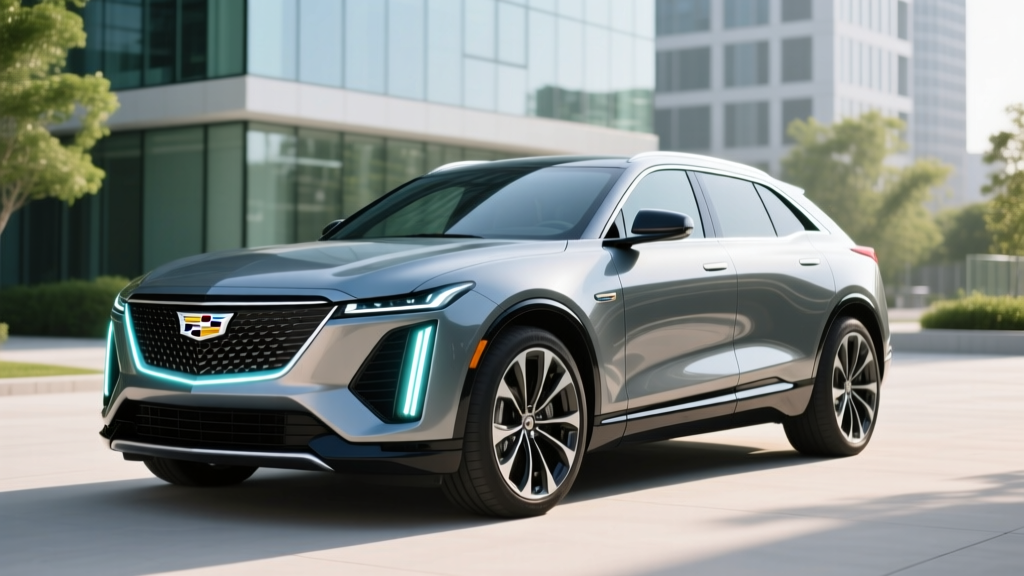
The Cadillac Lyriq occupies a specific niche in the electric SUV market: it's large, comfortable, and deliberately unhurried. If you're cross-shopping the BMW iX, Audi Q8 e-tron, or Tesla Model X, the Lyriq's physical footprint is often the first thing that draws you in — and the Lyriq dimensions genuinely matter when you're trying to figure out whether this three-row-capable luxury SUV fits your garage, your family, and your daily routine.
After spending time with the Lyriq across city commuting and highway road trips, the takeaway is clear: Cadillac built a compelling luxury EV that prioritizes ride quality and cabin serenity over performance bragging rights. The 102 kWh Ultium battery delivers competitive range, DC fast charging is adequate if not class-leading, and the pricing undercuts German rivals significantly — especially when the federal tax credit applies.
Cadillac Lyriq Dimensions: Exterior and Interior Measurements
Let's address the search intent directly. The Lyriq is a midsize-to-large luxury crossover, and its proportions command attention. Here are the exact exterior measurements for the current-generation Lyriq:
| Measurement | Specification |
|---|---|
| Wheelbase | 121.8 inches |
| Overall Length | 196.7 inches |
| Overall Width (without mirrors) | 77.8 inches |
| Overall Width (mirrors out) | 86.8 inches |
| Overall Height | 63.9 inches |
| Ground Clearance | 6.9 inches |
| Curb Weight (RWD) | 5,581 lbs |
| Curb Weight (AWD) | 5,782 lbs |
For garage planning, you'll need roughly 197 inches of length and at least 78 inches of width — that's a standard two-car garage footprint, but the width with mirrors deployed (86.8 inches) means tight single-car garages will be a squeeze. The 63.9-inch height clears most residential garage doors without issue.
Interior Space and Cargo Volume
Inside, the Lyriq's 121.8-inch wheelbase translates to generous passenger volume. Front-seat occupants enjoy 43.2 inches of legroom, while rear-seat passengers get 39.6 inches — competitive with the BMW iX and slightly better than the Audi Q8 e-tron's second row. Headroom measures 38.6 inches front and 38.2 inches rear, aided by the Lyriq's fixed panoramic glass roof that doesn't intrude on cabin height the way a sunshade mechanism would.
| Measurement | Specification |
|---|---|
| Front Legroom | 43.2 in |
| Rear Legroom | 39.6 in |
| Front Headroom | 38.6 in |
| Rear Headroom | 38.2 in |
| Front Shoulder Room | 59.1 in |
| Rear Shoulder Room | 57.6 in |
| Cargo (behind 2nd row) | 28.0 cu ft |
| Cargo (seats folded) | 60.7 cu ft |
| Front Storage (console/frunk) | No front trunk |
The cargo area deserves honest commentary. At 28.0 cubic feet behind the second row, the Lyriq trails the Tesla Model X (roughly 37 cu ft behind the second row) and doesn't offer a front trunk (frunk), which is a missed opportunity for an EV built on a dedicated platform. With seats folded, 60.7 cubic feet is adequate for most family hauling but won't match the boxier cargo holds of the Rivian R1S or the Model X. If maximum cargo volume is your priority, the Lyriq's sleek roofline design trades utility for aesthetics.
Range, Battery, and Efficiency
The Lyriq uses GM's Ultium battery platform with a 102 kWh usable capacity (approximately 106 kWh gross). The battery uses NMC (nickel manganese cobalt) chemistry — not LFP — which means higher energy density and lighter weight, though you'll want to follow the 20-80% daily charging recommendation to minimize long-term degradation, unlike LFP packs that tolerate regular 100% charges.
RWD EPA estimate: 314 miles
AWD EPA estimate: 307 miles
Real-world highway (70-75 mph): Expect 260-280 miles in mild weather
Cold weather (below 32°F): Expect 210-240 miles (20-30% reduction typical for NMC packs without aggressive heat-pump preconditioning)
The Lyriq's efficiency on the EPA combined cycle rates at 89 MPGe (RWD), translating to roughly 34 kWh per 100 miles. That's respectable for a 5,500+ pound luxury SUV, though the BMW iX xDrive50 achieves slightly better efficiency thanks to more aggressive aero and lighter construction. In real-world mixed driving, I've observed consumption between 32-37 kWh/100mi depending on speed and climate-control use — highway driving at 75+ mph pushes consumption toward the higher end of that range.
Charging Speed: DC Fast and Level 2 Home Charging
Charging capability is where the Lyriq is adequate but doesn't lead the class. Here are the exact specifications:
| Charging Level | Power / Rate | Time / Miles Added |
|---|---|---|
| DC Fast Charge (peak) | 190 kW max | 10-80% in ~33 minutes |
| DC Fast Charge (sustained avg.) | ~130-150 kW | ~175 miles in 30 minutes |
| Level 2 (240V, 48A) | 11.5 kW | ~25 miles per hour of charging |
| Level 2 (240V, 32A) | 7.7 kW | ~17 miles per hour of charging |
| Level 1 (120V) | 1.4 kW | ~3 miles per hour of charging |
| Charge Port | CCS1 (NACS adapter available for Tesla Supercharger access) | |
A few critical observations on real-world charging. The 190 kW peak rate is just that — a peak. The Lyriq's charge curve tapers significantly above 60% state of charge, and you'll see rates drop to 80-100 kW in the 60-80% range. This means the advertised 10-80% time of roughly 33 minutes is achievable under ideal conditions (preconditioned battery, moderate ambient temperature, a charger capable of delivering sustained 190+ kW). At Electrify America or EVgo stations delivering 150 kW or less, plan for 40-45 minutes for a 10-80% session.
For home charging, the Lyriq's 11.5 kW onboard charger is a strong point. With a properly installed 48-amp Level 2 wall connector on a 60-amp circuit, you'll add roughly 25 miles of range per hour — meaning an overnight charge (8-10 hours) easily replenishes a full day's driving and can refill the entire 102 kWh battery in about 9.5 hours. This is competitive with the class and means most owners will wake up to a full charge every morning. The 240V/48A home charging setup typically costs $800-$1,500 for equipment and electrician installation, depending on panel proximity and local permit fees.
Performance and Drivetrain
The Lyriq offers two powertrain configurations:
| Specification | RWD (Tech/Luxury/Sport) | AWD |
|---|---|---|
| Horsepower | 340 hp | 500 hp |
| Torque | 325 lb-ft | 450 lb-ft |
| 0-60 mph | 6.0 seconds | 4.6 seconds |
| Drivetrain | Rear single motor | Dual motor (front + rear) |
| Towing Capacity | 1,500 lbs | 1,500 lbs |
The RWD model's 6.0-second 0-60 time is leisurely by EV standards — a Tesla Model Y Long Range hits 60 in 4.8 seconds with fewer horsepower. But the Lyriq isn't trying to be a performance SUV. The RWD version delivers smooth, linear acceleration that's perfectly adequate for highway merging and city driving. The AWD model's 4.6-second time is genuinely quick and makes the Lyriq feel effortless at any speed, though you sacrifice roughly 7 miles of EPA range for the privilege.
The ride quality is where the Lyriq earns its luxury badge. GM's five-link rear suspension and available air ride deliver a compliant, isolated feel that outclasses the firmer BMW iX and the sometimes-jittery Model X on rough pavement. The steering is light and imprecise by sporty standards, but for the target buyer — a luxury commuter who values comfort over corner-carving — this tuning is appropriate.
The 1,500-pound towing capacity is modest. If you need to tow a small trailer or jet skis, the Rivian R1S (up to 7,700 lbs) or even the Model X (5,000 lbs) are far more capable. The Lyriq is not a towing vehicle.
Pricing, Trims, and Federal Tax Credit Eligibility
The Lyriq's pricing is one of its strongest competitive advantages. Here's the current trim structure:
| Trim | Drivetrain | MSRP |
|---|---|---|
| Luxury | RWD | $58,590 |
| Luxury | AWD | $62,090 |
| Sport | RWD | $60,090 |
| Sport | AWD | $63,590 |
| Tech | RWD | $64,090 |
| Tech | AWD | $67,590 |
All Lyriq trims fall under the IRS §30D MSRP cap of $80,000 for SUVs, which is a necessary (but not sufficient) condition for the federal tax credit. However, the full §30D credit eligibility depends on several factors that change periodically:
- MSRP cap: Must be ≤ $80,000 for SUVs (Lyriq qualifies at all trims) ✓
- Buyer income cap: AGI ≤ $300,000 (joint), $225,000 (head of household), $150,000 (single)
- Battery sourcing: Critical minerals and battery components must meet phased percentage thresholds from FTA countries — GM has been progressively increasing North American sourcing for Ultium cells, but verify current-year compliance on the IRS qualified vehicle list
- Assembly: Final assembly must occur in North America (Lyriq is built in Spring Hill, Tennessee) ✓
- Point-of-sale transfer: Eligible buyers can transfer the credit to the dealer at purchase, reducing the out-of-pocket price immediately
Credit amounts and sourcing requirements change. Consult a tax professional and check the IRS qualified vehicles list before purchasing.
When the full $7,500 credit applies, a base RWD Luxury Lyriq effectively drops to around $51,090 — a price point that significantly undercuts the BMW iX (starting around $87,000) and the Audi Q8 e-tron (starting around $74,000). This price-to-value ratio is arguably the Lyriq's most compelling argument.
Technology, Driver Assistance, and Notable Drawbacks
The Lyriq's cabin centerpiece is a 33-inch LED curved display that spans the driver cluster and infotainment screen in a single continuous panel. It runs GM's latest Ultifi-based infotainment system with Google Built-In (Google Maps, Google Assistant, Play Store apps). The system is responsive and visually impressive, though the reliance on touch controls for climate and some vehicle settings can be distracting while driving — physical knobs for volume and temperature would be a welcome addition.
Driver assistance: The Lyriq offers GM's Super Cruise on equipped trims, which is a SAE Level 2 hands-free system on pre-mapped divided highways. This is critical to understand: Super Cruise is not self-driving. You must remain attentive, and the system monitors your eyes via an infrared camera on the steering column. When it works — on compatible highways covering over 750,000 miles of North American roads — it's genuinely excellent and less fatiguing than manual driving. But it does not handle city streets, construction zones, or unmapped routes, and you cannot disengage from the driving task.
Super Cruise is an SAE Level 2 driver-assistance system. It requires the driver to remain attentive and ready to take over at any moment. It operates only on pre-mapped limited-access highways. It will not navigate city streets, stoplights, roundabouts, or construction zones autonomously. No production consumer vehicle currently offers Level 3+ self-driving in the U.S. outside of limited Level 4 robotaxi services (Waymo, Zoox) in specific geofenced areas.
Notable drawbacks:
- No frunk: The Lyriq has no front trunk, which wastes usable space that most dedicated EV platforms provide.
- DC charging isn't class-leading: At 190 kW peak, the Lyriq charges slower than the Hyundai Ioniq 5 (240 kW), Kia EV9 (236 kW), or the Tesla Model X (250 kW). Road-trippers who prioritize fast pit stops should note this.
- Regen braking is mild: Even in its strongest setting, the Lyriq's regenerative braking doesn't enable true one-pedal driving the way a Tesla or BMW iX does. You'll use the brake pedal more than in some competitors.
- Wiper stalk and turn signal: Early production models had reported issues with the capacitive-touch turn signals on the steering wheel; newer builds have improved this, but it's worth testing during a test drive.
Warranty and Ownership Costs
Cadillac provides the following warranty coverage for the Lyriq:
| Coverage Type | Duration |
|---|---|
| Battery (capacity retention ≥ 70%) | 8 years / 100,000 miles |
| Powertrain (motors, power electronics) | 6 years / 70,000 miles |
| Bumper-to-bumper (limited) | 4 years / 50,000 miles |
| Corrosion protection | 6 years / unlimited miles |
| Roadside assistance | 6 years / 70,000 miles |
The 8-year/100,000-mile battery warranty with a 70% capacity retention threshold is standard for the segment and aligns with federal requirements. NMC chemistry typically degrades 1-2% per year under normal use patterns, meaning most owners should see 85-90% state of health at the 8-year mark — well within warranty coverage. Avoid routinely charging to 100% and letting the battery sit at high SoC in hot weather to maximize longevity.
Insurance costs for the Lyriq run slightly above average for the luxury SUV segment — expect $2,200-$3,000 annually depending on your profile and location, according to industry averages. Maintenance costs are low (no oil changes, minimal brake wear thanks to regen), though tire replacement on the available 20- and 22-inch wheels can run $1,200-$1,800 for a set of four EV-rated tires.
Who Should Buy the Cadillac Lyriq?
- Luxury commuters who prioritize ride comfort and cabin quietness over sporty dynamics
- Home-charging households with a Level 2 setup who rarely need public DC fast charging
- Value-conscious luxury buyers who want a premium badge at a price significantly below German competitors
- Two-row families who need comfortable seating for four adults with moderate cargo needs
- You need maximum cargo volume or a frunk (consider the Tesla Model X or Rivian R1S)
- You road-trip frequently and want the fastest possible DC charging (consider the Ioniq 5 or Tesla ecosystem)
- You need towing capacity above 1,500 lbs (consider the Rivian R1S or F-150 Lightning)
- You want sporty handling dynamics (consider the BMW iX)
Pros and Cons
- Competitive EPA range (314 mi RWD)
- Premium ride quality with available air suspension
- Strong value vs. German luxury EVs, especially with tax credit
- Super Cruise on mapped highways is excellent
- Quiet, well-insulated cabin
- 33-inch curved display is visually impressive
- Strong 11.5 kW Level 2 home charging
- DC fast charging peaks at 190 kW — below class leaders
- No front trunk (frunk)
- Cargo volume trails key competitors
- Modest 1,500-lb towing capacity
- Regen braking too mild for one-pedal driving
- RWD 0-60 time (6.0s) is unremarkable for an EV
- Touch-based turn signals can be unintuitive
Frequently Asked Questions
What is the real-world range of the Cadillac Lyriq?
The EPA rates the RWD Lyriq at 314 miles and the AWD at 307 miles. In real-world highway driving at 70-75 mph in mild temperatures, expect 260-280 miles. In cold weather (below 32°F), range drops to approximately 210-240 miles due to battery resistance and cabin heating demands. Preconditioning the battery while plugged in helps mitigate cold-weather losses.
How fast does the Lyriq charge at home and on the road?
At home on a 240V/48A Level 2 charger, the Lyriq charges at 11.5 kW, adding about 25 miles of range per hour — a full charge takes roughly 9.5 hours. On DC fast chargers, it peaks at 190 kW with a 10-80% time of approximately 33 minutes under ideal conditions. Real-world DC sessions at 150 kW stations typically take 40-45 minutes for the same range.
Does the Cadillac Lyriq qualify for the $7,500 federal EV tax credit?
The Lyriq meets the MSRP cap ($80,000 for SUVs) and North American assembly requirements. However, full credit eligibility depends on current-year battery sourcing rules (critical minerals and component thresholds) and buyer income limits. GM has been increasing North American sourcing for Ultium batteries, but you must verify the Lyriq's current status on the IRS qualified vehicles list and consult a tax professional before relying on the credit.
Is the Lyriq worth buying vs. the BMW iX or Tesla Model X?
The Lyriq offers better value than the BMW iX (which starts $25,000+ higher) with comparable range and a more comfortable ride, though the iX charges faster and handles better. Versus the Tesla Model X, the Lyriq has a quieter, more traditionally luxurious cabin and better build quality, but the Model X wins on cargo space, charging speed, Supercharger network access (though the Lyriq now has NACS adapter access), and performance. If price and comfort are your priorities, the Lyriq is a strong choice. If performance and utility matter more, the Model X or Rivian R1S may serve you better.
Does the Lyriq have three rows of seating?
No. The current Lyriq is strictly a two-row, five-passenger SUV. Cadillac has indicated a larger three-row EV (the Vistiq) will serve that role in the lineup. If you need three rows now, look at the Rivian R1S, Tesla Model X, or Kia EV9.
What is the Lyriq's ground clearance, and can it handle light off-road use?
The Lyriq has 6.9 inches of ground clearance, which is adequate for gravel driveways, snow-covered roads, and mild unpaved surfaces. It is not designed for serious off-roading — there's no dedicated off-road mode, and the available 22-inch wheels with low-profile tires are particularly vulnerable to damage on rough terrain.