2026 Cadillac Lyriq: The Luxury EV Crossover at a Crossroads
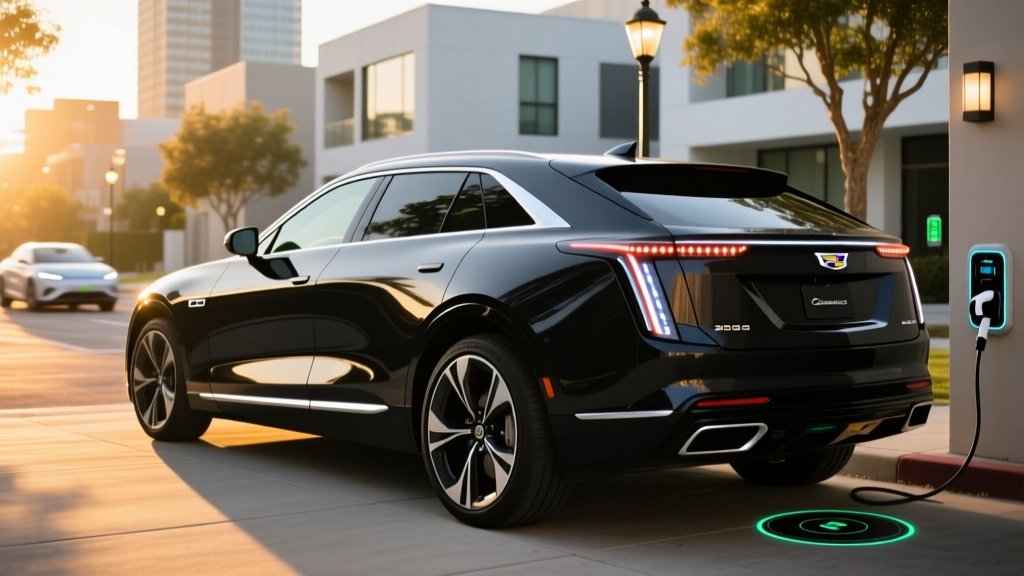
The Cadillac Lyriq occupies a specific niche: a premium, rear-biased electric crossover that prioritizes ride comfort and cabin serenity over Nürburgring lap times. For the 2026 model year, Cadillac has streamlined the trim ladder and quietly improved DC charging throughput, making the Lyriq a more compelling proposition for buyers cross-shopping the BMW iX, Genesis Electrified GV70, and Tesla Model X. But the real story for deal-seekers is how federal tax credits, dealer incentives, and trim-level pricing intersect to create genuine value windows.
This review dissects the 2026 Lyriq's real-world range, charging behavior, ownership economics, and where the best deals actually live — backed by EPA data, IRS §30D rules, and owner-relevant analysis.
Range, Battery, and Efficiency: What the EPA Number Doesn't Tell You
The 2026 Lyriq rides on GM's Ultium platform with a 102 kWh usable battery (112 kWh gross, NMC lithium-ion chemistry). The EPA rates the rear-wheel-drive (RWD) Lyriq at 314 miles and the all-wheel-drive (AWD) variant at 307 miles. Efficiency lands at 89 MPGe combined for RWD, translating to roughly 38 kWh per 100 miles.
EPA 314 mi (RWD) / 307 mi (AWD) is the sticker. In practice:
- Highway cruising (70-75 mph, 65°F): Expect ~260-280 miles before hitting 10% SoC.
- Cold weather (20-30°F, highway): Range drops to ~220-245 miles. The Lyriq's heat pump mitigates cabin energy draw but battery resistance still limits usable capacity.
- City/commuter driving (regenerative braking active): You can approach or slightly exceed the EPA number.
The Lyriq's 3,500-lb towing capacity (when equipped) will cut range by 30-40% under load — plan charging stops accordingly.
The NMC chemistry delivers strong energy density but requires more careful long-term State of Charge management than LFP packs. GM recommends daily charging to 80-90% and saving 100% fills for road trips.
| Spec | RWD | AWD |
|---|---|---|
| EPA Range | 314 mi | 307 mi |
| Battery (usable/gross) | 102 kWh / 112 kWh, NMC | |
| Efficiency (MPGe combined) | 89 MPGe | 87 MPGe |
| 0-60 mph | 6.0 sec | 4.6 sec |
| Horsepower | 340 hp | 500 hp |
| Drivetrain | Rear-Wheel Drive | Dual-Motor AWD |
| Max DC Fast Charge | 190 kW | |
| 10-80% DC Charge Time | ~28 min | |
| Level 2 Home Charge Rate | 11.5 kW (~31 mi/hr) | |
| Cargo (rear seats up / folded) | 28.0 / 60.9 cu ft | |
| Wheelbase | 121.8 in | |
Charging Speed and Infrastructure: 190 kW Peak, But Mind the Curve
The 2026 Lyriq supports 190 kW peak DC fast charging via the CCS1 connector (NACS adapter included for Tesla Supercharger access). A 10-80% session takes approximately 28 minutes at a capable 350 kW station. However, the charge curve tells the full story: peak rate holds from roughly 10-45% SoC, then tapers to ~120 kW through 65%, and drops below 60 kW past 80%. Charging from 80-100% at a DC fast charger is painfully slow — plan to unplug at 80% and move on.
| Charge Level | Power | Miles Added per Hour | Typical Use Case |
|---|---|---|---|
| Level 1 (120V household) | 1.4 kW | ~3 mi/hr | Emergency/top-up only |
| Level 2 (240V home, 48A) | 11.5 kW | ~31 mi/hr | Overnight home charging |
| DC Fast Charge (peak) | 190 kW | ~195 mi in 10 min (10-45%) | Road trips |
At home on a properly installed Level 2 (240V/60A circuit), the Lyriq adds roughly 31 miles of range per hour. A full overnight session from 20% to 90% takes about 8 hours. Home charging installation typically runs $800-$2,500 depending on panel capacity and conduit distance — budget accordingly and get a licensed electrician's quote before purchasing.
GM provides two years of complimentary DC fast charging at Electrify America stations (limited kWh allotment), which meaningfully offsets road-trip fueling costs in the early ownership period.
Pricing, Trims, and Where the Real 2026 Lyriq Deals Live
The 2026 Lyriq lineup is leaner than prior years, with three primary trims:
| Trim | Base MSRP | As-Tested (typical) | §30D Credit Eligible? | Effective Price* |
|---|---|---|---|---|
| Luxury (RWD) | $58,590 | $61,000-$64,000 | Yes (up to $7,500) | ~$51,090-$56,500 |
| Sport (RWD/AWD) | $63,590 | $67,000-$72,000 | Yes (up to $7,500) | ~$56,090-$64,500 |
| Performance (AWD) | $72,590 | $76,000-$80,000 | Yes (up to $7,500) | ~$65,090-$72,500 |
*Effective price assumes full $7,500 federal tax credit. Actual credit depends on individual tax liability, income caps, and battery-sourcing compliance. See §30D eligibility below.
Dealers frequently discount the Luxury RWD trim by $2,000-$5,000 off MSRP, particularly on carryover colors and inventory that has sat 60+ days. The Sport trim sees smaller discounts ($500-$2,000) due to stronger demand for the AWD dual-motor setup. Stack a dealer discount with the $7,500 point-of-sale credit transfer, and a Luxury RWD Lyriq can land in the low-$50,000s — a strong value for a premium EV crossover with this spec sheet.
- MSRP cap: SUVs/crossovers must be under $80,000. All 2026 Lyriq trims qualify.
- Buyer income cap: AGI ≤ $150,000 (single), $225,000 (head of household), $300,000 (married filing jointly).
- Battery sourcing: Critical minerals and battery components must meet escalating domestic/free-trade-partner thresholds. Cadillac confirms 2026 Lyriq meets current-year sourcing requirements.
- Point-of-sale transfer: Buyers can transfer the credit to the dealer at purchase, reducing the purchase price directly (no waiting for tax filing).
- Tax liability: The credit is non-refundable. If your federal tax liability is less than $7,500, you receive only the amount you owe. Point-of-sale transfer converts it to a price reduction regardless.
Verify current eligibility at IRS.gov §30D. Rules are subject to legislative change.
Performance and Driving Dynamics: Comfort Over Aggression
The RWD Lyriq delivers 340 hp and a 6.0-second 0-60 mph time — adequate for merging and passing but not thrilling. The AWD dual-motor variant bumps output to 500 hp and drops 0-60 to 4.6 seconds, which is genuinely quick for a 5,700-lb vehicle.
The Lyriq's strength is ride quality. GM's five-link rear suspension and available air springs (on Sport and Performance trims) deliver a compliant, quiet ride that outclasses the firmer BMW iX and the Tesla Model X in comfort metrics. Steering is light and precise, though feedback is minimal. Regenerative braking offers adjustable levels including a one-pedal-driving mode, though the brake pedal feel remains slightly disconnected — common in heavy EVs blending regen and friction braking.
Interior, Tech, and Daily Usability
The cabin centers on a 33-inch diagonal LED display spanning the instrument cluster and infotainment screen, running Google Built-In (Google Maps, Assistant, and Play Store native). Wireless Apple CarPlay and Android Auto are standard. The system is responsive, though the reliance on touch controls for climate and seat functions draws complaints from traditionalists.
Passenger space is generous: 41.2 inches of front legroom and 38.4 inches rear, with a flat floor thanks to the Ultium skateboard. Cargo volume is 28.0 cubic feet behind the second row (expanding to 60.9 cu ft folded) — competitive with the Audi Q8 e-tron but trailing the BMW iX's 35.5 cu ft. Notably, the Lyriq has no front trunk (frunk); GM sealed that space for structural rigidity.
Driver assistance comes via GM's Super Cruise on mapped divided highways — a SAE Level 2 system requiring continuous driver attention (monitored via steering-wheel and eye-tracking sensors). Super Cruise is among the most refined Level 2 systems available, with smooth lane changes and reliable hands-off operation on ~750,000 miles of mapped North American roads. It is not autonomous driving and will disengage in construction zones, unmapped roads, or if the driver looks away.
GM Super Cruise is an SAE Level 2 driver-assist system. You must remain engaged, keep your eyes on the road, and be prepared to take over instantly. It does not handle city streets, unmapped roads, or adverse weather autonomously. No production consumer vehicle currently offers Level 4 self-driving capability.
Warranty and Long-Term Ownership Costs
GM backs the Lyriq with a competitive warranty package:
- Battery/Powertrain: 8 years / 100,000 miles (covers defects and capacity below 70% of original)
- Bumper-to-Bumper: 4 years / 50,000 miles
- Corrosion: 6 years / 70,000 miles
- Roadside Assistance: 6 years / 70,000 miles
The 70% capacity retention threshold is standard for the industry but less generous than Hyundai/Kia's 70% at 10 years/100,000 miles on the Ioniq 5. NMC degradation data from early Ultium-platform vehicles (2023-2024 models) suggests 5-8% loss over 100,000 miles under normal use — well within the warranty buffer. Avoid habitual DC fast charging above 90% SoC and prolonged storage at 100% to maximize longevity.
Insurance premiums run 15-25% higher than comparable ICE crossovers due to repair cost and parts pricing. Expect $2,200-$3,200 annually depending on location and driving record.
Lyriq vs. the Competition: Where Does the Deal Make Sense?
At effective post-credit pricing in the $50,000-$65,000 range, the Lyriq competes directly with:
- BMW iX xDrive50: More powerful, sportier handling, better cargo space — but starts $15,000+ higher and the iX does not qualify for the full §30D credit in many configurations due to sourcing rules.
- Genesis Electrified GV70: Comparable luxury and ride quality, slightly shorter range (236 mi EPA), smaller cargo area. Often available with larger dealer discounts.
- Tesla Model X: Faster, longer range, Supercharger native — but panel gaps, service center wait times, and a less refined ride deter luxury-focused buyers.
- Audi Q8 e-tron: Strong build quality and 285-mile range, but slower DC charging (170 kW peak) and a higher starting price.
- Ride comfort and cabin quietness are top priorities
- You want a proven Level 2 highway assist (Super Cruise) on mapped routes
- Federal tax credit eligibility is confirmed for your income level
- You prefer a traditional luxury dealer experience over direct-to-consumer
- You prioritize maximum range (Tesla Model X, Rivian R1S)
- You need a frunk or maximum cargo versatility
- You want the sportiest handling in the segment (BMW iX)
- You regularly drive unmapped rural roads where Super Cruise can't operate
Pros, Cons, and Final Verdict
- 314-mile EPA range (RWD) is competitive for the class
- Super Cruise is among the best Level 2 highway systems
- Ride quality and cabin isolation exceed segment norms
- All trims qualify for up to $7,500 federal tax credit
- 33-inch display is visually striking and functional
- Complimentary Electrify America charging for 2 years
- No front trunk (frunk) — lost cargo utility
- Touch-heavy climate/seat controls frustrate some drivers
- 190 kW peak DC charging trails 250+ kW competitors
- RWD 6.0-second 0-60 feels leisurely at this price point
- Insurance premiums 15-25% above ICE equivalents
- Real-world highway range drops to ~260 mi in practice
The 2026 Cadillac Lyriq is best understood as a comfort-oriented luxury EV that rewards patient deal-hunters. A Luxury RWD trim with a dealer discount and the full $7,500 point-of-sale credit transfer delivers a premium electric crossover for low-$50,000 money — a genuine value in this segment. Verify your §30D eligibility, test the Super Cruise system on a mapped highway near you, and negotiate hard on inventory sitting 60+ days.
Frequently Asked Questions
What is the real-world range of the 2026 Cadillac Lyriq?
The EPA rates the RWD Lyriq at 314 miles and AWD at 307 miles. In real-world highway driving at 70-75 mph, expect 260-280 miles. Cold weather (below 30°F) can reduce range to 220-245 miles. City driving with regenerative braking can match or slightly exceed the EPA figure.
How fast does the Lyriq charge at home and on the road?
On a Level 2 home charger (240V, 48A), the Lyriq charges at 11.5 kW, adding about 31 miles of range per hour. A full overnight charge from 20% takes roughly 8 hours. On DC fast chargers, it peaks at 190 kW with a 10-80% time of about 28 minutes, though charging tapers significantly above 80% SoC.
How much does the 2026 Lyriq cost after federal tax credits?
The Luxury RWD starts at $58,590 MSRP. With the full $7,500 §30D credit (transferred at point of sale), the effective price drops to approximately $51,090 before dealer discounts. Dealer incentives of $2,000-$5,000 on select inventory can push the out-the-door price into the low-$50,000s. Eligibility depends on income caps and tax liability.
Does the 2026 Cadillac Lyriq qualify for the $7,500 federal EV tax credit?
Yes, all 2026 Lyriq trims fall under the $80,000 SUV MSRP cap and meet current-year battery-sourcing requirements. Buyer income must not exceed $150,000 (single), $225,000 (head of household), or $300,000 (married filing jointly). The credit can be transferred to the dealer at purchase as a price reduction. Confirm current rules at IRS.gov.
Is the Lyriq worth buying vs. the BMW iX or Tesla Model X?
If ride comfort, cabin quietness, and Super Cruise highway assist matter most, the Lyriq wins. The BMW iX is sportier and roomier but costs significantly more. The Tesla Model X offers more range and faster charging but a less refined ride and ownership experience. Post-credit, the Lyriq Luxury RWD undercuts both competitors by $15,000-$30,000.
What are the biggest drawbacks of the Cadillac Lyriq?
The lack of a frunk reduces cargo flexibility. The 190 kW peak DC charge rate trails newer 800V competitors. Touch-only climate controls annoy some drivers. The RWD model's 6.0-second 0-60 feels underwhelming for the price. Insurance costs run 15-25% higher than equivalent gas crossovers.
How does Super Cruise work, and is it self-driving?
Super Cruise is an SAE Level 2 driver-assist system that enables hands-off driving on approximately 750,000 miles of mapped divided highways. It uses eye-tracking and steering-wheel sensors to confirm driver attention. It is not autonomous — you must remain alert, and the system disengages on unmapped roads, in construction zones, or in poor visibility. You are legally responsible for the vehicle at all times.