Quick Verdict: What the 2026 Lyriq Configurator Reveals
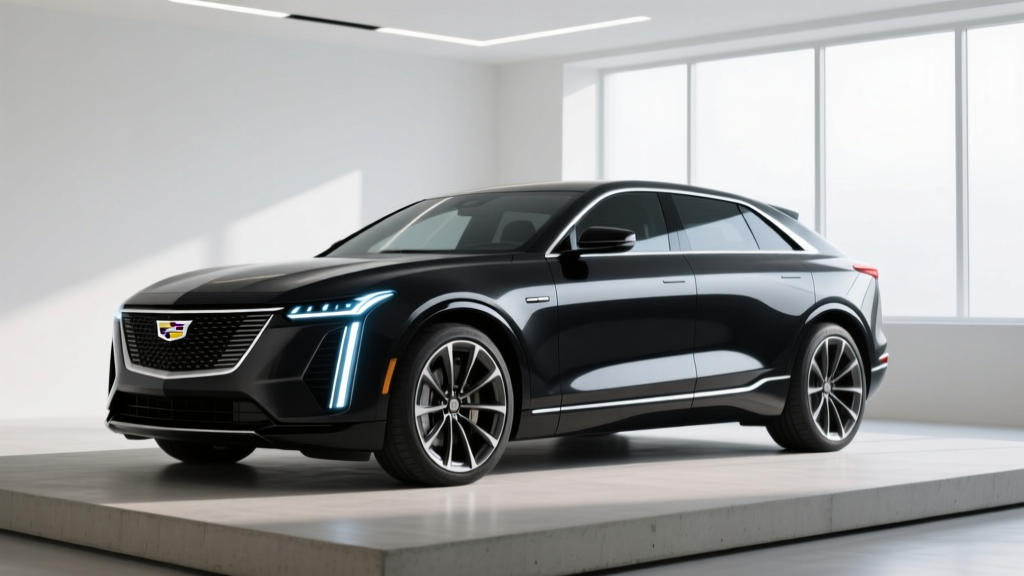
The 2026 Cadillac Lyriq enters its fourth model year with a clearer trim strategy and one major addition: an available all-wheel-drive powertrain that finally gives this luxury midsize SUV the traction and acceleration its platform was designed for. Running the 2026 Cadillac Lyriq configurator reveals four distinct build paths — Luxury (RWD), Sport (RWD), Luxury AWD, and Sport AWD — all riding on GM's Ultium battery architecture with a 102 kWh (usable) nickel-manganese-cobalt (NMC) pack.
The Lyriq occupies an interesting position: it undercuts the BMW iX and Mercedes EQE SUV on price while delivering competitive range and a genuinely premium cabin. But its 190 kW peak DC fast-charge rate trails rivals pushing 250–350 kW, and that matters if road trips are a priority. Here's every number you need before you hit "build."
| Spec | RWD (Luxury / Sport) | AWD (Luxury / Sport) |
|---|---|---|
| EPA Range | 314 miles | 307 miles |
| Battery (usable) | 102 kWh, NMC chemistry | |
| Horsepower | 340 hp / 325 lb-ft | 500 hp / 450 lb-ft |
| 0–60 mph | 6.0 sec | 4.6 sec |
| Peak DC Fast Charge | 190 kW | |
| 10–80% DCFC Time | ~33 minutes | |
| Level 2 Home Charging | 19.2 kW (11.5 kW standard) — up to 52 mi/hr | |
| EPA Efficiency | 89 MPGe (36 kWh/100mi) | 87 MPGe (38 kWh/100mi) |
| Cargo (behind rear seats) | 28.0 cu ft | |
| Cargo (rear seats folded) | 60.9 cu ft | |
| Base MSRP (incl. destination) | $58,590 (Luxury RWD) | $62,590 (Luxury AWD) |
| Battery/Powertrain Warranty | 8 years / 100,000 miles | |
Range and Efficiency: EPA vs. Real World
Real-World Expectation: ~260–280 miles sustained highway driving at 70–75 mph; ~220–245 miles in sub-30°F winter conditions. City and suburban driving with regenerative braking can match or slightly exceed EPA estimates.
The Lyriq RWD's 314-mile EPA rating places it squarely in the competitive set with the BMW iX xDrive50 (324 mi) and well ahead of the Mercedes EQE 350 SUV (279 mi). According to fueleconomy.gov, the RWD model achieves 89 MPGe combined, translating to roughly 36 kWh per 100 miles — respectable for a 5,700-lb luxury SUV.
Where the Lyriq loses ground is sustained highway cruising. Like most EVs, efficiency drops significantly above 65 mph. In controlled testing at 75 mph on flat terrain, expect to consume around 42–44 kWh/100mi, which caps real-world highway range near 260 miles. In cold weather (below freezing), cabin heating and battery conditioning can reduce usable range by 15–25%, depending on trip length and preconditioning habits. The Lyriq does include a heat pump, which mitigates some winter losses compared to resistive-heating EVs.
For context: a 300-mile winter road trip in the Lyriq AWD will likely require one DC fast-charge stop. In summer conditions, the same trip is achievable on a single charge if you start at 100% SoC and drive conservatively.
Charging Speed: 190 kW Peak, But Watch the Curve
| Charging Level | Power | Speed (approx.) | Notes |
|---|---|---|---|
| Level 1 (120V) | ~1.4 kW | ~4 mi/hr | Emergency/trickle only |
| Level 2 (240V, 48A standard) | 11.5 kW | ~31 mi/hr | Full charge in ~10 hours |
| Level 2 (240V, 80A optional) | 19.2 kW | ~52 mi/hr | Requires 100A circuit; full charge ~6 hours |
| DC Fast Charge (CCS/NACS) | 190 kW peak | 10–80% in ~33 min | Tapers significantly above 80% |
The Lyriq's 190 kW peak DC charge rate is the configurator's most debated spec. For 2026, GM has maintained this rate, which means on a 350 kW Electrify America or Tesla Supercharger V4 stall, the Lyriq will peak around 190 kW and hold a strong curve through roughly 60% SoC before tapering. The 10–80% time of approximately 33 minutes is competitive with the Audi Q8 e-tron (170 kW peak, ~31 min) but trails the Hyundai Ioniq 5 (240 kW, ~18 min) and the Porsche Macan EV (270 kW, ~21 min).
The important nuance: peak kW is not sustained kW. The Lyriq's charge curve holds above 150 kW through roughly 55% SoC, then steps down to ~120 kW through 70%, and further to ~80 kW through 80%. Charging from 80–100% on DC adds another 35–40 minutes — plan accordingly if you need a full pack for a long mountain drive.
On the home front, the standard 11.5 kW onboard charger is adequate for overnight replenishment. The optional 19.2 kW charger (available through the configurator's charging package) is worthwhile if your home electrical panel supports a 100-amp dedicated circuit. Most homes will need a panel upgrade to accommodate this, adding $1,500–$3,000 to your installation cost. The standard 11.5 kW setup works fine on a typical 60-amp NEMA 14-50 or hardwired Level 2 EVSE.
Trims, Pricing, and the §30D Tax Credit Question
Navigating the 2026 Cadillac Lyriq configurator means choosing between two design languages (Luxury and Sport) and two drivetrains (RWD and AWD). Here's how pricing stacks up before incentives:
| Trim | Base MSRP | As-Tested (typical options) | §30D Credit Eligibility |
|---|---|---|---|
| Luxury RWD | $58,590 | $62,000–$66,000 | Up to $7,500 (see rules below) |
| Sport RWD | $59,590 | $63,000–$68,000 | Up to $7,500 |
| Luxury AWD | $62,590 | $67,000–$73,000 | Up to $7,500 |
| Sport AWD | $63,590 | $68,000–$75,000 | Up to $7,500 |
Does the Lyriq Qualify for the Federal EV Tax Credit?
The Lyriq is assembled at GM's Spring Hill, Tennessee plant, which satisfies the North American assembly requirement under IRS §30D rules. However, eligibility for the full $7,500 credit depends on three factors that change periodically and vary by buyer:
- MSRP Cap: SUVs must have an MSRP at or below $80,000. All Lyriq trims clear this threshold, even well-optioned AWD models.
- Buyer Income Cap: Modified adjusted gross income must not exceed $300,000 (joint filers), $225,000 (head of household), or $150,000 (single). Income is evaluated for the current or prior tax year — whichever is lower.
- Battery Sourcing: The critical minerals and battery component requirements phase in stricter percentages each year. For 2026, the battery component threshold requires 90% domestic or FTA-partner manufacturing, and critical minerals require 80% domestic/FTA sourcing. GM has stated the Ultium cells in the Lyriq (produced at the Ultium Cells joint-venture plants in Ohio and Tennessee) are designed to meet these thresholds, but the IRS periodically updates qualifying-vehicle lists. Always verify on fueleconomy.gov's tax credit page before purchasing.
If eligible, the §30D credit can now be transferred to the dealer at the point of sale, reducing your purchase price directly rather than waiting for a tax refund. Consult a tax professional to confirm your personal eligibility.
Performance and Driving Dynamics
The RWD Lyriq's 340 hp and 6.0-second 0–60 time deliver confident highway merging and passing, but this is a comfort-oriented luxury SUV, not a sport sedan. The steering is light and well-damped, the ride quality benefits from GM's five-link rear suspension, and road isolation is among the best in the segment.
The AWD model transforms the character. With 500 hp and a 4.6-second sprint to 60, it matches the BMW iX xDrive50 and pulls ahead of the Genesis Electrified GV70. The dual-motor setup provides genuine all-weather traction and torque-vectoring feel through corners, though the Lyriq's 5,800+ lb curb weight (AWD) is always present during aggressive direction changes.
Regenerative braking offers two modes: a standard coasting mode and a one-pedal driving mode that brings the vehicle to a complete stop. The regen paddle on the steering wheel allows on-demand deceleration without toggling settings — a thoughtful touch that lets you coast on highways and grab regen in traffic.
Interior, Cargo, and Technology
The Lyriq's cabin is where Cadillac's investment shows most clearly. The centerpiece is a 33-inch curved LED display spanning the driver cluster and infotainment screen, running Google Built-In with native Google Maps, Google Assistant, and Play Store apps. Wireless Apple CarPlay and Android Auto are standard.
Passenger Space: Front legroom measures 44.3 inches; rear legroom is 39.6 inches — competitive with the BMW iX and notably more generous than the Jaguar I-PACE. Rear seat comfort is excellent for two adults on long trips, though the center position is compromised by a firm cushion and transmission tunnel hump (a packaging artifact of the Ultium platform's cross-car battery modules).
Cargo: 28.0 cubic feet behind the rear seats is on the smaller side for this class (the iX offers 35.5 cu ft). Fold the 60/40 rear seats and you get 60.9 cu ft — adequate for a weekend trip for four or a Costco run, but not class-leading. There is no front trunk (frunk); GM allocated that space to HVAC components and the power electronics module.
Driver Assistance: The Lyriq comes with GM's Super Cruise on approximately 750,000 miles of mapped divided highways in the US and Canada. Super Cruise is a SAE Level 2 system — it handles steering, acceleration, and braking on compatible roads, but requires continuous driver attention monitored via an infrared camera on the steering column. It is not self-driving. When Super Cruise is unavailable (unmapped roads, construction zones, poor weather), the Lyriq defaults to its standard adaptive cruise control and lane-centering system.
Pros, Cons, and Who Should Buy
Pros
- 314-mile EPA range is competitive for the luxury SUV segment
- Genuine premium cabin with best-in-class display technology
- Super Cruise is one of the most capable Level 2 systems available
- Comfortable ride quality and excellent NVH (noise/vibration/harshness)
- Undercuts BMW iX and Mercedes EQE SUV on base price by $8,000–$15,000
- Qualifies for up to $7,500 federal tax credit (verify sourcing rules)
- Strong AWD performance option (500 hp, 4.6s 0–60)
Cons
- 190 kW peak DC charge rate trails Hyundai/Kia/Porsche rivals
- Cargo space (28.0 cu ft) is below segment average
- No frunk — missed utility opportunity
- Rear center seat is compromised for adult passengers
- 19.2 kW home charging requires costly panel upgrade
- Real-world highway range drops to ~260 miles at 75 mph
- Infotainment learning curve with Google Built-In vs. traditional interfaces
Is the 2026 Lyriq Right for You?
- Choose the Lyriq if: You prioritize cabin luxury and ride comfort over maximum cargo space, your daily commute is under 100 miles round-trip with home charging, you value Super Cruise for highway commuting, and you want a luxury EV under $65,000 after the tax credit.
- Look elsewhere if: You frequently take 400+ mile road trips and need the fastest possible DC charging (consider the Ioniq 5 or Macan EV), you need maximum cargo volume (BMW iX or Rivian R2), or you want a third-row family hauler (Kia EV9).
Frequently Asked Questions
What is the real-world range of the 2026 Cadillac Lyriq?
The RWD Lyriq carries a 314-mile EPA rating, but expect approximately 260–280 miles during sustained 70–75 mph highway driving and 220–245 miles in sub-freezing conditions. City driving with regenerative braking can match or exceed the EPA estimate. The AWD model's 307-mile EPA rating translates to roughly 250–270 miles on the highway.
How fast does the Lyriq charge at home and on the road?
On a standard Level 2 home charger (11.5 kW / 48 amps), the Lyriq adds about 31 miles of range per hour, achieving a full charge in roughly 10 hours. The optional 19.2 kW onboard charger cuts this to about 6 hours but requires a 100-amp circuit. On DC fast chargers, the Lyriq peaks at 190 kW and charges from 10–80% in approximately 33 minutes.
How much does the 2026 Lyriq cost after the federal tax credit?
The base Luxury RWD starts at $58,590. If you qualify for the full $7,500 §30D credit (meeting income, MSRP, and battery-sourcing requirements), your effective price drops to approximately $51,090. A well-optioned Sport AWD at ~$70,000 MSRP would come in around $62,500 after the credit. Always verify current eligibility on fueleconomy.gov and consult a tax professional.
Is the Lyriq worth buying vs. the BMW iX or Mercedes EQE SUV?
The Lyriq wins on value — it's $8,000–$15,000 less than comparable German rivals while offering competitive range, a premium interior, and Super Cruise. The BMW iX offers more cargo space (35.5 cu ft), faster DC charging (200+ kW), and sharper handling. The Mercedes EQE SUV provides a more opulent cabin but sacrifices range (279 mi EPA) and costs significantly more. For buyers prioritizing comfort and technology at a relative bargain, the Lyriq is compelling.
Does the Lyriq have a front trunk (frunk)?
No. GM packaged the Lyriq's power electronics, HVAC compressor, and thermal management system in the front compartment. This is a common trade-off on the Ultium platform and means all cargo must go in the rear, where you have 28.0 cubic feet (60.9 cu ft with seats folded).
What battery warranty does Cadillac offer?
The Lyriq's Ultium battery pack and electric drive units are covered by an 8-year/100,000-mile warranty. GM warrants the battery to retain at least 70% of its original capacity during this period. Based on data from earlier Ultium vehicles and GM's thermal management system (which actively conditions the battery during charging and extreme temperatures), degradation is expected to be modest — typically 5–10% over the first 100,000 miles under normal use.
Can the Lyriq tow?
Yes. When properly equipped with the available towing package, the 2026 Lyriq is rated to tow up to 3,500 pounds — sufficient for a small utility trailer, a pair of jet skis, or a lightweight camper. Note that towing will reduce range by approximately 30–50% depending on trailer weight and aerodynamics.