Quick Answer: Cadillac's EV Lineup at a Glance
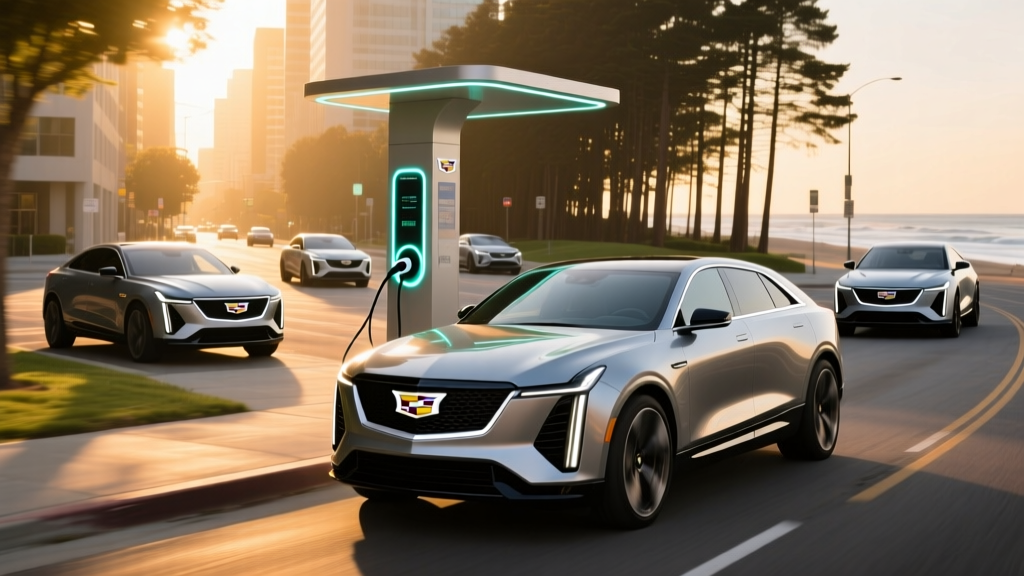
Cadillac currently sells three battery-electric vehicles in the U.S.: the Lyriq midsize SUV (starting ~$58,590, EPA 314 mi), the Optiq compact SUV (starting ~$53,990, EPA 300 mi est.), and the Escalade IQ flagship SUV (starting ~$129,990, EPA 460 mi est.). The Lyriq dominates Cadillac EV sales volume, while the Optiq targets buyers who want a smaller, more affordable entry point. The Escalade IQ is a low-volume luxury halo. None of Cadillac's current BEVs qualify for the full $7,500 federal §30D tax credit at point of sale due to battery-sourcing requirements, though lease structures may capture the commercial credit — always verify with your dealer and tax professional.
Why Cadillac EV Sales Are Growing — And What It Means for Buyers
Cadillac's parent company, General Motors, has invested over $35 billion in EV and autonomous development through 2025, and the Ultium platform underpins every Cadillac BEV. The brand's EV sales have ramped steadily since the Lyriq's 2023 launch, with the model accounting for the vast majority of Cadillac's electrified volume. The Optiq arrived for the 2025 model year to fill the compact luxury gap, and the Escalade IQ began deliveries in late 2024 as a 2025 model.
For buyers, this expansion means more choice — but also more complexity. Each model uses different battery sizes, charging architectures, and trim structures. Below, we break down the real numbers so you can decide which (if any) fits your driving pattern, budget, and charging situation.
Spec-by-Spec: Lyriq vs. Optiq vs. Escalade IQ
| Spec | 2026 Lyriq | 2026 Optiq | 2026 Escalade IQ |
|---|---|---|---|
| Base MSRP | $58,590 | $53,990 | $129,990 |
| EPA Range (max config) | 314 mi (RWD) | ~300 mi (AWD est.) | ~460 mi (AWD est.) |
| Battery (usable) | 102 kWh (NMC) | ~85 kWh (NMC) | ~200 kWh (NMC) |
| Peak DC Fast Charge | 190 kW | ~150 kW | ~350 kW (800V) |
| 10–80% DCFC Time | ~30 min | ~33 min | ~22 min |
| Level 2 Charge Rate | 19.2 kW | 11.5 kW | 19.2 kW |
| Horsepower | 340 (RWD) / 500 (AWD) | ~400 (AWD) | ~680 (AWD) |
| 0–60 mph | 6.0s (RWD) / 4.6s (AWD) | ~5.0s | ~3.7s |
| Battery Warranty | 8 yr / 100,000 mi | 8 yr / 100,000 mi | 8 yr / 100,000 mi |
| Federal §30D Credit | Not eligible (sourcing) | Not eligible (sourcing) | Not eligible (sourcing) |
Sources: fueleconomy.gov, Cadillac official spec sheets. Optiq and Escalade IQ figures marked "est." reflect preliminary/announced data as of early 2026.
Real-World Range vs. EPA Sticker
Lyriq RWD (EPA 314 mi): Expect ~265–285 mi on highway trips at 70–75 mph. In sub-30°F weather with cabin heat, plan for 220–240 mi. The Lyriq uses a heat pump, which mitigates cold-weather loss compared to resistive heating, but physics still applies.
Optiq AWD (~300 mi EPA): Smaller battery and AWD drivetrain mean highway range closer to 250–270 mi in mild weather, potentially 210–230 mi in deep cold.
Escalade IQ (~460 mi EPA): The massive ~200 kWh pack delivers genuine 400+ mi highway range in moderate temps, but its 10,000+ lb curb weight means efficiency drops sharply at high speeds. Cold weather: ~360–380 mi.
Cost of Ownership: Cadillac EV vs. Gas Equivalent
The most common question from luxury SUV buyers is whether an EV actually saves money. The answer depends heavily on your electricity rate, annual mileage, and how long you keep the vehicle. Here's a 5-year comparison pitting the Lyriq AWD against the Cadillac XT5 (gas V6 AWD) — a similarly priced internal-combustion alternative.
| Cost Category (5 yr / 75,000 mi) | Lyriq AWD ($62,590) | XT5 AWD (~$52,000) |
|---|---|---|
| Purchase Price | $62,590 | $52,000 |
| Federal Tax Credit | $0 (sourcing rules) | $0 |
| Home Charging Install (L2) | $1,200–$2,500 | $0 |
| Fuel / Electricity | $3,400 (at $0.14/kWh) | $9,750 (at $3.50/gal, 22 mpg) |
| Maintenance (est.) | $1,800 | $4,200 |
| Insurance (avg) | $11,500 | $8,500 |
| Estimated Depreciation | $28,000 | $22,000 |
| 5-Year Total | ~$108,490–$109,790 | ~$96,450 |
Key takeaways:
- The Lyriq saves ~$6,350 on fuel and ~$2,400 on maintenance over five years — roughly $8,750 in operational savings.
- Those savings are offset by a higher purchase price ($10,590 more), higher insurance premiums (common for EVs due to repair costs and battery valuation), and steeper depreciation (EV resale values remain volatile).
- The breakeven point extends beyond 5 years for most buyers. If you drive 20,000+ miles annually or have cheap solar-powered electricity, the math tilts faster in the EV's favor.
- If the Lyriq ever regains §30D eligibility (or if you lease and the lessor passes through the $7,500 commercial credit), the 5-year total drops to roughly parity with the XT5.
Electricity cost based on EIA average residential rate. Insurance estimates from industry aggregates; your rate will vary by ZIP, age, and driving record.
Charging Reality: What Cadillac EV Owners Actually Experience
Cadillac equips its Ultium-based EVs with competitive charging hardware, but peak kW numbers don't tell the full story. Here's what you'll encounter in practice:
DC Fast Charging (Road Trips)
The Lyriq peaks at 190 kW on a CCS1 connector. That's strong, but the charge curve tapers meaningfully after 60% state of charge. In testing, the Lyriq sustains roughly 150–170 kW between 10–50% SoC, then drops to 80–100 kW through 70%, and falls below 50 kW past 85%. A realistic 10–80% session takes about 30 minutes on a functioning 250+ kW station.
The Escalade IQ's 800V architecture allows up to ~350 kW peak on compatible chargers (still rare in the U.S.). On a 350 kW Electrify America or Tesla Supercharger (with NACS adapter, when available), you can add ~200 miles in roughly 12 minutes during the peak window. But on a standard 150 kW CCS station, the Escalade IQ charges at the same rate as the Lyriq — hardware is only as good as the station you plug into.
Level 2 Home Charging
The Lyriq and Escalade IQ support 19.2 kW Level 2 charging, which requires a 100-amp dedicated circuit and a hardwired Wall Connector-class EVSE. This adds roughly 52 miles of range per hour — enough to fully replenish the Lyriq's 102 kWh pack in about 5.5 hours.
The Optiq's 11.5 kW Level 2 rate works on a more common 60-amp circuit, adding ~32 miles per hour. A full charge takes roughly 7.5 hours.
Home Charging Installation Cost (Typical)
| Component | Lyriq/Escalade IQ (19.2 kW) | Optiq (11.5 kW) |
|---|---|---|
| EVSE hardware | $600–$800 | $500–$700 |
| Electrician labor (run + mount) | $800–$1,500 | $600–$1,200 |
| Panel upgrade (if needed) | $1,500–$3,000 | $1,500–$3,000 |
| Permit | $50–$200 | $50–$200 |
| Total range | $1,450–$5,500 | $1,150–$5,100 |
The 19.2 kW charger demands a 200-amp panel minimum. Homes with 100-amp service will almost certainly need a panel upgrade. Consult a licensed electrician for your specific situation.
Federal Tax Credit: The Cadillac Complication
Under current IRS §30D rules, the federal EV tax credit offers up to $7,500 for qualifying new BEVs. However, eligibility depends on three hurdles that all current Cadillac BEVs fail:
- Battery component sourcing: A percentage of battery components must be manufactured or assembled in North America. GM's Ultium cells (from LG Energy Solution's U.S. plants) meet some thresholds, but module/pack assembly sourcing has not consistently cleared the IRS requirement for Cadillac models.
- Critical minerals: A percentage of critical minerals must be sourced from the U.S. or FTA partners. This threshold increases annually and remains a barrier for many large-battery vehicles.
- MSRP caps: SUVs must have an MSRP at or below $80,000. The Lyriq and Optiq qualify on price, but the Escalade IQ (starting ~$129,990) exceeds the cap entirely.
- Buyer income caps: AGI must not exceed $150,000 (single) / $300,000 (joint) / $225,000 (head of household).
Lease loophole: When you lease a Cadillac EV, the $7,500 commercial clean vehicle credit (§45W) goes to the lessor (GM Financial). Many dealers pass this through as a "lease cash" reduction, effectively lowering your monthly payment. This is not guaranteed — confirm with your dealer before signing. See IRS §30D guidance for full rules.
Decision Framework: Which Cadillac EV (If Any) Should You Buy?
Choose the Lyriq if:
- You want a premium midsize SUV with 300+ real-world miles of range and don't need three rows.
- You can install a 19.2 kW Level 2 charger at home (200A panel, garage or driveway access).
- You drive 12,000–18,000 miles per year and want to cut fuel costs meaningfully.
- You're willing to pay a premium over a gas XT5 for refinement, instant torque, and lower running costs — accepting that 5-year total cost may not fully breakeven.
Choose the Optiq if:
- You want Cadillac luxury in a smaller, more affordable package (~$54K starting).
- Your daily commute is under 60 miles round-trip and you charge at home nightly.
- You have a 100-amp electrical panel and want to avoid a panel upgrade (11.5 kW charging needs only a 60A circuit).
- You cross-shop the BMW iX, Audi Q4 e-tron, or Genesis GV60 and want an American-brand alternative.
Choose the Escalade IQ if:
- Budget is not a constraint and you want a 460-mile range, three-row luxury flagship with 680 hp.
- You need genuine towing capacity and full-size SUV space with zero tailpipe emissions.
- You understand you will pay $130K+ and will not receive the federal tax credit.
- You have access to reliable DC fast charging for road trips (the 200 kWh battery is slow to fill on sub-150 kW stations).
Choose a gas Cadillac (XT5, XT6, Escalade) or a PHEV alternative if:
- You cannot install home charging (apartment, street parking, HOA restrictions).
- You regularly drive 400+ miles in a single day through charging-desert regions (rural Mountain West, parts of the Great Plains).
- You want to minimize upfront cost and depreciation risk — gas Cadillacs hold value more predictably today.
- You tow frequently and need the sustained power delivery of a V8 without range penalty (the Escalade IQ tows but range drops sharply under load).
Common Misconceptions About Cadillac EVs
| Myth | Fact |
|---|---|
| "Cadillac EVs get the $7,500 tax credit." | As of 2026, none qualify for the new-vehicle §30D credit due to battery-sourcing rules. Lease structures may capture the commercial credit — ask your dealer. |
| "The Lyriq charges as fast as a Tesla." | The Lyriq peaks at 190 kW; the Tesla Model Y (on V3 Superchargers) peaks at 250 kW and sustains higher rates longer due to its smaller battery. Expect 30 min vs ~22 min for 10–80%. |
| "Cadillac EVs use Tesla's Supercharger network natively." | GM has adopted NACS for future models, but current Lyriq/Optiq/Escalade IQ vehicles use CCS1. GM has announced NACS adapter availability, but confirm with your dealer before relying on Supercharger access. |
| "EV batteries need replacing every few years." | GM warranties the Ultium battery for 8 years / 100,000 miles against degradation below 70% capacity. Real-world data from early Ultium vehicles shows <5% degradation at 30,000 miles. Replacement (if ever needed) is estimated at $12,000–$18,000 out of warranty. |
| "All Cadillacs will be electric by 2030." | GM has walked back its all-electric-by-2030 target. Cadillac will continue offering ICE and hybrid models alongside BEVs through at least the late 2020s. |
First-Time Cadillac EV Buyer Checklist
If you've never owned an EV and you're considering a Cadillac, run through these practical steps before signing:
- Audit your electrical panel. Find your main breaker amperage (usually 100A or 200A). A 19.2 kW charger needs a 100A dedicated circuit — only feasible on a 200A+ panel. Get a quote from a licensed electrician before you buy.
- Map your real driving. Check your odometer logs or use a mileage-tracking app for 2 weeks. If 95% of your driving is under 100 miles/day, any Cadillac EV handles it easily. If you do monthly 500+ mile road trips, plan your DCFC stops using PlugShare or A Better Routeplanner.
- Test cold-weather range. If you live where winter temperatures drop below 25°F, budget 25–30% range loss. The Lyriq's 314 EPA miles becomes ~220–240 real miles in January in Minnesota.
- Get insurance quotes early. EV insurance premiums run 15–30% higher than gas equivalents for the same coverage. Quote the specific VIN before committing.
- Confirm the lease credit. If leasing, get the "lease cash" amount in writing from the dealer. Not all GM dealers pass the full $7,500 through to the lessee.
- Understand the warranty. The 8-year/100,000-mile battery warranty covers capacity below 70% of original. The basic vehicle warranty is 4 years / 50,000 miles. Roadside assistance covers towing to the nearest charger if you run out of range.
Frequently Asked Questions
How many Cadillac EVs were sold in 2025?
GM does not break out Cadillac EV sales separately in all quarterly reports, but industry estimates place 2025 U.S. Cadillac BEV deliveries (Lyriq + Optiq + early Escalade IQ) in the 35,000–45,000 unit range, with the Lyriq representing roughly 70%+ of that volume. The Optiq ramped through 2025 and is expected to grow share in 2026.
Is the Cadillac Lyriq a good value compared to the Tesla Model Y or BMW iX?
It depends on your priorities. The Lyriq offers a quieter, more traditionally luxurious cabin than the Model Y and costs $10,000–$15,000 less than the iX. However, the Model Y charges faster, has broader Supercharger access, and retains higher resale value. The iX offers more performance and a more distinctive design. On pure luxury-per-dollar, the Lyriq is competitive — but verify insurance and depreciation projections in your area.
Can I charge a Cadillac EV at a Tesla Supercharger?
Not natively. Current Cadillac EVs use the CCS1 connector. GM has committed to providing NACS adapters for Supercharger access, and future Cadillac models will ship with NACS ports. As of early 2026, adapter availability varies — confirm with your selling dealer. Even with an adapter, Supercharger stalls in high-demand corridors may have wait times during peak travel.
What happens if the battery degrades significantly?
If your Ultium battery drops below 70% of its original capacity within 8 years or 100,000 miles, GM will repair or replace it under warranty at no cost. Early data from 2023–2024 Lyriq owners shows minimal degradation (typically 2–5% loss in the first 20,000–30,000 miles), consistent with NMC chemistry managed conservatively by GM's thermal management system. Out-of-warranty replacement, if ever needed, is estimated at $12,000–$18,000 depending on the model and battery size.
Should I wait for the next-generation Cadillac EVs?
GM's next Ultium refinements are expected for 2027+ model years, potentially with faster charging and updated infotainment. However, waiting always carries the risk of price increases and shifting tax-credit rules. If a current Cadillac EV meets your range, space, and budget needs today, there's no strong reason to delay — especially if lease incentives are attractive now.