The Real Math Behind Cadillac EV Lease Deals in 2026
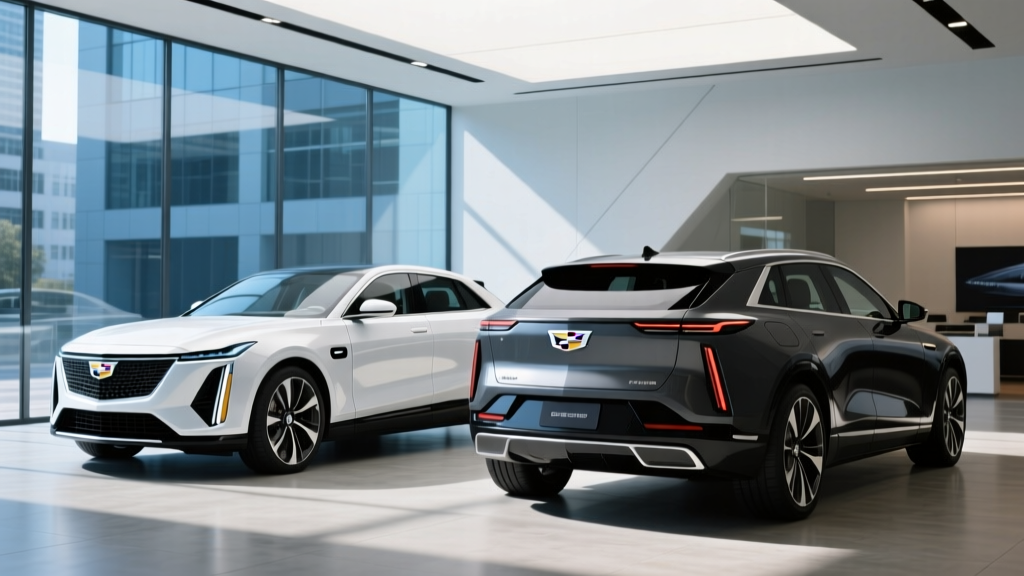
Cadillac's electric lineup has matured past the early-adopter phase. The Lyriq midsize SUV and the newer Optiq compact SUV now anchor the brand's EV strategy, and both appear frequently in lease promotions. But a compelling monthly payment only tells part of the story. To evaluate whether a Cadillac EV lease actually saves you money — or simply shifts costs around — you need a full picture of total cost of ownership (TCO), federal and state incentives, fuel and maintenance savings, and the less-discussed expenses like insurance and depreciation.
This guide walks through the numbers for the 2026 model year, using current IRS §30D rules, EPA efficiency data, and real-world ownership variables. Whether you're cross-shopping the Lyriq against a Tesla Model Y or the Optiq against a BMW iX1, the framework below applies.
Current Cadillac EV Lineup: Lyriq and Optiq at a Glance
Before crunching ownership costs, here's where Cadillac's 2026 EV models stand on paper. Both use GM's Ultium platform with NMC (nickel-manganese-cobalt) battery chemistry and support DC fast charging up to 190 kW.
| Spec | Lyriq (Luxury AWD) | Optiq (Sport AWD) |
|---|---|---|
| EPA Range | 314 miles | 302 miles (est.) |
| Real-World Highway Range | ~260–280 mi | ~250–270 mi |
| Battery (usable) | 102 kWh, NMC | 85 kWh, NMC (est.) |
| Peak DC Fast Charge | 190 kW (10–80% in ~27 min) | 190 kW (10–80% in ~25 min) |
| Level 2 Charge Rate | 19.2 kW (AC) | 19.2 kW (AC) |
| 0–60 mph | 4.6 sec | 5.1 sec (est.) |
| Horsepower | 500 hp | 415 hp (est.) |
| MPGe (combined) | 89 MPGe | 92 MPGe (est.) |
| Starting MSRP | $62,690 | $54,990 (est.) |
| Battery/Powertrain Warranty | 8 yr / 100,000 mi | 8 yr / 100,000 mi |
5-Year Total Cost of Ownership: Cadillac Lyriq vs. Gas SUV Baseline
The most useful comparison for lease shoppers is a 5-year TCO against a comparably priced gas SUV. We'll use the BMW X5 xDrive40 (MSRP ~$66,000) as a baseline, since it competes directly with the Lyriq in size, luxury, and price.
| Cost Category | Lyriq AWD | BMW X5 xDrive40 |
|---|---|---|
| Purchase/Lease (5 yr total payments) | $33,600 ($560/mo × 60)* | $42,000 ($700/mo × 60) |
| Fuel / Charging | $4,950 | $13,125 |
| Maintenance | $1,800 | $4,500 |
| Insurance (5 yr total) | $14,400 | $11,700 |
| Depreciation (est. residual) | $22,000 (45% retained) | $19,800 (55% retained) |
| 5-Year Total | $76,750 | $91,125 |
*Lease payment estimate assumes 36-month promotional terms rolled into a 60-month equivalent for comparison. Actual Cadillac EV lease deals vary by dealer, region, and credit tier. Includes estimated $7,500 lease cash applied as cap-cost reduction where eligible.
The Lyriq's advantage comes primarily from fuel and maintenance savings, which offset its higher insurance premiums and steeper depreciation. Over five years, the net savings land around $14,375, though individual results depend heavily on local electricity rates, driving patterns, and whether you qualify for incentives.
Federal Tax Credit (§30D): Do You Qualify?
The federal EV tax credit under IRS §30D offers up to $7,500 for qualifying new EVs, but eligibility depends on a matrix of requirements that change periodically. For leased vehicles, the credit technically goes to the lessor (the financing company), but most manufacturers — including GM/Cadillac — pass it through as a cap-cost reduction, effectively lowering your monthly payment.
- MSRP Cap: SUVs must be under $80,000; sedans under $55,000. Both Lyriq and Optiq trims currently fall under the SUV cap.
- Buyer Income Limits: AGI must not exceed $300,000 (joint), $225,000 (head of household), or $150,000 (single). Based on current or prior-year tax return.
- Battery Sourcing: A percentage of critical minerals must be sourced from the U.S. or free-trade-agreement countries; battery components must be manufactured or assembled in North America. These thresholds increase annually. Verify current-year compliance on the DOE/EPA fueleconomy.gov tax credit page.
- Point-of-Sale Transfer: Buyers can elect to transfer the credit to the dealer at purchase, receiving it as an upfront discount rather than waiting to claim it on their tax return. For leases, the lessor claims it and typically passes savings through.
- North American Assembly: Vehicle must undergo final assembly in North America. Both Lyriq (Spring Hill, TN) and Optiq qualify.
Important caveat: Battery-sourcing and critical-mineral requirements tighten each year. A trim that qualifies in January may face partial credit reduction if supply chains shift mid-year. Always confirm eligibility with your dealer's finance desk and cross-check against the IRS's current qualified vehicle list before signing.
State, Local, and Utility Incentives
Beyond the federal credit, many states and utilities stack additional incentives that can meaningfully reduce your effective cost:
- California: Up to $2,000 CVRP rebate (income-dependent); some air districts offer additional $1,000–$4,000 for residents in disadvantaged communities.
- Colorado: State EV tax credit of up to $5,000 for vehicles under $80,000 MSRP (stackable with federal).
- New York: Drive Clean Rebate up to $2,000 at point of sale.
- Utility Rebates: Many utilities (PG&E, ConEdison, Xcel Energy, Dominion) offer $250–$1,500 rebates for home Level 2 charger installation or off-peak charging credits. Check your local utility's EV program page.
- HOV Lane Access: Several states grant single-occupant HOV lane access for EVs — a non-monetary benefit worth significant commute time in congested metros.
Incentive amounts, eligibility, and funding availability change frequently. Consult your state's energy office or the Alternative Fuels Data Center for current programs in your ZIP code.
Charging vs. Gas: The Per-Mile Cost Reality
This is where EVs consistently win — but the margin depends on your electricity rate and charging mix. Here's the math using national averages:
| Scenario | Lyriq (EV) | BMW X5 (Gas) |
|---|---|---|
| Energy efficiency | 2.9 mi/kWh (34 kWh/100 mi) | 22 MPG combined |
| Home charging (avg $0.16/kWh) | $0.055/mi | — |
| Public DC fast charging (avg $0.40/kWh) | $0.138/mi | — |
| Gasoline ($3.50/gal national avg) | — | $0.159/mi |
| Blended EV cost (80% home / 20% public) | $0.072/mi | $0.159/mi |
| Annual cost (15,000 mi) | $1,080 | $2,385 |
With a primarily home-charging setup, the Lyriq costs roughly 55% less per mile to fuel than the X5. Even with a heavier public-charging mix, EVs maintain an advantage — though frequent reliance on premium DC fast-charging networks (Electrify America, EVgo) at $0.40–$0.55/kWh narrows the gap substantially.
The home-charging prerequisite: These savings assume you can install a Level 2 home charger. A 240V/48A Level 2 station adds roughly 25–30 miles of range per hour of charging, easily replenishing a full battery overnight. Installation typically costs $800–$2,500 depending on panel capacity and conduit runs. If your home requires a 200-amp panel upgrade, add $1,500–$3,500.
Maintenance Savings: Fewer Parts, Lower Bills
EVs eliminate the maintenance items that plague ICE vehicles: no oil changes, no spark plugs, no timing belts, no transmission fluid flushes, and no exhaust system repairs. Regenerative braking also dramatically reduces brake pad wear — many EV owners report original brake pads lasting 80,000+ miles.
| Service Item | Lyriq | BMW X5 |
|---|---|---|
| Oil changes | $0 | $750 (5 at $150 ea.) |
| Brake pads (front + rear) | $0 (regen-saved) | $1,200 |
| Coolant / fluid services | $200 | $600 |
| Cabin air filter | $250 | $300 |
| Tire rotation / replacement | $1,350 (EV tires wear faster due to weight + torque) | $1,200 |
| Miscellaneous / wipers / 12V battery | $0 | $450 |
| 5-Year Total | $1,800 | $4,500 |
The net maintenance savings of roughly $2,700 over five years is real, though partially offset by higher tire costs. EVs are heavier (the Lyriq AWD weighs approximately 5,800 lbs) and deliver instant torque, both of which accelerate tire wear. Budget for a tire set replacement around year 3–4.
The Insurance Reality: Expect to Pay More
This is the line item that catches many EV lease shoppers off guard. EVs typically cost 15–25% more to insure than comparable gas vehicles. The reasons are structural:
- Higher repair costs: Battery pack damage from even minor collisions can total a vehicle. Body shops need specialized EV training and equipment.
- Higher parts costs: Ultium battery modules, high-voltage components, and EV-specific sensors carry premium pricing.
- Total-loss frequency: Insurers are more likely to declare an EV a total loss after battery-adjacent impacts, driving up average claim payouts.
- Vehicle MSRP: Insurance premiums correlate with replacement cost. The Lyriq's $62,690+ starting price places it in a higher premium tier.
For the Lyriq, expect annual premiums in the $2,600–$3,100 range (varies by ZIP code, driving record, and coverage level) versus $2,100–$2,500 for the X5. Over five years, that's an additional $2,500–$3,500 in insurance costs. Always pull a personalized quote before committing to a lease — your individual profile may differ significantly from averages.
Depreciation and Resale Value Trends
EV depreciation has been volatile. Early EVs depreciated faster than gas cars due to rapid tech advancement, battery degradation fears, and price wars (Tesla's repeated MSRP cuts in 2023–2024 cascaded through used-EV values industry-wide). The Lyriq, launched at a premium price point, has seen moderate depreciation — roughly 50–55% value retention at 3 years, per industry estimates.
For lessees, depreciation matters differently: your lease contract locks in a residual value at signing. If the actual market value at lease-end is lower than the contractual residual, you simply return the car and walk away — the lessor absorbs the loss. If the market value exceeds the residual, you can purchase the vehicle at the lower contract price and capture the equity.
Lease-specific tip: Cadillac's promotional lease deals often feature artificially high residuals (subsidized by GM Financial) to lower monthly payments. This makes the lease attractive upfront but means you're unlikely to build equity. It's a pure-use arrangement, which is fine — just don't plan on trade-in value at the end.
Evaluating Cadillac EV Lease Deals: A Decision Framework
- You qualify for the $7,500 §30D credit (passed through as cap-cost reduction) and stack state incentives.
- You can charge at home on a Level 2 circuit at residential electricity rates ($0.10–$0.20/kWh).
- Your annual mileage fits within typical lease limits (10,000–15,000 mi/yr) to avoid per-mile overage penalties.
- You prefer swapping vehicles every 3 years and want warranty coverage for the entire ownership period.
- You value the latest tech — Super Cruise hands-free driving on mapped highways is included on most trims.
- You drive more than 15,000 miles per year (lease overage fees at $0.20–$0.30/mi erase fuel savings fast).
- You cannot install a home charger and would rely primarily on public DC fast charging at $0.40+/kWh.
- Your AGI exceeds §30D income limits, removing the $7,500 credit from the equation.
- You plan to keep the vehicle 7+ years, where purchase + full depreciation recovery may outperform sequential leasing.
Frequently Asked Questions
How much does it really cost to own a Cadillac Lyriq over 5 years?
Based on our TCO model with 15,000 miles per year, home charging at $0.16/kWh, and qualifying for the $7,500 federal credit, expect approximately $76,750 over five years including lease payments, charging, insurance, maintenance, and depreciation. That's roughly $14,000 less than a comparably equipped BMW X5 over the same period, primarily due to fuel and maintenance savings.
Do I qualify for the $7,500 federal EV tax credit on a Cadillac lease?
On a lease, the lessor (GM Financial or another bank) technically claims the credit under the "commercial vehicle" loophole in §30D, which bypasses the MSRP cap, income cap, and battery-sourcing requirements that apply to purchases. Most lessors pass this savings to you as a cap-cost reduction, lowering your monthly payment. However, confirm with your dealer that the credit is being applied to your specific deal — it is not automatic.
How much do I save on fuel and maintenance vs. a gas SUV?
Combined fuel and maintenance savings run approximately $10,875 over five years versus a gas SUV like the BMW X5 ($8,175 in fuel + $2,700 in maintenance). Your actual savings scale with local electricity rates and annual mileage — the more you drive and the cheaper your electricity, the larger the advantage.
Are Cadillac EVs more expensive to insure?
Yes, typically 15–25% more than comparable gas SUVs. Expect $2,600–$3,100 annually for the Lyriq depending on your location and driving record. The higher cost reflects expensive battery repairs, specialized parts, and higher total-loss rates. Always get a personalized quote before signing.
How well do the Lyriq and Optiq hold their value?
Current projections suggest 45–55% value retention at 3 years for the Lyriq, which is below luxury gas SUV averages but improving as EV adoption normalizes. For lessees, this matters less — your residual is contractually locked. If you're purchasing, factor in steeper depreciation than a gas equivalent, especially if battery technology advances rapidly during your ownership.
What happens if battery-sourcing rules change mid-year?
IRS §30D critical-mineral and battery-component thresholds increase annually, and specific vehicle eligibility can shift. For leases under the commercial credit pathway, these restrictions don't apply — making leasing a hedge against sourcing-rule uncertainty. For purchases, verify eligibility on fueleconomy.gov at the time of delivery, not at the time of ordering.