The Verdict: A 300-Mile Electric Flagship That Redefines Luxury SUVs
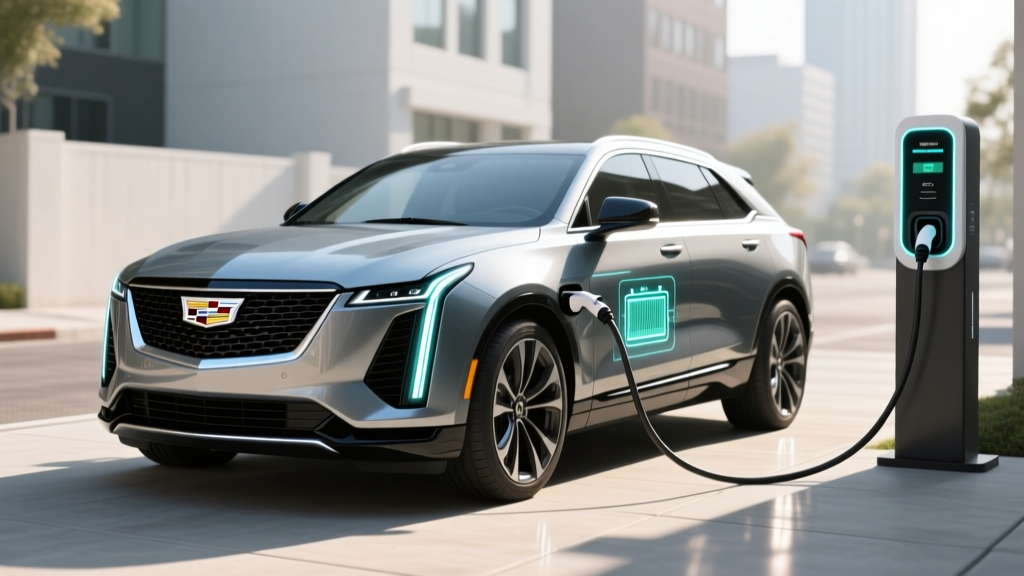
The 2026 Cadillac Escalade IQ arrives as the first fully electric version of GM's flagship luxury SUV, built on the Ultium platform shared with the GMC Hummer EV and Chevrolet Silverado EV. With an EPA-estimated range exceeding 300 miles, 750 horsepower in top trim, and a cabin that makes the gas Escalade look dated, the IQ targets buyers who want three-row luxury without tailpipe emissions — and without the range compromises of earlier luxury EVs.
But at a starting MSRP near $130,000, the Escalade IQ occupies rarefied air. This spec-by-spec review examines whether the numbers justify the price, how real-world range and charging stack up against the EPA sticker, and where the IQ fits among competitors like the Mercedes EQS SUV and Rivian R1S.
Core Cadillac Escalade IQ Specs at a Glance
| Attribute | Escalade IQ Luxury 2 | Escalade IQ Sport 2 |
|---|---|---|
| EPA Range (est.) | ~310 miles | ~300 miles |
| Battery Capacity (usable) | ~200 kWh (NMC) | ~200 kWh (NMC) |
| Drivetrain | Dual-motor AWD (e4) | Dual-motor AWD (e4) |
| Horsepower | 680 hp | 750 hp (Velocity) |
| Torque | 615 lb-ft | 785 lb-ft |
| 0–60 mph | ~4.5 sec | ~3.8 sec (Velocity) |
| Max DC Fast Charge | 200 kW | 200 kW |
| 10–80% DCFC Time | ~35 min | ~35 min |
| Level 2 Home Charging | 19.2 kW (AC) | 19.2 kW (AC) |
| Towing Capacity | 8,000 lbs (est.) | 8,000 lbs (est.) |
| Base MSRP | $129,990 | $149,990 |
| Battery Warranty | 8 yr / 100,000 mi | 8 yr / 100,000 mi |
Real-World Range Expectations
EPA estimate: ~300–310 miles depending on trim and wheel configuration.
What to actually expect: On highway road trips at 70–75 mph, plan for roughly 250–270 miles of usable range. In cold weather (below 30°F), range can drop an additional 15–25%, bringing real-world winter highway range closer to 210–230 miles. The Escalade IQ's massive frontal area and ~9,000-lb curb weight work against highway efficiency. City driving with regenerative braking recovers more energy, yielding results closer to the EPA sticker.
Range, Battery Chemistry, and Efficiency
The Escalade IQ uses GM's Ultium battery architecture with nickel-manganese-cobalt (NMC) chemistry — the same pouch-cell design found in the Hummer EV. The usable capacity is approximately 200 kWh, making it one of the largest battery packs in any production passenger vehicle. For context, that's roughly double the capacity of a Tesla Model Y's pack.
Why NMC, not LFP? Lithium iron phosphate (LFP) batteries offer longer cycle life and lower cost but have lower energy density. For a vehicle this heavy, Cadillac needs the energy density that NMC provides to hit 300+ miles without making the pack even heavier. The trade-off: NMC cells are more sensitive to sustained high state-of-charge storage, so daily charging to 80–90% (rather than 100%) is recommended for longevity.
Efficiency figures are expected around 48–52 MPGe combined, translating to roughly 65–70 kWh per 100 miles. This is typical for a full-size electric SUV — the Mercedes EQS 580 SUV achieves 54 MPGe for comparison, but it's over 2,000 lbs lighter.
Charging Speed: DC Fast Charging and Home Level 2
| Charging Level | Power / Rate | Miles Added Per Hour | Notes |
|---|---|---|---|
| Level 1 (120V) | 1.4 kW | ~2 mi/hr | Emergency/trickle only |
| Level 2 (240V, 80A) | 19.2 kW | ~32 mi/hr | Requires hardwired wall connector + 100A circuit |
| Level 2 (240V, 48A) | 11.5 kW | ~19 mi/hr | Standard NEMA 14-50 outlet |
| DC Fast Charge | Peak 200 kW | ~200 mi in 35 min (10–80%) | Tapers significantly above 80% SoC |
DC fast charging reality check: The Escalade IQ peaks at approximately 200 kW on a compatible DC fast charger, but like all EVs, it doesn't sustain that rate. The charge curve ramps quickly to peak through roughly 30–40% state of charge, then progressively tapers. The 10–80% time of approximately 35 minutes assumes ideal battery preconditioning and a charger capable of delivering sustained power. On a 350 kW Electrify America or Tesla Supercharger (via NACS adapter), you'll see the full 200 kW peak. On older 150 kW stations, expect 10–80% closer to 45 minutes.
Home charging is where the IQ shines: The 19.2 kW onboard AC charger is among the fastest available. With a hardwired Level 2 wall connector on a dedicated 100-amp circuit, you can add roughly 32 miles of range per hour — meaning a full overnight charge from 20% to 100% takes about 8–9 hours. However, a 100-amp circuit requires a panel with at least 200-amp service. Many older homes will need a panel upgrade ($1,500–$3,000) before installing a charger at this rate. Budget for a licensed electrician to assess your panel before purchase.
Performance: 750 HP and Sub-4-Second Sprints
The Escalade IQ Sport 2 with the available Velocity package produces 750 horsepower and 785 lb-ft of torque from its dual-motor e4 all-wheel-drive system. That translates to a 0–60 mph time of approximately 3.8 seconds — quicker than a Porsche Cayenne Turbo GT and absurd for a three-row SUV weighing over 9,000 pounds.
The base Luxury 2 trim still delivers 680 hp and a 0–60 time around 4.5 seconds. Both trims feature adaptive air suspension with magnetic ride control, rear-wheel steering (reducing the turning circle by roughly 3 feet versus the gas Escalade), and one-pedal driving with adjustable regenerative braking levels.
Towing: Cadillac targets an 8,000-pound maximum towing capacity, matching the gas Escalade. However, towing at maximum capacity will slash range by roughly 40–50%, bringing effective range down to 150–180 miles. Plan charging stops accordingly on any trailer haul.
Pricing, Trims, and Federal Tax Credit Eligibility
| Trim | Base MSRP | As-Tested (loaded) | Federal §30D Credit Eligible? |
|---|---|---|---|
| Luxury 2 | $129,990 | ~$145,000 | No — exceeds MSRP cap |
| Sport 2 | $149,990 | ~$165,000+ | No — exceeds MSRP cap |
The federal tax credit question, answered plainly: Under current IRS §30D rules, the new clean vehicle credit provides up to $7,500 — but only for SUVs with an MSRP at or below $80,000. The Escalade IQ starts at $129,990, which means it does not qualify for the federal purchase credit regardless of buyer income or battery sourcing. This is a hard MSRP cap with no workaround for new vehicles.
What about state incentives? Some states offer rebates or tax credits that are not subject to the federal MSRP cap. California, Colorado, and New York have varying programs — check your state's energy office or IRS §30D guidance for current-year eligibility. Additionally, if you lease rather than purchase, the commercial clean vehicle credit (§45W) may pass savings through the leasing company, though this depends on the lessor's structure.
Ownership cost context: Even without the federal credit, the Escalade IQ may save on fuel versus the gas Escalade. At 65 kWh/100mi and a national average electricity rate of $0.16/kWh, the IQ costs roughly $10.40 per 100 miles to charge at home. The gas Escalade 4WD (16 mpg combined) burns 6.25 gallons per 100 miles — at $3.50/gallon, that's $21.88 per 100 miles. Over 15,000 annual miles, that's a fuel savings of approximately $1,720 per year, or $8,600 over five years.
Interior, Tech, and Cargo Space
The Escalade IQ cabin is a generational leap over the gas model. The dashboard is dominated by a 55-inch total LED display spanning pillar to pillar — a combination of a 35-inch driver information cluster and a passenger-side entertainment screen. A separate center-mounted touchscreen handles infotainment, climate, and vehicle settings. Google Built-In provides native Google Maps navigation, Google Assistant voice control, and Play Store app access.
Passenger space:
- First-row legroom: ~45.0 inches
- Second-row legroom: ~42.0 inches (captain's chairs standard)
- Third-row legroom: ~35.0 inches (usable for adults on shorter trips)
- Seating: 7 passengers standard
Cargo volume:
- Behind third row: ~25 cu ft
- Behind second row (third row folded): ~70 cu ft
- Maximum (all rear seats folded): ~120 cu ft
- Front trunk (frunk): ~12 cu ft — a significant advantage over the gas Escalade, which has no frunk
Driver assistance: The IQ comes equipped with Super Cruise, GM's Level 2 hands-free driving system, operational on over 750,000 miles of mapped highways in the US and Canada. Super Cruise requires the driver to remain attentive — a camera monitors eye gaze and will issue escalating alerts if attention drifts. This is not self-driving; it is a SAE Level 2 system that handles steering, acceleration, and braking on compatible roads while the driver supervises.
Warranty Coverage
GM provides the following warranty coverage for the Escalade IQ:
- Battery pack: 8 years / 100,000 miles (capacity retention threshold: 70% of original capacity)
- Powertrain (motors, inverters): 8 years / 100,000 miles
- Bumper-to-bumper: 4 years / 50,000 miles
- Roadside assistance: 6 years / 70,000 miles
The 70% capacity retention threshold is standard for the industry. Based on current Ultium platform data from the Hummer EV and Lyriq, degradation over the first 50,000 miles has been modest — typically 3–6% loss. If the IQ follows this pattern, owners should see well over 90% capacity retention within the warranty period under normal use.
Escalade IQ vs. Key Competitors
Why the Escalade IQ Wins
- Class-leading 300+ mile range for a three-row luxury EV SUV
- 19.2 kW AC charging — fastest in segment for home replenishment
- 750 hp Velocity package with sub-4-second 0–60
- 55-inch pillar-to-pillar display with Google Built-In
- Super Cruise hands-free highway driving included
- 12 cu ft frunk adds practical storage the gas model lacks
- Rear-wheel steering dramatically improves low-speed maneuverability
Where the Escalade IQ Falls Short
- $130K+ MSRP disqualifies it from the $7,500 federal tax credit
- 200 kW DC fast charge peak trails the 350 kW capability of some rivals
- 9,000+ lb curb weight hurts efficiency and tire wear
- Third-row space is tighter than the gas Escalade's extended-length ESV
- No NACS native port — requires adapter for Tesla Superchargers
- Real-world highway range drops significantly in cold weather and while towing
Versus the Mercedes-Benz EQS 580 SUV ($105,550): The EQS SUV is lighter, more efficient (54 MPGe), and qualifies for the federal credit in some configurations. But it offers less cargo space, no hands-free driving system as robust as Super Cruise, and a less commanding road presence. The IQ wins on space and presence; the EQS wins on efficiency and price.
Versus the Rivian R1S ($79,900–$99,000): The R1S undercuts the IQ on price by $30K–$50K, offers comparable range (up to 410 miles with Max Pack), and includes genuine off-road capability. But the Rivian's interior materials and ride refinement don't match Cadillac's luxury standard, and its Super Cruise equivalent (Driver+) covers fewer roads.
Who Should Buy the Cadillac Escalade IQ?
Choose the Escalade IQ if:
- You need a three-row luxury SUV with 300+ mile range and refuse to compromise on cabin quality
- You have home charging access with 200-amp electrical service (to leverage the 19.2 kW onboard charger)
- You frequently drive on Super Cruise-compatible highways and want hands-free comfort on long commutes
- You value presence, technology, and acceleration over efficiency and tax-credit savings
Consider alternatives if:
- Your budget is under $100K — the Rivian R1S or BMW iX offer strong luxury EV SUV options at lower price points
- You need maximum federal and state incentive eligibility — the $80K MSRP cap excludes the IQ entirely
- You tow frequently over long distances — the 40–50% range reduction under load makes DC fast charging stops frequent and costly
- You live in an area with limited DC fast charging infrastructure — the 200 kW peak means longer stops on 150 kW chargers
Frequently Asked Questions
What is the real-world range of the Cadillac Escalade IQ?
The EPA estimates approximately 300–310 miles depending on trim. In real-world highway driving at 70–75 mph, expect 250–270 miles. In cold weather below 30°F, plan for 210–230 miles of usable range. City driving with regenerative braking recovers more energy and yields results closer to the EPA sticker.
How fast does the Escalade IQ charge at home and on the road?
On a DC fast charger, the IQ peaks at 200 kW, reaching 10–80% in approximately 35 minutes under ideal conditions. At home on a hardwired Level 2 charger (19.2 kW / 80 amps), you add roughly 32 miles per hour, fully replenishing overnight in 8–9 hours. A standard NEMA 14-50 outlet (48 amps / 11.5 kW) adds about 19 miles per hour.
Does the Escalade IQ qualify for the federal EV tax credit?
No. Under current IRS §30D rules, the new vehicle clean credit has an $80,000 MSRP cap for SUVs. The Escalade IQ starts at $129,990, making it ineligible regardless of buyer income or battery sourcing. State incentives may still apply — check your state energy office. Leasing may unlock the commercial credit (§45W) through the lessor.
Is the Escalade IQ worth buying over the gas Escalade?
If you have home charging and drive under 300 miles daily, the IQ delivers lower operating costs (~$1,700/year fuel savings), smoother acceleration, a quieter cabin, and zero tailpipe emissions. The gas Escalade still wins for heavy towing over long distances where charging infrastructure is sparse. For most luxury SUV buyers with charging access, the IQ is the better daily driver.
What are the biggest pros and cons?
Pros: 300+ mile range, 19.2 kW home charging, 750 hp performance, 55-inch display, Super Cruise, 12 cu ft frunk, rear-wheel steering. Cons: No federal tax credit, 200 kW DCFC peak trails some rivals, 9,000+ lb weight hurts efficiency, third row tighter than ESV, cold-weather and towing range penalties are significant.
Does it have a NACS charging port?
The Escalade IQ launches with a CCS1 port. GM has committed to transitioning to NACS (the Tesla connector) across its lineup, and a NACS adapter will be available for Supercharger access. Future model years may adopt NACS natively. Check with your dealer for the latest connector configuration and adapter availability.
Sources: Cadillac Escalade IQ official page, IRS New Clean Vehicle Credit, EPA Fuel Economy.