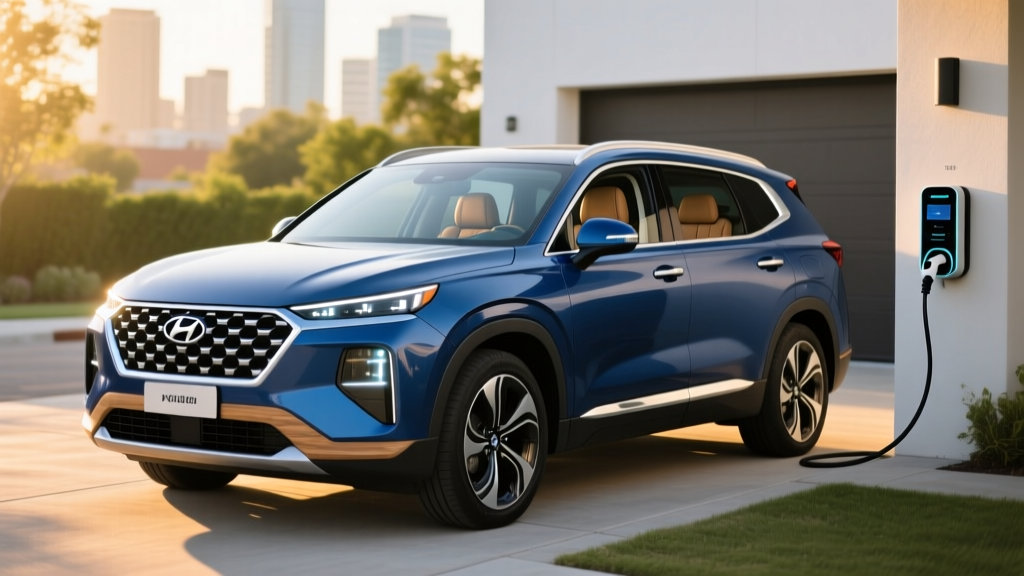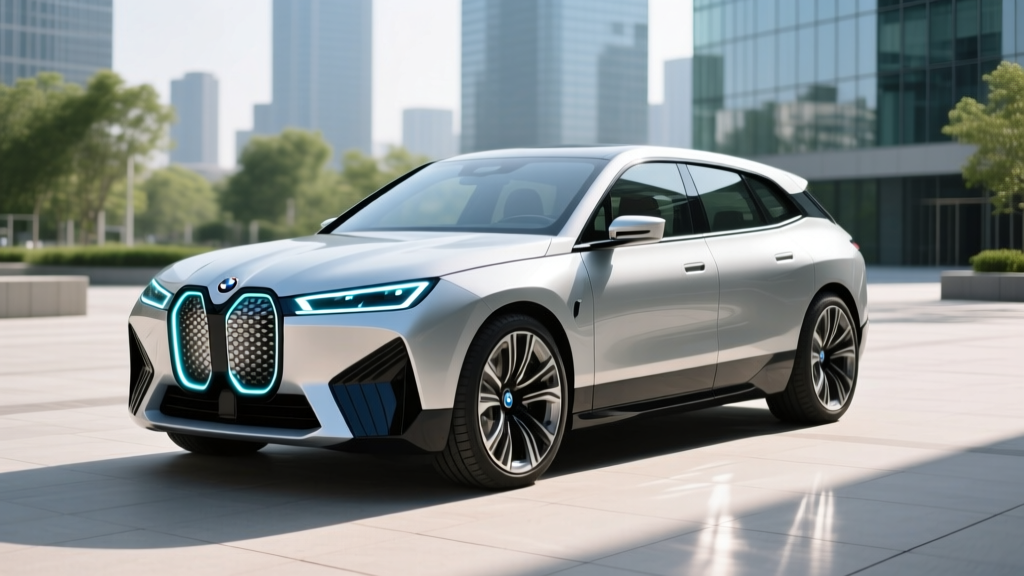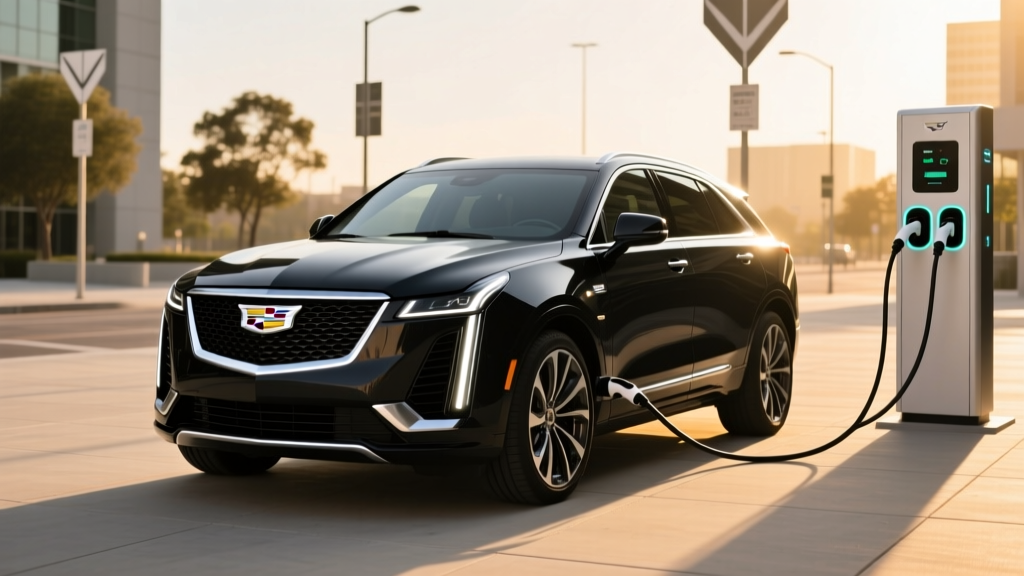
The Cadillac Escalade IQ is General Motors' answer to a question the luxury SUV market has been asking for years: can a full-size, three-row flagship go electric without compromising the presence, space, and comfort that made the Escalade an icon? Built on GM's dedicated BT1 electric platform — the same architecture underpinning the Chevrolet Silverado EV and GMC Sierra EV — the Escalade IQ stretches over 18 feet long and packs a massive Ultium battery. But at a starting price well into six figures, buyers need to know exactly what they're getting beyond the 55-inch hyperscreen and available Executive Second Row seating.
This review digs into the numbers that matter most to EV buyers: real-world range versus the EPA sticker, actual DC fast-charging behavior (not just peak kW), home charging logistics for a battery this large, and the federal tax credit math that could shave thousands off the bottom line. We've analyzed GM's published specs, EPA data, and ownership realities to give you a clear picture before you visit the dealer.
Range and Efficiency: 460 Miles on Paper, Less on the Interstate
The Escalade IQ's headline range figure is impressive. The Luxury and Premium Luxury trims, equipped with 24-inch wheels, carry an EPA-estimated 460 miles of range. The Sport trim, which rides on larger 24-inch wheels with a different tire compound, drops to approximately 430 miles EPA. Both figures come from a usable battery capacity of roughly 200 kWh — one of the largest packs ever fitted to a production passenger vehicle.
EPA estimates are measured under controlled lab conditions. In real-world driving, expect:
- City/suburban mixed driving: ~400–440 miles (regenerative braking recovers energy in stop-and-go traffic)
- Sustained highway (70–80 mph): ~340–380 miles (aerodynamic drag dominates at speed; the Escalade IQ's boxy profile and 9,000+ lb curb weight work against it)
- Cold weather (below 32°F): ~300–350 miles (battery chemistry slows, cabin heating draws significant energy, though the standard heat pump helps mitigate losses)
For most owners with home charging, daily range is a non-issue. Road-trippers should plan charging stops around 300–330 miles apart to maintain a comfortable buffer.
Efficiency for a vehicle this size is predictably modest. Expect roughly 58–62 MPGe combined depending on trim, translating to approximately 54–58 kWh per 100 miles. For comparison, a Tesla Model X achieves around 100 MPGe combined, but the Escalade IQ offers substantially more interior volume and towing capacity. Efficiency here is about the trade-off you're willing to accept for scale.
Battery and Powertrain: Ultium at Maximum Scale
The Escalade IQ uses GM's Ultium battery platform with an NMC (nickel manganese cobalt) chemistry — chosen for its high energy density, which is essential when you need to store 200 kWh without the vehicle weighing over 12,000 pounds. The pack operates on an 800-volt architecture, enabling both faster DC charging and more efficient power delivery to the motors.
| Specification | Luxury / Premium Luxury | Sport |
|---|---|---|
| EPA Range | 460 miles | ~430 miles |
| Battery (usable) | ~200 kWh (NMC) | ~200 kWh (NMC) |
| Drivetrain | Dual-motor AWD (eAWD) | Dual-motor AWD (eAWD) |
| Horsepower | ~680 hp (750 hp w/ Velocity Max) | ~750 hp (Velocity Max std) |
| 0–60 mph | ~4.7 sec (~3.8 sec Velocity Max) | ~3.8 sec |
| Max DC Charge Rate | ~200+ kW (800V) | ~200+ kW (800V) |
| Level 2 Charge Rate | 11.5 kW (AC) | 11.5 kW (AC) |
| Towing Capacity | ~8,000 lbs (est.) | ~8,000 lbs (est.) |
| Wheels | 24-inch | 24-inch (sport-specific) |
The dual-motor all-wheel-drive system provides standard eAWD across all trims. The available Velocity Max drive mode (standard on Sport, optional on Premium Luxury) unlocks the full 750 horsepower by temporarily adjusting thermal and power-delivery limits. Even without Velocity Max, the standard 680 hp output moves this 9,000-pound SUV with genuine authority. The 0–60 mph time of roughly 3.8 seconds in Velocity Max mode puts the Escalade IQ in sports car territory — a surreal experience given the vehicle's dimensions.
Charging Speed: 800V Architecture, But Patience Required at Home
Charging a 200 kWh battery is a logistical consideration every prospective Escalade IQ owner must plan for. The 800V architecture enables strong DC fast-charging performance, but the sheer size of the battery means even fast charging takes meaningful time.
| Charging Level | Power | Speed / Time | Notes |
|---|---|---|---|
| Level 1 (120V household) | ~1.4 kW | ~3–4 mi/hr | Not practical for daily use; emergency/trickle only |
| Level 2 (240V home) | 11.5 kW | ~21 mi/hr; 0–100% in ~17+ hours | Requires dedicated 60A circuit; overnight top-ups work for daily driving |
| DC Fast Charge | ~200+ kW peak | 10–80% in ~35–40 min (est.) | Charge curve tapers significantly above 80%; preconditioning critical |
DC Fast Charging Reality: The peak rate of approximately 200+ kW is achieved only under optimal conditions — battery preconditioned, state of charge below 30%, and connected to a capable 350 kW charger. As with all EVs, the charge curve tapers as the battery fills. Expect sustained rates of 150–180 kW through the 20–60% SoC window, then a gradual decline. A 10–80% session should take roughly 35–40 minutes at a high-power station. That's longer than a Tesla Model X (which has a smaller battery), but the Escalade IQ's range means you'll stop less frequently.
Home Charging Logistics: At 11.5 kW on Level 2, adding back a typical day's worth of driving (say, 60 miles) takes about 3 hours — perfectly manageable overnight. However, a full 0–100% charge takes over 17 hours, meaning you need to plug in the evening before a long road trip to start full. Most Escalade IQ owners will want a dedicated home Level 2 charger professionally installed, likely requiring a 60-amp dedicated circuit. If your home electrical panel is older or already near capacity, budget $1,500–$4,000+ for a panel upgrade and wiring run.
The Escalade IQ uses the NACS (North American Charging Standard) connector natively, giving direct access to Tesla Supercharger stations (now open to non-Tesla EVs) in addition to Electrify America, EVgo, and other networks with NACS connectors. This is a significant access advantage over CCS-only vehicles.
Interior, Tech, and the 55-Inch Hyperscreen
The Escalade IQ's cabin is where the six-figure price begins to make sense. The dashboard is dominated by a 55-inch diagonal LED hyperscreen that stretches nearly pillar to pillar, combining the instrument cluster, infotainment, and passenger display into one continuous glass surface. Google Built-In handles navigation, voice commands, and app integration. Wireless Apple CarPlay and Android Auto are standard.
Second-row passengers in the available Executive Seating package get individual captain's chairs with heating, ventilation, massage, and dedicated 12.6-inch seatback screens. The third row accommodates adults on shorter trips, though legroom is tighter than the first two rows.
Cargo and passenger dimensions:
- Seating: Up to 7 passengers (2-2-3 or 2-3-3 configuration depending on trim)
- Cargo behind 3rd row: ~25 cu ft
- Cargo behind 2nd row (3rd row folded): ~70 cu ft
- Max cargo (all rear seats folded): ~120+ cu ft
- Front trunk (frunk): ~12 cu ft — useful for charging cables and soft bags
- Front legroom: ~45 inches
- 2nd-row legroom: ~42 inches (Executive Seating)
The frunk is a welcome addition that the gas Escalade lacks, though it's modestly sized given the vehicle's overall footprint.
Driver Assistance: Super Cruise, Not Self-Driving
The Escalade IQ comes equipped with GM's Super Cruise — a hands-free (but not eyes-free) Level 2 driver-assistance system that operates on over 750,000 miles of mapped highways in the US and Canada. A driver-attention camera monitors your eyes and will issue escalating warnings if you look away for too long.
Super Cruise is a Level 2 driver-assist system per SAE International classification. The driver must remain attentive and ready to take over at any moment. This is not autonomous or "self-driving" capability. GM's planned Ultra Cruise (which expands operation beyond mapped highways) remains a Level 2+ system. Only Level 4 services like Waymo operate without a human driver in the loop.
Super Cruise is genuinely excellent on compatible highways — smooth lane-keeping, confident merging, and automatic lane changes in certain conditions. It reduces fatigue substantially on long trips. But it is not available on surface streets or unmapped roads, and weather conditions (heavy rain, snow, faded lane markings) can limit its operation. The available Ultra Cruise upgrade (when released) promises expanded coverage but will still require driver supervision.
Standard safety features include automatic emergency braking with pedestrian detection, lane-keep assist, adaptive cruise control, blind-spot monitoring, rear cross-traffic alert, and a comprehensive surround-view camera system — critical given the vehicle's size.
Pricing, Tax Credits, and Ownership Economics
The Escalade IQ is positioned at the top of the luxury EV SUV market. Here's how the pricing breaks down by trim:
| Trim | Base MSRP | Est. As-Tested (loaded) | Federal Tax Credit |
|---|---|---|---|
| Luxury | ~$129,990 | ~$140,000–$150,000 | See eligibility note below |
| Premium Luxury | ~$139,990 | ~$155,000–$175,000 | See eligibility note below |
| Sport | ~$149,990 | ~$160,000–$180,000+ | See eligibility note below |
Federal Tax Credit (§30D) — Important Caveats: The Escalade IQ's MSRP is well below the IRS §30D SUV cap of $80,000... except it isn't. At $130K+, the Escalade IQ exceeds the $80,000 MSRP cap for new clean vehicles under current IRS rules. This means the Escalade IQ does not qualify for the $7,500 federal tax credit under §30D as of current guidelines. Buyers should not factor the federal credit into their purchase calculations. Always verify current rules at IRS.gov, as regulations can shift, and some state-level incentives may still apply regardless of MSRP caps.
The point-of-sale transfer provision (which lets buyers apply the credit as an immediate discount at the dealership) is also unavailable here for the same MSRP-cap reason. Consult a tax professional for your specific situation and check your state's EV incentive programs, which may have different eligibility thresholds.
Warranty coverage:
- Battery: 8 years / 100,000 miles (minimum 70% capacity retention)
- Powertrain: 5 years / 60,000 miles
- Bumper-to-bumper: 4 years / 50,000 miles
- Roadside assistance: 6 years / 70,000 miles
The battery warranty is industry-standard for premium EVs. GM guarantees at least 70% state of health over the 8-year/100,000-mile window. Given the large battery capacity, even 70% retention still yields over 320 miles of range — more than many new EVs offer today.
How It Compares: Escalade IQ vs. the Competition
The Escalade IQ occupies a narrow but competitive segment. Here's how it stacks up against its closest rivals:
| Spec | Cadillac Escalade IQ | Tesla Model X | Mercedes EQS SUV | BMW iX |
|---|---|---|---|---|
| EPA Range | 460 mi | ~335 mi | ~305–390 mi | ~300–324 mi |
| Battery (usable) | ~200 kWh | ~100 kWh | ~108 kWh | ~77–112 kWh |
| 0–60 mph | ~3.8 sec (Velocity Max) | ~2.5 sec (Plaid) | ~4.4 sec | ~3.6 sec (M60) |
| 3rd Row | Yes (full-size) | Yes (small) | Yes (compact) | No |
| Max Cargo | ~120+ cu ft | ~88 cu ft | ~74 cu ft | ~62 cu ft |
| Base MSRP | ~$129,990 | ~$79,990 | ~$105,550 | ~$87,250 |
| Towing | ~8,000 lbs | 5,000 lbs | 3,500 lbs | 3,500 lbs |
The Escalade IQ's advantages are clear: class-leading range, genuinely usable third row, massive cargo volume, and superior towing capacity. Its trade-offs are price, weight, and the resulting charging time. The Model X Plaid is quicker and cheaper; the EQS SUV is more refined in ride quality; the iX is more efficient and nimble. But none of them match the Escalade IQ's combination of size, range, and American luxury presence.
- Choose the Escalade IQ if: You need a full-size, three-row luxury SUV with maximum range and towing capacity, you have reliable home charging, and budget is not your primary constraint.
- Choose the Tesla Model X if: You want quicker acceleration, Supercharger network convenience, a lower entry price, and can accept a smaller third row.
- Choose the Mercedes EQS SUV if: Ride refinement, cabin quietness, and brand prestige matter more than maximum space or range.
- Consider a PHEV alternative if: You lack home charging or frequently drive in remote areas with sparse DC charging infrastructure.
Pros, Cons, and the Verdict
- Class-leading 460-mile EPA range eliminates most range anxiety
- Genuinely spacious third row and massive cargo volume
- 800V architecture enables strong DC fast-charging speeds
- Super Cruise is one of the best Level 2 systems available
- 55-inch hyperscreen and Executive Second Row redefine luxury tech
- NACS connector provides broad charging network access
- ~8,000-lb towing capacity leads the electric SUV segment
- 750 hp in Velocity Max mode delivers absurd performance for its size
- $130K+ starting price; no federal tax credit due to MSRP cap
- Full charge takes 17+ hours at home — planning required for road trips
- Real-world highway range drops to ~340–380 miles at 75+ mph
- Cold-weather range loss significant (~25–30%) given the large battery
- Massive footprint makes parking and urban maneuvering challenging
- Insurance premiums expected to be high given repair costs and MSRP
- DC fast charging still takes 35–40 min for 10–80% (longer than smaller EVs)
- Weight (~9,000+ lbs) impacts tire wear and efficiency
The verdict: The Cadillac Escalade IQ does what no other electric SUV currently does — it delivers full-size, three-row luxury with range that genuinely competes with gas-powered road trips and towing capability that doesn't feel like a compromise. If you can absorb the price, have home charging sorted, and need the space, it's the most complete electric luxury SUV on the market. But the laws of physics still apply: a 200 kWh battery takes time to fill, a 9,000-pound vehicle consumes energy rapidly at highway speeds, and no amount of luxury can override cold-weather chemistry. Buy it with eyes open, and it rewards handsomely.
Frequently Asked Questions
What is the real-world range of the Cadillac Escalade IQ?
The EPA estimates 460 miles for Luxury/Premium Luxury trims and approximately 430 miles for the Sport. In real-world driving, expect 400–440 miles in mixed city use, 340–380 miles on sustained highway trips at 70–80 mph, and 300–350 miles in cold weather (below 32°F). The heat pump helps, but a 200 kWh battery in freezing temperatures still loses meaningful capacity to cabin heating and reduced chemical efficiency.
How fast does the Escalade IQ charge at home and on the road?
On DC fast charging (800V architecture), the Escalade IQ peaks at roughly 200+ kW, achieving a 10–80% charge in approximately 35–40 minutes under optimal conditions. At home on a Level 2 (240V, 11.5 kW) charger, expect about 21 miles of range per hour of charging, with a full 0–100% charge taking 17+ hours. Level 1 (120V) trickle charging adds only 3–4 miles per hour and is not practical for regular use.
Does the Cadillac Escalade IQ qualify for the federal EV tax credit?
Under current IRS §30D rules, the Escalade IQ does not qualify for the $7,500 federal tax credit because its MSRP ($129,990+) exceeds the $80,000 cap for SUVs/vans/pickups. Income limits and battery-sourcing requirements are irrelevant here since the vehicle fails the MSRP threshold first. Some state-level incentives may still apply — check your local programs. Always consult a tax professional for your specific situation.
Is the Escalade IQ worth buying over the Tesla Model X or Mercedes EQS SUV?
It depends on your priorities. The Escalade IQ wins on range (460 vs. ~335 mi for Model X), cargo volume (~120+ vs. ~88 cu ft), third-row usability, and towing capacity (~8,000 vs. 5,000 lbs). The Model X wins on price ($80K vs. $130K+), acceleration (Plaid: 2.5 sec 0–60), and charging speed. The EQS SUV offers superior ride refinement. If you need maximum space and range and can absorb the cost, the Escalade IQ is the most complete package in its class.
What are the biggest drawbacks of the Escalade IQ?
The most significant drawbacks are: (1) the $130K+ price with no federal tax credit, (2) long home-charging times due to the massive 200 kWh battery, (3) real-world highway and cold-weather range falling well below the 460-mile EPA sticker, (4) the vehicle's enormous size making urban parking and tight garages difficult, and (5) expected high insurance costs given the MSRP and repair complexity.
Can I tow with the Escalade IQ, and how does that affect range?
The Escalade IQ is estimated to tow approximately 8,000 pounds, leading the electric SUV segment. However, towing significantly impacts range — expect a 40–60% reduction depending on trailer weight, aerodynamics, and terrain. Towing a 6,000-lb camper on the highway could reduce effective range to roughly 180–220 miles. Plan charging stops accordingly and verify your specific trailer's impact with real-world testing before long trips.
What connector does the Escalade IQ use?
The Escalade IQ uses the NACS (North American Charging Standard) connector natively. This provides direct access to Tesla Supercharger stations (now available to non-Tesla EVs), as well as Electrify America, EVgo, and other networks deploying NACS connectors. No adapter is needed for NACS stations. For legacy CCS stations, a NACS-to-CCS adapter may be required depending on station availability in your area.