The Quick Answer: Is the Cadillac Escalade IQ Worth It?
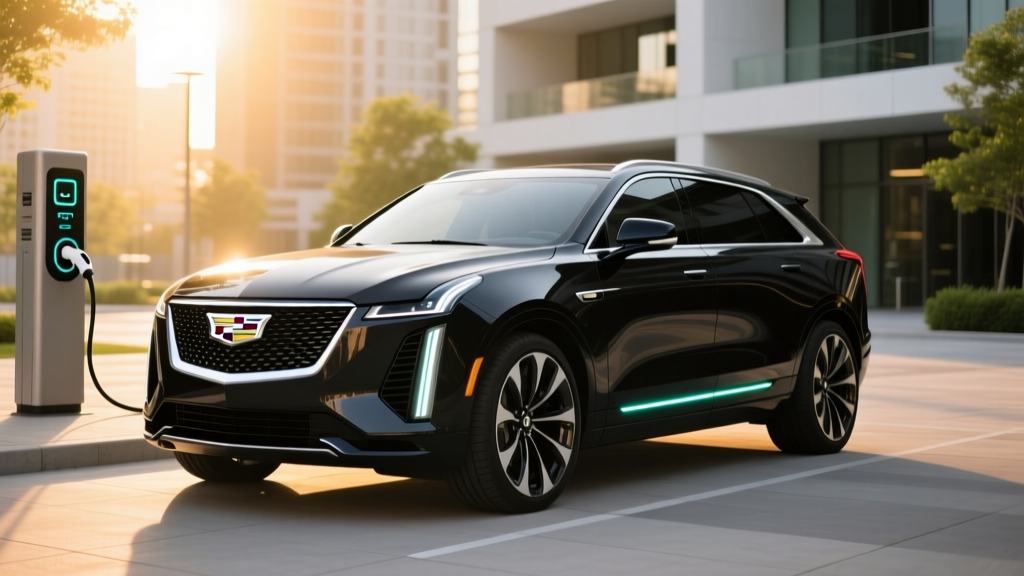
The 2026 Cadillac Escalade IQ (Cadillac's EV Escalade) delivers an EPA-estimated 460 miles of range from a massive 200+ kWh Ultium battery, charges at up to 200 kW DC (adding ~100 miles in 10 minutes), and starts around $130,000. It makes sense if you can charge at home, want three-row luxury without fuel stops, and drive mostly in suburban/highway corridors. It does not make sense if you lack home charging access, frequently tow heavy loads long-distance, or need to stay under the MSRP cap for the federal §30D tax credit (the IQ exceeds it).
The Escalade IQ is Cadillac's full-size electric flagship, built on GM's BT1 electric truck platform shared with the Silverado EV and Sierra EV. It replaces nothing — the gas Escalade continues alongside it — but targets buyers who want silent, torque-heavy luxury with lower running costs. Here's what the numbers actually look like when you live with one.
Escalade IQ Specs: Range, Battery, and Charging
| Spec | 2026 Escalade IQ |
|---|---|
| EPA Range | ~460 miles (est.) |
| Real-World Range (highway/cold) | ~350–390 miles |
| Battery Capacity | ~200+ kWh usable (NCMA Ultium) |
| Peak DC Fast Charge | 200 kW |
| 10–80% DC Charge Time | ~40–45 minutes |
| Level 2 Charging (Home) | 11.5 kW (est. ~16 mi/hr) |
| 0–60 mph | ~3.5 seconds (AWD, 750+ hp) |
| Horsepower | ~750 hp (dual motor AWD) |
| Towing Capacity | ~8,000 lbs (est.) |
| Battery Warranty | 8 years / 100,000 miles |
| Starting MSRP | ~$130,000 |
Real-World Range Reality: The EPA's 460-mile estimate is impressive, but expect 350–390 miles in mixed highway driving at 70+ mph, and potentially 300–330 miles in sub-freezing winter conditions. Large SUVs suffer disproportionate aero and cold-weather losses. The massive battery helps absorb this penalty better than smaller EVs, but physics still applies. On a 300-mile winter road trip, you'll likely arrive with 10–15% remaining — comfortable, but not the 100+ mile cushion the EPA sticker implies.
Charging at 200 kW peak means the Escalade IQ can add roughly 100 miles of range in about 10 minutes at a compatible DC fast charger. However, like all large batteries, the charge curve tapers significantly above 80% state of charge. Expect a 10–80% session to take 40–45 minutes at a 350 kW Electrify America or EVgo station. Charging from 80–100% can add another 30+ minutes, so plan road trips around the 10–80% window.
At home on a Level 2 charger (11.5 kW / 48-amp circuit), a full charge from empty takes roughly 17–18 hours. In practice, most owners will plug in nightly and wake up with a full battery, since daily driving rarely exceeds 60–80 miles. A Level 2 home charger installation typically costs $800–$2,500 depending on panel capacity and run length — factor this into your first-year budget.
Escalade IQ vs Gas Escalade: Cost and Efficiency Compared
The gas Cadillac Escalade (6.2L V8, 420 hp) returns an EPA-estimated 14 city / 18 highway / 16 combined MPG. At $3.50/gallon and 15,000 miles/year, that's roughly $3,281 annually in fuel. The Escalade IQ, at an efficiency of roughly 2.0 kWh/mile and a national average electricity rate of $0.16/kWh, costs about $480 per year to charge at home. That's a $2,800/year fuel savings — but only if you charge primarily at home.
| Factor | 2026 Escalade IQ (EV) | 2026 Gas Escalade (V8) |
|---|---|---|
| Starting MSRP | ~$130,000 | ~$82,000 |
| Annual Fuel/Energy Cost | ~$480 (home charging) | ~$3,281 |
| Annual Maintenance | ~$300–$500 | ~$800–$1,200 |
| 5-Year Fuel/Energy Total | ~$2,400 | ~$16,400 |
| 5-Year Maintenance Total | ~$2,000 | ~$5,000 |
| 0–60 mph | ~3.5 sec | ~5.9 sec |
| EPA Range / Tank | 460 mi | ~360 mi (24-gal tank) |
| Federal Tax Credit | Not eligible (MSRP cap) | N/A |
The Escalade IQ saves roughly $14,000 in fuel and $3,000 in maintenance over five years — about $17,000 total. But it starts ~$48,000 higher than a base gas Escalade. The math only closes if you keep the vehicle 10+ years, drive high annual miles, or value the performance and refinement gap. This is a luxury purchase first, an efficiency play second.
Tax Credits, Insurance, and the Full Cost Picture
Here's where the Escalade IQ hits a wall for credit seekers: the IRS §30D federal EV tax credit caps eligibility at $80,000 MSRP for SUVs and trucks (source: IRS §30D). The Escalade IQ starts at roughly $130,000, making it ineligible for the $7,500 federal credit. Some state-level incentives may still apply — check your local DMV or energy office — but don't count on federal help.
Insurance for the Escalade IQ will run higher than the gas version. EVs generally carry 15–25% higher premiums due to repair costs, battery replacement risk, and higher vehicle values. Expect annual premiums of $3,500–$5,500 depending on your profile, location, and coverage level. Get quotes before committing.
| 5-Year Ownership Cost | Escalade IQ (EV) | Gas Escalade |
|---|---|---|
| Purchase Price | $130,000 | $82,000 |
| Federal Tax Credit | $0 | $0 |
| Home Charger Install | $1,500 | $0 |
| Fuel/Energy (5 yr) | $2,400 | $16,400 |
| Maintenance (5 yr) | $2,000 | $5,000 |
| Insurance (5 yr, est.) | $22,500 | $17,500 |
| Estimated Depreciation | $52,000 | $35,000 |
| 5-Year Total Cost | ~$210,400 | ~$155,900 |
Over five years, the EV Escalade costs roughly $54,500 more in total ownership. The fuel and maintenance savings are real but cannot overcome the higher purchase price, insurance, and steeper depreciation typical of high-end EVs. Buyers should view the IQ as a premium experience upgrade, not a financial optimization.
Real-World Ownership: What First-Time EV Buyers Need to Know
Home charging is non-negotiable for this vehicle. A 200+ kWh battery is impractical to fill on public DC fast chargers alone — a single session costs $40–$60 at typical rates ($0.35–$0.50/kWh) and takes 45+ minutes. At home on Level 2, a full charge costs roughly $32 at $0.16/kWh and happens while you sleep. If you live in an apartment without charging access or park on the street, the Escalade IQ's ownership experience degrades significantly.
Cold weather cuts range by 15–30%. The Escalade IQ's Ultium battery includes active thermal management and a heat pump, which helps. But in sustained sub-25°F conditions, expect 300–340 real-world miles instead of 460. Preconditioning the battery while plugged in (a feature GM includes) recovers some of this loss and is essential for fast-charging speed in winter.
Public charging infrastructure is adequate but not seamless. The Escalade IQ uses the NACS (Tesla-style) connector, giving it access to Tesla Superchargers via the expanding network — over 20,000 stalls nationwide as of 2026 (source: Tesla). Electrify America and EVgo also serve NACS vehicles. However, reliability at non-Tesla networks remains inconsistent; plan road trips with the A Better Routeplanner app and always have a backup charging stop.
Towing significantly reduces range. If you plan to tow a boat or trailer near the 8,000-lb limit, expect range to drop 40–50%. A 460-mile EPA range becomes roughly 230–280 miles while towing at highway speeds. This is a physics reality for all EVs and makes long-distance towing less practical than with the gas Escalade.
Common Escalade IQ Misconceptions
| Myth | Fact |
|---|---|
| "The battery will need replacing in 5 years" | GM warranties the Ultium battery for 8 years/100,000 miles with at least 70% capacity retention. Real-world data from Ultium vehicles shows ~5–8% degradation over the first 100K miles. |
| "It qualifies for the $7,500 tax credit" | The Escalade IQ's ~$130K MSRP exceeds the $80K SUV cap under IRS §30D rules. No federal credit applies. |
| "460 miles means I'll never need to charge on road trips" | Real-world highway range is ~350–390 miles. At 70+ mph with HVAC running, plan one charging stop on trips over 300 miles. |
| "EVs are cheaper to own overall" | At this price point, the Escalade IQ costs ~$54K more over 5 years than the gas version. Savings apply to fuel/maintenance, not total cost. |
| "It charges as fast as a Tesla" | At 200 kW peak, the IQ charges slower than a Model S (250 kW) or Cybertruck (250+ kW). A 10–80% session takes ~40–45 min vs. ~25–30 min for Tesla's fastest vehicles. |
Decision Framework: Should You Buy the Cadillac EV Escalade?
Buy the Escalade IQ if:
- You have reliable home Level 2 charging (garage or driveway with 240V access)
- You drive 10,000–20,000 miles/year in mostly suburban or highway conditions
- You want three-row luxury with instant torque and near-silent operation
- You plan to keep the vehicle 7+ years to absorb the higher purchase price
- You live in a mild-to-moderate climate (or accept winter range reduction)
Stick with the gas Escalade if:
- You lack home charging access or live in an apartment without EV infrastructure
- You frequently tow heavy loads over long distances
- You plan to sell or trade within 3–5 years (depreciation risk is higher on the EV)
- You regularly drive in extreme cold (sustained sub-10°F) on long routes
- Total cost of ownership is a primary purchase driver
Consider a plug-in hybrid alternative if:
- You want some electric daily driving but need unlimited range for road trips and towing
- Your budget is $80K–$110K and you want partial electrification without the IQ's price premium
Frequently Asked Questions
Does the Cadillac Escalade IQ qualify for any tax credits?
No federal §30D credit applies — the Escalade IQ's MSRP (~$130,000) exceeds the $80,000 cap for SUVs set by the IRS. Some states offer separate EV incentives that may not have MSRP caps; check your state energy office or consult a tax professional for current eligibility.
How long does it take to charge the Escalade IQ at home?
On a Level 2 home charger (11.5 kW / 48A), a full 0–100% charge takes roughly 17–18 hours. In practice, most owners charge 20–50% overnight (4–8 hours), which covers typical daily driving. A Level 1 (120V) trickle charge adds only ~3–4 miles per hour and is not practical for a vehicle this size as a primary charging method.
What connector does the Escalade IQ use?
The Escalade IQ uses the NACS (North American Charging Standard) connector, the same as Tesla vehicles. This gives access to Tesla Superchargers, Electrify America, EVgo, and other networks that support NACS. No adapter is needed at NACS-native stations.
How does the Escalade IQ compare to the Tesla Model X?
The Model X offers similar three-row EV luxury at a lower starting price (~$80K–$100K), faster DC charging (250 kW), and access to the mature Supercharger network. The Escalade IQ counters with a significantly larger battery (more range), traditional luxury interior materials, and a more conventional SUV form factor. The Model X is more tech-forward; the IQ is more traditionally opulent.
What is the battery replacement cost for the Escalade IQ?
Out of warranty, a 200+ kWh Ultium battery replacement could cost $25,000–$35,000+ based on current large-format EV battery pricing. However, GM's 8-year/100,000-mile battery warranty covers defects and excessive degradation (below 70% capacity). Real-world Ultium degradation data suggests most batteries will retain 85–92% capacity at 100K miles, making out-of-warranty replacement unlikely for most original owners.
Is the Escalade IQ self-driving?
No. The Escalade IQ features GM's Super Cruise (on compatible mapped highways) and Ultra Cruise (expanded coverage), both of which are SAE Level 2 driver-assistance systems. The driver must remain attentive, keep eyes on the road, and be ready to take over at any time. These are not autonomous driving systems — Level 4 driverless operation is currently limited to robotaxi services like Waymo in specific metro areas.
Editorial note: Pricing and specifications are based on Cadillac's announced 2026 model-year data and may vary by trim and configuration. Federal and state incentive rules change frequently — verify current eligibility at IRS.gov and your state energy office before purchasing. Range and efficiency figures are EPA estimates; your results will vary based on driving style, climate, terrain, and tire selection.