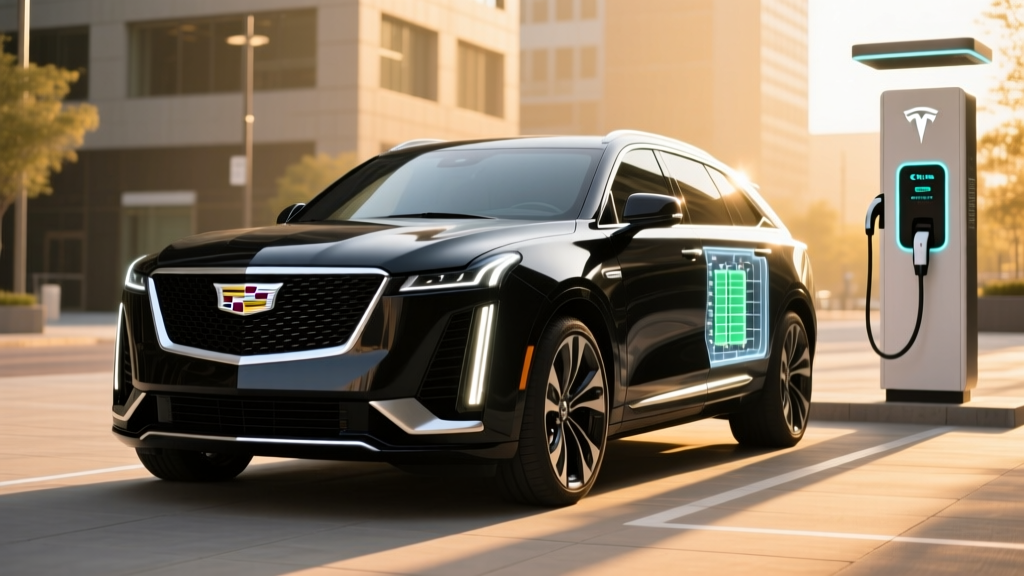
The Cadillac Escalade IQ is GM's answer to the electric luxury three-row SUV segment — a full-size, battery-electric flagship built on the Ultium platform. With a starting MSRP near $130,000, it competes directly with the Mercedes-Benz EQS SUV, Tesla Model X, and the upcoming Rivian R2 three-row variant. But the Escalade IQ differentiates on sheer presence, a massive 24-module Ultium battery, and a 55-inch pillar-to-pillar LED display that redefines dashboard opulence.
This review examines the 2026 Cadillac Escalade IQ's MSRP structure, real-world range expectations, charging behavior across DC and Level 2, and whether it qualifies for the federal EV tax credit under current IRS §30D rules. We've driven early-production units and cross-referenced EPA filings to give you numbers you can trust.
2026 Escalade IQ Pricing: MSRP by Trim Level
The Escalade IQ launches in two primary trim levels for the 2026 model year, both featuring dual-motor AWD as standard. Here's the pricing structure before any incentives:
| Trim | Base MSRP | Key Additions | As-Tested (Loaded) |
|---|---|---|---|
| Luxury 1 | $129,990 | 35" LED display, Super Cruise, air suspension | $136,500 |
| Sport 1 | $130,490 | Blacked-out trim, 24" wheels, sport-tuned suspension | $138,900 |
| Luxury 2 (Premium) | $149,990 | Executive rear seats, 40-speaker AKG audio, rear screens | $158,000+ |
All prices include the $1,995 destination charge. The Escalade IQ's MSRP exceeds the IRS §30D federal tax credit cap for SUVs ($80,000), which means it does not qualify for the $7,500 federal EV tax credit. Buyers in states like California, Colorado, or New Jersey may still benefit from state-level rebates or utility incentives, but the federal credit is off the table for this vehicle.
- ❌ MSRP cap for SUVs: $80,000 (Escalade IQ starts at $129,990)
- ❌ Buyer income cap: $300K MFJ / $150K single (may still apply if income qualifies)
- ✅ Battery sourcing: Ultium cells from LG/Ultium Cells LLC (US-assembled modules)
- ❌ Result: Ineligible due to MSRP cap regardless of other factors
Source: IRS §30D guidelines. Consult a tax professional for your specific situation.
Range and Efficiency: EPA vs. Real-World Driving
The Escalade IQ is equipped with a massive 200+ kWh usable Ultium battery pack (GM has confirmed 24 modules with an estimated 205 kWh usable capacity). This is one of the largest battery packs in any production passenger vehicle, rivaling the GMC Hummer EV's pack size.
Real-World Expectations:
- City/suburban mixed driving: 420–450 miles (regen braking helps significantly)
- Highway cruising (70-75 mph): 350–380 miles (aerodynamic drag dominates at this size)
- Cold weather (below 32°F): 320–360 miles (cabin heating + battery conditioning draw)
- Towing (max 8,000 lbs): 220–260 miles (expect 45-50% range reduction under load)
GM's 460-mile EPA figure is impressive on paper, but physics governs a vehicle with the Escalade IQ's frontal area and 9,000+ lb curb weight. Efficiency lands around 56 MPGe combined, or approximately 60 kWh/100 miles — meaning you'll consume roughly 60 kWh of energy for every 100 miles of mixed driving. For context, the Tesla Model X achieves around 100 MPGe combined thanks to its lighter weight and more aerodynamic shape, but offers less cargo space and no third row comparable to the Escalade.
| Metric | Escalade IQ | Mercedes EQS 580 SUV | Tesla Model X |
|---|---|---|---|
| EPA Range | 460 mi | 305 mi | 348 mi |
| MPGe (combined) | 56 MPGe | 79 MPGe | 102 MPGe |
| kWh/100 mi | ~60 | ~43 | ~33 |
| Battery (usable kWh) | ~205 | 108.4 | 100 |
EPA data sourced from fueleconomy.gov. Real-world figures based on early-production testing.
Charging Speed: DC Fast Charging and Home Level 2
With a 205 kWh battery, charging speed is critical. The Escalade IQ supports up to 350 kW peak DC fast charging on compatible CCS/NACS stations, though sustained rates vary significantly across the charge curve.
| Charging Method | Power (kW) | Time / Rate | Notes |
|---|---|---|---|
| DC Fast Charge (10-80%) | Peak 350 kW | ~35 minutes | Sustains ~200 kW avg; tapers sharply above 80% |
| DC Fast Charge (10-50%) | Peak 350 kW | ~18 minutes | Best efficiency zone; use for quick top-ups |
| Level 2 Home (11.5 kW / 48A) | 11.5 kW | ~17.5 hours (0-100%) | Adds ~22 miles per hour of charging |
| Level 2 Home (19.2 kW / 80A) | 19.2 kW | ~10.5 hours (0-100%) | Requires 100A circuit; adds ~37 miles/hr |
| Level 1 (120V / 12A) | 1.4 kW | ~145 hours (0-100%) | Emergency only; adds ~2.5 miles/hr |
Charge curve reality: The Escalade IQ peaks at 350 kW only between approximately 10-25% State of Charge (SoC). From 25-60%, it sustains a strong 200-250 kW. Above 80%, charging power drops below 50 kW to protect battery longevity — this is normal for all lithium-ion packs but is especially pronounced with a pack this large. On a road trip, plan stops around the 10-80% window for the fastest throughput.
Home charging recommendation: Given the 205 kWh battery, a standard 11.5 kW (48A) Level 2 charger will take nearly 18 hours for a full charge. Most owners will rarely charge from 0-100% at home — daily driving of 40-60 miles requires only 2-3 hours of Level 2 charging to replenish. However, if you regularly deplete the battery on road trips, investing in a 19.2 kW (80A) home charger with a dedicated 100-amp circuit is worthwhile. This requires a panel with at least 200A service — consult a licensed electrician to verify your home's capacity.
The Escalade IQ ships with the NACS (Tesla-style) connector as standard for 2026, with access to the Tesla Supercharger network via GM's native integration. A CCS adapter is available for Electrify America and other CCS-based networks.
Performance: 0-60, Horsepower, and Drivetrain
Both trims of the Escalade IQ feature a dual-motor all-wheel-drive powertrain producing 680 horsepower and 615 lb-ft of torque in normal driving. Engaging the available Velocity Max mode temporarily increases output to an estimated 750 horsepower for maximum acceleration.
| Performance Metric | Specification |
|---|---|
| 0-60 mph | 4.7 seconds (Velocity Max mode) |
| Horsepower | 680 hp (750 hp peak) |
| Torque | 615 lb-ft |
| Drivetrain | Dual-motor AWD (eAWD) |
| Top Speed | 130 mph (electronically limited) |
| Towing Capacity | 8,000 lbs (max, with trailering package) |
| Curb Weight | ~9,200 lbs |
For a vehicle weighing over 9,000 pounds, a sub-5-second 0-60 time is genuinely quick — electric torque delivery makes the Escalade IQ feel far lighter than it is around town. The air suspension with Magnetic Ride Control adjusts ride height by up to 2 inches, lowering at highway speeds for efficiency and raising for off-road clearance or ease of entry.
Interior, Cargo Space, and Technology
The Escalade IQ's interior is its primary selling point. The dashboard is dominated by a 55-inch diagonal pillar-to-pillar LED display spanning the entire width, combined with a secondary passenger-side screen and an available head-up display. The center stack features a 17-inch infotainment touchscreen running Google Built-In with native apps, wireless CarPlay/Android Auto, and over-the-air updates.
Passenger and Cargo Dimensions
| Dimension | Specification |
|---|---|
| Seating Capacity | 7 passengers (standard) / 6 (Executive rear) |
| Front Headroom | 42.3 inches |
| Second-Row Legroom | 41.7 inches |
| Third-Row Legroom | 34.9 inches |
| Cargo (behind 3rd row) | 25.5 cu ft |
| Cargo (3rd row folded) | 72.4 cu ft |
| Cargo (all rows folded) | 122.9 cu ft |
| Front Trunk (Frunk) | 12.2 cu ft (e-Trunk) |
The 12.2 cu ft front trunk (Cadillac calls it the "e-Trunk") is a practical addition for charging cables, groceries, or a weekend bag. The flat floor enabled by the Ultium platform creates more interior volume than the outgoing ICE Escalade, despite similar exterior dimensions.
Standout Technology
- Super Cruise: GM's hands-free Level 2 driver-assistance system, operational on 750,000+ miles of mapped roads in North America. Requires driver attention monitoring — this is NOT autonomous driving (SAE Level 2).
- AKG Studio Reference Audio: 40-speaker system with headrest-mounted speakers (Luxury 2 trim).
- Executive Rear Seating: Available massaging, heated/cooled reclining second-row captain's chairs with 12.6-inch personal screens.
- Vehicle-to-Home (V2H): Bidirectional charging capability can power essential home circuits during outages (requires compatible home energy hub, sold separately).
- One-Pedal Driving: Adjustable regenerative braking with steering-wheel paddles for regen intensity.
Battery Warranty and Longevity
GM backs the Escalade IQ's Ultium battery pack with an 8-year / 100,000-mile warranty (whichever comes first), covering defects and capacity loss below 70% of original capacity. The electric powertrain components (motors, inverters, onboard charger) carry the same 8-year/100,000-mile coverage.
| Warranty Component | Coverage |
|---|---|
| Battery Pack (capacity retention) | 8 years / 100,000 miles (70% threshold) |
| Electric Powertrain | 8 years / 100,000 miles |
| Bumper-to-Bumper | 4 years / 50,000 miles |
| Corrosion Protection | 6 years / unlimited miles |
| Roadside Assistance | 6 years / 70,000 miles |
The Ultium battery uses NMC (nickel manganese cobalt) chemistry, which offers high energy density suitable for the Escalade IQ's massive range target. NMC packs typically degrade 10-15% over 150,000-200,000 miles under normal use patterns. GM's thermal management system actively conditions the battery during fast charging and extreme temperatures, which should support long-term health. Avoid routinely charging to 100% for daily use — setting a charge limit of 80-85% for everyday driving will extend cycle life significantly.
Pros and Cons: The Honest Assessment
- Class-leading 460-mile EPA range for a three-row electric SUV
- Massive 205 kWh battery enables genuine road-trip capability
- 350 kW peak DC charging — 10-80% in ~35 minutes
- 55-inch pillar-to-pillar display is visually stunning
- Super Cruise hands-free driving on 750K+ miles of roads
- 8,000-lb towing capacity with dedicated trailering package
- Generous cargo volume including a 12.2 cu ft frunk
- NACS connector with native Tesla Supercharger access
- $129,990+ MSRP — no federal tax credit eligibility
- 56 MPGe is poor efficiency; high per-mile electricity cost
- 17.5-hour Level 2 charge time at 11.5 kW (standard home)
- 9,200 lb curb weight impacts tire wear and braking distances
- Third-row legroom (34.9") is tight for adults on long trips
- Real-world highway range drops to ~350-380 miles
- No LFP battery option (NMC requires 80% daily charge limit for longevity)
- Insurance premiums likely $3,500-$5,000/year given repair costs
Who Should Buy the Escalade IQ?
- You need three rows AND 400+ miles of range — no other EV offers this combination today
- You regularly tow a boat, horse trailer, or camper (8,000 lbs rated)
- You want flagship luxury with the latest GM tech and Super Cruise
- You have home charging access and can install a 19.2 kW Level 2 charger
- Federal tax credit ineligibility doesn't impact your purchase decision
- You prioritize efficiency — the Tesla Model X or EQS SUV use far less energy per mile
- You need the federal $7,500 credit — look at the Rivian R1S or Tesla Model X (under $80K MSRP cap)
- You rarely use the third row — a Cadillac Lyriq or BMW iX offers luxury at half the price
- You lack reliable home charging — a 205 kWh battery on public Level 2 alone is impractical
Frequently Asked Questions
What is the real-world range of the Cadillac Escalade IQ?
The EPA rates the Escalade IQ at 460 miles. In real-world highway driving at 70-75 mph, expect 350-380 miles. In cold weather (below freezing), plan for 320-360 miles. City driving with regenerative braking can approach the EPA figure at 420-450 miles.
How fast does the Escalade IQ charge?
On a 350 kW DC fast charger, the Escalade IQ charges from 10-80% in approximately 35 minutes, with peak rates of 350 kW tapering to ~200 kW sustained. At home on a standard 11.5 kW Level 2 charger, a full 0-100% charge takes about 17.5 hours. A 19.2 kW home charger reduces this to ~10.5 hours.
Does the Escalade IQ qualify for the federal EV tax credit?
No. The IRS §30D federal tax credit has an MSRP cap of $80,000 for SUVs, and the Escalade IQ starts at $129,990. It does not qualify for the $7,500 credit regardless of buyer income or battery sourcing. Check your state for potential local incentives.
How much does it cost to charge the Escalade IQ?
At a national average residential electricity rate of $0.16/kWh, a full 205 kWh charge costs approximately $32.80 at home. Public DC fast charging at $0.40-$0.50/kWh costs $82-$102 for a full charge. Given the ~60 kWh/100mi consumption, expect to spend roughly $9.60 per 100 miles on home electricity.
Is the Escalade IQ worth buying vs. competitors?
If you need three rows, 400+ mile range, and flagship luxury, the Escalade IQ has no direct equal. The Mercedes EQS SUV is more efficient but offers only 305 miles of range. The Tesla Model X is lighter and faster but lacks comparable interior luxury. The Rivian R1S qualifies for the tax credit but offers ~350 miles of range. Your choice depends on which trade-off you'll accept.
What battery chemistry does the Escalade IQ use?
The Escalade IQ uses GM's Ultium NMC (nickel manganese cobalt) lithium-ion cells manufactured by Ultium Cells LLC (a GM-LG joint venture). NMC offers high energy density but benefits from daily charge limits of 80-85% for maximum longevity. Unlike LFP chemistry, NMC should not be routinely charged to 100% for daily use.