Quick Verdict: The Escalade IQ Redefines Electric Luxury Hauling
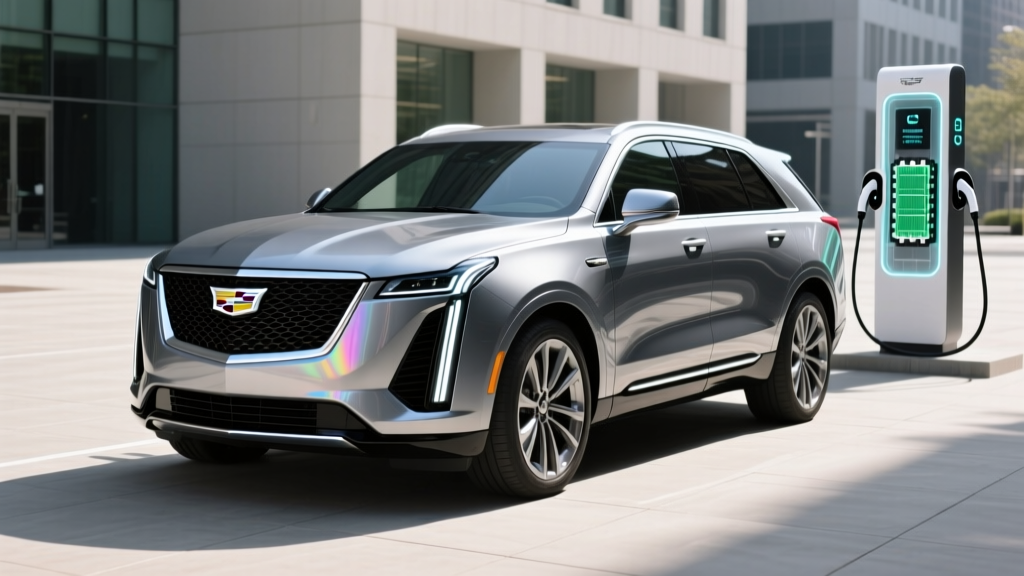
The Cadillac Escalade IQ is the first full-size luxury SUV built on GM's dedicated BT1 electric platform — the same architecture underpinning the Silverado EV and Sierra EV, but tuned for maximum refinement. With an EPA-estimated 460 miles of range, a massive 200+ kWh battery, and a starting price north of $129,000, this isn't an EV for the masses. It's a statement vehicle for buyers who want three rows of first-class seating, serious towing capability, and the ability to skip the gas station entirely. But does the real-world execution match the spec sheet? We break down every number that matters.
| Spec | Value |
|---|---|
| EPA Range | 460 miles (est.) |
| Battery Capacity | ~200 kWh usable, Ultium NMC |
| Peak DC Fast Charge | 200 kW (est.) |
| 10–80% DC Charge Time | ~45 minutes (est.) |
| Level 2 Home Charging | 19.2 kW / ~45 mi/hr |
| Horsepower | Up to 750 hp (Velocity mode) |
| 0–60 mph | Under 5 seconds (est.) |
| Drivetrain | Dual-motor AWD |
| Towing Capacity | Up to 8,000 lbs (est.) |
| Base MSRP | $129,990 (Luxury 1) |
| Federal Tax Credit | Not eligible (MSRP exceeds §30D cap) |
| Battery Warranty | 8 years / 100,000 miles |
Range and Efficiency: 460 Miles on Paper, What About Reality?
Cadillac targets an EPA-estimated 460 miles of range for the Escalade IQ, which would place it among the longest-range EVs ever sold in the United States. That figure is made possible by the enormous Ultium battery pack — approximately 200 kWh of usable capacity using GM's NMC (nickel manganese cobalt) lithium-ion chemistry. NMC offers higher energy density than LFP (lithium iron phosphate), which is critical in a vehicle this size where packing enough cells for 400+ miles is already a packaging challenge.
Real-World Range Expectations
EPA estimate: 460 miles
Highway driving (75 mph, flat terrain): Expect roughly 370–400 miles. Aerodynamic drag hits large SUVs hard at sustained highway speeds, and the Escalade IQ's boxy profile and ~9,000-lb curb weight work against efficiency.
Cold weather (below 32°F): Plan for 310–350 miles. NMC chemistry loses 15–25% capacity in freezing temperatures, and cabin heating in a vehicle this large demands significant energy.
City / mixed driving: 420–450 miles is realistic, as regenerative braking recovers energy in stop-and-go traffic.
Efficiency is rated at approximately 46–48 kWh per 100 miles (roughly 70–73 MPGe combined), per preliminary estimates. For context, that's thirstier than a Tesla Model X (around 38 kWh/100mi) but comparable to the Rivian R1S. The trade-off for 460 miles of range is carrying a battery that weighs nearly as much as a compact car.
According to fueleconomy.gov, final EPA certification numbers will be published once the vehicle is officially on sale and tested. We'll update this review when those figures are confirmed.
Charging Speed: 200 kW DC and 19.2 kW at Home
The Escalade IQ supports DC fast charging at up to 200 kW on compatible CCS or NACS stations (Cadillac has confirmed NACS adoption for the 2025 model year, granting access to Tesla's Supercharger network with an adapter). At peak rate, you can add roughly 100 miles of range in about 10 minutes.
| Charging Level | Power (kW) | Miles Added per Hour | Notes |
|---|---|---|---|
| Level 1 (120V) | 1.4 kW | ~3 mi/hr | Emergency only — full charge takes days |
| Level 2 (240V, 19.2 kW) | 19.2 kW | ~45 mi/hr | Requires 100A circuit; full charge ~10–11 hrs |
| Level 2 (240V, 48A) | 11.5 kW | ~27 mi/hr | Standard home setup; full charge ~17 hrs |
| DC Fast Charge | Up to 200 kW | ~600 mi/hr (peak) | 10–80% in ~45 min; tapers above 80% |
The charging-curve reality: Like all large-battery EVs, the Escalade IQ won't sustain 200 kW for the entire session. Expect peak rates between 10–50% state of charge, with a significant taper above 80%. That 45-minute 10–80% estimate assumes preconditioning is active (the battery is brought to optimal temperature before plugging in). Skip preconditioning in cold weather and you could see peak rates cut by 40% or more.
For home charging, the Escalade IQ supports up to 19.2 kW on Level 2 — but that requires a dedicated 100-amp circuit and a hardwired EVSE. Most homes will need an electrical panel upgrade to support this. A more typical 48-amp Level 2 circuit delivers 11.5 kW, adding about 27 miles per hour. With a 200 kWh battery, a full charge from empty on a standard 48A setup takes roughly 17 hours, which means overnight charging won't fully replenish the pack unless you're starting above 30%.
The key practical insight: owners who drive 50–80 miles daily will barely notice the slow full-charge time, since topping up from 50% to 80% overnight is easily achievable. Road-trip charging is where the 200 kW peak rate matters most, and preconditioning through the navigation system is essential.
Performance: 750 HP and Sub-5-Second Sprints
The Escalade IQ uses a dual-motor all-wheel-drive powertrain producing up to 750 horsepower and an estimated 785 lb-ft of torque in Velocity mode. Cadillac targets a 0–60 mph time under 5 seconds — remarkable for a vehicle expected to weigh over 9,000 pounds. For comparison, the gas-powered Escalade V with its 682-hp supercharged V8 hits 60 mph in 4.4 seconds, but the IQ's instant electric torque delivery makes it feel quicker in real-world passing situations.
The air suspension system (Adaptive Air Ride) lowers the vehicle at highway speeds for aerodynamic efficiency and raises it for off-road clearance or easier entry/exit. Four-wheel steering (a first for Escalade) tightens the turning circle to roughly 40 feet — critical for maneuvering a 205-inch-long SUV in urban environments.
Towing capacity is estimated at 8,000 pounds, matching the gas Escalade. However, expect range to drop by 40–50% when towing at highway speeds. That 460-mile range becomes roughly 230–275 miles with a loaded trailer — still usable, but plan charging stops accordingly.
Interior, Tech, and the 55-Inch Hyperscreen
The Escalade IQ's cabin is where Cadillac justifies its six-figure price. The dashboard is dominated by a 55-inch diagonal LED display spanning the full width — a pillar-to-pillar "hyperscreen" that consolidates instrumentation, infotainment, and a dedicated passenger display. The system runs GM's latest Ultifi software platform with Google Built-In (Maps, Assistant, Play Store) and wireless Apple CarPlay/Android Auto.
Seating and cargo:
- Passenger capacity: 7 passengers (2-2-3 configuration with second-row captain's chairs) or available 8-passenger bench
- Front legroom: ~45 inches
- Second-row legroom: ~42 inches
- Third-row legroom: ~35 inches (competitive with the gas Escalade, improved over prior generations)
- Cargo behind 3rd row: ~25 cu ft
- Cargo behind 2nd row (3rd row folded): ~65 cu ft
- Max cargo (all rear seats folded): ~115 cu ft
- Front trunk (frunk): ~12 cu ft — a major advantage over the gas Escalade, which has no front storage
Driver assistance: The Escalade IQ comes equipped with Super Cruise, GM's hands-off-wheel Level 2 driver-assistance system, operational on over 750,000 miles of mapped roads in North America. Super Cruise requires an attentive driver (monitored via infrared camera) and does not handle construction zones, unmapped roads, or adverse weather autonomously. This is not a self-driving system — it's SAE Level 2 automation with the driver remaining legally responsible.
Super Cruise Limitations
- Driver must remain attentive and keep eyes on the road at all times
- Only operates on pre-mapped divided highways (not local streets or parking lots)
- Hands-off does not mean mind-off — SAE Level 2 requires continuous driver supervision
- System disengages in construction zones, severe weather, and unmapped areas
Other notable tech includes a 36-speaker AKG Studio Reference audio system, available Executive Rear Seating with individual 12.6-inch displays and tray tables, power-opening/closing doors, and Vehicle-to-Home (V2H) bi-directional charging capability to power home circuits during outages.
Pricing, Trims, and Tax Credit Reality
The 2025 Cadillac Escalade IQ starts at $129,990 for the Luxury 1 trim (including destination). A fully loaded Sport 2 trim is expected to push past $150,000. Here's the trim breakdown based on Cadillac's announced pricing:
| Trim | MSRP | Key Additions |
|---|---|---|
| Luxury 1 | $129,990 | Full spec, 55-in display, Super Cruise, air suspension |
| Luxury 2 | ~$140,000 (est.) | Executive rear seating, AKG 36-speaker, V2H capability |
| Sport 1 | ~$132,000 (est.) | Blacked-out exterior trim, sport-tuned suspension |
| Sport 2 | ~$150,000+ (est.) | All Luxury 2 features plus Sport appearance |
Federal Tax Credit (§30D) Eligibility
The Escalade IQ does NOT qualify for the $7,500 federal EV tax credit. Here's why:
- MSRP cap: IRS §30D limits the credit to SUVs with an MSRP of $80,000 or less. The Escalade IQ starts at $129,990 — nearly $50,000 over the cap.
- Income cap: Even if it qualified on price, buyers must have an adjusted gross income below $300,000 (joint filers) or $150,000 (single).
- Battery sourcing: The Ultium battery must meet critical-mineral and battery-component sourcing requirements that are still evolving under current IRS guidance.
For full details on §30D rules, consult IRS.gov's clean vehicle credit page or speak with a tax professional. State and local incentives may still apply — check your jurisdiction's DMV or energy office.
Escalade IQ vs. the Competition
The Escalade IQ doesn't have a direct rival — it occupies a unique intersection of full-size three-row luxury, electric powertrain, and six-figure pricing. Here's how it stacks up against the closest alternatives:
| Spec | Cadillac Escalade IQ | Tesla Model X | Rivian R1S (Tri-Motor) | Mercedes EQS SUV |
|---|---|---|---|---|
| EPA Range | 460 mi (est.) | 335 mi | ~410 mi (est.) | 305 mi |
| Starting Price | $129,990 | $79,990 | $99,900 | $104,400 |
| 3rd Row | Yes (adult-capable) | Yes (tight) | Yes (compact) | Yes (compact) |
| Horsepower | 750 hp | 670 hp (Plaid) | 850 hp | 536 hp |
| Towing | 8,000 lbs (est.) | 5,000 lbs | 7,700 lbs | 3,500 lbs |
| Tax Credit | No (over MSRP cap) | Yes (eligible trims) | Yes (eligible trims) | No (over MSRP cap) |
Where the Escalade IQ wins: Range (by a wide margin), third-row space, towing capacity, and sheer cabin grandeur. The 55-inch screen and available Executive Rear Seating put it in a different league for chauffeured luxury.
Where it loses: Price is the obvious one — you'll pay $30,000–$50,000 more than a Model X or R1S. Charging speed is also slower than the competition; the Model X and R1S can peak above 250 kW on compatible chargers, and their smaller batteries mean faster 10–80% times. The Escalade IQ's massive pack simply takes longer to fill.
Pros, Cons, and Who Should Buy
Pros
- Class-leading 460-mile EPA range eliminates most range anxiety
- Genuine adult-usable third row with improved legroom
- 55-inch hyperscreen and Executive Rear Seating redefine in-cabin luxury
- 8,000-lb towing capacity matches the gas Escalade
- Frunk adds 12 cu ft of secure front storage (gas Escalade has none)
- Super Cruise hands-off driving on 750,000+ miles of mapped highways
- V2H bi-directional charging provides home backup power
- Nearly silent, vibration-free powertrain in a luxury context
Cons
- $129,990 starting price — no federal tax credit available
- ~200 kWh battery means very long home charging times (17+ hrs on 48A)
- 200 kW peak DC charge rate trails competitors (Model X, R1S peak 250+ kW)
- 9,000+ lb curb weight impacts tire wear and efficiency
- Range drops 40–50% when towing — plan road trips carefully
- Cold-weather range loss of 25%+ in freezing climates
- Super Cruise is Level 2 only — not autonomous, requires driver attention
Who the Escalade IQ Is For
Buy it if: You need a three-row luxury SUV with genuine long-range capability, you tow regularly, you have reliable home charging (ideally a 19.2 kW installation), and your budget comfortably accommodates $130,000+ without relying on tax incentives.
Look elsewhere if: You want the fastest possible DC charging, you need the federal tax credit, your daily commute is short and a smaller EV (or PHEV) would suffice, or you primarily drive in extreme cold where the range penalty stings more.
Consider the Rivian R1S if: You want three rows, strong off-road capability, and a lower starting price with potential tax-credit eligibility on certain trims.
Consider the Tesla Model X if: You prioritize the fastest Supercharger network access, lower pricing, and don't need a full-size SUV footprint.
Warranty and Long-Term Ownership
GM covers the Escalade IQ's Ultium battery pack for 8 years or 100,000 miles, whichever comes first, with a capacity-retention threshold of 70% (meaning GM will repair or replace the battery if it degrades below 70% of original capacity within the warranty period). The powertrain carries the same 8-year/100,000-mile coverage. The basic vehicle warranty is 4 years / 50,000 miles.
For a 200 kWh NMC pack, replacement cost out of warranty is expected to be substantial — likely $25,000–$40,000 based on current Ultium module pricing. However, GM's track record with Ultium degradation is still limited (the platform launched in 2022), so long-term data over 150,000+ miles remains to be collected. NMC chemistry typically retains 80–85% capacity after 1,000 full charge cycles under normal conditions, which translates to well over 200,000 miles for most drivers.
Insurance costs are expected to be significant. Full-size luxury EVs carry higher premiums than their gas counterparts due to repair complexity, parts cost, and specialized labor requirements. Expect annual premiums in the $3,500–$5,500 range depending on your state and driving record.
Frequently Asked Questions
What is the real-world range of the Cadillac Escalade IQ?
Cadillac targets an EPA-estimated 460 miles. In real-world highway driving at 75 mph, expect 370–400 miles. In freezing weather, plan for 310–350 miles. City driving with regenerative braking gets you closest to the EPA sticker, around 420–450 miles.
How fast does the Escalade IQ charge?
On a DC fast charger, it peaks at approximately 200 kW, achieving a 10–80% charge in roughly 45 minutes with battery preconditioning active. At home on a 48-amp Level 2 circuit (11.5 kW), expect about 27 miles of range per hour, or roughly 17 hours for a full charge from empty. A 19.2 kW hardwired setup cuts that to about 10–11 hours.
Does the Escalade IQ qualify for the federal EV tax credit?
No. Under IRS §30D rules, SUVs must have an MSRP of $80,000 or less to qualify. The Escalade IQ starts at $129,990, far exceeding this cap. Income limits and battery-sourcing requirements are additional barriers, though the price alone disqualifies it. State-level incentives may still apply — check your local energy office. See IRS.gov for current rules.
Is the Escalade IQ worth buying vs. the Rivian R1S or Tesla Model X?
If maximum range, adult-capable third-row space, towing, and cabin luxury are your top priorities — and budget is not a constraint — the Escalade IQ has no equal. If you want a lower price, faster DC charging, or tax-credit eligibility, the R1S and Model X are more practical choices. The IQ is a luxury-first vehicle; its competitors lean more toward performance or adventure utility.
Can the Escalade IQ tow, and how does that affect range?
Estimated towing capacity is 8,000 pounds. When towing at highway speeds, expect range to drop by 40–50%, reducing the 460-mile figure to roughly 230–275 miles. This is still competitive with gas-SUV fuel stops, but requires planning charging stops on longer hauls.
What home charging setup do I need?
For the fastest home charging (19.2 kW), you'll need a dedicated 100-amp, 240-volt circuit and a hardwired EVSE rated for 80 amps continuous. Most homes will require an electrical panel upgrade (200A service minimum, 400A recommended). Budget $2,000–$5,000+ for the full installation, including the EVSE unit, wiring, permits, and panel work. Consult a licensed electrician for a site-specific quote.
Is Super Cruise self-driving?
No. Super Cruise is an SAE Level 2 driver-assistance system. It allows hands-off-wheel operation on pre-mapped highways, but the driver must remain attentive, keep eyes on the road (monitored by infrared camera), and be ready to take over at any time. It does not operate on local streets, in parking lots, or in severe weather. Only Level 4 systems (like Waymo's robotaxi service) qualify as self-driving in specific geofenced areas.