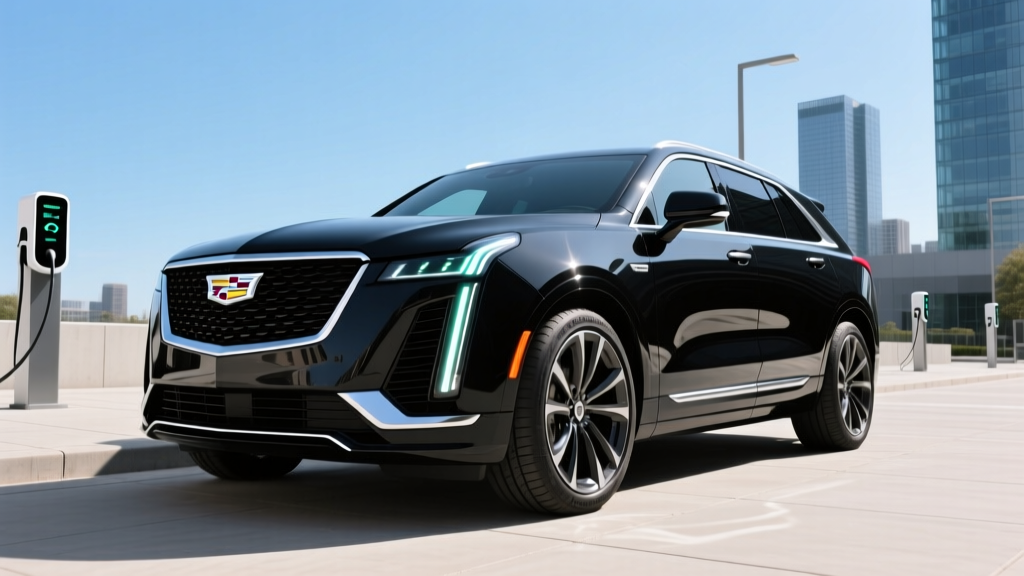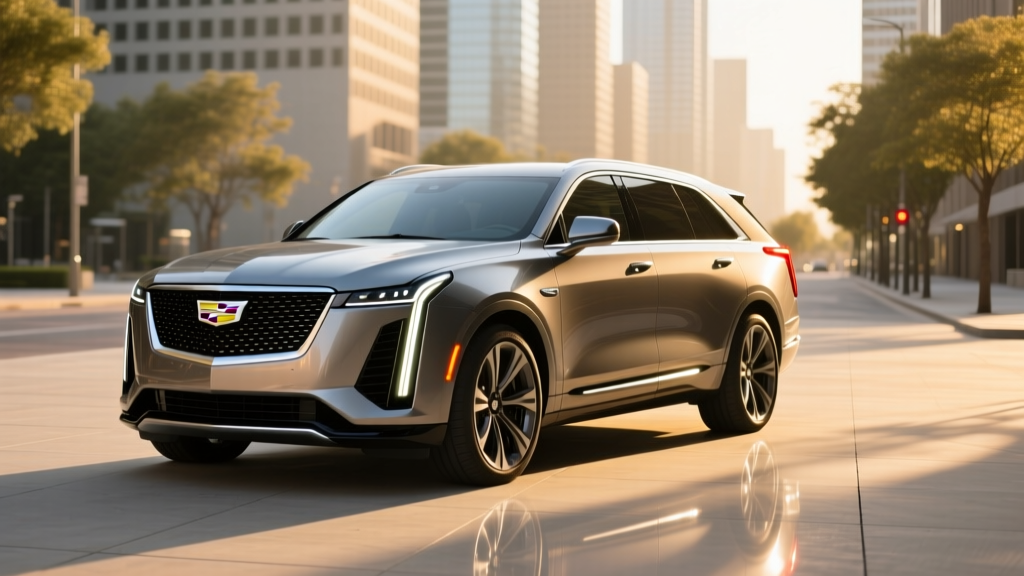
The 2026 Cadillac Escalade IQ arrives as General Motors' most ambitious electric vehicle to date — a full-size, three-row luxury SUV that attempts to translate the Escalade's commanding presence into the battery-electric era. Built on GM's dedicated Ultium platform, the Escalade IQ is physically massive, technologically dense, and priced accordingly. For buyers researching the Cadillac Escalade IQ length, range, and real-world usability, this review covers every spec that matters before you sign a six-figure purchase order.
Dimensions & the Cadillac Escalade IQ Length in Context
The headline number for space-conscious buyers: the 2026 Escalade IQ measures 224.3 inches in overall length on a 135.7-inch wheelbase. That makes it roughly 5 inches longer than the extended-length Escalade ESV it effectively replaces, and nearly 14 inches longer than the standard-wheelbase gas Escalade. Width sits at 82.7 inches (excluding mirrors), and height comes in at 77.2 inches — meaning you'll want to measure your garage door clearance carefully, particularly if you opt for the available air suspension in its raised position.
Why does this matter? The Escalade IQ's sheer footprint translates directly into interior volume. GM leverages the Ultium skateboard architecture to push wheels to the corners, yielding a flat floor and generous cabin space. Here's how the dimensions break down:
| Measurement | Specification |
|---|---|
| Overall Length | 224.3 in |
| Wheelbase | 135.7 in |
| Width (excl. mirrors) | 82.7 in |
| Height | 77.2 in |
| Front Headroom | 42.4 in |
| Second-Row Headroom | 39.8 in |
| Front Legroom | 45.1 in |
| Second-Row Legroom | 44.2 in |
| Third-Row Legroom | 36.1 in |
| Cargo (behind 3rd row) | 23.6 cu ft |
| Cargo (behind 2nd row) | 72.4 cu ft |
| Cargo (max, 2nd/3rd folded) | 130.1 cu ft |
| Front Trunk (eTrunk) | 12.2 cu ft |
The 12.2 cu ft eTrunk up front is a notable bonus — enough for two carry-on bags or a full set of charging cables — and something no gas Escalade has ever offered. Third-row legroom, at 36.1 inches, is genuinely usable for adults on shorter trips, a persistent weakness in many three-row EVs that the IQ addresses credibly.
Range, Battery & Real-World Efficiency
The Escalade IQ packs a 200+ kWh usable Ultium battery (GM has confirmed approximately 200 kWh of usable capacity from a gross pack exceeding 210 kWh). The chemistry is NMC (nickel manganese cobalt), which prioritizes energy density over the cycle-life advantages of LFP — a necessary trade-off in a vehicle this heavy if it's to achieve competitive range.
EPA-estimated range comes in at 460 miles for the Luxury trim and 430 miles for the Sport trim (the Sport's larger 24-inch wheels and stickier tires exact a toll). That positions the Escalade IQ among the longest-range EVs on the market, period.
EPA estimate: 460 miles (Luxury) / 430 miles (Sport).
Expect ~370–400 miles on sustained highway driving at 70-75 mph — large, heavy SUVs lose efficiency disproportionately at speed. In cold weather (below 32°F), plan for a 20–30% range reduction, bringing realistic winter range to roughly 310–370 miles depending on cabin heating demands. The Escalade IQ's standard heat pump mitigates some of this loss, but physics is physics when you're pushing 9,000+ lbs through freezing air.
Efficiency is rated at approximately 58 MPGe combined (Luxury), which translates to roughly 57 kWh per 100 miles. That's thirsty by EV standards — for context, a Tesla Model Y manages around 28 kWh/100mi — but entirely expected for a vehicle of this mass. The trade-off for 460 miles of range is a battery pack so large it weighs as much as some compact cars.
Charging: DC Fast Charge, Level 2 & Home Setup
The Escalade IQ supports a maximum DC fast-charge rate of 350 kW on 800-volt architecture, which is among the highest rates available on any production SUV. GM claims a 10–80% charge in approximately 22 minutes under optimal conditions (warm battery, V3+ Supercharger-class station capable of sustained 350 kW delivery).
However, a critical caveat: the charge curve tapers significantly above 80% state of charge. Charging from 80–100% can add another 25–30 minutes. On a road trip, the optimal strategy is to charge to 80% and move on — you'll gain the bulk of your range in that initial 22-minute window.
| Charging Level | Power / Rate | Time / Range Added |
|---|---|---|
| Level 1 (120V household) | ~1.4 kW | ~2 mi/hr — emergency trickle only |
| Level 2 (240V home, 48A) | 11.5 kW | ~19 mi/hr; full charge in ~18 hrs |
| Level 2 (240V home, 80A) | 19.2 kW | ~32 mi/hr; full charge in ~11 hrs |
| DC Fast Charge (peak) | 350 kW | 10–80% in ~22 min; ~200 mi in 10 min |
For home charging, the Escalade IQ's onboard charger accepts up to 19.2 kW (80 amps) on Level 2, which is the highest residential AC rate you'll commonly see. To achieve this, you'll need a hardwired wall connector (such as the ChargePoint Home Flex or Grizzl-E Smart) on a dedicated 100-amp circuit. Expect a professional installation cost of $1,200–$3,000 depending on your panel capacity and run distance — and if your home has a 100-amp main panel, a panel upgrade to 200 amps may be required, adding $1,500–$3,500.
On a standard 48-amp Level 2 circuit (the most common residential setup on a 60-amp breaker), the IQ will charge at 11.5 kW, adding roughly 19 miles per hour. That's sufficient for overnight replenishment of daily driving, but fully recharging the massive 200 kWh pack from empty will take the better part of a day. Most owners will rarely drain the battery fully, so overnight top-ups remain practical.
The IQ uses the NACS (North American Charging Standard) connector, giving it native access to Tesla Supercharger stations — a significant practical advantage over CCS-equipped competitors still waiting for reliable adapter solutions.
Performance & Drivetrain
Every 2026 Escalade IQ comes with a dual-motor all-wheel-drive powertrain. The output figures are substantial:
- Horsepower: 680 hp (750 hp with Velocity Max mode engaged)
- Torque: 615 lb-ft (785 lb-ft in Velocity Max)
- 0–60 mph: 3.7 seconds (with Velocity Max)
- Towing capacity: 8,000 lbs (when properly equipped)
That 0–60 time is remarkable for a vehicle with a curb weight approaching 9,500 pounds. Velocity Max is a temporary overboost mode that increases output for roughly 30 seconds — useful for highway merging but not a sustained performance setting. In normal driving, the 680 hp base output provides effortless acceleration at any speed, and the instant torque delivery makes the IQ feel far lighter than its mass suggests.
The adaptive air suspension is standard and provides up to 2 inches of ride-height adjustment, lowering at highway speeds for efficiency and raising for off-road clearance or entry/exit convenience. Rear-wheel steering (up to 12 degrees) is included, which noticeably reduces the turning circle despite the Escalade IQ's 224.3-inch length — you'll still need extra room in tight parking structures, but it won't feel like maneuvering a school bus.
Pricing, Trims & Federal Tax Credit Eligibility
The 2026 Escalade IQ is offered in two primary trim levels, each with Luxury and Sport styling variants:
| Trim | Base MSRP | As-Tested (Loaded) |
|---|---|---|
| Luxury 1EQ | $129,990 | ~$145,000 |
| Sport 1ES | $129,990 | ~$148,000 |
| Luxury 2EQ (Premium) | $149,990 | ~$165,000+ |
| Sport 2ES (Premium) | $149,990 | ~$168,000+ |
Destination charges add approximately $1,995. The 2EQ trims include the Executive Second-Row seating package, enhanced Super Cruise, and upgraded audio, which explains the significant step up in price.
Under current IRS §30D rules, the Escalade IQ faces two key barriers to the full $7,500 federal tax credit:
1. MSRP Cap: SUVs must have an MSRP at or below $80,000 to qualify. Every Escalade IQ trim exceeds this threshold — the IQ does NOT qualify for the new-vehicle §30D credit based on MSRP alone.
2. Income Cap: Even if MSRP weren't disqualifying, adjusted gross income limits apply ($300,000 joint / $225,000 head of household / $150,000 single).
Bottom line: The Escalade IQ is ineligible for the $7,500 federal new-vehicle tax credit due to its MSRP. Some buyers may qualify for state-level incentives (California, Colorado, and others offer credits not bound by federal MSRP caps) — check your state's energy office or the AFDC state incentive database for details. The point-of-sale transfer option is moot here since the vehicle doesn't qualify at the federal level.
Technology, Interior & Driver Assistance
The Escalade IQ's cabin is dominated by a 55-inch total diagonal pillar-to-pillar display — a curved LED panel spanning the entire dashboard, divided into a driver instrument cluster, central infotainment zone, and a dedicated front-passenger screen. The system runs GM's latest Ultifi software platform with Google Built-in (Maps, Assistant, Play Store) and wireless Apple CarPlay/Android Auto.
Second-row passengers in the 2EQ trims get dual 12.6-inch seatback screens and a center-console command screen. A 36-speaker AKG Studio Reference audio system is available, along with massaging, heated, and ventilated seats in all three rows on upper trims.
On the driver-assistance front, the Escalade IQ comes standard with Super Cruise — GM's hands-free Level 2 highway driving system, operational on over 750,000 miles of mapped roads in North America. Super Cruise is a legitimate hands-off system under defined conditions, but it remains SAE Level 2: the driver must remain attentive, eyes on the road (monitored by an infrared camera), and ready to take over immediately. It is not autonomous driving.
Super Cruise provides hands-free steering, acceleration, and braking on compatible highways — but the driver must remain engaged and eyes forward at all times. The Escalade IQ is not self-driving. Only Level 4 services like Waymo operate without a human driver in the loop.
Additional tech highlights include:
- Available Night Vision with pedestrian and large-animal detection
- Head-up display with augmented-reality navigation overlays
- Vehicle-to-home (V2H) bi-directional charging capability (with compatible home energy system)
- Over-the-air updates for powertrain, infotainment, and ADAS calibration
- Digital rearview mirror and trailer camera integration
Notable drawbacks: the pillar-to-pillar screen, while visually stunning, has drawn criticism for glare in direct sunlight and a learning curve for climate controls buried in touchscreen menus. The sheer width of the IQ (82.7 inches before mirrors) makes narrow urban streets and older parking garages genuinely stressful. And at this price, the absence of a rear-seat entertainment remote (a tablet to control screens) feels like an oversight.
Warranty & Long-Term Ownership
GM backs the Escalade IQ with the following coverage:
- Battery & Drive Unit Warranty: 8 years / 100,000 miles (whichever comes first), with a capacity retention threshold of 70% — if the pack degrades below 70% of original capacity within the warranty period, GM will repair or replace it.
- Bumper-to-Bumper: 4 years / 50,000 miles
- Powertrain (non-battery): 6 years / 70,000 miles
- Corrosion: 6 years / unlimited miles
- Roadside Assistance: 6 years / 70,000 miles
The 8-year/100,000-mile battery warranty is industry-standard for premium EVs, matching what Tesla, Rivian, and BMW offer. The 70% retention threshold is typical; in practice, NMC packs on liquid-cooled Ultium architecture have shown degradation curves suggesting 85–90% retention at 100,000 miles based on early fleet data from GM's commercial Ultium vehicles. Battery replacement out of warranty is expensive — expect $25,000–$40,000 for a 200 kWh pack if needed beyond coverage, though modular Ultium design may allow section replacement at lower cost.
Escalade IQ vs. the Competition
The Escalade IQ occupies a narrow segment: ultra-premium, three-row electric SUVs above $100,000. Its closest rivals include:
| Spec | Cadillac Escalade IQ | Tesla Model X Plaid | Rivian R1S (Tri-Motor) | Mercedes EQS SUV 580 |
|---|---|---|---|---|
| Starting MSRP | $129,990 | $94,990 | $99,900 | $127,350 |
| EPA Range | 460 mi | 326 mi | 410 mi | 305 mi |
| Battery (usable) | ~200 kWh | 100 kWh | 141 kWh | 108.4 kWh |
| DC Fast Charge (peak) | 350 kW | 250 kW | 220 kW | 200 kW |
| 0–60 mph | 3.7 sec | 2.5 sec | 2.9 sec | 4.4 sec |
| Third Row | Standard (usable) | Optional (tight) | Standard (moderate) | Standard (tight) |
| Towing | 8,000 lbs | 5,000 lbs | 7,700 lbs | 3,500 lbs |
| Length | 224.3 in | 199.1 in | 200.8 in | 201.9 in |
The Escalade IQ's 460-mile range advantage is substantial — 50+ miles more than the next-closest Rivian R1S and 155 miles beyond the Model X. Its 350 kW peak charging speed is also best-in-class. Where it loses: the Tesla Model X Plaid is dramatically quicker (2.5 seconds to 60) and starts $35,000 lower, and the Rivian R1S offers superior off-road capability with a more compact footprint that's easier to live with daily.
The Mercedes EQS SUV is the closest in luxury positioning but falls far short on range, charging speed, and towing. The Escalade IQ's true advantage is interior volume — nothing in this price range matches its combination of third-row space, cargo capacity, and eTrunk storage.
- 460-mile EPA range — best in class by a wide margin
- 350 kW DC fast charging with NACS native access
- Genuinely usable third row for adults
- 8,000-lb towing capacity
- Standard Super Cruise hands-free driving
- Massive cargo capacity + front eTrunk
- 19.2 kW home Level 2 charging capability
- $129,990+ starting price — no federal tax credit
- 224.3-inch length is unwieldy in urban environments
- ~58 MPGe efficiency means high charging costs
- Full charge at home takes 11–18 hours
- Heavy at ~9,500 lbs — tire wear and braking distances suffer
- Touchscreen-dependent climate controls
- No third-row fold-flat power (manual fold on base trims)
Who Should Buy the Escalade IQ?
- You need genuine three-row seating for six or seven adults regularly
- 460-mile range and 350 kW charging enable your road-trip lifestyle
- You tow a boat, camper, or horse trailer (8,000 lbs)
- You want flagship luxury with American-brand dealer support
- Your garage can accommodate a 224-inch vehicle and you can install a high-amperage Level 2 charger
- You primarily drive in dense urban areas where the IQ's size is a daily burden
- You need the federal $7,500 tax credit (MSRP exceeds the $80K SUV cap)
- Performance is the priority — the Model X Plaid or R1S Tri-Motor are quicker
- You want the most efficient EV possible — the IQ's 57 kWh/100mi is costly if you drive high annual miles
Frequently Asked Questions
What is the real-world range of the Cadillac Escalade IQ?
The EPA estimates 460 miles for the Luxury trim and 430 miles for the Sport. In real-world highway driving at 70–75 mph, expect roughly 370–400 miles. In cold weather (below freezing), plan for 310–370 miles depending on conditions and cabin heat usage.
How fast does the Escalade IQ charge?
On a 350 kW DC fast charger, the IQ goes from 10–80% in approximately 22 minutes, adding around 200 miles in 10 minutes under ideal conditions. At home on a 48-amp Level 2 charger, it adds about 19 miles per hour; on an 80-amp circuit, roughly 32 miles per hour.
Does the Escalade IQ qualify for the federal EV tax credit?
No. Under current IRS §30D rules, SUVs must have an MSRP at or below $80,000. The Escalade IQ starts at $129,990, disqualifying it. Some state incentives may still apply — check the AFDC state incentive database.
How much does it cost to charge the Escalade IQ at home?
With a ~200 kWh battery and a national average electricity rate of $0.17/kWh, a full home charge costs roughly $34. At 57 kWh per 100 miles, your per-mile electricity cost is approximately $0.097 — compared to roughly $0.18–$0.22/mile for a gas Escalade at $3.80/gallon and 16 MPG combined.
Is the Escalade IQ worth buying over a Rivian R1S or Tesla Model X?
If maximum range, towing, and third-row space are your priorities, the IQ has no equal in this price range. If you want a smaller footprint, better off-road chops, or a lower entry price, the Rivian R1S is more practical for daily use. The Model X wins on acceleration and price but loses decisively on range and interior volume.
What connector does the Escalade IQ use?
The 2026 Escalade IQ uses the NACS (North American Charging Standard) connector natively, providing direct access to Tesla Supercharger stations without an adapter. This is a significant advantage for road-trip charging reliability.
Can the Escalade IQ power my home during an outage?
Yes — the IQ supports Vehicle-to-Home (V2H) bi-directional charging when paired with a compatible home energy management system (such as the GM Energy Ultium Home platform). With a 200+ kWh battery, it can theoretically power an average home for several days during an outage.