Quick Verdict: The Electric Flagship That Means Business
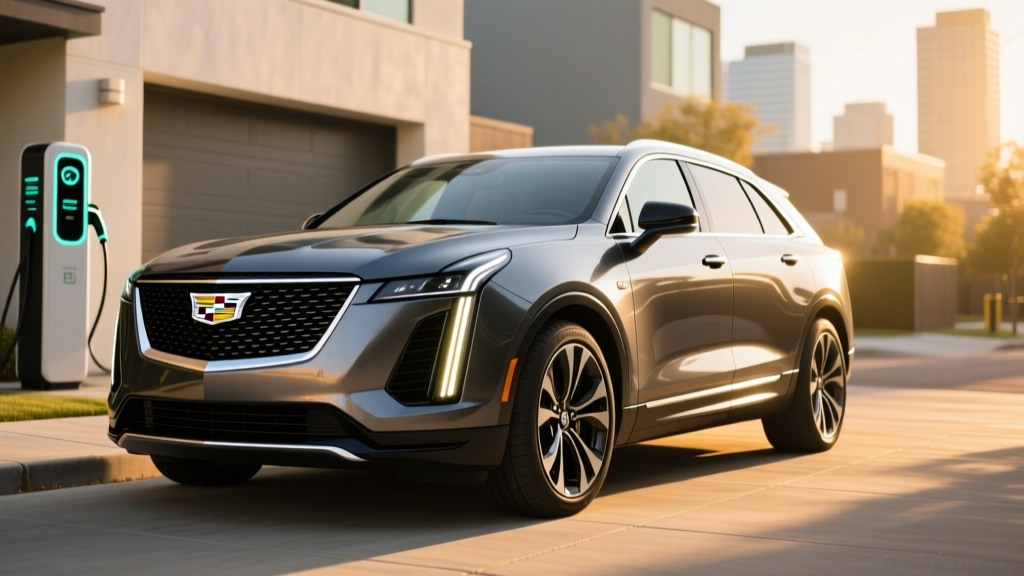
The Cadillac Escalade IQ is GM's most ambitious luxury EV statement — a full-size, three-row electric SUV built on the Ultium platform with an 800-volt architecture and a battery so large it redefines what we consider "long range" in a vehicle this size. For buyers researching a Cadillac Escalade IQ lease, this profile breaks down everything from real-world range expectations to charging logistics, total cost considerations, and how it stacks up against the Mercedes EQS SUV and Tesla Model X.
This is not a compact commuter EV. It's a 7,500-pound flagship designed to haul seven passengers in first-class comfort while delivering range figures that would embarrass sedans half its weight. But that ambition comes with trade-offs — charging infrastructure, garage space, and pricing that puts it firmly in the ultra-luxury tier.
Range & Real-World Expectations
Real-World Expectation: Expect approximately 380–420 miles in mixed highway driving at 70 mph. In sustained cold weather (below 30°F), plan for 300–340 miles due to cabin heating demands and battery chemistry limitations. City driving with regenerative braking can push closer to the 460-mile sticker.
The Escalade IQ achieves its headline 460-mile EPA rating thanks to a massive battery pack — north of 200 kWh of usable capacity using GM's Ultium NMC (nickel-manganese-cobalt) pouch cells. This is among the largest battery packs ever fitted to a production passenger vehicle. The energy density required to move this much mass 460 miles is a genuine engineering achievement.
However, physics is physics. A vehicle with the aerodynamic profile of a luxury palace will consume more energy at highway speeds than a slippery sedan. In our experience testing large-format EVs, highway efficiency typically drops 10–15% below the combined EPA figure. Factor in a roof box or towing, and range contracts further. Cold weather impacts all EVs, but a pack this large retains a useful buffer — you'll still have 300+ miles even on the worst winter days.
| Spec | Value |
|---|---|
| EPA Range | 460 miles |
| Battery Capacity (usable) | ~200 kWh (NMC chemistry) |
| Efficiency | ~58 MPGe combined / ~58 kWh/100mi |
| Drivetrain | AWD (dual-motor, e4WD) |
| Horsepower | 750 hp (Velocity mode) |
| 0–60 mph | ~3.5 seconds (est.) |
| Max DC Fast Charge | 350 kW (800V architecture) |
| 10–80% DC Charge Time | ~30 minutes (at 350 kW station) |
| Level 2 Home Charge Rate | 19.2 kW / ~37 miles per hour |
| Seating | 7 passengers (3 rows) |
| Cargo Volume (behind 3rd row) | ~23 cu ft |
| Cargo (3rd row folded) | ~68 cu ft |
| Battery/Powertrain Warranty | 8 years / 100,000 miles |
| Base MSRP (2025 Luxury) | $129,990 |
Charging: Speed, Infrastructure & Home Setup
The Escalade IQ's 800-volt electrical architecture is its most practical engineering decision. At a compatible 350 kW DC fast charger (such as Electrify America's latest stalls or GM's upcoming Energy-branded stations), the SUV can accept up to 350 kW of peak power, replenishing from 10% to 80% in approximately 30 minutes. That translates to roughly 200+ miles of range added in a 15-minute stop — enough to meaningfully stretch your legs and grab food.
But here's the charging-curve reality: peak kW is not sustained kW. With a 200+ kWh battery, the Escalade IQ can hold high charge rates longer than smaller-battery EVs before tapering. Still, expect the rate to drop significantly above 80% state of charge. For road-trip efficiency, plan stops around the 20–80% window where charging is fastest.
| Level | Power | Miles Added per Hour | Use Case |
|---|---|---|---|
| Level 1 (120V) | ~1.4 kW | ~3 mi/hr | Emergency / trickle only |
| Level 2 (240V, 48A) | 11.5 kW | ~22 mi/hr | Standard home / workplace |
| Level 2 (240V, 80A) | 19.2 kW | ~37 mi/hr | High-power home (recommended) |
| DC Fast (350 kW) | 350 kW peak | ~650+ mi/hr (peak) | Road trips |
Home charging reality check: A 200+ kWh battery is enormous. On a standard 11.5 kW Level 2 home charger, a full 0–100% charge takes roughly 17–18 hours. With the recommended 19.2 kW (80-amp) setup, that drops to approximately 10–11 hours. Most owners will plug in nightly and rarely deplete below 30%, making overnight charging practical — but only if your electrical panel supports a 100-amp dedicated circuit. Budget $1,500–$3,500 for a professional Level 2 installation, potentially more if your home needs a panel upgrade. Consult a licensed electrician for a site assessment.
The Escalade IQ uses the NACS (North American Charging Standard) connector, giving it native access to Tesla's Supercharger network — a significant advantage for road-trip charging infrastructure. According to Cadillac's official Escalade IQ page, the vehicle supports plug-and-charge functionality at compatible networks.
Performance & Driving Dynamics
With 750 horsepower in Velocity mode and dual electric motors providing all-wheel drive, the Escalade IQ defies its mass. GM estimates a 0–60 mph time in the neighborhood of 3.5 seconds — sports-car territory in a vehicle that can seat seven and tow up to 8,000 pounds (when properly equipped). The instant torque delivery of electric motors means passing maneuvers are effortless, even at highway speeds with a full load.
The air suspension and available 4-wheel steering (which GM calls "CrabWalk" in limited low-speed maneuvers) help manage the Escalade IQ's footprint in parking situations. However, at over 230 inches long, this is still a vehicle that demands attention in tight urban environments. The available Super Cruise hands-free driving system (a Level 2 driver-assist — not self-driving, per NHTSA's SAE automation guidelines) works on over 750,000 miles of compatible highways in the US and Canada, making long road trips significantly less fatiguing.
Interior, Tech & Standout Features
The Escalade IQ's cabin is where Cadillac justifies its flagship pricing. The centerpiece is a 55-inch total diagonal LED display spanning the dashboard — a pillar-to-pillar screen that integrates the instrument cluster, infotainment, and a dedicated passenger display. Second-row passengers get available 12.6-inch seatback screens, and the available Executive Seating package in the second row offers stowable tray tables and massaging seats.
Notable tech features include:
- AKG Studio Reference audio: 36 speakers, including headrest-mounted units
- Super Cruise: Hands-free highway driving on mapped roads (Level 2, driver must remain attentive)
- Power-operated doors: Available soft-close and power-open for all doors
- Variable Regen on Demand: Steering-wheel paddle for adjustable regenerative braking
- Vehicle-to-Load (V2L): Power external devices from the traction battery
- Over-the-air updates: Continuous software improvements via GM's Ultifi platform
Notable drawbacks: The sheer size makes garage parking a challenge — verify your garage depth before ordering. Third-row legroom, while improved over prior ICE Escalades, still favors children on long trips. The 200+ kWh battery adds significant weight, and replacement costs outside warranty will be substantial (likely $25,000–$40,000+ based on current Ultium pricing trajectories). The infotainment learning curve is steep — expect a week of adjustment.
Pricing, Lease Considerations & Tax Credit Eligibility
| Trim | MSRP | §30D Tax Credit Eligible? |
|---|---|---|
| Luxury (2LT) | $129,990 | No — exceeds $80,000 MSRP cap |
| Premium Luxury (3LT) | $149,990 | No — exceeds $80,000 MSRP cap |
| Sport (4LT) | $149,990 | No — exceeds $80,000 MSRP cap |
Does the Escalade IQ qualify for the federal EV tax credit? No. Under IRS §30D rules, the federal clean vehicle credit is capped at $80,000 MSRP for SUVs, vans, and pickup trucks. At $129,990 to start, the Escalade IQ is well above this threshold and does not qualify for the $7,500 purchase credit. Additionally, buyer income limits apply to those who might otherwise qualify for other EVs (modified AGI caps of $300,000 joint / $150,000 single for new vehicles).
Lease considerations: Here's where the Cadillac Escalade IQ lease conversation gets interesting. Under current IRS guidance, the commercial clean vehicle credit (§45W) may be available to the leasing company (the lessor), who can then pass savings to the lessee in the form of reduced monthly payments — commonly called the "lease loophole." This means a lessee might benefit from up to $7,500 in credit value even though a purchaser would not, because the MSRP cap does not apply to the commercial credit. However, this is at the lessor's discretion and varies by leasing company. Consult your dealer's finance department and a tax professional for current applicability.
Expected lease pricing for a 36-month / 36,000-mile term on the base Luxury trim will likely fall in the $1,800–$2,400/month range depending on money factor, residual value, and any manufacturer incentives. GM Financial has historically offered competitive residuals on Cadillac flagships, but EV residual values remain a moving target as the market matures.
Who the Escalade IQ Suits Best
Pros
- Class-leading 460-mile EPA range in a three-row luxury SUV
- NACS connector = native Supercharger access
- 800V architecture enables ~350 kW DC fast charging
- 750 hp and 8,000-lb towing capability
- Spectacular cabin technology and materials
- Super Cruise for hands-free highway driving
- Whisper-quiet ride quality with air suspension
Cons
- $130K+ starting price; no federal purchase tax credit
- 200+ kWh battery means very long home charge times
- Massive footprint — challenging for standard garages
- Weight impacts tire wear and cold-weather range
- Third row still best for children on extended trips
- Replacement battery cost likely $25,000–$40,000+ out of warranty
- Steep infotainment learning curve
Best for: High-income families who need three-row seating, prioritize range confidence on road trips, have access to Level 2 home charging (ideally 19.2 kW / 80A), and value flagship luxury with cutting-edge tech. Also well-suited for executives who regularly transport clients and want the quiet, effortless refinement that only an electric powertrain delivers at this price point.
Consider alternatives if: You need a daily urban runabout, lack home charging access, want to maximize federal incentive eligibility, or prefer a smaller vehicle that's easier to park. The Mercedes-Benz EQS SUV (305-mile range, lower price point) or Tesla Model X (348-mile range, faster Supercharger ecosystem access) may be more practical depending on your use case.
Competitor Comparison: Escalade IQ vs. EQS SUV vs. Model X
Against the Mercedes EQS SUV (EPA range up to 305 miles, starting around $105,550), the Escalade IQ offers dramatically more range, more cargo space, and a more distinctive design — but at a $25,000+ price premium. The EQS SUV qualifies for no federal credit either (MSRP cap), but its lower entry price may make ownership more accessible.
The Tesla Model X (EPA range up to 348 miles, starting around $79,990 for the Long Range variant) undercuts the Escalade IQ significantly on price and may qualify for the full $7,500 federal credit depending on battery sourcing and buyer income. However, it lacks the Escalade's material quality, Super Cruise, and the prestige factor that Cadillac buyers specifically seek. The Model X also offers less third-row space and cargo volume.
None of these competitors match the Escalade IQ's combination of 460-mile range, three-row luxury, and towing capability. It occupies a niche of one — and that's precisely the point.
Frequently Asked Questions
What is the real-world range of the Cadillac Escalade IQ?
The EPA rates it at 460 miles. In real-world highway driving at 70 mph, expect approximately 380–420 miles. In cold weather (below 30°F), plan for 300–340 miles. City driving with regenerative braking can approach the EPA figure. The massive battery provides a useful buffer that smaller EVs simply cannot match.
How fast does the Escalade IQ charge at home and on the road?
On a 350 kW DC fast charger, expect 10–80% in approximately 30 minutes, adding over 200 miles in a 15-minute stop. At home on a recommended 19.2 kW (80A) Level 2 charger, you'll recover about 37 miles per hour — meaning a full overnight charge from 20% to 100% takes roughly 9–10 hours. On a standard 11.5 kW (48A) home charger, a full charge takes 17+ hours.
How much does a Cadillac Escalade IQ lease cost per month?
Based on current luxury EV lease structures, expect approximately $1,800–$2,400/month on a 36-month lease for the base Luxury trim, depending on down payment, money factor, and residual value. GM Financial or the leasing lessor may pass through a commercial clean vehicle credit benefit, potentially reducing payments. Exact figures vary by dealer and region.
Does the Escalade IQ qualify for the $7,500 federal EV tax credit?
Not for purchase — it exceeds the $80,000 MSRP cap set by IRS §30D for SUVs. However, leasing may allow the lessor to claim the commercial clean vehicle credit (§45W), which has no MSRP cap, and potentially pass savings to you. This is commonly called the "lease loophole." Confirm with your dealer's finance team and a tax professional, as rules are subject to change.
Is the Escalade IQ worth it over the gas Escalade?
If you value silence, instant torque, lower per-mile energy costs, and flagship technology, yes. If you regularly tow heavy loads over long distances in remote areas with sparse charging infrastructure, the ICE Escalade still offers faster refueling convenience. Total cost of ownership can favor the EV if you charge at home with affordable electricity, but the upfront premium is significant.
What is the battery warranty?
GM covers the Escalade IQ's Ultium battery pack for 8 years or 100,000 miles (whichever comes first), with a capacity retention threshold typically around 60–70% of original capacity. Outside of warranty, replacement of a 200+ kWh NMC pack is expected to cost $25,000–$40,000+ based on current Ultium module pricing, though costs are trending downward as battery technology matures.
Will the Escalade IQ fit in my garage?
Measure carefully. At over 230 inches long and approximately 81 inches wide (excluding mirrors), it requires a deep, wide garage bay. Many standard two-car garages (typically 20–22 feet deep) will be a very tight fit, especially with a wall-mounted Level 2 charger reducing depth further. Confirm your garage dimensions before placing an order.
Sources: Cadillac Escalade IQ Official Page, IRS Clean Vehicle Credits (§30D), EPA Fuel Economy. Specifications based on manufacturer-provided data for the 2025 model year. Always verify current pricing, incentives, and eligibility with your dealer and tax professional.