Quick Verdict: Is the Electric Escalade Worth It?
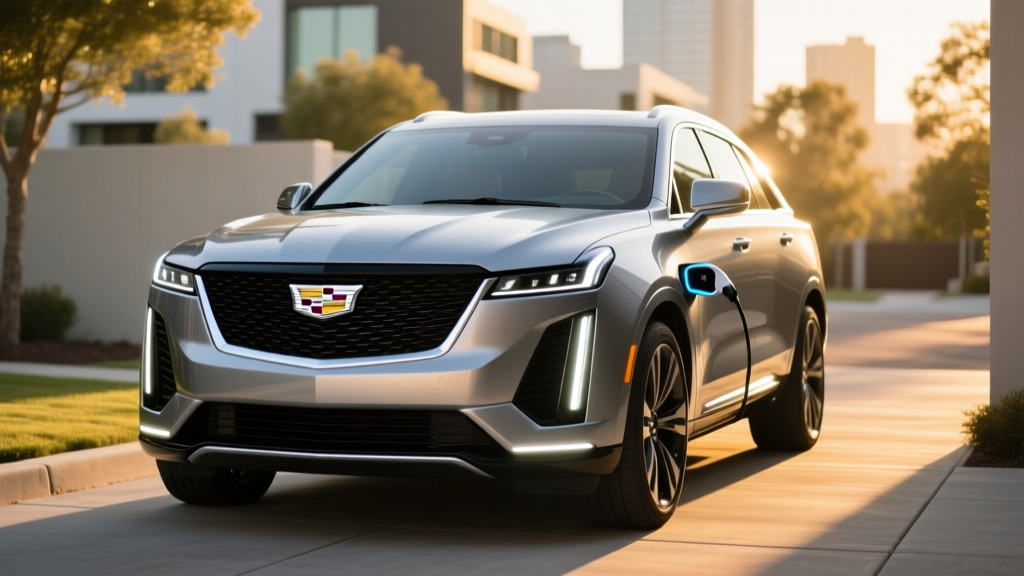
The 2026 Cadillac Escalade IQ is the battery-electric successor to GM's flagship luxury SUV, built on the Ultium platform with a massive 200+ kWh battery, dual-motor AWD, and an EPA-estimated range of up to 460 miles. Starting at $129,990, it targets buyers who want three-row luxury with zero tailpipe emissions. Real-world highway range will likely land between 370–400 miles, and DC fast charging peaks at roughly 200 kW (10–80% in approximately 35 minutes). Compared to the gas Escalade, the IQ eliminates $3,500–$4,500 in annual fuel costs for typical drivers but carries a $40,000+ premium upfront. It qualifies for no federal §30D tax credit because its MSRP far exceeds the $80,000 SUV cap. This is a prestige purchase, not a savings play.
Range, Battery & Efficiency: What the Numbers Actually Mean
The Escalade IQ rides on GM's BT1 battery-electric truck platform — the same architecture underpinning the Silverado EV and GMC Sierra EV. Cadillac has confirmed a battery pack exceeding 200 kWh of usable capacity, using Ultium NMC (nickel-manganese-cobalt) pouch cells. This is one of the largest battery packs ever fitted to a production passenger vehicle.
Real-World Range Expectations
EPA estimate: 460 miles (top trim, optimal conditions)
Highway driving (70–75 mph): Expect ~370–400 miles. Aerodynamic drag dominates at speed in a vehicle with the Escalade's boxy profile and 9,000+ lb curb weight.
Cold weather (below 32°F): Plan for 310–350 miles. NMC chemistry loses 15–25% range in freezing temperatures even with the heat pump engaged.
Mixed suburban/highway: ~390–420 miles is a realistic year-round average for moderate climates.
| Spec | Value |
|---|---|
| EPA Range (est.) | Up to 460 miles |
| Battery Capacity | 200+ kWh usable (NMC) |
| Drivetrain | Dual-motor eAWD |
| Horsepower | ~750 hp (estimated, AWD) |
| 0–60 mph | Under 5.0 seconds (est.) |
| Peak DC Fast Charge | ~200 kW |
| 10–80% DC Charge Time | ~35 minutes |
| Level 2 Charge Rate | ~19.2 kW (80A capable) |
| Towing Capacity | ~8,000 lbs (est.) |
| Seating | 7 passengers (3 rows) |
| Starting MSRP | $129,990 |
| Battery/Powertrain Warranty | 8 years / 100,000 miles |
Efficiency in a vehicle this heavy will likely land around 50–55 MPGe combined (roughly 1.8–2.0 kWh/mile). That's thirsty by EV standards — for comparison, the Tesla Model X achieves about 100 MPGe — but it's the trade-off for a 9,000-lb three-row luxury hauler. For context, the gas Escalade with its 6.2L V8 returns about 16 MPG combined, according to fueleconomy.gov.
Charging Speeds: Home and Public
Charging a 200+ kWh battery is a serious logistical consideration. Here's what to expect at each level:
| Level | Power | Miles Added per Hour | Full Charge Time (0–100%) |
|---|---|---|---|
| Level 1 (120V household) | ~1.4 kW | ~3–4 mi/hr | ~60+ hours |
| Level 2 (240V, 48A) | ~11.5 kW | ~25–30 mi/hr | ~18–20 hours |
| Level 2 (240V, 80A) | ~19.2 kW | ~40–48 mi/hr | ~11–13 hours |
| DC Fast Charge | Up to ~200 kW | ~350+ mi/hr (peak) | 10–80% in ~35 min |
Home charging reality: Level 1 is unusable for daily driving on a battery this large — you'd add barely 50 miles overnight. A Level 2 home charger is effectively mandatory. Even at 48 amps (the most common home setup), you'll need 18–20 hours for a full charge from empty. The practical approach: plug in nightly and top up from 30–80%, which takes roughly 8–10 hours at 48A. If your electrical panel supports an 80A circuit (requires a 100A breaker and likely a 200A+ main panel), you can cut that to 5–6 hours for the same swing.
Public DC fast charging: At 200 kW peak, the Escalade IQ will add roughly 150 miles in 15 minutes under ideal conditions. However, expect the charge curve to taper significantly above 80% State of Charge — this is standard for NMC chemistry. A realistic 10–80% session takes about 35 minutes, and 10–90% may stretch to 50+ minutes. On a road trip, plan stops around every 300 miles for comfort and to stay in the fastest part of the charge curve.
The Escalade IQ uses the NACS (Tesla-style) connector, giving it native access to the Tesla Supercharger network — the most reliable public charging infrastructure in the U.S. It will also work with Electrify America, EVgo, and other networks via NACS-compatible stalls.
Escalade IQ vs. Gas Escalade: Cost and Ownership Breakdown
This is where most buyers want clarity. The gas Escalade starts around $83,000 and tops out near $115,000 for the V-Series. The IQ starts at $129,990 — a substantial premium. Let's compare the total cost picture over 5 years and 75,000 miles.
| Category | Escalade IQ (EV) | Gas Escalade (6.2L V8) |
|---|---|---|
| Purchase Price (base) | $129,990 | $83,000 |
| Federal Tax Credit (§30D) | $0 (exceeds $80K MSRP cap) | $0 |
| Fuel/Energy Cost | $5,400 (at $0.16/kWh avg) | $18,750 (at $3.75/gal, 16 MPG) |
| Maintenance (5 yr) | ~$1,500 (tires, cabin filter, fluid top-offs) | ~$4,500 (oil, brakes, transmission, belts) |
| Insurance (est. avg/yr) | ~$3,800/yr ($19,000 total) | ~$3,200/yr ($16,000 total) |
| Estimated Depreciation | ~$52,000 (40%) | ~$33,200 (40%) |
| 5-Year Total Cost | ~$207,890 | ~$155,450 |
| Cost per Mile | ~$2.77 | ~$2.07 |
The bottom line: The Escalade IQ saves roughly $13,350 in fuel and $3,000 in maintenance over five years, but those savings don't come close to offsetting the ~$47,000 higher purchase price and steeper depreciation (in absolute dollars). Insurance will likely be higher due to the vehicle's value and EV repair costs. This is not an EV you buy to save money — it's an EV you buy for the driving experience, status, and zero-emission operation.
Home charging access is also a critical variable. If you can install a Level 2 charger (budget $1,200–$3,000 for equipment and electrician work, possibly more if your panel needs upgrading to 200A), the IQ is convenient and practical. If you rely entirely on public charging, the time cost and higher per-kWh rates at DC fast stations ($0.35–$0.55/kWh) erode the fuel-cost advantage substantially — potentially doubling your energy spend to $9,000+ over five years.
Performance, Interior & Technology
With an estimated 750 horsepower from its dual-motor setup, the Escalade IQ will hit 60 mph in under 5 seconds — remarkable for a vehicle weighing over 9,000 pounds. GM's Ultium platform delivers instant torque, meaning highway merging and passing feel effortless even at altitude where the gas V8 would breathe thinner air.
The interior carries forward the Escalade's reputation as a luxury flagship: expect a massive curved OLED display spanning the dashboard (likely 55+ inches of combined screen real estate), available Super Cruise hands-free driving on compatible highways, premium leather, massaging seats, and AKG studio-grade audio. Important: Super Cruise is an SAE Level 2 driver-assistance system — you must remain attentive and ready to take over at all times. It is not autonomous driving.
Super Cruise: What It Does NOT Do
GM's Super Cruise enables hands-free driving on over 750,000 miles of pre-mapped compatible roads in the U.S. and Canada. However, it is an SAE Level 2 system. The driver must remain alert, keep eyes on the road (monitored by a driver-attention camera), and be prepared to steer or brake immediately. It does not handle construction zones, unmapped roads, severe weather, or complex urban driving. You are the driver — the system is assisting.
Cargo space should be competitive with the gas Escalade, and the EV platform may offer a modest front trunk (frunk) for additional storage — a practical bonus for stowing charging cables or groceries.
Tax Credits, Incentives & Purchase Considerations
Here's where the math gets unfavorable for credit-seekers. Under current IRS §30D rules, the federal clean vehicle credit caps eligible SUVs at an $80,000 MSRP. The Escalade IQ's starting price of $129,990 puts it far beyond this threshold. There is no partial credit — you either qualify or you don't.
| Requirement | Escalade IQ Status |
|---|---|
| MSRP ≤ $80,000 (SUVs/vans/pickups) | ❌ $129,990 — exceeds cap |
| Buyer income ≤ $300K (MFJ) / $150K (single) | Varies by buyer |
| Battery components: North America assembly | ✓ Likely (GM U.S. production) |
| Critical minerals: FTA-country sourcing | ✓ Likely (GM Ultium supply chain) |
| Eligible for credit? | No — MSRP disqualifies |
Some buyers may qualify for state-level incentives — California's CVRP, Colorado's innovative motor vehicle credit, or utility company rebates for home charger installation. These vary widely by jurisdiction and change frequently, so check your state's energy office and local utility for current programs.
Decision Framework: Should You Buy the Escalade IQ?
Choose the Escalade IQ If:
- You have reliable home charging — a garage or driveway with access to a 240V circuit is essentially mandatory for a 200+ kWh battery.
- You want flagship luxury with zero tailpipe emissions — the IQ delivers Escalade prestige without the V8 rumble and fuel bills.
- You drive primarily in urban/suburban settings — regenerative braking maximizes efficiency and range in stop-and-go traffic.
- You value instant torque and silent operation — the EV powertrain transforms a heavy luxury SUV into a surprisingly quick, serene cruiser.
- Budget is not your primary constraint — at $130K+ with no tax credit, this is a lifestyle purchase.
Stick With the Gas Escalade (or Consider Alternatives) If:
- You can't install a Level 2 home charger — public-charging-only ownership of a 200+ kWh vehicle is time-consuming and expensive.
- You regularly tow near maximum capacity — towing 7,000–8,000 lbs will cut EV range by 40–50%, making road trips impractical without frequent long stops.
- You want to minimize total cost of ownership — the gas Escalade is $47,000+ cheaper upfront, and fuel savings don't bridge that gap in any reasonable timeframe.
- You live in a region with extreme cold and limited charging — sub-zero temperatures reduce range significantly, and rural charging deserts make a 460-mile range feel shorter.
- You want a federal tax credit — the IQ doesn't qualify, but alternatives like the Rivian R1S (under $80K MSRP on some trims) or the Tesla Model X may, depending on sourcing and your income.
Common Misconceptions About the Electric Escalade
| Myth | Fact |
|---|---|
| "460 miles of range means I'll always get 460 miles." | EPA range is measured under controlled conditions. Highway driving at 75 mph, cold weather, and towing will reduce range by 15–50%. Plan for 310–400 real-world miles depending on conditions. |
| "I'll save a fortune on fuel compared to gas." | You'll save ~$13,350 over 5 years on fuel and maintenance, but you're paying $47,000+ more upfront. The IQ is not a cost-savings vehicle. |
| "It charges as fast as a Tesla." | At ~200 kW peak, the IQ charges slower than a Tesla Model X on a V4 Supercharger (which can accept 250+ kW). A 10–80% session takes ~35 minutes, not 15–20. |
| "Super Cruise means I don't have to pay attention." | Super Cruise is SAE Level 2. You must remain alert, eyes on the road, hands available. The system monitors your attention and will disengage if you look away. |
| "I'll get the $7,500 federal tax credit." | The §30D credit caps SUVs at $80,000 MSRP. The Escalade IQ starts at $129,990 and is ineligible regardless of your income or the battery sourcing. |
| "The battery will need replacing in a few years." | GM warranties the Ultium battery for 8 years / 100,000 miles against defects and excessive degradation (typically below 60–70% capacity). NMC batteries in large packs with robust thermal management typically retain 85–90% capacity at 100,000 miles. |
Frequently Asked Questions
How long does it take to charge the Escalade IQ at home?
On a standard 48-amp Level 2 home charger (240V), a full charge from empty takes roughly 18–20 hours. In practice, most owners plug in nightly and charge from 30–80%, which takes about 8–10 hours — easily done overnight. An 80-amp circuit cuts that to 5–6 hours but requires a panel capable of supporting a 100A breaker.
Can I tow with the Escalade IQ?
Yes — expect an estimated towing capacity around 8,000 lbs, competitive with the gas Escalade. However, towing heavy loads will reduce range dramatically, likely by 40–50%. A 460-mile range becomes roughly 230–280 miles while towing a large trailer. Plan road-trip charging stops accordingly.
Is the Escalade IQ eligible for any tax credits?
Not the federal §30D credit — the MSRP exceeds the $80,000 SUV cap. Some state incentives and utility rebates may apply. Check your state's clean vehicle program and local utility for charger installation rebates. Consult a tax professional for advice specific to your situation.
How does the Escalade IQ compare to the Rivian R1S or Tesla Model X?
The IQ is significantly larger, heavier, and more expensive than both. The Rivian R1S (starting ~$79,900) offers three rows and up to 410 miles of range in a more adventure-oriented package — and some trims may qualify for the federal credit. The Tesla Model X (starting ~$79,990) offers faster charging and Supercharger network access natively but has a different luxury aesthetic and only two standard rows (six-seat optional). The IQ wins on traditional luxury, space, and brand prestige; the R1S and Model X win on value and efficiency.
What happens if the battery degrades?
GM's Ultium battery warranty covers 8 years / 100,000 miles. Industry data from similar large NMC packs suggests you'll retain approximately 85–90% of original capacity at 100,000 miles with normal use. If degradation falls below the warranty threshold (typically 60–70% retained capacity), GM will repair or replace the battery at no cost. Out-of-warranty replacement for a 200+ kWh pack would be extremely expensive — likely $25,000–$40,000 — though this scenario is rare within the vehicle's normal lifespan.
Do I need to upgrade my home electrical panel?
Possibly. A 48-amp Level 2 charger requires a 60-amp breaker, which most modern 200-amp home panels can accommodate. An 80-amp charger needs a 100-amp breaker and may require a panel upgrade if your home has a 100-amp or 150-amp main service. Budget $500–$2,500 for a standard Level 2 installation, or $2,000–$5,000+ if a panel upgrade is needed. Always get a quote from a licensed electrician before purchasing equipment.
Sources: Cadillac official specifications, fueleconomy.gov (EPA), IRS §30D Clean Vehicle Tax Credits. Specifications for the 2026 Escalade IQ are based on manufacturer-announced data and may be updated prior to delivery. Always verify final specs and pricing with your dealer.