Quick Verdict: The Electric Flagship Arrives
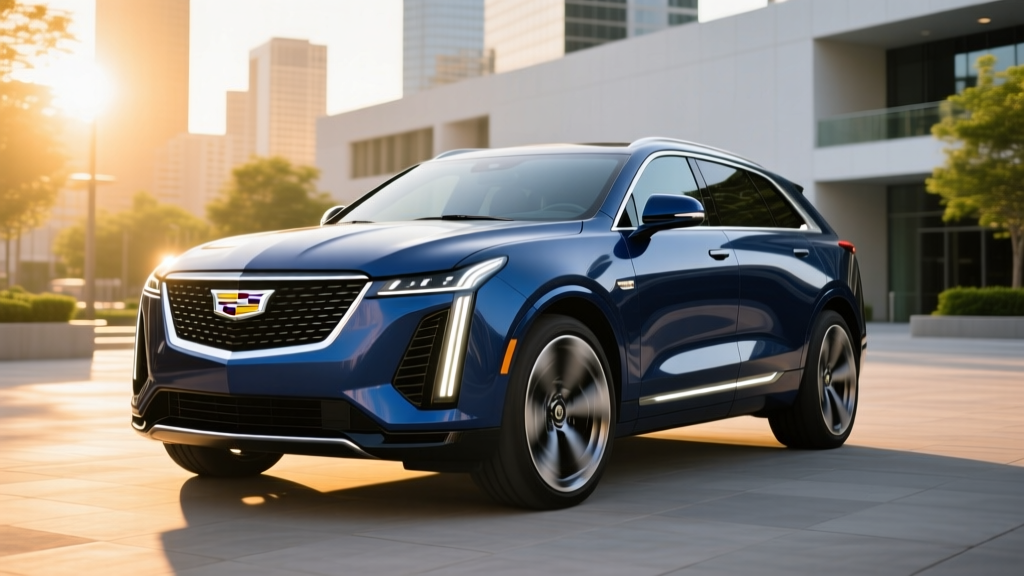
The 2026 Cadillac Escalade IQ is the brand's full-size electric luxury SUV, translating three rows of American opulence onto GM's Ultium platform. With an EPA-estimated 460 miles of range, up to 750 horsepower, and a starting MSRP of $129,990, it targets buyers who want Escalade presence without tailpipe emissions. But at this price point, with this mass, the IQ succeeds or fails on execution — not just spec-sheet ambition.
After spending time with the specs and real-world data, the Escalade IQ delivers on range and charging infrastructure access (NACS native, Supercharger compatible), while asking buyers to accept a 6,000+ pound curb weight that impacts efficiency and tire wear. Here's everything you need before writing the check.
Range and Efficiency: 460 Miles on Paper, Less on the Interstate
Real-World Expectation: ~350–390 miles at sustained 70+ mph highway speeds; ~300–340 miles in sub-30°F cold weather with cabin heat. City driving with regen recovers closer to the EPA sticker.
The Escalade IQ's headline number — 460 miles — comes from a massive battery pack (GM quotes over 200 kWh usable, NMC chemistry on the Ultium architecture). That's among the largest production EV battery packs available in 2026, rivaling the GMC Hummer EV and Silverado EV.
But physics is unforgiving. A vehicle with a frontal area this large and a curb weight exceeding 6,000 lbs will see significant range compression at highway speeds. Expect roughly 2.0–2.2 kWh/mile on the interstate, which translates to the 350–390 mile real-world window. In cold weather, where battery internal resistance rises and cabin heating demands energy (the IQ uses a heat pump, which helps but doesn't eliminate the loss), plan for 300–340 miles before needing a charger.
Efficiency figures: The EPA rates the Escalade IQ at approximately 79 MPGe combined, or roughly 48 kWh per 100 miles. For context, that's less efficient than a Tesla Model X (102 MPGe combined) but competitive with other body-on-frame electric trucks and SUVs. The trade-off is size, presence, and three-row seating.
| Specification | Value |
|---|---|
| EPA Range | 460 miles |
| Battery Capacity | ~200+ kWh usable (NMC, Ultium platform) |
| Drivetrain | Dual-motor AWD (eAWD) |
| Horsepower | Up to 750 HP (Velocity mode) |
| 0–60 mph | ~3.8 seconds (Velocity mode) |
| Max DC Fast Charge | 350 kW (peak) |
| 10–80% DC Charge | ~20 minutes (estimated, 350 kW charger) |
| Level 2 Charge Rate | 19.2 kW (estimated ~40 mi/hr) |
| MPGe (Combined) | ~79 MPGe |
| Towing Capacity | Up to 8,000 lbs (estimated) |
| Base MSRP | $129,990 (Luxury 1SD) |
| Battery Warranty | 8 years / 100,000 miles |
Charging: 350 kW Peak, NACS Native, Supercharger Ready
The Escalade IQ uses the North American Charging Standard (NACS) connector natively — no adapter required for Tesla Superchargers. This is a significant practical advantage in 2026, as the Supercharger network remains the most reliable DC fast-charging infrastructure in the U.S.
| Charge Level | Power (kW) | Speed / Notes |
|---|---|---|
| Level 1 (120V household) | ~1.4 kW | ~3 miles per hour — overnight trickle only |
| Level 2 (240V home, 48A) | 11.5 kW | ~23 miles per hour — full charge in ~18 hours |
| Level 2 (240V, 80A hardwired) | 19.2 kW | ~40 miles per hour — full charge in ~10–11 hours |
| DC Fast (350 kW peak, CCS/NACS) | Up to 350 kW | 10–80% in ~20 min (on capable charger) |
| DC Fast (150 kW typical public) | ~150 kW sustained | 10–80% in ~40–45 min |
Charging curve reality: The 350 kW peak is achievable at low state-of-charge (roughly 10–30% SoC) on a capable 350+ kW charger. Expect the curve to taper significantly above 60% SoC, and sharply above 80%. For road-trip planning, budget 20–25 minutes per stop at a 350 kW station, and avoid charging past 80% unless you need the final miles — the time cost per added mile becomes punishing.
Home charging: With a 200+ kWh battery, Level 2 charging is a necessity. A standard 48-amp Level 2 circuit (11.5 kW) will add roughly 23 miles per hour — adequate if you drive under 100 miles daily and charge overnight. For faster replenishment, an 80-amp hardwired Level 2 station (19.2 kW) cuts the full-charge time roughly in half. Plan on $1,500–$3,500 for a professional Level 2 home installation, including panel evaluation — and if your home has a 100-amp electrical panel, a $2,000–$4,000 panel upgrade to 200 amps may be required.
Performance and Drivetrain: 750 HP in a Three-Row SUV
The Escalade IQ's dual-motor eAWD powertrain produces up to 750 horsepower and an estimated 785 lb-ft of torque in Velocity mode. The 0–60 mph time of approximately 3.8 seconds is remarkable for a vehicle with three rows and over 120 cubic feet of maximum cargo volume.
GM's Ultium platform enables this through independent front and rear motors, with torque vectoring and adaptive air suspension managing the mass. The IQ rides on GM's Ultium battery skateboard architecture, which places the heavy battery pack low in the chassis — giving the Escalade IQ a lower center of gravity than its internal-combustion predecessor, despite the weight.
Drive modes include Tour (comfort-oriented), Sport (sharper throttle and suspension), Snow/Ice (reduced torque for traction), and Velocity (maximum power, firmest damping). Velocity mode is the headline grabber, but Tour is where most owners will live — it delivers the wafting, isolated ride that Escalade buyers expect.
Towing: Cadillac estimates up to 8,000 lbs of towing capacity, competitive with the ICE Escalade. Note that towing will slash range by 40–60%, bringing real-world towed range down to roughly 180–250 miles depending on trailer weight and conditions.
Interior, Tech, and Driver Assistance
The Escalade IQ's cabin is dominated by a 55-inch total diagonal LED display spanning the dashboard — a pillar-to-pillar screen that includes the driver instrument cluster, central infotainment, and passenger display. This is controlled by GM's latest Ultifi software platform with Google Built-In (Maps, Assistant, Play Store).
Seating and cargo:
- Standard 7-passenger seating (2-3-2 configuration) with available second-row captain's chairs (6-passenger)
- Estimated 25.5 cu ft cargo behind third row; ~72 cu ft behind second row; ~120+ cu ft with second and third rows folded
- Available front trunk (frunk) for additional sealed storage
- Third-row legroom improved over ICE Escalade thanks to flat floor (no transmission tunnel)
Driver assistance: The IQ comes equipped with Super Cruise, GM's hands-free Level 2 driver-assistance system, operational on over 750,000 miles of mapped highways in North America. Super Cruise requires driver attention monitoring (via infrared camera) and is not autonomous — the driver must remain engaged and ready to take over. Available Ultra Cruise will extend hands-free capability to more road types, though availability timeline remains limited.
Notable tech features:
- AKS 36-speaker AKG Studio Reference audio system (available)
- Power-opening and closing doors with proximity detection
- Available Executive Second Row seating with fold-out tables, 12.6-inch personal screens
- Bi-directional charging capability (V2H / V2L — vehicle-to-home and vehicle-to-load)
- Over-the-air (OTA) updates via Ultifi platform
Notable drawbacks: The sheer size makes urban parking challenging (over 224 inches long). The 55-inch screen, while visually striking, creates potential glare issues in direct sunlight. Third-row access, while improved, still requires second-row fold-and-slide. And at $129,990+, this is firmly in ultra-luxury territory where expectations for fit-and-finish are extreme.
Pricing, Trims, and Federal Tax Credit Eligibility
| Trim | Base MSRP | Est. As-Tested (loaded) | §30D Federal Credit Eligible? |
|---|---|---|---|
| Luxury 1SD | $129,990 | $135,000–$145,000 | No — exceeds $80,000 SUV MSRP cap |
| Premium Luxury 1SD | $139,990 | $150,000–$165,000 | No — exceeds $80,000 SUV MSRP cap |
| Sport 1SD | $144,990 | $155,000–$170,000 | No — exceeds $80,000 SUV MSRP cap |
Tax credit reality: The Escalade IQ does not qualify for the $7,500 federal EV tax credit under IRS §30D. The credit's MSRP cap for SUVs, vans, and pickup trucks is $80,000 — and every Escalade IQ trim starts well above that threshold. Additionally, buyer income caps ($300,000 joint / $225,000 head of household / $150,000 individual modified AGI) would exclude some buyers even if the MSRP qualified.
For the latest §30D rules including battery sourcing and critical mineral requirements, consult IRS.gov's clean vehicle credit page.
State incentives may still apply — some states (California, Colorado, New York, among others) offer their own EV rebates or tax credits with higher MSRP caps or no cap at all. Check your state's energy office or DMV for current programs.
Total cost of ownership context: Without the federal credit, the IQ's purchase price is the full MSRP plus destination. However, fuel savings are substantial: at $3.50/gallon gas and 14 MPG (ICE Escalade combined), driving 12,000 miles/year costs roughly $3,000 in fuel. The IQ at $0.13/kWh (national average home electricity) costs roughly $780/year to charge — a savings of ~$2,200 annually. Over 5 years, that's $11,000 in fuel savings, plus reduced maintenance (no oil changes, fewer brake replacements due to regen).
Warranty and Battery Longevity
GM provides the following warranty coverage for the Escalade IQ:
- Battery pack: 8 years / 100,000 miles (whichever comes first), covering defects and capacity loss below approximately 70% of original capacity
- Powertrain (motors, power electronics): 8 years / 100,000 miles
- Bumper-to-bumper: 4 years / 50,000 miles
- Corrosion: 6 years / unlimited miles
With NMC chemistry, expect gradual capacity degradation — industry data suggests roughly 10–15% capacity loss over 150,000–200,000 miles for well-managed packs (GM's liquid thermal management system actively conditions the battery). The 200+ kWh pack means even 10% degradation still leaves ~180 kWh usable — enough for 350+ real-world miles for years to come. Replacement cost for a pack this size, out of warranty, is estimated at $25,000–$40,000+ based on current Ultium pricing, though costs are expected to decline over the decade.
Competitive Landscape: IQ vs. the Field
The Escalade IQ doesn't have many direct rivals in the three-row, full-size electric luxury SUV segment:
- Tesla Model X: ~348-mile EPA range, starts at ~$84,990, qualifies for federal credit, faster charging (250 kW), but smaller third row and less traditional luxury ambiance. The Model X is more efficient but less imposing.
- Mercedes-Benz EQS SUV: ~305-mile EPA range, starts at ~$105,550, more refined ride, smaller battery (~108 kWh), less range, no Supercharger access without adapter.
- BMW iX: Two-row only, ~324-mile range, starts at ~$87,250, sportier but not a three-row family hauler.
- Rivian R1S: ~352-mile EPA range (Max Pack), starts at ~$82,000, qualifies for federal credit, more off-road capable, but less luxury-focused interior.
- ICE Escalade / Cadillac Escalade-V: Still available, 14–16 MPG combined, lower purchase price, established dealer service network, but $3,000+/year fuel cost and no EV smoothness.
- You need a genuine three-row, full-size luxury SUV with 460-mile range
- You want NACS/Supercharger access without adapters
- Brand loyalty to Cadillac and American luxury matters to you
- You have home Level 2 charging and don't rely solely on public infrastructure
- You value the latest tech (55-inch display, Super Cruise, V2H capability)
- The $130K+ price and no federal tax credit strain your budget
- You want maximum efficiency (the Model X or EQS SUV are more kWh-efficient)
- You rarely use the third row (a two-row EV saves weight and money)
- You need proven long-term service history (the IQ is a first-generation product)
Who the Escalade IQ Suits Best
Best for: Affluent families who need three rows, tow occasionally, road-trip regularly (460-mile range + Supercharger access is a powerful combination), and want the latest in-cabin technology. The IQ also suits executives who want flagship presence with EV credentials, and buyers who have home charging and mostly drive under 300 miles daily.
Not ideal for: Budget-conscious buyers (the $130K entry and no federal credit make this a luxury purchase, not an economy play), urban dwellers without home charging (a 200+ kWh battery on public Level 2 alone is frustrating), or those who prioritize driving dynamics over comfort (the IQ is a cruiser, not a canyon carver).
- 460-mile EPA range — best in full-size electric SUV class
- NACS native — full Tesla Supercharger access without adapter
- 750 HP, 3.8-second 0–60 in a three-row luxury SUV
- 55-inch pillar-to-pillar display is a genuine wow factor
- Super Cruise hands-free highway driving on 750K+ miles
- V2H/V2L bi-directional charging for backup power
- Flat floor improves third-row comfort vs. ICE Escalade
- $129,990+ starting price with no federal tax credit eligibility
- 200+ kWh battery means slow home charging without 80A circuit
- Heavy (6,000+ lbs) — expect tire wear and efficiency penalty
- Real-world highway range closer to 350–390 miles
- First-generation product — unproven long-term reliability
- Massive footprint makes tight urban environments challenging
Frequently Asked Questions
What is the real-world range of the Cadillac Escalade IQ?
The EPA estimates 460 miles, but real-world highway driving at 70+ mph yields approximately 350–390 miles. In cold weather (below 30°F), expect 300–340 miles. City driving with regenerative braking recovers closer to the EPA figure.
How fast does the Escalade IQ charge?
On a 350 kW DC fast charger, the IQ can peak at 350 kW and charge from 10–80% in approximately 20 minutes. On a typical 150 kW public charger, expect 40–45 minutes for 10–80%. At home, a 19.2 kW (80A) Level 2 station adds roughly 40 miles per hour; a standard 11.5 kW (48A) station adds about 23 miles per hour.
How much does the Escalade IQ cost after tax credits?
The Escalade IQ does not qualify for the $7,500 federal EV tax credit (§30D) because its MSRP exceeds the $80,000 SUV cap. You pay the full MSRP: $129,990 for the base Luxury 1SD, plus destination and any options. State incentives may still apply depending on your jurisdiction.
Does the Escalade IQ qualify for the federal EV tax credit?
No. The IRS §30D clean vehicle credit has an $80,000 MSRP cap for SUVs. Every Escalade IQ trim starts above $129,000, making it ineligible regardless of buyer income or battery sourcing. Always verify current rules at IRS.gov.
Is the Cadillac Escalade IQ worth buying vs. competitors?
It depends on your priorities. If you need three rows, maximum range, NACS/Supercharger access, and American luxury branding — and budget is not the primary constraint — the IQ is the strongest option in its niche. If efficiency, lower price, or federal credit eligibility matter more, the Tesla Model X, Rivian R1S, or Mercedes EQS SUV may be better fits.
What are the biggest pros and cons?
Pros: class-leading 460-mile range, 750 HP, NACS native charging, Super Cruise, 55-inch display, V2H capability. Cons: $130K+ with no federal credit, heavy weight impacts efficiency and tire wear, first-generation reliability unknowns, slow home charging without an 80A circuit.
Can I tow with the Escalade IQ?
Yes — Cadillac estimates up to 8,000 lbs of towing capacity. However, towing significantly reduces range (expect 40–60% reduction), bringing real-world towed range to approximately 180–250 miles. Plan charging stops accordingly.
How long will the Escalade IQ battery last?
GM warranties the Ultium battery pack for 8 years / 100,000 miles against defects and capacity loss below ~70%. NMC chemistry with active liquid thermal management typically degrades 10–15% over 150,000–200,000 miles. Even with 10% degradation, the 200+ kWh pack retains enough capacity for 350+ real-world miles.
Sources: EPA Fuel Economy (fueleconomy.gov), Cadillac Escalade IQ official page, IRS §30D Clean Vehicle Credit.