Quick Verdict: The Electric Flagship That Actually Fits
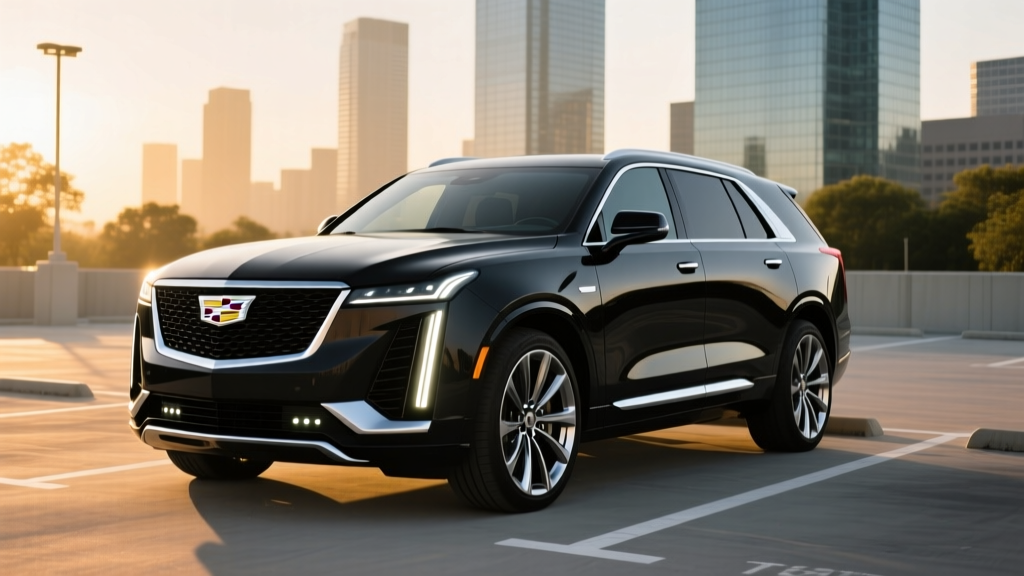
The 2026 Cadillac Escalade IQ is the largest luxury battery-electric SUV in General Motors' lineup, riding on the same Ultium-based BT1 platform as the GMC Hummer EV and Silverado EV. But for buyers researching whether this three-row electric flagship will fit in their garage, accommodate a family of six, and still deliver meaningful range, the story goes well beyond the badge. With an EPA-estimated range north of 400 miles on the largest battery pack, 800-volt DC fast-charging architecture, and a cabin that reimagines luxury around a 55-inch pillar-to-pillar LED display, the Escalade IQ is Cadillac's answer to the Tesla Model X, Rivian R1S, and Mercedes-Benz EQS SUV — all while being substantially larger than any of them.
This review breaks down every dimension, range figure, charging speed, and ownership cost you need to evaluate before writing a six-figure check.
Cadillac Escalade IQ Dimensions: Exterior and Interior by the Numbers
Let's address the keyword question head-on. The Escalade IQ is enormous, and prospective buyers need to know exactly what they're parking. Here are the key exterior measurements:
| Dimension | Measurement |
|---|---|
| Wheelbase | 135.6 inches |
| Overall Length | ~224.3 inches |
| Overall Width (w/o mirrors) | ~81.1 inches |
| Overall Height | ~75.0 inches |
| Ground Clearance | ~7.0 inches (adaptive air suspension) |
| Curb Weight (est.) | ~8,800–9,200 lbs |
For garage planning, you'll need at least 230 inches of depth and 90 inches of width to open doors comfortably. Standard 7-foot garage doors (84 inches) are a tight squeeze — measure your mirrors or plan to fold them.
Interior Space and Cargo Volume
Inside, the Escalade IQ leverages its flat-floor EV skateboard to maximize cabin volume. Cadillac targets three-row seating for up to seven passengers, with generous second-row executive-style captain's chairs available on upper trims. Key interior measurements (manufacturer preliminary figures):
- Front headroom: ~40.5 inches
- Second-row legroom: ~41.0 inches
- Third-row legroom: ~35.0 inches (usable for adults on short trips)
- Cargo behind 3rd row: ~25 cu ft
- Cargo behind 2nd row (3rd row folded): ~70 cu ft
- Max cargo (all rear seats folded): ~115 cu ft
- Frunk (front trunk): ~10.5 cu ft
The frunk is a meaningful advantage over the gas Escalade — useful for charging cables, groceries, or a carry-on. The flat load floor and available power-folding third row make cargo reconfiguration effortless.
Battery, Range, and Efficiency
The Escalade IQ uses GM's Ultium platform with a massive battery pack. Cadillac has confirmed a usable battery capacity of approximately 200+ kWh on the top-range configuration, using NMC (nickel manganese cobalt) lithium-ion chemistry in large-format pouch cells. This is one of the largest battery packs ever fitted to a production passenger vehicle.
Cadillac targets an EPA-estimated range of up to 450 miles on the largest battery configuration (Luxury 2 / Sport 2 trims with 24-inch wheels). However, real-world results will vary:
- City / mixed driving (65°F): Expect 390–430 miles
- Highway (75 mph sustained): Expect 340–380 miles — aerodynamic drag dominates at speed with a vehicle this large
- Cold weather (20°F, cabin heat on): Expect 280–330 miles — a 25–35% reduction is typical for NMC packs without exceptional thermal management
- Towing (max ~8,000 lbs rated): Range can drop to 180–220 miles depending on trailer weight and terrain
The Escalade IQ includes a heat pump for cabin conditioning, which helps mitigate cold-weather range loss compared to resistive heating. Still, physics is physics: a 9,000-lb SUV with the aerodynamic profile of a luxury hotel will consume more energy at highway speed than a sedan.
| Spec | Value |
|---|---|
| Battery Chemistry | NMC (pouch cells, Ultium platform) |
| Usable Capacity | ~200+ kWh (top config) |
| EPA Range (target, largest pack) | Up to 450 miles |
| EPA Efficiency (MPGe, est.) | ~65–72 MPGe combined |
| Energy Consumption | ~55–62 kWh/100 mi |
| Thermal Management | Liquid-cooled w/ heat pump |
Charging Speed: DC Fast, Level 2, and Home Setup
The Escalade IQ features an 800-volt electrical architecture, enabling some of the fastest DC charging available on any full-size SUV. Here's the complete charging picture:
| Charging Level | Power / Rate | Speed |
|---|---|---|
| Level 1 (120V household) | ~1.4 kW | ~3–4 miles per hour |
| Level 2 (240V home / public) | Up to 19.2 kW (onboard charger) | ~42–50 miles per hour |
| DC Fast Charge (CCS/NACS) | Up to 350 kW peak | 10–80% in ~30 min (est.) |
Real-World Charging Curve Reality
Peak 350 kW is a headline number — and you'll only see it on a capable 350+ kW charger (such as Electrify America's newest stalls or Tesla Supercharger V4 with CCS/NACS adapter) with the battery preconditioned and at a low state of charge. The actual charging curve matters:
- 10–30% SoC: Sustained 280–350 kW (fastest segment)
- 30–60% SoC: Tapers to ~200–250 kW
- 60–80% SoC: Tapers further to ~130–170 kW
- Above 80% SoC: Drops sharply to protect battery longevity; 80–100% can take as long as 10–80%
For road trips, plan your stops around 10–80% sessions. A 30-minute stop at a 350 kW station should add roughly 250–280 real-world miles — enough to keep moving on most corridors.
Home Charging Setup
With a 19.2 kW onboard charger, the Escalade IQ can accept more Level 2 power than most home installations provide. Most buyers will install a 48-amp (11.5 kW) or 60-amp (14.4 kW) Level 2 wallbox, which will fully replenish the massive battery in 14–18 hours. Given the battery size, overnight charging from a 50% daily minimum to 100% is realistic for most commutes. A 240V/60A circuit requires a licensed electrician and likely a 200-amp (or larger) electrical panel — budget $1,200–$3,000 for installation.
Performance: Horsepower, 0–60, and Drivetrain
The Escalade IQ uses a dual-motor all-wheel-drive configuration with permanent magnet motors front and rear. GM targets:
- Horsepower: Up to 750 hp (with Velocity Max / launch mode engaged)
- Torque: Up to 785 lb-ft
- 0–60 mph: Under 5.0 seconds (manufacturer target)
- Drivetrain: Dual-motor AWD with torque vectoring
- Towing capacity: Up to 8,000 lbs (when properly equipped)
For context, that 0–60 time puts a 9,000-pound luxury SUV in the territory of a Porsche Cayenne S. The instant electric torque makes highway merging and passing effortless, and the adaptive air suspension with magnetic ride control keeps body motions well-controlled despite the mass.
Pricing, Trims, and Federal Tax Credit Eligibility
The Escalade IQ is positioned as Cadillac's flagship EV, and pricing reflects that. For the 2026 model year, here's what we know from Cadillac's announced pricing structure:
| Trim | Base MSRP | §30D Credit Eligible? |
|---|---|---|
| Luxury 1 | ~$129,990 | No (exceeds MSRP cap) |
| Sport 1 | ~$130,690 | No (exceeds MSRP cap) |
| Luxury 2 | ~$149,990 | No (exceeds MSRP cap) |
| Sport 2 | ~$150,690 | No (exceeds MSRP cap) |
Under current IRS §30D rules, the new clean vehicle credit has an MSRP cap of $80,000 for SUVs. Every Escalade IQ trim exceeds this cap by a wide margin, making none of them eligible for the $7,500 federal tax credit. Additionally, buyer income limits ($300,000 joint / $150,000 single) and battery critical-mineral sourcing requirements apply to vehicles that do qualify. Consult a tax professional for your specific situation.
Some state-level incentives (such as utility rebates for home charger installation or HOV lane access) may still apply regardless of MSRP caps — check your state's energy office for details.
Tech, Driver Assists, and Ownership Experience
The Escalade IQ's cabin technology is where Cadillac attempts to justify the six-figure price:
- 55-inch pillar-to-pillar LED display spanning the entire dashboard, with separate zones for driver instrument cluster, infotainment, and passenger entertainment
- Google Built-In with native Google Maps navigation, Google Assistant, and Play Store apps
- AKG Studio Reference audio with up to 36 speakers and Dolby Atmos support
- Super Cruise (SAE Level 2 hands-free driver assistance) on 400,000+ miles of compatible highways — requires driver attention monitoring via infrared cameras
- Ultracruise (expanded hands-free coverage, also SAE Level 2) available on upper trims
- Air suspension with ride-height adjustment — lowers at highway speed for efficiency, raises for rough roads or loading
- Vehicle-to-Load (V2L) capability for powering accessories or job-site equipment
Both systems are SAE Level 2 driver-assist features. You must remain alert, keep your eyes on the road, and be prepared to take over immediately. They do not navigate construction zones, handle all weather conditions, or replace an attentive driver. True Level 4 driverless operation (like Waymo's robotaxi service) is an entirely different category not available in any consumer vehicle.
Notable Drawbacks
- Massive weight impacts tire wear, braking distances, and energy consumption — expect higher tire replacement costs
- Garage compatibility is a genuine concern for many homes; measure before ordering
- No federal tax credit due to MSRP cap — the full sticker price is what you pay (minus any state incentives)
- Third row is more suitable for children or short-trip adult use than long-haul comfort
- Public charging infrastructure for vehicles this large is still limited — many CCS stalls lack the pull-through space or physical clearance for a 224-inch SUV
Warranty and Battery Longevity
GM backs the Escalade IQ with its standard EV warranty package:
| Coverage | Term |
|---|---|
| Bumper-to-Bumper | 4 years / 50,000 miles |
| Powertrain | 6 years / 70,000 miles |
| Battery Pack | 8 years / 100,000 miles (retains ≥70% capacity) |
| Corrosion | 6 years / unlimited miles |
| Roadside Assistance | 6 years / 70,000 miles |
The 8-year/100,000-mile battery warranty with a 70% capacity retention threshold is industry-standard and aligns with GM's Ultium platform warranty. For a $130,000+ vehicle, some buyers may want to consider an extended warranty or factor in potential out-of-warranty battery replacement costs, which for a 200+ kWh pack could range from $25,000–$40,000+ based on current Ultium cell pricing trajectories.
Who Should Buy the Escalade IQ?
- You need a three-row luxury SUV with genuine adult-capable second and third rows
- You have home Level 2 charging and want to eliminate gas station visits for daily use
- You value 400+ miles of range for road trips without frequent stops
- You want flagship luxury with cutting-edge cabin tech and Super Cruise hands-free driving
- You tow occasionally (up to 8,000 lbs) and want electric torque for trailer launches
- Your garage is undersized or you lack home charging access
- You need the federal tax credit to justify the purchase (it does not qualify)
- You prioritize efficiency and low running costs over sheer size and presence
- You want a more agile driving experience — the Rivian R1S or BMW iX are sportier alternatives
Escalade IQ vs. Key Competitors
| Spec | Cadillac Escalade IQ | Tesla Model X | Rivian R1S (Tri-Motor) | Mercedes EQS 580 SUV |
|---|---|---|---|---|
| EPA Range | Up to ~450 mi | ~348 mi (LR) | ~410 mi (Max Pack) | ~305 mi |
| Battery (kWh) | ~200+ | ~100 | ~149 | ~108.4 |
| 0–60 mph | <5.0 sec | 3.8 sec (Plaid) | ~3.5 sec | 4.4 sec |
| Max DC Charge | 350 kW | 250 kW | ~220 kW | 200 kW |
| 3rd Row | Yes (std) | Optional (tight) | Yes (std) | Optional (tight) |
| Base MSRP | ~$129,990 | ~$79,990 | ~$99,900 | ~$105,550 |
| §30D Credit | No | Eligible (if income/sourcing) | No (MSRP cap) | No (MSRP cap) |
- Class-leading range potential (450+ mi EPA target)
- Fastest DC charging in the full-size SUV segment (350 kW)
- Stunning 55-inch pillar-to-pillar display and AKG audio
- Super Cruise / Ultracruise hands-free driving on 400K+ miles of highway
- Massive cargo volume with frunk bonus
- 8,000-lb towing with instant electric torque
- Air suspension with adaptive ride height
- No federal tax credit eligibility (MSRP exceeds $80K cap)
- Requires oversized garage — many homes need modification
- Real-world highway range drops significantly at 75+ mph
- Heavy weight = high tire wear and energy consumption
- Third row still best for children or short trips
- Public charging stalls often lack space for a 224-inch SUV
- Six-figure price with no value trim below $129K
Frequently Asked Questions
What is the real-world range of the Cadillac Escalade IQ?
Cadillac targets up to 450 miles EPA-estimated on the largest battery pack. In real-world mixed driving, expect 390–430 miles. Highway-only driving at 75 mph drops this to roughly 340–380 miles, and cold weather (20°F) can reduce range to 280–330 miles. The heat pump helps, but this is a heavy, boxy vehicle — aerodynamic drag is significant at speed.
How fast does it charge at home and on the road?
On a 350 kW DC fast charger, the Escalade IQ can add roughly 250–280 miles in 30 minutes (10–80% SoC). At home on a 48-amp Level 2 wallbox (11.5 kW), expect about 25–30 miles per hour of charging — a full charge of the 200+ kWh battery takes 14–18 hours. The 19.2 kW onboard charger is faster if your home electrical panel can support an 80-amp circuit.
How much does the Escalade IQ cost after tax credits?
Because every trim exceeds the IRS §30D MSRP cap of $80,000 for SUVs, no Escalade IQ qualifies for the $7,500 federal tax credit. You'll pay the full MSRP ($129,990–$150,690+) plus destination and dealer fees. Some state incentives and utility rebates may still apply — check your local programs.
Is the Escalade IQ worth buying vs. the Tesla Model X or Rivian R1S?
If maximum size, range, and traditional luxury are your priorities, the Escalade IQ has no equal in the EV space. If you want something more affordable, more agile, or eligible for the federal credit, the Model X Long Range ($79,990 base, credit-eligible) is compelling. The Rivian R1S offers better off-road capability and a more adventurous personality at a lower price point. The Escalade IQ is the right choice for buyers who want a genuine three-row flagship with the longest range and fastest charging available.
Does it qualify for the federal EV tax credit?
No. The Escalade IQ's MSRP exceeds the $80,000 SUV cap under IRS §30D rules. Even if a lower-priced trim existed, buyer income limits and battery-sourcing requirements would apply. Consult a tax professional for personalized guidance.
Will it fit in a standard two-car garage?
At 224 inches long and 81+ inches wide (excluding mirrors), the Escalade IQ requires a deep, wide garage bay. Standard 20-foot (240-inch) depth garages work with a few inches to spare, but 18-foot-deep garages will not accommodate it with the door closed. Measure your space — including door swing radius — before committing.
What is the battery warranty?
GM covers the Ultium battery pack for 8 years or 100,000 miles, guaranteeing it will retain at least 70% of original capacity. This is consistent with industry norms and federal requirements for EV battery warranty disclosure.