The All Electric Escalade at a Glance
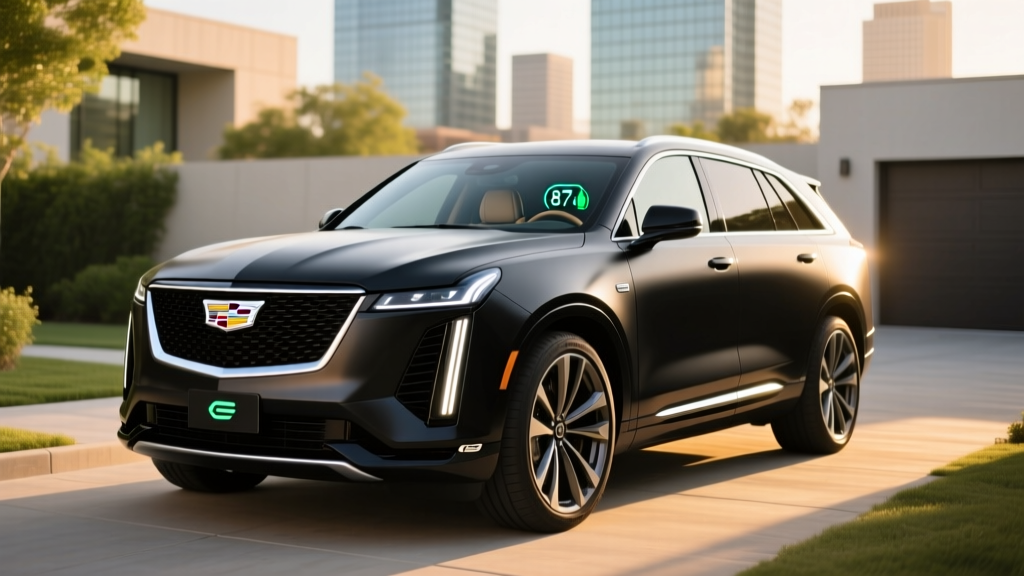
The 2026 Cadillac Escalade IQ — the first all electric Escalade — is a full-size luxury SUV built on GM's Ultium platform. It offers an EPA-estimated 460 miles of range from a massive 200+ kWh usable battery (NMC chemistry), produces up to 750 horsepower in Velocity mode, and starts at approximately $129,990 (including destination). DC fast charging peaks at 350 kW on 800-volt architecture, adding up to 100 miles in roughly 10 minutes. It seats up to seven, tows up to 8,000 lbs, and qualifies for no federal §30D tax credit due to its MSRP exceeding the $80,000 SUV cap.
What the 2026 Escalade IQ Actually Is
The Escalade IQ is not a converted gas Escalade with batteries bolted underneath. It's a ground-up electric vehicle sharing its platform architecture with the GMC Sierra EV and Chevrolet Silverado EV, but tuned for Cadillac-level luxury, ride quality, and performance. At over 205 inches long and roughly 8,000 lbs curb weight, it's a genuine full-size luxury hauler — not a crossover masquerading as one.
The powertrain uses a dual-motor all-wheel-drive setup. In normal driving, output sits around 600 HP. Engaging Velocity mode unlocks the full 750 HP and 785 lb-ft of torque, pushing this massive SUV from 0-60 mph in approximately 4.7 seconds. For context, the gas Escalade-V with its 682-HP supercharged V8 hits 60 in about 4.4 seconds — the IQ is in the same ballpark despite carrying substantially more weight.
Range, Efficiency, and Real-World Expectations
Cadillac targets an EPA-estimated 460 miles of range for the Escalade IQ, placing it among the longest-range EVs ever sold. The battery pack is an NMC (nickel manganese cobalt) Ultium module with over 200 kWh of usable capacity — the largest pack currently in any production passenger vehicle in the U.S. market.
Real-World Range Reality Check
EPA Estimate: 460 miles
Expected Highway (70-80 mph): ~370-400 miles
Cold Weather (below 32°F): ~310-350 miles
Towing (5,000+ lb trailer): ~200-250 miles
The 460-mile EPA figure is achievable in mixed city/suburban driving at moderate speeds in mild weather. At sustained highway speeds, aerodynamic drag on a vehicle this large reduces efficiency significantly. In freezing temperatures, expect a 20-30% range reduction — physics, not a defect. If you plan to tow frequently, range effectively halves.
Efficiency is rated at approximately 53 MPGe combined per fueleconomy.gov, which translates to roughly 63-65 kWh/100 miles. That's not efficient in absolute terms — a Tesla Model Y uses about 28 kWh/100mi — but it's competitive for a 8,000-lb luxury SUV. The gas Escalade 4WD returns 16 MPG combined, which is the relevant comparison.
Charging Speed and Infrastructure
The Escalade IQ uses an 800-volt architecture, enabling DC fast charging at up to 350 kW on compatible chargers. Cadillac estimates a 10-80% charge in approximately 35-40 minutes, with the ability to add roughly 100 miles of range in 10 minutes at peak rate.
The charge curve matters here. The pack will sustain peak rates in the 10-40% state of charge window, then taper progressively. Above 80%, charging slows dramatically to protect the NMC cells — expect 80-100% to take an additional 25-30 minutes. Plan road-trip stops around the 10-80% window for efficiency.
| Level | Power | Connector | Miles Added per Hour | Time (10-80%) |
|---|---|---|---|---|
| Level 1 (120V) | ~1.4 kW | NACS (standard) | ~2-3 mi/hr | Not practical |
| Level 2 (240V, 48A) | ~11.5 kW | NACS | ~18-20 mi/hr | ~30-35 hours |
| Level 2 (240V, 80A) | ~19.2 kW | NACS | ~30-33 mi/hr | ~18-22 hours |
| DC Fast (350 kW peak) | Up to 350 kW | NACS | ~600+ mi/hr (peak) | ~35-40 min |
The Escalade IQ ships with a NACS (North American Charging Standard) port, giving it native access to Tesla Superchargers (V3 and V4) without an adapter. This is a significant practical advantage for road trips, as Supercharger reliability consistently outpaces CCS networks in third-party surveys.
For home charging, the 200+ kWh battery is enormous. On a standard 48-amp Level 2 circuit (the most common home installation), a full 10-100% charge takes roughly 30+ hours. Most owners will need to top up over multiple nights or invest in an 80-amp circuit for ~19.2 kW charging. A 200-amp electrical panel may not support an 80-amp EV circuit — budget for a potential panel upgrade ($1,500-$3,500) if your home is older.
Pricing, Trims, and Tax Credit Eligibility
The 2026 Escalade IQ is offered in two main trims:
- Luxury 1: ~$129,990 (including destination)
- Sport 1: ~$130,490 (including destination)
Higher-content Luxury 2 and Sport 2 trims push the price above $145,000 with options. These are preliminary MSRPs based on Cadillac's announcement; final pricing may vary at dealer delivery.
Federal §30D Tax Credit: Does It Qualify?
No. The Escalade IQ does not qualify for the federal $7,500 EV tax credit. Here's why:
- MSRP cap for SUVs/pickups: $80,000 — the Escalade IQ starts at ~$129,990
- Buyer income cap: $300,000 (MFJ) / $150,000 (single) — may apply to some buyers
- Battery sourcing and critical minerals requirements also apply
Per IRS §30D rules, the MSRP cap is absolute regardless of income or battery sourcing. Some states offer additional credits or rebates — check your state energy office for details. Consult a tax professional for personal eligibility.
Escalade IQ vs. Gas Escalade: Ownership Cost Comparison
The gas-powered 2026 Cadillac Escalade with 4WD and the 6.2L V8 starts around $84,990 — roughly $45,000 less than the IQ. But purchase price is only part of the picture. Here's a five-year ownership comparison assuming 15,000 miles/year, $3.50/gallon gas, and $0.14/kWh electricity (national average home rate):
| Category | Escalade IQ (Electric) | Gas Escalade 4WD |
|---|---|---|
| Purchase Price (base MSRP) | $129,990 | $84,990 |
| Federal Tax Credit | $0 | $0 |
| Fuel/Energy Cost (75k mi) | ~$10,000 (home charging) | ~$16,400 (16 MPG avg) |
| Maintenance (5 yr) | ~$1,500 | ~$4,200 |
| Insurance (5 yr est.) | ~$22,000 | ~$18,500 |
| Estimated Depreciation (5 yr) | ~$65,000 | ~$42,500 |
| Total 5-Year Cost | ~$228,490 | ~$166,590 |
| Cost Per Mile | ~$3.05/mi | ~$2.22/mi |
The verdict: The IQ saves roughly $6,400 on energy and $2,700 on maintenance over five years, but costs $45,000 more upfront, roughly $3,500 more in insurance, and is projected to depreciate more in absolute dollars (luxury EVs have steeper depreciation curves). The gas Escalade remains significantly cheaper to own over five years. The IQ is a technology and experience choice, not a cost-savings play.
Home Charging: What First-Time EV Buyers Must Know
Charging a 200+ kWh battery at home requires real electrical infrastructure. Here's what to plan for:
| Item | 48A Circuit (11.5 kW) | 80A Circuit (19.2 kW) |
|---|---|---|
| EVSE Hardware (charger) | $500 - $750 | $900 - $1,500 |
| Electrician Labor | $800 - $2,000 | $1,500 - $3,500 |
| Electrical Panel Upgrade (if needed) | $0 - $3,000 | $1,500 - $4,500 |
| Permits & Inspection | $100 - $400 | $150 - $500 |
| Total Estimated Cost | $1,400 - $6,150 | $4,050 - $10,000 |
For a battery this large, the 80A circuit is strongly recommended. With a 48A setup, daily driving of 40-50 miles requires 6-8 hours of charging — manageable overnight. But if you drive 100+ miles daily or want faster turnaround between trips, the 80A system is worth the investment. Always have a licensed electrician assess your panel capacity before committing to a circuit size.
If you lack home charging access — apartment living, street parking, or older wiring — the Escalade IQ becomes significantly less practical. Public DC fast charging at $0.35-$0.50/kWh would push your energy cost to $18,000-$25,000 over 75,000 miles, erasing the fuel-cost advantage entirely.
Common Misconceptions About the All Electric Escalade
| Myth | Fact |
|---|---|
| "It's just as cheap to own as the gas Escalade." | The IQ costs ~$62,000 more over 5 years (total cost). Energy savings are real but don't offset the purchase premium. |
| "460 miles means I'll never need to charge on road trips." | At highway speeds in moderate weather, expect ~370-400 miles. In winter or while towing, plan for stops every 250-350 miles. |
| "I can charge it overnight on a regular outlet." | Level 1 (120V) adds ~2-3 miles per hour. A full charge would take over 80 hours. Level 2 home installation is essential. |
| "It qualifies for the $7,500 federal tax credit." | It does not. The MSRP cap for SUVs is $80,000. The Escalade IQ starts at ~$129,990. |
| "Electric means no maintenance." | Tires (heavy EVs wear them faster), cabin air filters, brake fluid, coolant, and wiper blades still need service. Expect ~$300/year, not zero. |
| "It's self-driving with Super Cruise." | Super Cruise is an SAE Level 2 hands-free system. The driver must remain attentive. It is not autonomous. |
Super Cruise and Driver Assistance
The Escalade IQ comes equipped with GM's Super Cruise, a hands-free driver-assistance system operational on over 750,000 miles of mapped roads in North America. It uses LiDAR-mapped HD data, a driver-attention camera, and adaptive cruise + lane centering to enable genuine hands-off driving on compatible highways.
SAE Automation Level: Level 2
Super Cruise is SAE Level 2 — partial automation. The driver must remain alert, keep eyes on the road (monitored by an infrared camera), and be ready to take over immediately. It does not navigate construction zones, unmapped roads, or adverse weather autonomously. It is not Level 4 self-driving.
Compared to the gas Escalade's Super Cruise, the IQ version benefits from the EV platform's lower center of gravity and more precise torque-vectoring for smoother lane changes. Expect the same coverage map and attention-monitoring requirements.
Battery Warranty, Degradation, and Longevity
GM covers the Escalade IQ's Ultium battery with an 8-year/100,000-mile warranty against defects and capacity loss below 70% of original capacity (per Cadillac's official warranty terms). NMC chemistry in the Ultium platform has shown promising degradation curves in GM's fleet data, with the Chevrolet Silverado EV and GMC Hummer EV retaining approximately 90-93% capacity after 50,000 miles in early owner reports.
For a 200+ kWh pack, even 10% degradation over 100,000 miles would leave ~410 miles of EPA-equivalent range — still more than most EVs offer new. Replacement cost for a pack this size is estimated at $25,000-$40,000 out of warranty, though individual module replacement (a feature of the Ultium platform) could reduce that cost substantially if only specific modules degrade.
Decision Framework: Should You Buy the All Electric Escalade?
Choose the Escalade IQ If:
- You have home charging (or can install Level 2) and drive mostly in urban/suburban patterns
- You want the quietest, smoothest full-size luxury SUV experience available
- You value instant torque (750 HP, 4.7s 0-60) without V8 fuel consumption at city speeds
- You road-trip 2-4 times per year and can plan around DC fast charging stops
- You want hands-free Super Cruise on mapped highways and value the latest tech
- The $130,000+ price point doesn't strain your budget and you accept steeper depreciation
Choose the Gas Escalade (or Wait) If:
- You lack reliable home charging and depend on street parking or apartment living
- You tow frequently — gas Escalade towing range is 350+ miles; IQ drops to ~200-250 miles
- Total cost of ownership matters and you want to save ~$60,000+ over five years
- You regularly drive in extreme cold (-10°F or below) where range loss compounds
- You want proven long-term reliability data (the IQ is a first-generation product)
Frequently Asked Questions
How long does it take to charge the Escalade IQ at home?
On a 48-amp Level 2 charger (11.5 kW), a full charge from 10-100% takes approximately 30-35 hours. On an 80-amp circuit (19.2 kW), it drops to roughly 18-22 hours. Most owners will charge incrementally overnight, adding 100-200 miles per night depending on circuit size.
Can the Escalade IQ tow, and how does range change?
Yes, it's rated for up to 8,000 lbs of towing capacity. However, towing a 5,000+ lb trailer at highway speeds will reduce range to approximately 200-250 miles. For long-distance towing, the gas Escalade remains more practical due to faster refueling and no range cliff under load.
Does the Escalade IQ use NACS or CCS for charging?
The Escalade IQ uses the NACS (North American Charging Standard) connector natively, meaning direct access to Tesla Superchargers without an adapter. This is the dominant standard for new GM vehicles starting in 2025.
What battery chemistry does the Escalade IQ use?
The Ultium platform in the Escalade IQ uses NMC (nickel manganese cobalt) chemistry, chosen for its higher energy density — necessary to achieve 460 miles in a vehicle this heavy. LFP chemistry, while more durable, is too heavy for this application at the required capacity.
Is the Escalade IQ eligible for any tax incentives?
Not the federal §30D credit — the MSRP exceeds the $80,000 SUV cap. Some states (California, Colorado, New York, and others) offer additional rebates or credits that may apply regardless of MSRP. Check your state's energy office and consult a tax professional for your specific situation.
How does the Escalade IQ compare to the Tesla Model X?
The Model X Plaid is faster (2.5s 0-60) and starts lower (~$95,000), but is significantly smaller inside — it's a midsize crossover, not a full-size SUV. The Escalade IQ offers substantially more third-row space, cargo volume, and towing capacity. They serve different buyers: Model X for performance-oriented tech buyers, Escalade IQ for traditional luxury full-size SUV buyers going electric.