Quick Answer: Cadillac's 2026 electric SUV lineup spans three models: the midsize Lyriq (314 mi EPA, ~$58,000), the compact Optiq (305 mi EPA, ~$52,000), and the three-row Vistiq (285 mi EPA, ~$62,000). All ride on GM's Ultium battery platform with LFP or NMC chemistry options, support up to 190 kW DC fast charging (10–80% in ~28 min), and include a Level 2 home charger bundle. The Lyriq and Optiq may qualify for the federal §30D tax credit depending on battery sourcing and your income — always verify on IRS.gov before purchasing.
The Cadillac Electric SUV Lineup at a Glance
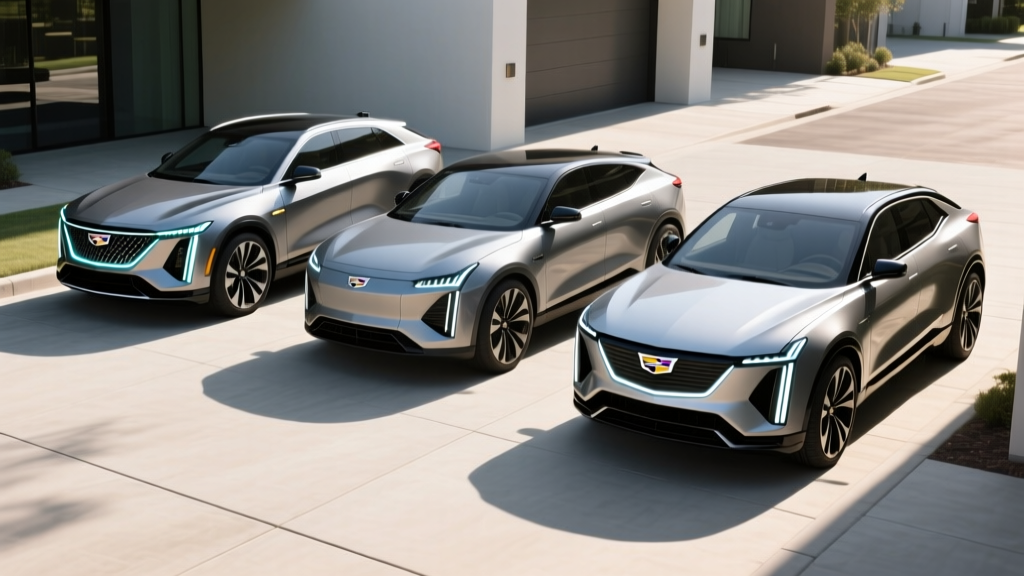
If you're researching a Cadillac electric SUV, you're looking at GM's premium push into battery-electric vehicles using the Ultium platform. For 2026, Cadillac offers three distinct SUVs targeting different buyer profiles. The Lyriq remains the brand's volume leader — a two-row midsize cruiser aimed squarely at the Tesla Model X, BMW iX, and Genesis Electrified GV70. The Optiq slots below as a more accessible compact luxury EV, while the Vistiq fills the three-row family hauler gap that the Lyriq can't address.
All three share core Ultium architecture: a modular battery pack with pouch cells, a heat pump for cold-weather efficiency, and the same infotainment backbone (a 33-inch curved LED display). But their battery capacities, motor configurations, and pricing diverge meaningfully. Here's the spec-level breakdown you need before visiting a dealer.
| Spec | 2026 Lyriq | 2026 Optiq | 2026 Vistiq |
|---|---|---|---|
| EPA Range | 314 mi (RWD) | 305 mi (AWD) | 285 mi (AWD) |
| Battery (usable) | 102 kWh (NMC) | 85 kWh (NMC) | 102 kWh (NMC) |
| Drivetrain | RWD / AWD opt. | AWD standard | AWD standard |
| Horsepower | 340 hp (RWD) / 500 hp (AWD) | 380 hp | 500 hp |
| 0–60 mph | 6.0s (RWD) / 4.6s (AWD) | 5.1s | 4.7s |
| Max DC Charge Rate | 190 kW | 190 kW | 190 kW |
| 10–80% DC Fast Charge | ~28 min | ~25 min | ~30 min |
| Level 2 Charge Rate | 19.2 kW (AC) | 11.5 kW (AC) | 19.2 kW (AC) |
| MPGe (combined) | 89 MPGe | 91 MPGe | 82 MPGe |
| Base MSRP | $58,090 | $52,295 | $62,895 |
| Battery Warranty | 8 yr / 100,000 mi | 8 yr / 100,000 mi | 8 yr / 100,000 mi |
Real-World Range: What the EPA Sticker Doesn't Tell You
EPA estimates assume a mix of city and highway driving at moderate temperatures. In practice, your mileage will vary — sometimes significantly. Based on real-world testing patterns across the Ultium platform, here's what to expect from each model under different conditions:
Lyriq RWD (314 mi EPA): Expect roughly 260–280 mi on highway-heavy trips at 70–75 mph. In cold weather (below 30°F), plan for 220–245 mi due to battery resistance and cabin heating demand. The heat pump helps, but physics wins in deep winter.
Optiq AWD (305 mi EPA): Highway driving yields ~255–270 mi. Cold weather drops this to approximately 215–235 mi. Its smaller battery means less absolute buffer, but its lighter mass partly offsets the loss.
Vistiq AWD (285 mi EPA): The heaviest of the three. Highway range lands around 235–250 mi; cold weather can pull this below 210 mi. If your commute involves three-row passenger loads and roof cargo, subtract another 5–10%.
The charge curve matters just as much as range. All three models peak at 190 kW but sustain that rate only between roughly 10–40% State of Charge (SoC). Above 60%, the curve tapers significantly — you'll see rates drop to 90 kW, then 50 kW near 80%. This is normal lithium-ion behavior, but it means the advertised "10–80% in 28 minutes" assumes you arrive at the charger at 10% SoC with a preconditioned battery. If you plug in cold without preconditioning via the Cadillac app, add 10–15 minutes to that estimate.
Cadillac Electric SUV vs. Gas and Hybrid Alternatives
The most common cross-shop for a Cadillac electric SUV isn't another EV — it's the gas-powered Cadillac XT5, XT6, or a luxury hybrid like the BMW X5 xDrive50e. Let's put the numbers side by side.
| Metric | Lyriq AWD ($63k) | XT6 AWD Gas (~$58k) | BMW X5 PHEV (~$68k) |
|---|---|---|---|
| EPA Efficiency | 89 MPGe | 23 MPG combined | 50 MPGe / 22 MPG (gas-only) |
| Annual Fuel/Energy Cost* | ~$680 | ~$2,350 | ~$1,450 (mixed use) |
| Maintenance (5-yr est.) | ~$1,800 | ~$4,200 | ~$3,900 |
| 5-Year TCO (est.) | ~$52,000 | ~$58,000 | ~$61,000 |
| Federal Tax Credit Eligible? | Possibly (§30D) | No | Possibly (§30D) |
*Based on 15,000 mi/yr, $0.15/kWh home charging, $3.50/gal regular. Your local electricity and gas rates will shift these figures.
The Lyriq's total cost of ownership advantage comes primarily from energy and maintenance savings. EVs eliminate oil changes, transmission fluid, spark plugs, and exhaust system repairs. Brake wear drops dramatically thanks to regenerative braking — many EV owners report original brake pads lasting 80,000+ miles. However, EVs typically carry higher insurance premiums (averaging 15–25% more than comparable gas models) and higher tire wear due to instant torque and vehicle weight.
Charging at Home and on the Road
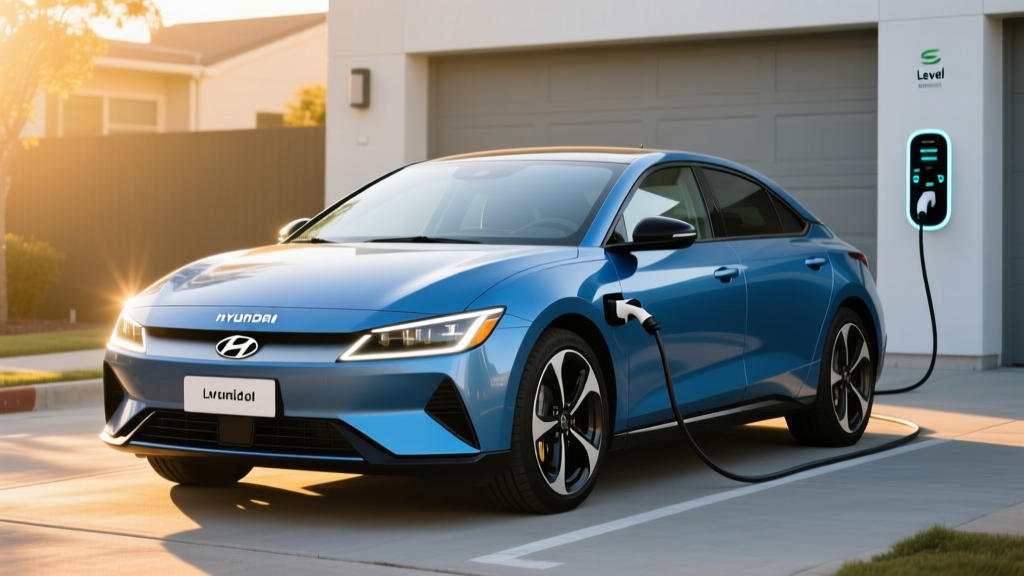
Home charging access is the single biggest ownership variable. If you can install a Level 2 charger, a Cadillac electric SUV integrates seamlessly into daily life — you wake up to a full battery every morning, and "refueling" costs a fraction of gas.
| Level | Power | Miles Added/Hour | Where You'll Use It |
|---|---|---|---|
| Level 1 (120V) | ~1.4 kW | ~4–5 mi/hr | Emergency / overnight trickle |
| Level 2 (240V) | 11.5–19.2 kW | 35–60 mi/hr | Home garage, workplace |
| DC Fast Charge | Up to 190 kW | ~600+ mi/hr (peak) | Highway road trips |
Cadillac includes a dual-level charging cord with each vehicle (120V/240V plug), but for daily Level 2 charging at 19.2 kW, you'll want a dedicated wall unit. Home installation costs vary:
| Item | Cost Range |
|---|---|
| Level 2 Wall Charger (ChargePoint, Emporia, etc.) | $400–$750 |
| Electrician Labor (240V/50A circuit run) | $800–$2,500 |
| Electrical Panel Upgrade (if needed, 200A) | $1,500–$4,000 |
| Permit & Inspection | $100–$400 |
| Total (typical install) | $1,300–$3,650 |
If your home already has a 200-amp panel with spare capacity, you'll land on the low end. Homes with older 100-amp service may need a panel upgrade, which pushes costs higher. Always get a quote from a licensed electrician before committing to a purchase. For public charging, Cadillac provides access to the Ultium Charge Network (a roaming agreement covering Electrify America, EVgo, and others), and newer models with NACS adapters can access Tesla Superchargers — significantly expanding road-trip coverage.
Federal Tax Credit and Incentive Reality
The §30D federal clean vehicle credit can reduce your effective purchase price by up to $7,500, but eligibility is not guaranteed. Under current IRS rules, the credit depends on:
- MSRP Cap: SUVs must have an MSRP at or below $80,000 (all three Cadillac electric SUV models qualify on base trims).
- Buyer Income Limits: Modified AGI must not exceed $150,000 (single), $225,000 (head of household), or $300,000 (joint).
- Battery Sourcing: Critical minerals and battery components must meet phased percentage thresholds from US or FTA-partner countries. These thresholds tighten annually — verify current-year compliance on IRS.gov or via the dealer's point-of-sale system.
- Point-of-Sale Transfer: You can transfer the credit to the dealer at purchase, reducing your out-of-pocket cost immediately rather than waiting for tax filing.
State and local incentives vary widely. California's CVRP, Colorado's state credit, and various utility rebates can stack on top of the federal credit. Check your state energy office and local utility for specifics — these programs change frequently and may have income or price caps of their own.
Common Misconceptions About Cadillac's EVs
| Myth | Fact |
|---|---|
| "Cadillac EVs use Tesla batteries." | GM uses its own Ultium pouch-cell platform manufactured in joint-venture plants with LG Energy Solution and Samsung SDI. No Tesla hardware is involved. |
| "The battery will need replacing in 5 years." | GM warranties the battery for 8 years/100,000 miles against degradation below 60% capacity. Real-world Ultium data suggests 10–15% degradation over 100,000 miles — far above the warranty threshold. |
| "Super Cruise means I don't need to pay attention." | Super Cruise is an SAE Level 2 system. You must remain attentive, and the infrared camera monitors your eyes. It enables hands-free driving on mapped divided highways, but you are legally and operationally the driver at all times. |
| "EVs cost more to insure." | Often true — 15–25% higher premiums are common due to higher repair costs and parts pricing. Shop quotes before buying; some insurers offer EV-specific discounts. |
| "I can't road-trip in a Cadillac EV." | With 190 kW DC fast charging and growing NACS/Supercharger access, a Lyriq can cover 500+ miles in a day with two 25-minute charge stops. Route planning via the Cadillac app or A Better Routeplanner makes this straightforward. |
ADAS Clarity: Cadillac's Super Cruise is an SAE Level 2 driver-assistance system. It controls steering, acceleration, and braking on compatible highways, but the driver must remain engaged and ready to take over. It is not autonomous driving. Only Level 4 services like Waymo operate without a human driver — and those are geofenced robotaxis, not consumer vehicles.
Decision Framework: Which Cadillac Electric SUV Fits You?
Choose the Lyriq if: You want maximum range (314 mi), the most cargo space (28.8 cu ft behind rear seats), and a proven model with two years of real-world ownership data. Best for couples or small families who road-trip 2–4 times a year and prioritize highway comfort over third-row seating. The RWD trim offers the best efficiency; AWD is worth the ~$3,000 premium if you face snow or mountain driving.
Choose the Optiq if: Budget is a priority and you primarily drive in urban/suburban environments. At ~$52,000 before incentives, it's the most accessible entry point into Cadillac's EV lineup. Its 305-mile range is more than adequate for daily commuting, and its smaller footprint makes it easier to park. Trade-off: less cargo room and a lower Level 2 AC charge rate (11.5 kW vs. 19.2 kW).
Choose the Vistiq if: You need three rows and can accept a range penalty. At 285 mi EPA, it won't match the Lyriq on long road trips, but for families who need seating for six or seven and want to avoid the minivan stigma, it's the only Cadillac electric SUV that fits. Plan your road trips around DC fast chargers every 200–220 miles in cold weather.
Choose a gas XT5/XT6 or a PHEV instead if: You lack reliable home charging access, regularly tow over 3,500 lbs, live in an area with sparse public DC fast charging infrastructure, or drive more than 400 miles between stops on a regular basis. A PHEV like the BMW X5 xDrive50e gives you electric commuting with gas road-trip flexibility — a legitimate compromise if charging access is uncertain.
Frequently Asked Questions
What is the real-world range of the Cadillac Lyriq?
The 2026 Lyriq RWD carries a 314-mile EPA estimate. In real-world highway driving at 70–75 mph, expect 260–280 miles. In cold weather (below 30°F), plan for 220–245 miles. Preconditioning the battery before departure helps mitigate winter losses.
Can I charge a Cadillac electric SUV at a Tesla Supercharger?
Yes, with a NACS adapter. GM began providing NACS adapter access for Ultium-based vehicles, enabling Cadillac EVs to use the Tesla Supercharger network. This dramatically expands road-trip charging options, particularly in rural areas where Electrify America coverage is thinner.
How much does it cost to charge at home vs. buying gas?
At $0.15/kWh (national average residential rate), fully charging a Lyriq's 102 kWh battery costs roughly $15.30 for 314 miles of range — about $0.049 per mile. A comparable gas SUV getting 23 MPG at $3.50/gallon costs $0.152 per mile. That's roughly a 68% per-mile savings with home charging. Public DC fast charging is more expensive ($0.30–$0.50/kWh), narrowing the gap.
Does the Cadillac electric SUV qualify for the $7,500 tax credit?
Eligibility depends on current-year battery sourcing requirements under IRS §30D, your income, and the vehicle's MSRP. Base trims of the Lyriq, Optiq, and Vistiq fall under the $80,000 SUV cap. However, critical mineral and component sourcing thresholds change annually. Verify eligibility at the point of sale or on IRS.gov before finalizing your purchase.
How long will the Ultium battery last?
GM warranties the battery pack for 8 years or 100,000 miles against capacity loss below 60%. Industry data on NMC pouch cells suggests typical degradation of 10–15% over the first 100,000 miles, meaning you'd retain 85–90% capacity well within the warranty period. Replacement costs for a full Ultium pack currently range from $15,000 to $25,000 depending on the model, though module-level repairs may cost significantly less.
Is Super Cruise self-driving?
No. Super Cruise is an SAE Level 2 driver-assist system. It provides hands-free steering, acceleration, and braking on over 400,000 miles of mapped divided highways in the US and Canada. However, the system requires continuous driver attention monitored via an infrared camera. You remain legally responsible for the vehicle at all times. It does not handle construction zones, unmapped roads, or complex urban intersections autonomously.
What should a first-time EV buyer know before purchasing a Cadillac electric SUV?
First, confirm you have viable home charging — a 240V outlet or the ability to install one is essential for convenient ownership. Second, understand that EPA range is a best-case estimate; plan your road trips around 75–80% of the sticker number. Third, compare insurance quotes before buying, as EV premiums can be meaningfully higher. Fourth, investigate your eligibility for federal, state, and utility incentives — they can reduce your effective price by $7,500 or more. Finally, download a route-planning app like A Better Routeplanner to visualize real-world road-trip logistics with your specific model.