The Quick Answer: Is a Cadillac Electric Vehicle Right for You?
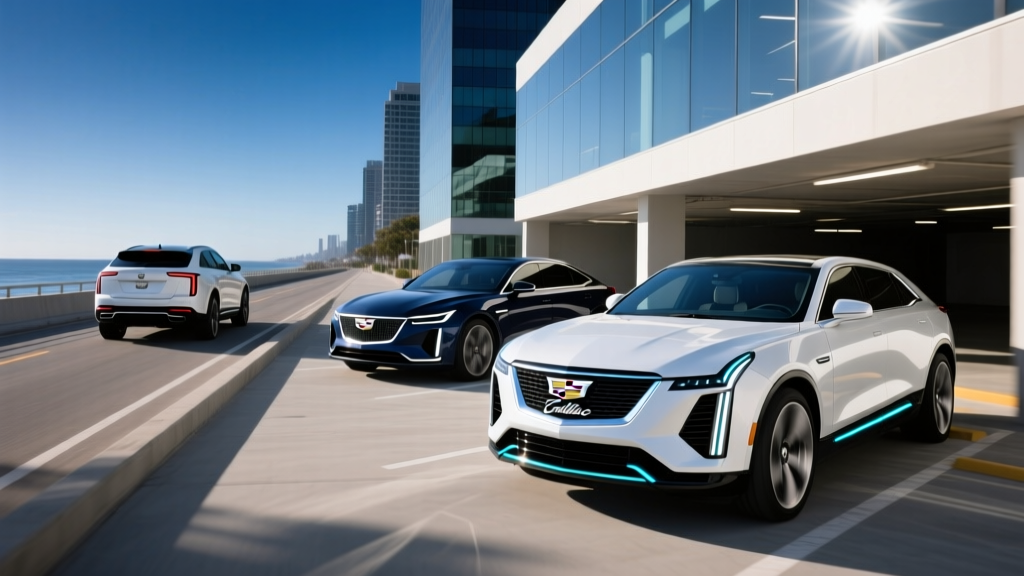
Cadillac's 2026 electric lineup spans three distinct vehicles: the Lyriq midsize SUV (EPA range up to 314 miles, starting at $58,590), the Optiq compact SUV (EPA range up to 305 miles, starting at $53,990), and the ultra-luxury Celestiq sedan (300+ miles estimated, ~$340,000 hand-built). For most buyers, the Lyriq or Optiq delivers genuine luxury EV practicality with GM's Ultium battery platform, 190+ kW DC fast charging, and eligibility for up to $7,500 in federal tax credits — provided you meet IRS income and sourcing requirements. If you can charge at home and your daily driving stays under 200 miles, a Cadillac electric SUV eliminates fuel stops while matching or exceeding the refinement of gas-powered competitors like the BMW X5 or Genesis GV70.
2026 Cadillac Electric Lineup at a Glance
Cadillac has committed fully to battery-electric propulsion. The brand no longer sells a traditional gas-only sedan, and its SUV portfolio is increasingly electrified. Here's how the three current Cadillac electric models stack up on the numbers that matter most.
| Spec | 2026 Lyriq | 2026 Optiq | 2026 Celestiq |
|---|---|---|---|
| Body Style | Midsize SUV | Compact SUV | Ultra-Luxury Sedan |
| EPA Range | 314 mi (RWD) / 307 mi (AWD) | 305 mi (AWD) | ~300 mi (est.) |
| Battery (usable) | 102 kWh (NMC, Ultium) | 89 kWh (NMC, Ultium) | ~111 kWh (NMC, Ultium) |
| Horsepower | 365 hp (RWD) / 515 hp (AWD) | 410 hp (AWD) | ~600 hp (AWD) |
| 0-60 mph | 6.0s (RWD) / 4.6s (AWD) | 5.0s (AWD) | ~3.8s (est.) |
| Peak DC Fast Charge | 190 kW | 150 kW | ~200 kW |
| 10-80% DC Charge | ~34 min | ~37 min | ~30 min (est.) |
| Level 2 (AC) Rate | 19.2 kW | 11.5 kW | 19.2 kW |
| MPGe (combined) | 89 MPGe | ~91 MPGe | N/A (limited production) |
| Starting MSRP | $58,590 | $53,990 | ~$340,000 |
| Federal Tax Credit (§30D) | Up to $7,500 (varies) | Up to $7,500 (varies) | Not eligible (MSRP cap) |
| Battery Warranty | 8 yr / 100,000 mi | 8 yr / 100,000 mi | 8 yr / 100,000 mi |
Sources: EPA / fueleconomy.gov, Cadillac official specifications. Celestiq figures are manufacturer estimates for limited hand-built production. Real-world highway range at 75 mph typically runs 10-15% below EPA; add 20-30% loss in sub-freezing temperatures.
Lyriq vs. Optiq vs. Gas Rivals: Real Cost Comparison
The purchase decision rarely comes down to sticker price alone. Let's compare the two volume Cadillac electric models against their closest gas-powered luxury competitors over a 5-year / 75,000-mile ownership period.
| Cost Category | Lyriq AWD ($62,090) | BMW X5 xDrive40i (~$68,000) | Optiq AWD ($53,990) | Genesis GV70 2.5T (~$50,000) |
|---|---|---|---|---|
| Purchase Price | $62,090 | $68,000 | $53,990 | $50,000 |
| Fed. Tax Credit (§30D) | -$7,500* | $0 | -$7,500* | $0 |
| Effective Net Price | $54,590 | $68,000 | $46,490 | $50,000 |
| Fuel/Energy (5 yr) | $4,200 (home L2)** | $10,500 (premium gas) | $3,800 (home L2)** | $9,600 (premium gas) |
| Maintenance (5 yr) | $1,800 | $4,200 | $1,800 | $3,800 |
| Insurance (5 yr avg) | $11,500 | $9,800 | $10,200 | $9,000 |
| Est. Depreciation | $22,000 | $25,000 | $18,500 | $20,000 |
| 5-Year Total Cost | $94,090 | $117,500 | $80,790 | $92,400 |
*Tax credit eligibility requires meeting IRS §30D income caps ($150K single / $300K joint), MSRP caps ($80K SUVs), and battery critical-mineral/sourcing rules. Confirm at irs.gov before purchasing.
**Energy costs assume 80% home Level 2 charging at $0.16/kWh national average, 20% public DC fast charging at $0.40/kWh. Gas costs at $3.80/gal premium, 22 MPG combined.
Real-World Range Reality Check
Lyriq RWD: EPA 314 miles. Expect ~265-280 miles at sustained 75 mph highway speeds. In winter conditions (below 32°F), plan for 220-250 miles of usable range before needing a charge stop. The 102 kWh Ultium battery provides a generous buffer, and the heat pump helps minimize cold-weather losses compared to older EV platforms.
Optiq AWD: EPA 305 miles. Highway real-world: ~255-270 miles. Winter: ~210-240 miles. The smaller 89 kWh pack is still substantial for a compact luxury SUV, and the Ultium architecture's thermal management keeps degradation low over time.
Charging the Cadillac Electric Fleet: Home and Public
Charging infrastructure is the single biggest ownership variable. Here's what each model supports and what you should budget for home installation.
| Charging Level | Power | Lyriq Speed | Optiq Speed | Miles Added/Hour |
|---|---|---|---|---|
| Level 1 (120V) | 1.4 kW | ~4 mi/hr | ~4 mi/hr | 3-5 mi |
| Level 2 (240V, 48A) | 11.5 kW | ~34 mi/hr | ~34 mi/hr | 30-38 mi |
| Level 2 (240V, 80A) | 19.2 kW | ~52 mi/hr (Lyriq/Celestiq) | N/A (11.5 kW max) | 48-56 mi |
| DC Fast (peak) | 150-190 kW | 190 kW peak | 150 kW peak | ~200-250 mi in 30 min |
Home Level 2 Installation Cost Breakdown
| Item | Low End | High End | Notes |
|---|---|---|---|
| Level 2 EVSE (48A hardwired) | $500 | $800 | ChargePoint Home Flex, Emporia, Wallbox |
| Electrical Permit | $50 | $250 | Varies by municipality |
| Electrician Labor (50 ft run) | $800 | $2,000 | 240V/60A circuit, conduit, wiring |
| Panel Upgrade (if needed) | $1,500 | $3,500 | 200A service upgrade; ~20% of homes need this |
| Total Typical Install | $1,350 | $3,050 | Without panel upgrade |
| Total With Panel Upgrade | $2,850 | $6,550 | Older homes with 100A service |
Charging-curve reality: The Lyriq's 190 kW peak DC rate is not sustained across the entire session. You'll see 170-190 kW from 10-40% state of charge, tapering to ~100 kW by 60%, and ~50 kW above 80%. A 10-80% charge takes approximately 34 minutes at a functioning 350 kW-capable station. The Optiq peaks lower at 150 kW but maintains a flatter curve, making the real-world time difference modest (~3 minutes).
Connector note: All 2026 Cadillac electric models ship with the NACS (North American Charging Standard) connector, granting native access to Tesla Supercharger stations (17,000+ stalls nationwide) in addition to CCS-equipped networks like Electrify America and EVgo. This dual-network access is a significant practical advantage.
Federal Tax Credit: What You Actually Qualify For
The §30D federal EV tax credit can reduce your effective purchase price by up to $7,500, but eligibility is not automatic. Here's the current checklist for 2026:
- MSRP Cap: SUVs must be under $80,000. The Lyriq and Optiq qualify at all current trims. The Celestiq (~$340,000) does not.
- Buyer Income Cap: Modified AGI must not exceed $150,000 (single), $225,000 (head of household), or $300,000 (married filing jointly).
- Battery Sourcing: A percentage of critical minerals and battery components must be sourced from the US or FTA-partner nations. GM's Ultium batteries use US-assembled cells, but the exact credit amount ($3,750 or $7,500) depends on critical-mineral sourcing percentages that shift annually.
- Point-of-Sale Transfer: You can transfer the credit to the dealer at purchase, reducing your out-of-pocket cost immediately rather than waiting for a tax refund.
- Foreign Entity of Concern (FEOC): Battery components cannot be manufactured by a FEOC (primarily targeting Chinese supply chains). GM's US and Korean battery supply chain currently complies.
Always verify current eligibility at irs.gov or consult a tax professional. Rules have changed multiple times since 2023, and annual sourcing thresholds tighten each year.
Common Misconceptions About Cadillac Electric Vehicles
| Myth | Fact |
|---|---|
| "Cadillac EVs are just rebadged Chevrolets." | The Lyriq and Optiq share GM's Ultium platform with Chevrolet and GMC, but use unique body structures, suspension tuning, interior materials, noise isolation, and Cadillac-specific software. The Blackwing performance variant of the Lyriq (515 hp AWD) has no Chevrolet equivalent. |
| "The battery will need replacing in 5 years." | GM warranties the Ultium battery for 8 years / 100,000 miles against capacity loss below 70%. Real-world data from earlier Ultium vehicles shows approximately 5-8% degradation after 100,000 miles — far above the warranty threshold. NMC chemistry with active thermal management degrades slowly under normal use. |
| "I can't road-trip in a Cadillac EV." | With 300+ miles of range and NACS access to Tesla Superchargers, a Lyriq can cover a 600-mile trip with one 30-minute charge stop. The navigation system preconditions the battery for optimal charging speed when you navigate to a DC fast charger. |
| "Electricity costs more than gas." | At the US average of $0.16/kWh, the Lyriq costs roughly $0.055/mile to fuel at home versus $0.17/mile for a 22 MPG gas SUV on premium at $3.80/gallon. Even with 100% public DC fast charging at $0.40/kWh, the EV cost per mile is ~$0.14 — still below gas. |
| "Insurance is impossibly expensive." | EV insurance premiums run 10-20% higher than equivalent gas vehicles due to higher repair costs. For the Lyriq, expect $2,100-$2,500/year depending on your state and driving record — meaningful but not prohibitive. |
Who Should Buy a Cadillac Electric — And Who Shouldn't
Decision Framework: Is a Cadillac Electric Right for You?
Choose the Lyriq if:
- You want a midsize luxury SUV with 300+ miles of range and don't want to compromise on interior space (31.4 cu ft cargo behind second row)
- You can install a Level 2 home charger and your daily commute is under 150 miles round-trip
- You value Super Cruise hands-free highway driving (SAE Level 2 — you must remain attentive and eyes on the road) for long commutes
- Your household income is under the §30D cap and you want the point-of-sale tax credit to offset the premium over a gas X5 or GLE
Choose the Optiq if:
- You want Cadillac luxury at the lowest entry price (~$54K before credit, potentially ~$46.5K after)
- You live in an urban area with compact parking and want a smaller footprint without sacrificing range
- You don't need the Lyriq's extra cargo space (25.3 cu ft behind second row)
Look elsewhere (or consider a PHEV/gas vehicle) if:
- You cannot charge at home and have no reliable public charging within 10 minutes of your home or workplace
- You regularly tow more than 3,500 lbs (the Lyriq maxes out at 3,500 lbs; gas SUVs like the X5 tow 7,200+ lbs)
- You take frequent 500+ mile road trips through rural areas with sparse DC fast-charging coverage
- You live in a region with extreme cold (below 0°F sustained) and have no garage — range loss and charging slowdown become significant
Ownership Essentials: What First-Time Cadillac EV Buyers Must Know
1. Schedule your home charger install before delivery. A Level 2 home charger is non-negotiable for convenient ownership. Book a licensed electrician 4-6 weeks ahead. Request a load calculation to determine if your panel needs upgrading.
2. Understand preconditioning. When you navigate to a DC fast charger in the Lyriq or Optiq, the thermal management system warms or cools the battery to the optimal temperature for peak charge acceptance. Without preconditioning — especially in cold weather — your peak charge rate may be cut in half. Always use the built-in navigation for charge stops.
3. The 80% rule for daily charging. For NMC batteries (which all current Cadillac electric models use), GM recommends setting your daily charge limit to 80% to maximize long-term battery health. Charge to 100% only before long trips. The infotainment system lets you set a custom charge limit.
4. Super Cruise is not self-driving. Cadillac's Super Cruise is an SAE Level 2 driver-assistance system. It handles steering, acceleration, and braking on mapped divided highways, but you must keep your eyes on the road (monitored by an infrared camera). It does not handle city streets, construction zones, or unmapped roads. Hands-off does not mean attention-off.
5. Regenerative braking takes a week to learn. The Cadillac electric lineup offers adjustable regen, including a one-pedal driving mode that can bring the vehicle to a complete stop without touching the brake pedal. Expect the first week to feel unusual; most owners prefer one-pedal mode after the adjustment period.
Frequently Asked Questions
What is the real-world range of the Cadillac Lyriq on a road trip?
On a 75 mph highway drive in mild weather (60-75°F), expect approximately 265-280 miles from the RWD Lyriq before needing to charge. In winter (20-35°F), that drops to roughly 220-250 miles. Always plan charge stops at 20% remaining to avoid stress and account for charger availability.
Can I use Tesla Superchargers with a Cadillac Lyriq or Optiq?
Yes. All 2026 Cadillac electric vehicles come equipped with the NACS charge port natively. You can use Tesla Superchargers without an adapter. You'll access them through the Cadillac app or the vehicle's built-in navigation, which shows real-time stall availability.
How long will the Cadillac Ultium battery last?
GM warranties the Ultium battery pack for 8 years or 100,000 miles, whichever comes first, against capacity loss below 70% of original capacity. Industry data on liquid-cooled NMC packs suggests 15-20 years of useful life before degradation reaches 30%. Full pack replacement, if ever needed outside warranty, currently ranges from $12,000-$18,000 depending on pack size.
Does the Cadillac Lyriq qualify for the $7,500 federal tax credit?
It can, but eligibility depends on your income (under $300K joint / $150K single), the battery's critical-mineral sourcing for the specific model year, and the vehicle's MSRP being under $80,000. As of 2026, the Lyriq and Optiq qualify at most trims, but confirm current sourcing compliance on fueleconomy.gov before purchasing, as thresholds tighten annually.
How does the Cadillac Lyriq compare to the Tesla Model X?
The Lyriq offers a more traditional luxury interior, quieter ride, and conventional door handles — trade-offs the Model X sacrifices for falcon-wing doors and a minimalist cabin. The Model X Long Range has higher EPA range (~348 mi) and faster DC charging (250 kW), but starts at roughly $80,000+ — well above the Lyriq. The Lyriq also qualifies for the federal tax credit at most trims, while the Model X does not (exceeds MSRP cap).
What maintenance does a Cadillac electric vehicle require?
Far less than a gas vehicle. Expect tire rotations every 7,500 miles (EVs are heavier and wear tires faster), cabin air filter replacement annually, brake fluid checks every 2 years, and windshield washer fluid. The regenerative braking system significantly extends brake pad life — many EV owners report original brake pads at 80,000+ miles. There are no oil changes, transmission fluid changes, or spark plugs.