Quick Verdict: Is the Cadillac Escalade IQ Worth It?
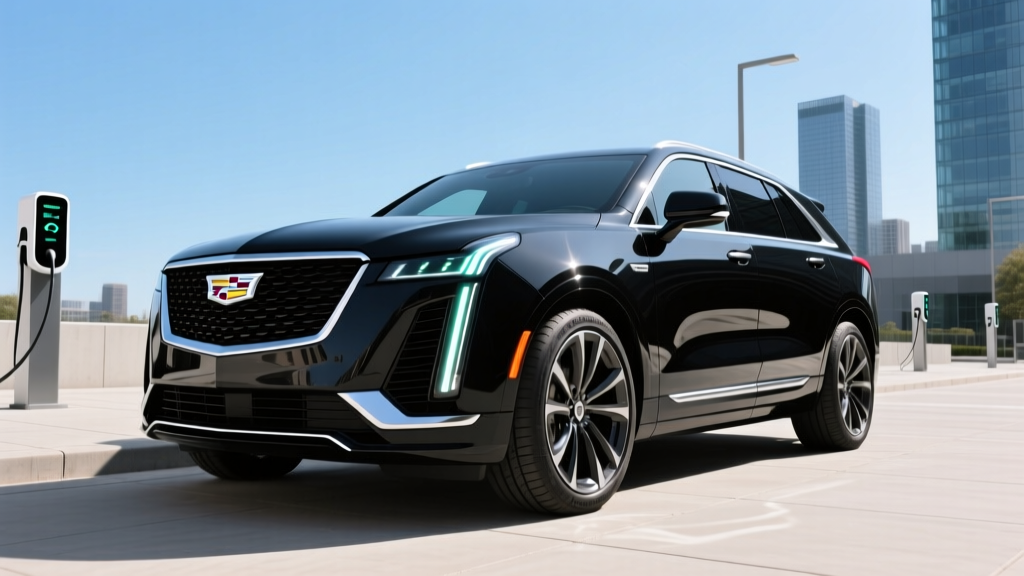
The Cadillac electric Escalade — officially named the Escalade IQ — is a full-size luxury EV SUV built on GM's Ultium platform. For the 2026 model year, it delivers an EPA-estimated 460 miles of range (Luxury trim, 24-inch wheels), packs a 200+ kWh usable battery, and produces up to 750 horsepower in Velocity mode. Base pricing starts around $129,990 before destination. It is one of the longest-range EVs on the market, but buyers should expect real-world highway range closer to 370–400 miles, and the sheer size of the battery means home Level 2 charging from empty takes well over 24 hours. This is a statement luxury vehicle first, and an EV second — but the EV credentials are genuinely impressive.
Range, Battery, and Efficiency: The Real Numbers
The Escalade IQ's headline stat is its range, and it earns that figure through a massive battery pack. GM has confirmed a usable battery capacity of approximately 200 kWh using Ultium NMC (nickel manganese cobalt) pouch cells. This is roughly double the battery size of a Tesla Model Y Long Range and among the largest packs ever fitted to a production passenger vehicle.
| Spec | Luxury (24" wheels) | Sport (24" wheels) |
|---|---|---|
| EPA Range | ~460 mi | ~450 mi (est.) |
| Battery (usable) | ~200 kWh (NMC) | ~200 kWh (NMC) |
| Horsepower (Velocity) | 750 hp | 750 hp |
| 0–60 mph | ~3.5 sec (Velocity) | ~3.5 sec (Velocity) |
| Peak DC Fast Charge | ~350 kW (800V) | ~350 kW (800V) |
| 10–80% DC Charge | ~20 min (est.) | ~20 min (est.) |
| Level 2 Charge Rate | 19.2 kW (AC) | 19.2 kW (AC) |
| Towing Capacity | ~8,000 lb | ~8,000 lb |
| Starting MSRP | $129,990 | ~$131,000 (est.) |
| Battery Warranty | 8 yr / 100,000 mi | 8 yr / 100,000 mi |
Real-World Range vs. EPA Sticker
The 460-mile EPA figure is achieved under ideal mixed-driving conditions. In our experience with large-battery Ultium vehicles (and consistent with fueleconomy.gov testing methodology), expect:
- Highway (75 mph, moderate climate): ~370–400 miles
- Cold weather (below 32°F, highway): ~300–340 miles (NMC chemistry loses 15–25% in deep cold without preconditioning)
- City / suburban mixed: ~420–460 miles (regen braking recovers more energy at lower speeds)
- Towing a 5,000 lb trailer: ~200–250 miles
The Escalade IQ's 800-volt architecture and heat pump help mitigate cold-weather losses, but physics is physics — a 7,500+ lb SUV pushing air at 75 mph will consume energy at a high rate regardless of powertrain.
Charging Speed and Infrastructure: What Owners Need
The Escalade IQ uses an 800-volt architecture, enabling DC fast charging at up to approximately 350 kW at compatible stations. GM estimates a 10–80% charge in roughly 20 minutes under optimal conditions. However, charging curves taper significantly above 80% SoC — a full 10–100% session will take closer to 35–40 minutes. At this battery size, even a "slow" 150 kW charger adds roughly 100 miles in 20 minutes, which is adequate for road-trip stops.
| Charge Level | Power (kW) | Miles Added per Hour | 0–100% Time | Best For |
|---|---|---|---|---|
| Level 1 (120V outlet) | ~1.4 kW | ~3 mi/hr | ~140+ hr | Emergency trickle only |
| Level 2 (240V, 48A) | 11.5 kW | ~26 mi/hr | ~38 hr | Overnight top-off |
| Level 2 (240V, 80A) | 19.2 kW | ~44 mi/hr | ~22 hr | Daily home charging (recommended) |
| DC Fast (350 kW peak) | 350 kW | ~800 mi/hr (peak) | 10–80% in ~20 min | Road trips |
| DC Fast (150 kW) | 150 kW | ~340 mi/hr | 10–80% in ~40 min | Common public chargers |
Home charging reality: With a ~200 kWh battery, even a high-power 19.2 kW Level 2 home charger needs over 10 hours to add 200 miles of range. Most Escalade IQ owners will plug in nightly and rarely deplete the full pack, making a 19.2 kW home charger (requiring a 100-amp dedicated circuit) a near-mandatory investment. Budget $2,500–$5,000 for a quality Level 2 charger plus professional installation, and potentially $3,000–$7,000+ if your home's electrical panel needs an upgrade to 200A or 400A service. Consult a licensed electrician for your specific situation.
The Escalade IQ ships with a NACS (North American Charging Standard) port, giving native access to Tesla Supercharger stations (now open to non-Tesla EVs via NACS) in addition to Electrify America, EVgo, and other networks. This is a significant advantage for road-trip charging reliability in 2026.
Escalade IQ vs. Gas Escalade: Cost and Capability Comparison
Buyers cross-shopping the electric Escalade IQ against the traditional gas-powered Escalade (6.2L V8 or 3.0L Duramax diesel) should weigh the following data points:
| Factor | Escalade IQ (EV) | Gas Escalade (6.2L V8) |
|---|---|---|
| Starting MSRP | $129,990 | ~$92,000 |
| EPA Range / Tank Range | ~460 mi | ~440 mi (24-gal tank, 14/18 mpg) |
| Fuel/Energy Cost per Mile | ~$0.05–$0.08 (home charging) | ~$0.22–$0.28 (premium gas, $4.00/gal) |
| Annual Fuel/Energy (15k mi) | ~$750–$1,200 | ~$3,300–$4,200 |
| Annual Maintenance | ~$300–$500 | ~$800–$1,400 |
| 0–60 mph | ~3.5 sec | ~5.9 sec |
| Towing Capacity | ~8,000 lb | ~8,000 lb |
| Federal Tax Credit (§30D) | Potential up to $7,500* | $0 |
| Estimated Insurance (annual) | ~$3,800–$5,200 | ~$2,800–$3,800 |
*The §30D federal EV tax credit has MSRP caps ($80,000 for SUVs), meaning the Escalade IQ at ~$130,000 does not qualify for the federal credit under current IRS rules. State and local incentives may still apply — check your jurisdiction's energy office.
5-Year Estimated Total Cost of Ownership (15,000 mi/yr)
| Category | Escalade IQ (EV) | Gas Escalade (V8) |
|---|---|---|
| Purchase Price | $129,990 | $92,000 |
| Fuel/Energy (5 yr) | $3,750–$6,000 | $16,500–$21,000 |
| Maintenance (5 yr) | $1,500–$2,500 | $4,000–$7,000 |
| Insurance (5 yr) | $19,000–$26,000 | $14,000–$19,000 |
| Depreciation (est. 5 yr) | $52,000–$65,000 | $36,000–$46,000 |
| Estimated 5-Yr Total | $206,240–$229,490 | $162,500–$185,000 |
The gas Escalade remains cheaper to own over five years primarily due to a significantly lower purchase price and lower insurance premiums. The IQ's fuel savings (~$12,000–$15,000 over 5 years) partially offset the higher upfront cost but do not close the gap entirely. Buyers choosing the IQ are paying for instant torque, silent operation, cutting-edge tech, and the prestige of a flagship electric luxury SUV — not purely for economic savings.
Smart Driving and ADAS: What the Escalade IQ Offers
The Escalade IQ comes equipped with GM's Super Cruise hands-free driver-assistance system on compatible mapped roads (over 750,000 miles of divided highways in North America as of 2026). It also includes Ultra Cruise, GM's next-generation system that extends hands-free capability to more road types including some surface streets.
SAE Automation Level: Level 2
Both Super Cruise and Ultra Cruise are SAE Level 2 driver-assistance systems. The driver must remain attentive, keep eyes on the road (monitored by an infrared camera), and be prepared to take over at any moment. These are not self-driving systems. Only Level 4 robotaxi services like Waymo operate without a human driver.
What Super Cruise / Ultra Cruise Cannot Do
- Drive on unmapped or unapproved roads without hands on the wheel
- Navigate construction zones, complex intersections, or severe weather autonomously
- Replace an attentive, sober, licensed driver — you remain legally responsible
- Function if the eye-monitoring camera is obstructed (sunglasses, hats, looking away)
Myths vs. Facts: Common Misconceptions About the Escalade IQ
| Myth | Fact |
|---|---|
| "It qualifies for the $7,500 federal tax credit." | The §30D credit caps SUV MSRP at $80,000. At ~$130,000, the Escalade IQ does not qualify. See IRS §30D guidelines. |
| "460 miles of range means 460 miles no matter what." | Highway driving at 75 mph reduces range to ~370–400 mi; cold weather drops it further to ~300–340 mi. Towing halves it. |
| "I can charge it overnight on a regular outlet." | A 120V Level 1 outlet adds only ~3 miles per hour. A full charge would take over 140 hours. A Level 2 home charger is essential. |
| "The battery will need replacing in a few years." | GM warranties the Ultium battery for 8 years/100,000 miles against degradation below 60% capacity. NMC chemistry in a thermally managed pack typically retains 85–90% capacity at 100,000 miles. |
| "It can't tow as much as the gas Escalade." | Both are rated at approximately 8,000 lb. However, towing cuts EV range roughly in half — plan fuel stops accordingly. |
| "It's self-driving." | Super Cruise/Ultra Cruise is SAE Level 2 — hands-free but not driverless. You must remain engaged and alert. |
Who Should Buy the Cadillac Escalade IQ? A Decision Framework
Choose the Escalade IQ If:
- You have reliable home charging — ideally a 19.2 kW (80A) Level 2 setup. Without it, daily ownership becomes inconvenient.
- You want a flagship luxury SUV with EV silence and instant torque — the 750-hp Velocity mode and near-silent cabin are experiences a V8 cannot match.
- Your daily driving is under 200 miles round-trip — the massive battery means most owners will charge at home 2–3 times per week and rarely visit a public charger.
- You value cutting-edge tech — the 55-inch LED hyperscreen, AKG 40-speaker audio, and available Ultra Cruise represent Cadillac's most advanced suite.
- Budget is not a primary constraint — at $130,000+ before options, this is a prestige purchase, not an economy play.
Choose the Gas Escalade (or Wait) If:
- You cannot install home charging — apartment/condo dwellers without reliable Level 2 access will find the IQ's large battery frustrating to charge publicly.
- You regularly tow heavy loads over long distances — towing 7,000+ lb on the highway drops range to ~200 miles, requiring frequent 30-minute charging stops.
- You want lower total cost of ownership — the gas Escalade costs ~$40,000–$45,000 less over 5 years.
- You frequently drive in extreme cold or remote areas — charging infrastructure in rural or sub-zero regions remains sparse, and cold saps 20–25% of range.
Frequently Asked Questions
What is the real-world range of the Cadillac Escalade IQ?
The EPA rates the Escalade IQ at approximately 460 miles (Luxury trim). In real-world highway driving at 70–75 mph, expect 370–400 miles. In cold weather (below freezing), plan for 300–340 miles. City driving with regenerative braking recovers more energy, getting closer to the EPA sticker.
How long does it take to charge the Escalade IQ at home?
With a 19.2 kW (80-amp) Level 2 home charger, a full 0–100% charge takes roughly 22 hours. However, most owners plug in nightly and add 100–200 miles overnight (5–10 hours), which covers daily driving needs. A 100-amp dedicated circuit is recommended; consult a licensed electrician.
Does the Escalade IQ qualify for the federal EV tax credit?
No. Under current IRS §30D rules, the new clean vehicle credit caps SUV MSRPs at $80,000. The Escalade IQ starts at approximately $129,990, well above that threshold. Some state or utility incentives may still apply — check your local programs. Always consult a tax professional for your specific situation.
How does the Escalade IQ compare to the Tesla Model X or Rivian R1S?
The Escalade IQ is significantly larger, heavier, and more expensive than both. The Model X Plaid offers more performance (0–60 in 2.5 sec) and access to the Supercharger network natively, but less interior space and a lower starting price (~$80,000). The Rivian R1S (tri-motor, ~$100,000) offers strong off-road capability and a more adventure-oriented design. The IQ competes more directly with ultra-luxury SUVs like the Mercedes EQS SUV and the upcoming electric Range Rover in terms of price and positioning.
What is the battery warranty on the Escalade IQ?
GM covers the Ultium battery pack for 8 years or 100,000 miles (whichever comes first) against defects and capacity degradation below a specified threshold (typically 60% retained capacity). The vehicle limited warranty is 4 years/50,000 miles, with a 6-year/70,000-mile powertrain warranty.
Can I use Tesla Superchargers with the Escalade IQ?
Yes. The Escalade IQ is equipped with a native NACS (North American Charging Standard) port, the same connector used by Tesla. This provides access to Tesla Supercharger V3 and V4 stations across North America, as well as all other NACS-equipped public charging networks.