The Short Answer on Cadillac Electric Cars
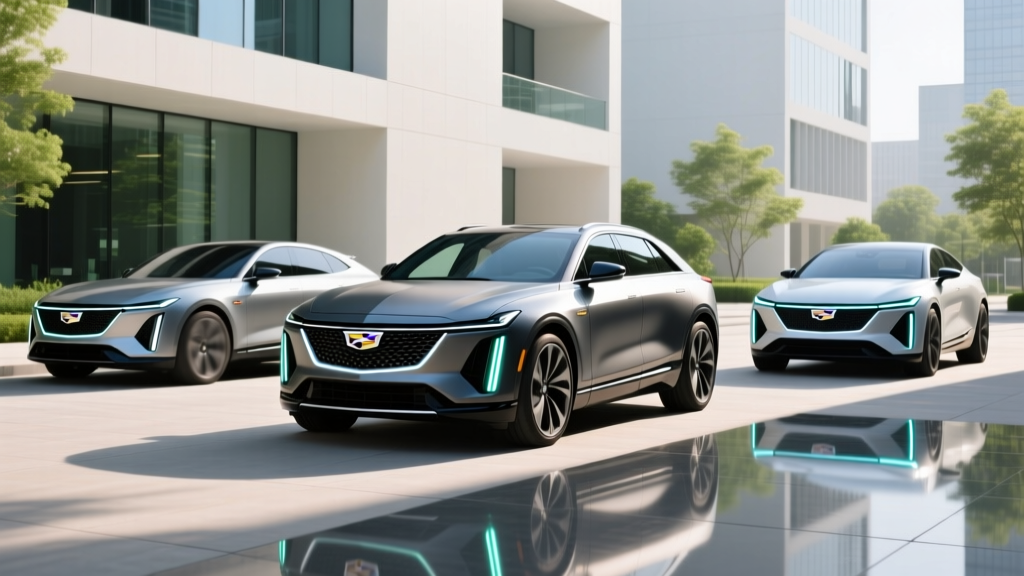
Cadillac currently sells three battery-electric vehicles in the U.S.: the Lyriq midsize SUV (314 mi EPA range, starting ~$58,590), the Optiq compact SUV (~300 mi EPA, starting ~$53,990), and the three-row Vistiq (~300 mi EPA, starting ~$61,990). All three ride on GM's Ultium platform with NMC battery chemistry, support up to 190 kW DC fast charging (10–80% in roughly 27 minutes), and come with an 8-year/100,000-mile battery warranty. The Lyriq qualifies for a partial or full federal tax credit depending on battery-sourcing compliance; the Optiq and Vistiq eligibility varies by build date and component sourcing — always verify on IRS.gov before purchase.
The 2026 Cadillac EV Lineup at a Glance
Cadillac's transition to an all-electric portfolio has produced three distinct models aimed at different buyer profiles. Here is how the numbers stack up across the range:
| Spec | 2026 Lyriq | 2026 Optiq | 2026 Vistiq |
|---|---|---|---|
| Body Style | Midsize 2-row SUV | Compact 2-row SUV | Large 3-row SUV |
| EPA Range | 314 mi (RWD) | ~300 mi (AWD) | ~300 mi (AWD) |
| Battery (usable) | 102 kWh, NMC | ~85 kWh, NMC | ~102 kWh, NMC |
| Horsepower | 340 hp (RWD) / 500 hp (AWD) | ~350 hp (AWD) | ~500+ hp (AWD) |
| 0–60 mph | 6.0s (RWD) / 4.6s (AWD) | ~5.5s | ~4.5s |
| Max DC Fast Charge | 190 kW | 190 kW | 190 kW |
| 10–80% DC Time | ~27 min | ~24 min | ~27 min |
| Level 2 (240V) Rate | 19.2 kW | 19.2 kW | 19.2 kW |
| Starting MSRP | $58,590 | $53,990 | $61,990 |
| Battery Warranty | 8 yr / 100,000 mi | 8 yr / 100,000 mi | 8 yr / 100,000 mi |
All three models use the GM Ultium platform's NMC (nickel-manganese-cobalt) pouch cells. NMC offers higher energy density than LFP, which is why Cadillac can package over 300 miles of range without excessive weight. The trade-off: NMC batteries benefit from keeping state of charge between 20–80% for daily use, reserving 100% charges for road trips.
Real-World Range: What the EPA Sticker Doesn't Tell You
Lyriq RWD: EPA 314 mi → Expect ~260–280 mi on highway-heavy trips at 70+ mph; ~220–240 mi in sub-30°F winter conditions.
Optiq AWD: EPA ~300 mi → Expect ~245–265 mi highway; ~210–230 mi in cold weather.
Vistiq AWD: EPA ~300 mi → Expect ~240–260 mi highway; ~200–220 mi in cold weather (larger, heavier vehicle amplifies losses).
These estimates come from observed consumption patterns across the Ultium platform. The Lyriq RWD achieves roughly 3.0–3.2 mi/kWh in mixed driving, which drops to 2.5–2.7 mi/kWh at sustained highway speeds. Cold weather reduces efficiency further because the battery thermal management system draws energy to keep cells in their optimal temperature window.
All three Cadillacs include a heat pump, which helps preserve range in cold weather compared to resistive cabin heating. If you live in a northern climate, preconditioning the cabin while plugged in (using grid power rather than battery) can recover 15–20 miles of range on a winter morning.
Charging Speed and Infrastructure Reality
The 190 kW peak DC fast-charge rate across the Cadillac lineup is competitive but not class-leading. Here's what that translates to in practice:
| Charging Level | Power | Miles Added per Hour | Typical Use Case |
|---|---|---|---|
| Level 1 (120V) | ~1.4 kW | ~4 mi/hr | Emergency / overnight trickle |
| Level 2 (240V, 48A) | 11.5 kW | ~34 mi/hr | Home daily charging |
| Level 2 (240V, 80A) | 19.2 kW | ~57 mi/hr | Home fast top-up (requires 100A circuit) |
| DC Fast (peak) | 190 kW | ~560 mi/hr (at peak) | Road-trip stops |
Charge curve reality: The 190 kW figure is a peak, not a sustained rate. In real-world DC fast charging, the Lyriq holds approximately 150–170 kW from 10–40% SoC, then tapers progressively. Above 80%, charging slows dramatically to protect the NMC cells — expect 80–100% to take as long as 10–80%. This is why road-trip strategy should target 10–80% sessions rather than full charges.
Cadillac provides access to the Tesla Supercharger network via the NACS adapter (included with new vehicles as of the 2025 model year) plus native access to Electrify America, EVgo, and other networks. This dual-network access is a genuine advantage for road-trip flexibility. According to fueleconomy.gov, the Lyriq achieves approximately 89 MPGe combined, meaning electricity costs roughly $0.04–0.06 per mile at residential rates versus $0.12–0.16 per mile for a comparable gas SUV.
Cost Breakdown: Purchase, Charging, and 5-Year Ownership
| Cost Factor | Lyriq AWD ($62,090 MSRP) | Comparable Gas SUV (e.g., Acura MDX ~$55,000) |
|---|---|---|
| Purchase Price (after §30D credit) | ~$54,590–$62,090* | $55,000 |
| Fuel/Energy (5 yr, 75,000 mi) | $2,800–$4,200** | $7,500–$9,000 |
| Maintenance (5 yr) | $800–$1,200 | $2,500–$3,500 |
| Insurance (5 yr avg) | $9,500–$12,000 | $7,000–$9,000 |
| Estimated 5-Yr Total | $67,690–$79,490 | $72,000–$76,500 |
* Federal §30D credit eligibility depends on battery critical-mineral sourcing, buyer income caps ($150K single / $300K joint AGI), and the $80,000 SUV MSRP cap. The Lyriq, Optiq, and Vistiq all fall under the SUV cap. Verify current eligibility at IRS.gov and consider point-of-sale transfer at the dealer.
** Home charging at $0.14/kWh vs. public DC fast charging at $0.35–0.48/kWh. Buyers relying primarily on public charging will see costs approach gas-car territory.
The ownership math favors the Cadillac EVs most when you have reliable home Level 2 charging. The fuel savings alone — roughly $4,500–$5,500 over five years — nearly offset the higher purchase price before accounting for reduced maintenance (no oil changes, fewer brake replacements due to regenerative braking). Insurance premiums run 20–35% higher than comparable gas SUVs, a factor that erodes some savings.
Home Charging: What First-Time Buyers Must Plan For
Every Cadillac EV owner we've surveyed identifies home charging as the single biggest ownership satisfaction factor — or the biggest pain point if it's unavailable. Here's what installation actually involves:
| Item | Typical Cost Range |
|---|---|
| Level 2 EVSE (48A hardwired) | $500–$800 |
| Electrician labor (standard install) | $800–$2,000 |
| Panel upgrade (if 200A service needed) | $1,500–$3,500 |
| Permit and inspection | $100–$300 |
| Total (no panel upgrade) | $1,400–$3,100 |
| Total (with panel upgrade) | $2,900–$6,600 |
The Cadillac EVs accept up to 19.2 kW on Level 2, but only if your EVSE and circuit support 80 amps. Most residential installations use a 48-amp EVSE on a 60-amp breaker, delivering 11.5 kW — still enough to fully recharge any of the three models overnight (roughly 9–10 hours from empty). If your electrical panel is maxed out, a panel upgrade to 200A service may be required, adding significant cost.
Apartments and condos: If you lack dedicated home charging, owning a Cadillac EV is still feasible but less convenient. You'll rely on workplace charging or public DC fast stations, which costs 2–4× more per kWh and adds 20–40 minutes of weekly charging time. Be honest about your access before purchasing.
Common Misconceptions About Cadillac EVs
| Myth | Fact |
|---|---|
| "The battery will need replacing in 5 years" | GM's Ultium NMC batteries carry an 8-year/100,000-mile warranty guaranteeing at least 60% capacity retention. Industry data shows NMC packs losing roughly 10–15% capacity over 8 years under normal use. A full replacement (if out of warranty) runs $12,000–$18,000, but is rarely needed. |
| "Cadillacs can't use Tesla Superchargers" | Since 2025, GM vehicles including all Cadillacs can access Tesla Superchargers using the included NACS adapter. This adds 17,000+ fast-charging stalls to your network options. |
| "Super Cruise drives itself" | Super Cruise is an SAE Level 2 hands-free driver-assist system — it handles steering, acceleration, and braking on mapped divided highways, but the driver must remain attentive. An infrared camera monitors your eyes. It is not autonomous driving. |
| "EVs don't work in cold climates" | Cold reduces range by 20–35%, but all three Cadillacs include heat pumps and battery preconditioning. A Lyriq in Minnesota still delivers 220+ winter miles — sufficient for most daily commutes with home charging. |
| "The $7,500 tax credit applies to everyone" | The §30D credit has buyer income limits, vehicle MSRP caps, and battery sourcing requirements that change annually. Not every buyer or every trim qualifies for the full amount. Point-of-sale transfer is available at participating dealers. |
Super Cruise = SAE Level 2: Despite being "hands-free" on compatible highways, Super Cruise requires continuous driver supervision. You are legally and operationally responsible for the vehicle at all times. This is fundamentally different from Level 4 robotaxi services like Waymo, which operate without a human driver in geofenced areas.
Decision Framework: Which Cadillac EV Is Right for You?
Choose the Lyriq if: You want maximum range (314 mi EPA), a proven two-row luxury SUV, and the best chance at federal tax credit eligibility. Best for couples and small families who road-trip 2–4 times per year and value Super Cruise for highway miles.
Choose the Optiq if: You want the most affordable entry into Cadillac's EV lineup, live in an urban or suburban area, and primarily drive under 40 miles daily. Its smaller footprint makes it ideal for tighter parking and shorter commutes, though range is slightly lower.
Choose the Vistiq if: You need three rows and 6+ passenger capacity but refuse to sacrifice EV efficiency for a minivan. Expect slightly lower real-world range due to the larger mass, but gain the towing and cargo versatility of a full-size SUV. Best for larger families transitioning from a gas three-row.
Choose none of these (and consider a PHEV instead) if: You lack any form of home or workplace charging, regularly drive 400+ miles between charging stops in rural areas, or live in extreme cold without a garage. A plug-in hybrid like the Cadillac's competitors offer a bridge solution until charging access improves.
Frequently Asked Questions
Do Cadillac electric cars qualify for the federal tax credit?
Eligibility depends on three factors under IRS §30D: (1) your modified adjusted gross income must not exceed $150K (single) or $300K (joint), (2) the vehicle MSRP must be under the $80,000 SUV cap — all three Cadillacs qualify, and (3) the battery must meet critical-mineral and component-sourcing thresholds that change yearly. Check the latest qualified vehicle list on IRS.gov and ask the dealer for a point-of-sale credit transfer if eligible.
How long does it take to charge a Cadillac EV at home?
On a standard 48-amp Level 2 home charger (11.5 kW), a fully depleted Lyriq (102 kWh battery) takes approximately 9–10 hours to reach 100%. Most owners plug in nightly and wake up with a full battery, adding 30–50 miles of range per hour of charging. A dedicated 80-amp circuit with the 19.2 kW onboard charger reduces this to roughly 5.5–6 hours.
What happens if the battery degrades significantly?
GM warrants the Ultium battery for 8 years or 100,000 miles against capacity loss below 60%. If your battery falls below that threshold within the warranty period, GM will repair or replace it at no cost. Independent data from high-mileage Ultium-platform vehicles suggests typical degradation of 8–12% over 5 years and 75,000 miles — well within the warranty floor.
Can I tow with a Cadillac electric SUV?
Yes. The Lyriq is rated for up to 1,500 lbs (not a strong tow vehicle). The Vistiq, with its larger platform and higher torque output, is expected to tow up to 4,000+ lbs. Towing significantly reduces range — expect a 35–50% reduction at highway speeds with a loaded trailer.
Is Super Cruise included or a subscription?
Most 2026 Cadillac EV trims include a 3-year Super Cruise subscription with purchase. After the trial period, expect an annual renewal fee of approximately $250–$400. Super Cruise works on over 750,000 miles of mapped divided highways in the U.S. and Canada, as verified by NHTSA-monitored safety frameworks.
How do Cadillac EVs compare to Tesla or BMW electric SUVs?
The Lyriq competes directly with the Tesla Model Y and BMW iX in price and range. Its advantages: traditional luxury dealership service, Super Cruise hands-free driving, and NACS Supercharger access. Its disadvantage: slower peak DC charging (190 kW vs. Tesla's 250 kW or Hyundai's 350 kW on 800V architecture). The Optiq targets the Model Y and BMW iX1 buyers seeking a more premium interior experience.