Quick Verdict: The Celestiq Is a Hand-Built EV Flagship
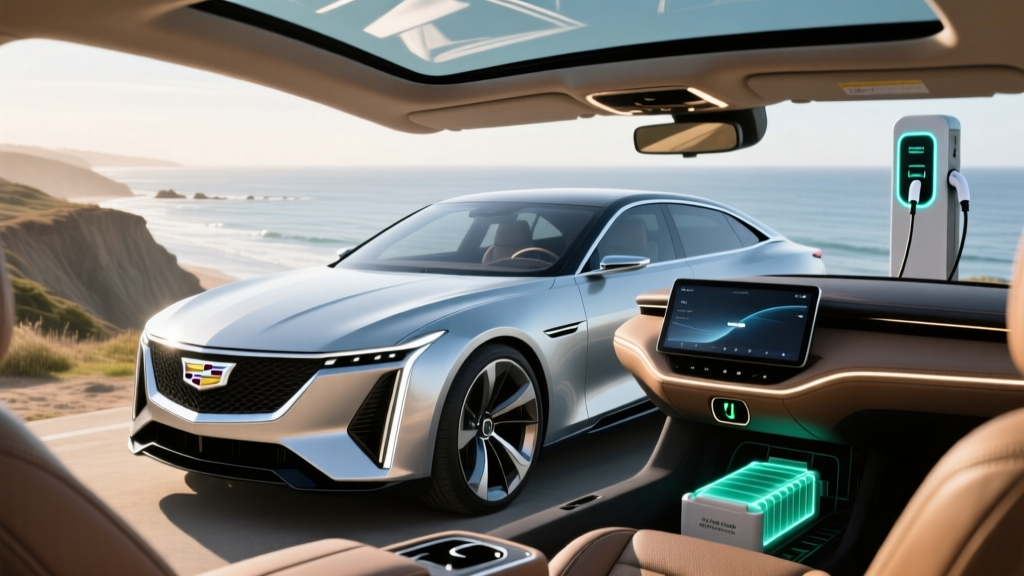
The Cadillac Celestiq is not a mass-market electric sedan. It is a coach-built, made-to-order flagship that Cadillac positions against the Rolls-Royce Spectre and Bentley's upcoming EV offerings. With dual-motor all-wheel drive producing an estimated 655 horsepower, a 111 kWh Ultium battery, and a starting price north of $340,000, the Celestiq exists in a rarefied tier where efficiency metrics take a back seat to craftsmanship, exclusivity, and bespoke personalization.
That said, buyers spending this kind of money still want to know the numbers: how far it actually goes on a charge, how fast it replenishes, and whether the Ultium platform delivers on its promises. This review dissects the 2026 Cadillac Celestiq's hp output, range, charging behavior, and ownership economics with the precision you need before placing a commission order.
Powertrain, Horsepower, and Performance
The Celestiq uses GM's Ultium platform with a dual-motor all-wheel-drive configuration. Cadillac rates the combined output at approximately 655 horsepower and 646 lb-ft of torque. That positions it firmly in the ultra-luxury performance bracket, though it trails the Tesla Model S Plaid and Lucid Air Sapphire in raw acceleration.
| Spec | Value |
|---|---|
| Drivetrain | Dual-motor AWD |
| Horsepower | ~655 hp (combined) |
| Torque | ~646 lb-ft |
| 0-60 mph | ~3.8 seconds (est.) |
| Top Speed | Electronically limited, ~130 mph |
| Battery (usable) | ~111 kWh, NMC (Ultium) |
| Platform | GM Ultium (BEV3) |
The 0-60 mph time of roughly 3.8 seconds is brisk for a sedan weighing over 5,800 pounds, but the Celestiq prioritizes effortless, silent thrust over track-oriented aggression. Throttle response is immediate, as with all EVs, and the torque vectoring between front and rear motors provides confident corner exit traction.
EPA Range and Real-World Expectations
Cadillac targets an EPA-estimated range of approximately 300 miles for the Celestiq. For a 111 kWh battery pushing a heavy, aerodynamically challenged luxury sedan, that figure is reasonable but not class-leading. The Lucid Air Grand Touring, by comparison, achieves over 500 miles from a similarly sized pack thanks to superior efficiency.
EPA Estimate: ~300 miles
Highway (70-80 mph, mild weather): Expect 240–265 miles. The Celestiq's large frontal area and luxury-sedan proportions hurt efficiency at sustained speed.
Cold Weather (below 32°F): Plan for 190–230 miles. NMC chemistry loses 15–25% capacity in freezing temperatures, and cabin heating draws significant energy despite any heat-pump assist.
City / Mixed Commuting: 270–300 miles is achievable with regenerative braking recapturing energy in stop-and-go traffic.
The Celestiq's efficiency is estimated at roughly 70–75 MPGe combined, translating to about 40–43 kWh per 100 miles. That is thirsty by EV standards — comparable to the original Hummer EV's consumption profile — but buyers in this segment are unlikely to cross-shop based on efficiency alone. According to fueleconomy.gov, large luxury EVs consistently deliver 20–30% less range on highway-heavy trips compared to their EPA stickers.
Charging Speed: DC Fast and Home Level 2
Charging a 111 kWh battery is a time-intensive affair, and the Celestiq's architecture — based on GM's 400-volt Ultium platform rather than an 800-volt system like Hyundai/Kia or Lucid — limits its peak DC fast-charging speed.
| Charging Level | Power / Rate | Time / Notes |
|---|---|---|
| Level 1 (120V household) | ~1.4 kW | ~2–3 miles per hour; 70+ hours for full charge |
| Level 2 (240V home) | ~11.5 kW (estimated) | ~25–28 miles per hour; ~10–12 hours for 10–100% |
| DC Fast Charge (peak) | ~200 kW (estimated peak) | 10–80% in approximately 30–35 minutes |
| DC Sustained Rate | ~100–130 kW above 60% SoC | Charge curve tapers significantly past 80% |
The 400-volt Ultium architecture means the Celestiq cannot match the 350 kW peak rates of 800-volt platforms. Expect a peak around 200 kW under ideal conditions (warm battery, low state of charge, 350 kW-capable station), with the rate tapering as the battery fills. The 10–80% charge in roughly 30–35 minutes is acceptable for road-trip stops but noticeably slower than the Hyundai Ioniq 5 or Lucid Air.
Home charging reality: At 11.5 kW on a Level 2 home charger, you'll add about 25–28 miles of range per hour. An overnight session (10 hours) replenishes roughly 250–280 miles — sufficient for daily use. Celestiq owners will almost certainly have dedicated 60-amp circuits installed with premium wall connectors; budget $1,500–$3,000 for professional Level 2 installation depending on your panel capacity, per typical rates cited by licensed electricians.
Pricing, Tax Credits, and Ownership Cost
The Celestiq occupies a pricing stratum where the federal EV tax credit is functionally irrelevant — but the rules still matter for buyers who want to understand the full picture.
| Item | Details |
|---|---|
| Base MSRP | ~$340,000 (commission-based pricing varies) |
| As-Tested / Personalized | $380,000–$500,000+ with bespoke options |
| §30D Federal Tax Credit | Not eligible — MSRP cap for sedans is $55,000 per IRS rules |
| Income Cap Relevance | Moot — vehicle exceeds MSRP cap regardless of buyer income |
| Battery Sourcing Requirements | Moot — vehicle exceeds MSRP cap |
The IRS §30D credit caps eligible sedans at $55,000 MSRP. The Celestiq, at roughly six times that threshold, does not qualify for any portion of the $7,500 federal credit. Point-of-sale transfer is also unavailable. State-level incentives (where they exist) may apply, but they typically range from $1,000–$5,000 — rounding error on a $340,000+ vehicle.
Five-year ownership cost considerations:
- Insurance: Expect $8,000–$15,000+ annually given the bespoke build, low production volume, and repair complexity. Specialty insurers like Hagerty or Chubb may be required.
- Electricity: At ~42 kWh/100 mi and $0.16/kWh national average, fueling costs approximately $6.72 per 100 miles — far less than the $14–$18 per 100 miles a comparable V12 luxury sedan would consume in gasoline.
- Depreciation: Ultra-luxury, low-volume EVs carry significant depreciation risk. The Rolls-Royce Spectre has shown 30–40% first-year depreciation in some markets. Expect similar or worse for the Celestiq given Cadillac's weaker brand equity in the ultra-luxury tier.
- Maintenance: Minimal compared to ICE equivalents — no oil, no transmission fluid, fewer brake replacements thanks to regen. Cadillac includes a concierge service program for Celestiq owners.
Interior, Technology, and Cargo
The Celestiq's interior is where the commission price starts to make sense — or at least where the differentiation from a loaded Tesla Model S becomes obvious. Every Celestiq is built to the buyer's specification at GM's Factory ZERO in Detroit-Hamtramck.
Infotainment and displays:
- A 55-inch diagonal pillar-to-pillar LED display spans the dashboard — one of the largest single automotive screens ever fitted to a production vehicle.
- Individual rear-seat displays with independent climate and entertainment controls.
- Google Built-In for navigation, assistant, and app integration.
- AKG Studio Reference audio system with 38+ speakers.
Driver assistance: The Celestiq features Super Cruise, GM's Level 2 hands-free driving system on pre-mapped divided highways. Per NHTSA SAE definitions, this is Level 2 automation — the driver must remain attentive and is legally responsible for vehicle operation at all times. Super Cruise is not self-driving.
Super Cruise operates only on compatible pre-mapped highways (~400,000+ miles in the US/Canada). It does not handle city streets, construction zones, unmapped roads, or adverse weather autonomously. The driver must keep eyes on the road; a camera-based attention system enforces this. This is not a Level 4 robotaxi system.
Passenger and cargo dimensions:
- Seating: 4 passengers (individual rear bucket seats with a fixed center console)
- Rear legroom: ~42 inches (estimated; generous for the segment)
- Cargo volume: ~14–16 cu ft trunk (sedan configuration); no frunk due to front motor and HVAC packaging
- Roof: Fixed glass roof with variable opacity (no traditional sunshade)
The 4-seat layout and modest trunk make the Celestiq impractical for families or cargo-heavy use cases. This is a chauffeur-class grand tourer, not a daily utility vehicle.
Battery Warranty, Chemistry, and Longevity
The Celestiq uses GM's Ultium battery platform with NMC (nickel manganese cobalt) chemistry. NMC offers higher energy density than LFP (lithium iron phosphate), which is necessary given the Celestiq's weight and range targets — but it comes with trade-offs.
| Attribute | NMC (Celestiq) | LFP (e.g., Tesla Model 3 RWD) |
|---|---|---|
| Energy Density | Higher — more range per kg | Lower — heavier pack for same range |
| Cycle Life | ~1,000–1,500 cycles to 80% SoH | ~2,000–3,000+ cycles to 80% SoH |
| Cold-Weather Performance | Moderate loss (15–25%) | Greater loss (20–30%) |
| Thermal Stability | Good, with active management | Excellent — inherently safer chemistry |
| Recommended Daily Charge | 80% for longevity | 100% OK per manufacturer guidance |
Warranty coverage:
- Battery: 8 years / 100,000 miles (whichever comes first), with GM warranting at least 70% capacity retention over that period — consistent with federal minimum requirements for emissions-related components and industry norms.
- Powertrain: 6 years / 70,000 miles (estimated, aligned with Cadillac's premium warranty tier).
- Bumper-to-bumper: 4 years / 50,000 miles.
At ~$340,000, the 8-year/100,000-mile battery warranty is standard — not exceptional. Out-of-warranty battery replacement for a 111 kWh NMC pack could cost $25,000–$40,000+ based on current Ultium pricing, though module-level repair may reduce that figure. Celestiq owners will likely rely on the concierge service program for any warranty work.
Pros, Cons, and Who Should Buy
Pros
- 655 hp with silent, effortless AWD acceleration
- Truly bespoke, hand-finished interior — no two Celestiqs are alike
- 55-inch pillar-to-pillar display is a genuine showpiece
- Super Cruise hands-free driving on 400,000+ miles of highway
- Exclusivity: ~400 units planned total across initial production
- Ultium platform benefits from GM's massive R&D investment
Cons
- ~300-mile EPA range is modest for the price and battery size
- 400V architecture limits DC fast-charging speed vs 800V rivals
- 4-seat only layout; no cargo versatility
- Depreciation risk is severe — Cadillac lacks ultra-luxury resale equity
- $340,000+ with no federal tax credit eligibility
- Insurance costs will be extreme given bespoke parts and low volume
- Efficiency (~70 MPGe) is poor even by luxury EV standards
Decision Framework: Who Is the Celestiq For?
Choose the Celestiq if: You want an American-built, commission-only ultra-luxury EV that functions as much as a collectible as a car. You value exclusivity, bespoke materials, and Super Cruise highway comfort over efficiency metrics and charging speed. You already have a daily-driver EV or ICE vehicle for practical needs.
Look elsewhere if: You need 400+ miles of range (Lucid Air Grand Touring), sub-2-second acceleration (Lucid Air Sapphire, Tesla Model S Plaid), practical rear cargo (Mercedes EQS SUV), or any concern about depreciation. The Celestiq is a passion purchase, not a rational optimization.
Frequently Asked Questions
What is the real-world range of the Cadillac Celestiq?
The Celestiq targets an EPA-estimated ~300 miles. In real-world highway driving at 70–80 mph, expect 240–265 miles. In freezing temperatures, that drops to 190–230 miles. City driving with regenerative braking can approach the EPA sticker, but the large, heavy sedan is least efficient at sustained high speeds.
How fast does the Celestiq charge at home and on the road?
On a Level 2 home charger (~11.5 kW), the Celestiq adds roughly 25–28 miles per hour, requiring 10–12 hours for a full charge. On DC fast chargers, it peaks at approximately 200 kW (400V architecture), reaching 10–80% in about 30–35 minutes. This is slower than 800V competitors like the Lucid Air or Porsche Taycan.
Does the Cadillac Celestiq qualify for the federal EV tax credit?
No. The IRS §30D credit caps eligible sedans at $55,000 MSRP. The Celestiq starts around $340,000, making it ineligible regardless of buyer income or battery sourcing. State incentives may apply but are negligible relative to the purchase price.
Is the Celestiq worth buying versus the Rolls-Royce Spectre or Lucid Air?
Against the Rolls-Royce Spectre (~$420,000, ~260-mile range), the Celestiq offers more technology, more horsepower, and a lower entry price — but the Rolls-Royce badge carries vastly stronger resale and prestige equity. Against the Lucid Air Sapphire (~$250,000, 427-mile range, 1,234 hp), the Celestiq cannot compete on performance or efficiency; its advantage is purely bespoke exclusivity and interior craftsmanship. The Celestiq is a statement purchase, not a spec-sheet winner.
How many Celestiqs will Cadillac build?
Cadillac has indicated initial production will be extremely limited — roughly 400 units total, with each one commissioned individually. This scarcity is central to the value proposition and differentiates the Celestiq from any mass-production EV.
What is the battery replacement cost for the Celestiq?
Out-of-warranty replacement for a 111 kWh Ultium NMC pack is estimated at $25,000–$40,000+, though module-level repairs may cost significantly less. The 8-year/100,000-mile warranty covers defects and capacity loss below 70%. Given the bespoke nature of the vehicle, any battery service will likely require coordination through Cadillac's Celestiq concierge program.