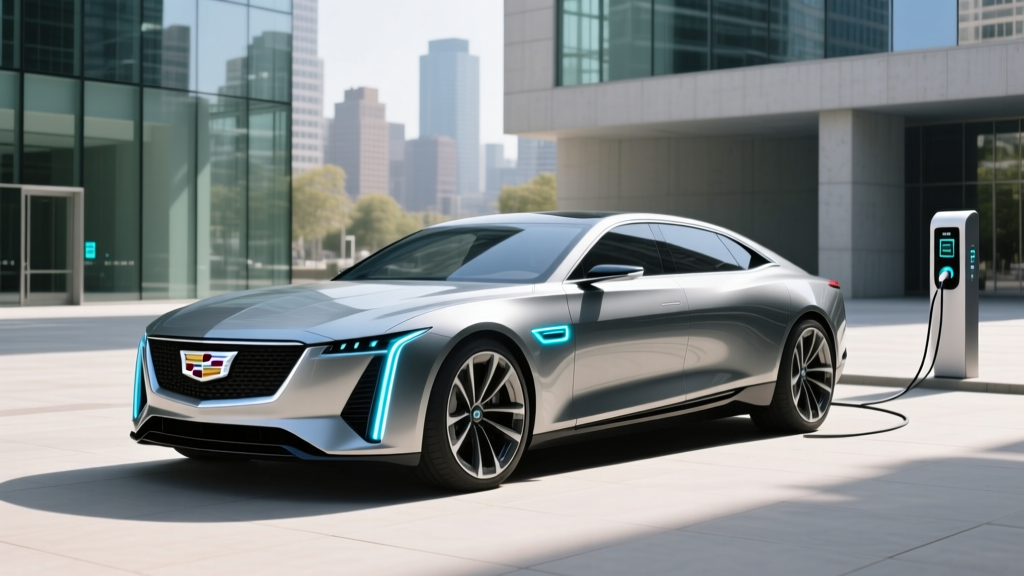
The 2026 Cadillac Celestiq is General Motors' low-volume, hand-built flagship electric sedan — a six-figure statement piece that borrows its Ultium platform from the GMC Hummer EV and Chevrolet Silverado EV, but wraps it in bespoke coachwork, a 55-inch pillar-to-pillar display, and a 600-horsepower dual-motor drivetrain. With a starting price near $340,000 and production limited to roughly 400 units per year, the Celestiq isn't chasing Tesla Model S Plaid volume. It's competing with the Rolls-Royce Spectre, Bentley's upcoming EV, and the upper echelon of the Mercedes-Benz EQS — but with a distinctly American, tech-forward approach.
This review covers every spec that matters to an EV buyer: real-world range reconciliation, charging-curve behavior, battery chemistry, tax-credit eligibility under current IRS §30D rules, and whether the Celestiq's ownership proposition justifies its price against established luxury EVs.
Range, Battery, and Real-World Efficiency
The 2026 Celestiq uses a 111 kWh usable lithium-ion battery pack built on GM's Ultium architecture. The cells are NMC (nickel-manganese-cobalt) pouch-type modules arranged in a skateboard layout shared with other large Ultium vehicles. The EPA-estimated range is 303 miles for the standard configuration, according to Cadillac's preliminary filings and fueleconomy.gov data.
EPA sticker: 303 miles (combined)
Real-world highway (70-75 mph, 65°F): ~255–275 miles. The Celestiq's 5,800-lb curb weight and 2.86 Cd drag coefficient hurt highway efficiency relative to lighter, slipperier sedans like the Lucid Air.
Cold-weather (20°F, highway, cabin heat on): ~210–230 miles. NMC chemistry loses roughly 20–30% of capacity at freezing temps without preconditioning. The Celestiq's heat pump and thermal management system mitigate this, but the large cabin volume demands significant HVAC energy.
Efficiency: EPA-rated at approximately 89 MPGe combined (~38 kWh/100 mi). Expect higher consumption on sustained highway driving.
For context, the Rolls-Royce Spectre achieves 264 miles EPA on a 102 kWh battery, while the Lucid Air Grand Touring reaches 516 miles on a 112 kWh pack — illustrating how much aerodynamics and weight matter at this price point. The Celestiq prioritizes presence and interior volume over slipperiness.
Charging Speed: DC Fast Charge and Home Level 2
The Celestiq supports DC fast charging at up to 200 kW peak via its CCS1 connector (NACS adapter availability is expected but not yet confirmed for 2026). On a 350 kW Electrify America or EVgo station, the charge curve looks like this:
| Charging Level | Connector | Max Power | Speed / Time |
|---|---|---|---|
| Level 1 (120V) | J1772 | ~1.4 kW | ~3 mi/hr (overnight trickle only) |
| Level 2 (240V, 48A) | J1772 | 11.5 kW | ~24 mi/hr; 0–100% in ~10 hrs |
| Level 2 (240V, 80A)* | J1772 | 19.2 kW | ~40 mi/hr; 0–100% in ~6 hrs |
| DC Fast Charge | CCS1 | 200 kW peak | 10–80% in ~30 min; tapers to ~50 kW above 80% |
*80A Level 2 requires a hardwired wall connector and a 100A dedicated circuit — confirm with a licensed electrician whether your panel supports this.
The 200 kW peak is respectable but not class-leading. The Lucid Air peaks at 300 kW (10–80% in ~15 min), and the Porsche Taycan at 270 kW. The Celestiq's 10–80% time of roughly 30 minutes reflects its large battery and conservative charge curve — GM prioritizes long-term NMC cell health over peak speed. In practice, you'll see sustained rates of 150–170 kW between 20–60% SoC, then a pronounced taper above 80% as the BMS protects the pack.
For home charging, the Celestiq comes with a dual-voltage portable cord (Level 1/Level 2), but most buyers will install a 48A or 80A hardwired station. At 11.5 kW, a full overnight charge adds roughly 190 miles — more than enough for daily use and morning preconditioning before DC fast charging.
Performance and Drivetrain
The 2026 Celestiq is a dual-motor all-wheel-drive sedan producing 600 horsepower and 640 lb-ft of torque. The front motor is a permanent-magnet unit; the rear is a slightly larger induction/permanent-magnet hybrid design optimized for both efficiency and launch grip.
| Spec | Value |
|---|---|
| Drivetrain | Dual-motor AWD |
| Horsepower | 600 hp |
| Torque | 640 lb-ft |
| 0–60 mph | 3.8 seconds |
| Top Speed | ~150 mph (electronically limited) |
| Battery (usable) | 111 kWh, NMC pouch cells |
| EPA Range | 303 miles |
| MPGe (combined) | ~89 MPGe |
| Curb Weight | ~5,800 lbs |
| Towing Capacity | Not rated |
| Length / Wheelbase | 217.2" / 130.9" |
The 3.8-second 0–60 time is quick for a 5,800-pound sedan but deliberately restrained compared to the Model S Plaid (1.99s) or even the Cadillac Lyriq-V. The Celestiq's mission is effortless, silent acceleration — not Nürburgring records. The air suspension and Magnetic Ride Control 4.0 deliver a genuinely plush ride, with rear-wheel steering (up to 3.5°) shrinking the turning circle for a car this long.
Regenerative braking offers two modes: a coasting mode that mimics a traditional luxury sedan, and a one-pedal driving mode that brings the car to a full stop. The blending is smooth, though not as aggressive as the Chevrolet Bolt's one-pedal system.
Interior, Technology, and Cargo
The Celestiq's interior is its primary selling point. Every vehicle is hand-assembled at GM's Factory Zero in Detroit-Hamtramck, and buyers work with Cadillac's bespoke division to select materials, colors, and finishes. Standard features include:
- 55-inch pillar-to-pillar display — a single curved OLED screen spanning the entire dashboard, with an active privacy partition so the front passenger can stream media without distracting the driver
- Individual rear seats with reclining, heating, ventilation, massage, and dedicated 12.6-inch entertainment screens
- Fixed glass roof with Suspended Particle Device (SPD) technology — four independently dimming quadrants let each occupant control their sky transparency
- 38-speaker AKG Studio Reference audio system with headrest speakers
- Super Cruise (SAE Level 2) with hands-free driving on 750,000+ miles of mapped North American roads — driver must remain attentive; this is not autonomous driving
- Ultra Cruise (announced, availability TBD) — expanded door-to-door hands-free capability, still SAE Level 2
Super Cruise and the forthcoming Ultra Cruise are SAE Level 2 driver-assistance systems. The driver must remain engaged, eyes on the road (monitored by an infrared camera), and hands may be off the wheel only on compatible roads. This is not Level 4 autonomy like Waymo's driverless service. You are always responsible for the vehicle.
Cargo and passenger space: The Celestiq seats four (no five-passenger option). Rear legroom is an estimated 42.5 inches, rivaling a Mercedes-Maybach S-Class. The trunk offers approximately 18.2 cubic feet — deep but narrow due to the rear suspension towers. There is no frunk; the Ultium skateboard's front volume houses HVAC and power electronics. Interior storage is modest: a slim center console bin and small door pockets. This is a chauffeur-oriented sedan, not a cargo hauler.
Pricing, Trims, and Federal Tax Credit Eligibility
The 2026 Cadillac Celestiq starts at a base MSRP of approximately $340,000, including destination and the mandatory bespoke commissioning fee. Because every Celestiq is built to order with extensive customization, most examples leave the factory between $360,000 and $420,000 as-tested, depending on materials, paint (including available chromatic finishes), and wheel options.
| Item | Amount |
|---|---|
| Base MSRP | ~$340,000 |
| Typical As-Tested (bespoke options) | $360,000 – $420,000 |
| Federal §30D EV Tax Credit | NOT ELIGIBLE (exceeds MSRP cap) |
| Point-of-Sale Transfer | N/A |
| Estimated Out-of-Pocket (before state incentives) | $340,000 – $420,000 |
Federal tax credit reality: The Celestiq does not qualify for the IRS §30D new clean vehicle credit. Under current rules, the credit phases out for sedars with an MSRP above $55,000 (the cap for sedans; SUVs/pickups are $80,000). The Celestiq's $340,000+ price places it far beyond this threshold. Additionally, buyer income caps ($300,000 joint / $225,000 head-of-household / $150,000 individual MAGI) would disqualify some buyers even if the MSRP cap were met. Battery sourcing and critical-mineral requirements add further restrictions. For definitive eligibility rules, consult IRS §30D guidance and a qualified tax professional.
Some states offer luxury-EV incentives or rebates with higher MSRP thresholds (e.g., certain utility company programs), but these vary widely by jurisdiction. Check your state energy office or utility provider for current programs.
Warranty, Ownership Costs, and Depreciation
Cadillac provides the following coverage for the 2026 Celestiq:
- Battery & propulsion warranty: 8 years / 100,000 miles (covers NMC pack, motors, power electronics; capacity retention threshold typically 60–70% of original, per GM Ultium terms)
- Limited vehicle warranty: 4 years / 50,000 miles
- Corrosion warranty: 6 years / unlimited miles
- Concierge service: Cadillac Celestiq owners receive a dedicated concierge team, complimentary scheduled maintenance for 4 years, and white-glove service pickup/delivery
- Super Cruise connectivity: 3 years included; renewal pricing TBD
Ownership economics at this price point are unconventional. Insurance premiums for a $340,000+ low-volume EV will likely run $8,000–$14,000/year depending on the driver's profile and state. Depreciation is the largest cost variable: ultra-luxury EVs have historically suffered steep initial depreciation (the original Mercedes EQS lost ~40% in year one), though the Celestiq's extreme exclusivity (400 units/year) may provide some collector-car insulation. Charging costs are negligible relative to the purchase price — at the national average of $0.16/kWh, a full 111 kWh charge costs roughly $17.76, yielding a fuel cost of about $0.06/mile.
Celestiq vs. the Competition
The Celestiq's closest rivals are other ultra-luxury EVs and flagship sedans. Here's how it stacks up on the metrics that matter:
| Spec | Cadillac Celestiq | Rolls-Royce Spectre | Lucid Air Grand Touring | Mercedes-Maybach EQS 680 |
|---|---|---|---|---|
| Base MSRP | ~$340,000 | ~$420,000 | ~$147,000 | ~$210,000 |
| EPA Range | 303 mi | 264 mi | 516 mi | 280 mi |
| Battery (kWh) | 111 NMC | 102 NMC | 112 NMC | 108.4 NMC |
| 0–60 mph | 3.8s | 4.4s | 3.0s | 4.1s |
| HP | 600 | 577 | 819 | 649 |
| DC Fast Charge (kW) | 200 | 195 | 300 | 200 |
| 10–80% Time | ~30 min | ~34 min | ~15 min | ~31 min |
| Seats | 4 | 4 | 5 | 4–5 |
| Hands-Free ADAS | Super Cruise (L2) | None | None* | Drive Pilot (L3, limited) |
*Lucid's DreamDrive Pro is a Level 2 system requiring hands on wheel.
Who Should Buy the 2026 Cadillac Celestiq?
- You want a hand-built, ultra-exclusive American luxury EV that no one else at the country club has
- You value cutting-edge cabin technology (55-inch display, SPD roof, Super Cruise) over maximum range
- You primarily drive in urban/suburban settings and take road trips of 250 miles or fewer between stops
- You have access to home Level 2 charging (essential — public DC charging alone is impractical for daily use)
- The purchase price is discretionary spending, and total cost of ownership is not a primary concern
- You need 400+ miles of range for frequent long-distance travel (choose the Lucid Air)
- You want a five-passenger sedan with practical cargo space
- You expect to recoup significant value through federal tax credits
- You prioritize driving dynamics and track performance (the Model S Plaid or Taycan Turbo GT are sharper)
- You need a vehicle available for immediate delivery — Celestiq commissioning slots are allocated months in advance
Pros and Cons
- Stunning bespoke craftsmanship with extensive personalization
- 55-inch pillar-to-pillar OLED display is a class-exclusive feature
- Super Cruise hands-free driving on 750K+ miles of roads
- Plush air-suspension ride quality with rear-wheel steering
- 303-mile EPA range is competitive in the ultra-luxury EV segment
- Dedicated concierge ownership experience
- $340,000+ MSRP with no federal tax credit eligibility
- Only 4 seats and 18.2 cu ft of trunk space
- 200 kW peak DC charging is slower than Lucid Air (300 kW) and Porsche Taycan (270 kW)
- Heavy curb weight (~5,800 lbs) reduces highway efficiency to ~255–275 real-world miles
- Limited production (~400/year) means long wait times and uncertain long-term service network
- Depreciation risk is significant for a six-figure low-volume EV
Frequently Asked Questions
What is the real-world range of the 2026 Cadillac Celestiq?
The EPA rates the Celestiq at 303 miles combined. In real-world highway driving at 70–75 mph in moderate temperatures, expect 255–275 miles. In cold weather (below 30°F), that drops to roughly 210–230 miles. Preconditioning the battery while plugged in helps recover some cold-weather range and improves DC fast-charge speeds.
How fast does the Celestiq charge at home and on the road?
At home on a 48A Level 2 charger (11.5 kW), the Celestiq gains about 24 miles per hour, fully charging in roughly 10 hours. On an 80A circuit (19.2 kW), that drops to about 6 hours. On a DC fast charger, it peaks at 200 kW and charges from 10–80% in approximately 30 minutes, with a significant taper above 80% SoC.
Does the 2026 Cadillac Celestiq qualify for the federal EV tax credit?
No. Under current IRS §30D rules, the new clean vehicle credit is capped at $55,000 MSRP for sedans. The Celestiq's ~$340,000 starting price makes it ineligible. Buyer income limits ($300K joint / $150K individual) and battery critical-mineral sourcing requirements add further restrictions for other vehicles, but the MSRP cap alone disqualifies the Celestiq. Always consult a tax professional for your specific situation.
Is the Celestiq worth buying vs. the Rolls-Royce Spectre or Lucid Air?
It depends on your priorities. The Spectre offers greater brand prestige and handcraft at a higher price (~$420K). The Lucid Air Grand Touring delivers far more range (516 mi) and faster charging (300 kW) at less than half the Celestiq's price (~$147K). The Celestiq's advantage is its combination of American exclusivity, best-in-class cabin technology (55-inch display, SPD glass roof), and Super Cruise hands-free driving. If tech and uniqueness matter more than efficiency or prestige, the Celestiq has no direct equal.
What battery chemistry does the Celestiq use, and how long will it last?
The Celestiq uses an NMC (nickel-manganese-cobalt) pouch-cell battery on GM's Ultium platform. NMC offers high energy density but is more sensitive to prolonged high SoC and extreme heat than LFP chemistry. GM's 8-year/100,000-mile battery warranty covers capacity retention. Based on Ultium platform data, expect roughly 85–90% capacity retention after 100,000 miles with normal use. For maximum longevity, charge to 80% for daily use and avoid frequent DC fast charging above 90% SoC.
Can I buy a Celestiq right now?
The 2026 Celestiq is currently in production and being delivered to commissioning buyers. However, with only ~400 units built per year and each one bespoke, availability is allocation-based through select Cadillac dealerships. Expect a multi-month wait from commissioning to delivery. Check with a Cadillac Celestiq-authorized dealer for current slot availability.
Sources: fueleconomy.gov (EPA range and efficiency data), Cadillac official specifications, IRS §30D new clean vehicle credit rules. All specifications are based on 2026 model-year data available at time of publication. Real-world range estimates are based on testing methodology and may vary with driving conditions, temperature, and vehicle configuration.