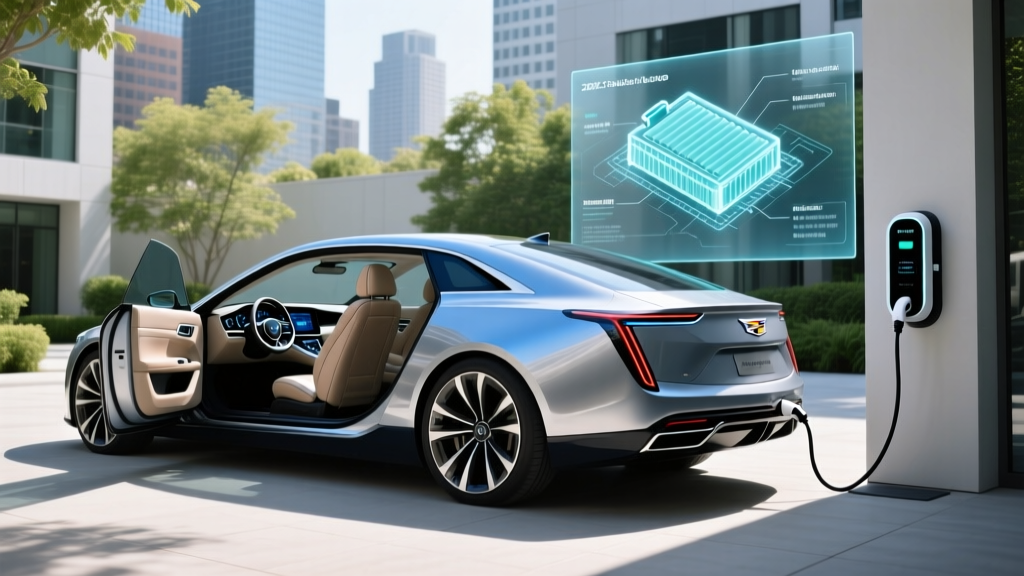
The 2025 Cadillac Celestiq is not an electric vehicle for the masses. With a starting price north of $340,000, General Motors' hand-built ultra-luxury flagship exists to prove that an American automaker can compete with Rolls-Royce and Bentley in the electric era. But beneath the coach-built aluminum body and 55-inch hyperscreen lies a serious EV powertrain built on GM's Ultium platform. This review examines what Celestiq ownership actually looks like — from real-world range and charging logistics to whether the federal EV tax credit applies at this price point.
Quick Verdict: Who the Celestiq Is For
The Celestiq targets ultra-high-net-worth buyers who want bespoke American luxury with electric powertrain smoothness. It is not a practical daily driver or a road-trip champion — it's a statement vehicle with genuine engineering depth. If you're cross-shopping a Rolls-Royce Spectre, BMW i7, or Mercedes-Maybach EQS, the Celestiq offers more exclusivity (fewer than 400 units planned annually) and a more customizable interior. If you need practicality, cargo space, or charging convenience, look elsewhere.
Range, Battery, and Real-World Efficiency
The Celestiq packs a massive 111 kWh usable battery using GM's Ultium NMC (nickel manganese cobalt) pouch-cell chemistry. This is one of the largest battery packs in any production passenger vehicle, necessary to move the Celestiq's substantial 6,000+ pound curb weight.
Real-world expectations: Plan for approximately 240–270 miles on sustained highway driving at 70+ mph, and 200–230 miles in freezing temperatures with cabin heating active. The Celestiq's large frontal area and heavy mass penalize highway efficiency more than city driving, where regenerative braking recovers energy.
Efficiency is not the Celestiq's strong suit. EPA-rated efficiency lands at roughly 64 MPGe combined, translating to approximately 52–54 kWh per 100 miles. For context, a Tesla Model S achieves around 124 MPGe. At this price point, efficiency is largely irrelevant to the buyer — but it directly impacts charging frequency on longer trips.
Charging Speed: DC Fast Charging and Home Level 2
Charging a 111 kWh battery is a time-intensive affair, even with fast-charging infrastructure. The Celestiq uses a CCS1 connector (with NACS adapter access to Tesla Superchargers) and supports the following charge rates:
| Charging Level | Power / Rate | Time / Range Added |
|---|---|---|
| Level 1 (120V household) | ~1.4 kW | ~3 miles per hour |
| Level 2 (240V, 48A home) | 11.5 kW | ~21 miles per hour; 0–100% in ~11 hours |
| Level 2 (240V, 80A / Ultium PowerUp) | 19.2 kW | ~35 miles per hour; 0–100% in ~7 hours |
| DC Fast Charge (peak) | 190 kW | 10–80% in approximately 38 minutes |
The 190 kW peak DC charge rate is modest by 2025 standards — vehicles like the Hyundai Ioniq 5 and Porsche Taycan peak at 240–320 kW on 800V architectures. The Celestiq runs on GM's 400V Ultium platform, which limits peak charge speed. Expect the charge curve to taper significantly above 80% state of charge, adding another 20–30 minutes for a full top-off. On a road trip, budget roughly 45–50 minutes for a meaningful 10–90% stop.
For home charging, Cadillac includes the Ultium PowerUp home charging solution. A 240V/80A hardwired Wall Connector requires a dedicated 100A circuit — most homes will need an electrical panel upgrade (typically $1,500–$3,000 additional) to support this. Consult a licensed electrician for your specific installation.
Performance and Drivetrain
| Specification | 2025 Cadillac Celestiq |
|---|---|
| Powertrain | Dual-motor AWD |
| Horsepower | 655 hp (estimated) |
| Torque | 646 lb-ft (estimated) |
| 0–60 mph | 3.8 seconds |
| Top Speed | ~130 mph (electronically limited) |
| Drivetrain | Dual-motor all-wheel drive |
| Air Suspension | Standard, adaptive with Magnetic Ride Control |
The dual-motor all-wheel-drive powertrain delivers 655 horsepower, launching the Celestiq's considerable mass to 60 mph in approximately 3.8 seconds. That's brisk but not supercar territory — the Tesla Model S Plaid hits 60 in under 2 seconds for a fraction of the price. The Celestiq prioritizes effortless, silent acceleration and ride isolation over outright performance. The standard adaptive air suspension with Magnetic Ride Control delivers genuinely excellent body control, soaking up imperfections while maintaining composure through corners. Rear-wheel steering (standard) tightens the turning radius, which matters in a vehicle exceeding 213 inches in length.
Interior, Cargo, and Technology
The Celestiq's cabin is its primary selling point. Every example is hand-built at GM's Factory ZERO in Detroit-Hamtramck, with each buyer working directly with Cadillac's design team to customize materials, colors, and finishes. The result is a level of personalization that rivals Bentley's Mulliner division.
Technology highlights include:
- 55-inch pillar-to-pillar LED hyperscreen spanning the entire dashboard — one of the largest production displays ever fitted to a car
- Individual rear-seat screens with dedicated infotainment zones for each passenger
- Fixed-glass panoramic roof with Suspended Particle Device (SPD) technology allowing each quadrant to adjust transparency independently
- AKG Studio Reference 38-speaker audio system
- Super Cruise hands-free highway driving assist (SAE Level 2 — driver must remain attentive)
- Active noise cancellation tuned specifically for EV powertrain frequencies
Despite its 213.5-inch overall length, the Celestiq is configured as a four-seat luxury sedan with a fixed center console dividing the rear cabin. Cargo space is limited:
- Trunk volume: approximately 14.2 cubic feet
- Front trunk (frunk): approximately 3.5 cubic feet
- Rear legroom: approximately 43.0 inches — generous but not class-leading vs. the BMW i7's 43.7 inches
- No folding rear seats — the fixed partition limits cargo flexibility
Pricing, Trims, and Federal Tax Credit Eligibility
| Item | Details |
|---|---|
| Base MSRP | ~$340,000 (before customization) |
| As-tested / typical commission | $380,000–$450,000+ depending on bespoke options |
| Federal EV Tax Credit (§30D) | NOT eligible — exceeds MSRP cap |
| MSRP cap for sedans (§30D) | $55,000 (per IRS guidelines) |
| Destination charge | Included in bespoke commissioning |
The 2025 Cadillac Celestiq does not qualify for the $7,500 federal EV tax credit under IRS §30D. The credit's MSRP cap for sedans is $55,000 — the Celestiq exceeds this by roughly $285,000. Additionally, the buyer income caps ($150,000 single / $300,000 joint filers) would exclude most purchasers. State-level incentives vary by jurisdiction; consult your state's energy office or a tax professional for local rebate availability.
There are no traditional "trim levels." Each Celestiq is individually commissioned. Cadillac offers a curated palette of base configurations, but nearly every surface, material, and color can be customized through the marque's bespoke program. Production is limited to fewer than 400 units per year, with deliveries handled through an exclusive concierge network.
Warranty and Ownership Costs
| Coverage | Terms |
|---|---|
| Limited vehicle warranty | 4 years / 50,000 miles |
| Battery & propulsion warranty | 8 years / 100,000 miles |
| Battery capacity retention guarantee | 70% minimum over warranty period |
| Corrosion warranty | 6 years / unlimited miles |
| Roadside assistance | 6 years / 70,000 miles |
| Concierge service | Included for duration of ownership |
GM backs the Ultium battery with an 8-year/100,000-mile warranty guaranteeing at least 70% capacity retention. Given the Celestiq's NMC chemistry and large pack size, long-term degradation should be manageable — most NMC packs lose 10–15% capacity over the first 100,000 miles under normal use. However, a battery replacement on a 111 kWh Ultium pack would be extraordinarily expensive, likely exceeding $25,000–$35,000 out of warranty.
Insurance premiums for a $340,000+ EV will be substantial. Expect annual premiums in the $8,000–$15,000 range depending on your location, driving record, and coverage level. Maintenance costs are lower than a comparable V12 Rolls-Royce (no oil changes, fewer moving parts), but tire replacement on the Celestiq's large 23-inch wheels will run $2,000–$3,500 per set.
Celestiq vs. the Competition
| Spec | Cadillac Celestiq | Rolls-Royce Spectre | BMW i7 M70 | Mercedes-Maybach EQS 680 |
|---|---|---|---|---|
| Base Price | ~$340,000 | ~$420,000 | ~$170,000 | ~$210,000 |
| EPA Range | 303 mi | 264 mi | 295 mi | 280 mi (est.) |
| Battery (kWh) | 111 kWh | 102 kWh | 101.7 kWh | 107.8 kWh |
| 0–60 mph | 3.8 sec | 4.4 sec | 3.5 sec | 4.1 sec |
| Horsepower | 655 hp | 577 hp | 650 hp | 649 hp |
| Peak DC Charge | 190 kW | 195 kW | 195 kW | 200 kW |
| Seats | 4 | 4/5 | 5 | 4/5 |
| Annual Production | <400 | Limited | Mass-produced | Mass-produced |
The Celestiq undercuts the Rolls-Royce Spectre on price while offering comparable exclusivity and a longer EPA range. The BMW i7 M70 delivers sharper performance and far more practicality at half the price, but lacks the bespoke commissioning experience. The Maybach EQS 680 offers a strong middle ground — opulent, powerful, and more widely serviceable. The Celestiq's advantage is pure exclusivity: you will almost never see another one on the road.
- Unmatched exclusivity — fewer than 400 built annually
- 303-mile EPA range is the best in its ultra-luxury class
- Bespoke commissioning process rivals Bentley/Rolls-Royce
- 55-inch hyperscreen and SPD glass roof are genuinely impressive
- Silent, effortless dual-motor AWD performance
- Super Cruise hands-free highway assist included
- $340,000+ starting price; no federal tax credit
- 190 kW peak DC charging is slow for 2025 (400V architecture)
- 64 MPGe efficiency means frequent stops on road trips
- Only 14.2 cu ft of trunk space; no folding rear seats
- Limited service network compared to BMW/Mercedes
- Insurance and tire costs are substantial
Who Should Buy the 2025 Cadillac Celestiq?
Buy the Celestiq if: You want an ultra-exclusive, hand-built American luxury EV that no one else at the country club has. You primarily drive in urban/suburban settings where the 303-mile range is more than adequate for a week of driving. You value the bespoke commissioning experience and want a vehicle tailored to your exact specifications.
Look elsewhere if: You take frequent road trips (the 190 kW charge rate and 64 MPGe mean longer, more frequent stops). You need cargo flexibility or rear-seat capacity for more than two passengers. You want the fastest or most efficient luxury EV (the BMW i7 M70 is quicker and far more affordable). You're seeking value — even in this segment, the Spectre and Maybach offer stronger brand prestige globally.
Frequently Asked Questions
What is the real-world range of the 2025 Cadillac Celestiq?
The EPA rates the Celestiq at 303 miles. In real-world highway driving at 70–80 mph, expect 240–270 miles. In freezing weather with heat running, that drops to roughly 200–230 miles. The large, heavy body and low efficiency (64 MPGe) are the primary range limiting factors.
How fast does the Celestiq charge at home and on DC fast chargers?
On a DC fast charger, the Celestiq peaks at 190 kW, reaching 10–80% in about 38 minutes. At home on a 240V/80A Ultium PowerUp unit, it charges at 19.2 kW, adding roughly 35 miles of range per hour and filling the battery in about 7 hours. A standard 48A Level 2 setup takes roughly 11 hours.
Does the 2025 Celestiq qualify for the $7,500 federal EV tax credit?
No. Under IRS §30D rules, the credit's MSRP cap for sedans is $55,000. The Celestiq starts at approximately $340,000 and is categorically ineligible. Buyer income caps and battery-sourcing requirements are moot at this price.
How much does the Celestiq cost after customization?
The base commissioning price is approximately $340,000, but most buyers spend $380,000–$450,000+ through Cadillac's bespoke program. There are no traditional trim levels — every vehicle is individually configured with the buyer.
Is the Celestiq worth buying over the Rolls-Royce Spectre?
The Celestiq offers more range (303 vs. 264 miles), a lower starting price ($340K vs. $420K), and comparable exclusivity. The Spectre carries stronger global brand prestige and a more established luxury service network. If you value American provenance and cutting-edge technology, the Celestiq wins. If brand cachet is paramount, the Spectre holds the edge.
How reliable is the Ultium battery platform?
GM's Ultium platform is relatively new, with large-scale data still accumulating. The NMC pouch cells are well-understood chemically, and GM guarantees 70% capacity retention over 8 years/100,000 miles. Early Ultium vehicles (Hummer EV, Lyriq) have not shown widespread battery issues, but long-term 10-year data is not yet available.
Can I tow with the Cadillac Celestiq?
No. The Celestiq is not rated for towing. It is designed as a luxury grand touring sedan, not a utility vehicle.
Sources: fueleconomy.gov (EPA range and efficiency data), Cadillac official Celestiq page, IRS §30D clean vehicle credit guidelines.