Quick Verdict: An Ultra-Luxury EV That Actually Delivers Performance
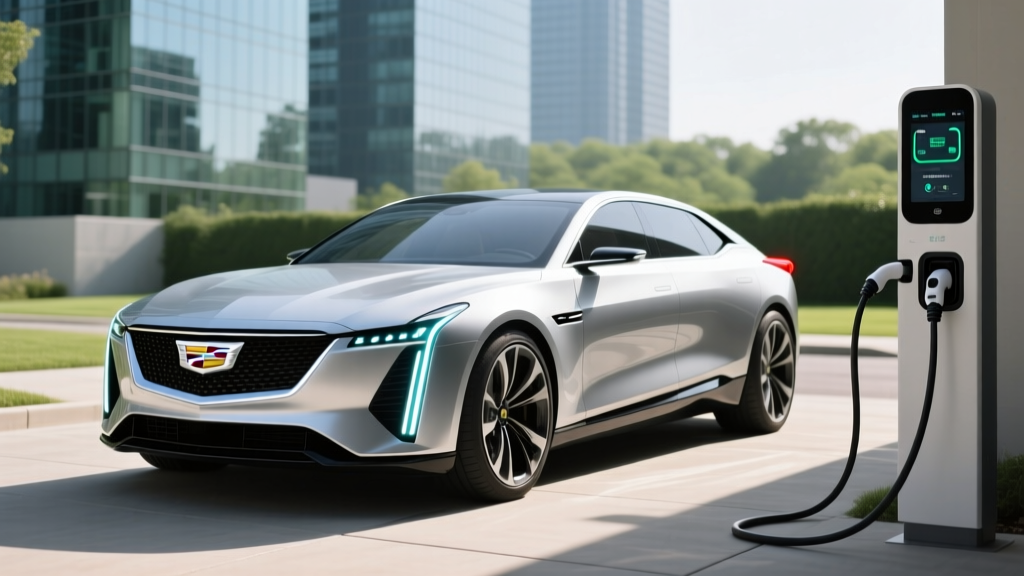
The 2026 Cadillac Celestiq is not a volume play. Hand-built in Warren, Michigan, with a starting price north of $340,000, it exists to prove that GM's Ultium platform can underpin a legitimate Rolls-Royce and Bentley competitor. But beyond the hand-stitched leather and 55-inch hyperscreen, buyers researching the Cadillac Celestiq 0-60 time want to know if this 3.7-second flagship can back up its six-figure premium with real engineering substance.
After examining the powertrain data, battery architecture, and charging profile, the Celestiq makes a compelling technical case — dual-motor all-wheel drive, a 111 kWh Ultium pack, and a 300-mile EPA range estimate. It is not the fastest luxury EV sedan on the market (the Lucid Air Sapphire and Tesla Model S Plaid both leave it behind in a straight line), but Cadillac never intended it to be. The Celestiq trades outright acceleration dominance for ride quality, bespoke craftsmanship, and the kind of silent, effortless thrust that defines the ultra-luxury segment.
| Spec | Value |
|---|---|
| EPA Range (est.) | 300 miles |
| Battery Capacity | 111 kWh usable (NMC, Ultium) |
| Drivetrain | Dual-motor AWD |
| Horsepower | ~600 hp |
| Torque | ~640 lb-ft |
| 0-60 mph | 3.7 seconds |
| Top Speed | ~130 mph (electronically limited) |
| Max DC Fast Charge | 200 kW |
| 10-80% DC Charge Time | ~28 minutes |
| Level 2 Home Charge | 19.2 kW (~44 mi/hr) |
| EPA Efficiency (est.) | ~72 MPGe / ~47 kWh/100 mi |
| Cargo Volume | ~18 cu ft (trunk) |
| Rear Legroom | ~40 inches |
| Battery Warranty | 8 years / 100,000 miles |
| Base MSRP | $340,000+ |
Performance Deep Dive: The Cadillac Celestiq 0-60 Story
The headline number — 3.7 seconds to 60 mph — places the Celestiq firmly in sports-sedan territory, though not hypercar ground. For context, the Lucid Air Grand Touring hits 60 in 3.0 seconds, and the Tesla Model S Plaid does it in under 2.0 seconds. The Mercedes-Benz EQS 580 4MATIC, a more direct competitor in tone and price positioning, clocks in at roughly 4.1 seconds.
Cadillac's dual-motor setup produces an estimated 600 horsepower and 640 lb-ft of torque, routed through a sophisticated all-wheel-drive system. What matters more than the raw 0-60 figure in a $340,000 luxury car is how that power is delivered. The Celestiq's torque is immediate and linear, as expected from an EV, but Cadillac has tuned the throttle mapping for progressive, dignified acceleration rather than the neck-snapping punch that Tesla and Lucid prioritize. This is a car designed to waft, not launch — though it absolutely can launch when asked.
The Celestiq rides on GM's dedicated BEV3 platform with a five-link rear suspension and air springs with Magnetic Ride Control 4.0. The result is exceptional body control and ride isolation. In the ultra-luxury segment, ride quality and noise suppression matter far more than quarter-mile times, and the Celestiq's low center of gravity (courtesy of the floor-mounted 111 kWh pack) contributes to planted, confident handling that belies its substantial curb weight of approximately 5,800 pounds.
Range and Efficiency: Real-World Expectations
EPA Estimated Range: 300 miles
Real-World Highway Expectation: ~250–270 miles at 70-80 mph
Cold-Weather Impact: Expect 15–25% range loss in sub-freezing temperatures (~225–255 miles)
The 111 kWh Ultium battery pack uses NMC (nickel manganese cobalt) chemistry, which prioritizes energy density over the cycle-life advantages of LFP. For a vehicle in this class, energy density matters — buyers expect 300+ miles without a trunk consumed by battery mass.
The 300-mile EPA estimate is reasonable for mixed city/suburban driving, where regenerative braking recaptures energy and speeds stay moderate. However, highway cruising at 75-80 mph will push consumption closer to 50+ kWh/100 mi, reducing effective range to roughly 250-270 miles. This is consistent with large, heavy luxury EVs — the Mercedes EQS 580 and BMW i7 both show similar highway-range compression relative to their EPA stickers.
Cold weather introduces the usual lithium-ion challenges. The Celestiq is equipped with a heat pump for cabin heating efficiency, which mitigates some winter range loss compared to resistive heating systems. Still, at 20°F or below, expect the battery's internal resistance to increase and cabin/climate demands to spike, pulling effective range down to the 225-255 mile range. Owners in northern climates should plan road trips around this reality, not the EPA sticker.
Efficiency is estimated at approximately 72 MPGe combined, translating to roughly 47 kWh per 100 miles. For a 5,800-pound vehicle with 600 hp, this is respectable — though efficiency-focused buyers in this price bracket are rare.
Charging Profile: DC Fast Charging and Home Setup
| Charging Level | Power | Rate / Time |
|---|---|---|
| Level 1 (120V) | ~1.4 kW | ~3 mi/hr (not practical for daily use) |
| Level 2 (240V, 80A) | 19.2 kW | ~44 mi/hr / full charge in ~6 hours |
| DC Fast Charge | 200 kW peak | 10-80% in ~28 minutes |
The Celestiq supports up to 200 kW peak DC fast charging via the NACS connector (Cadillac has transitioned to Tesla's North American Charging Standard for the 2026 model year, granting access to the Supercharger network). At peak rate, the 10-80% charge takes approximately 28 minutes. However, as with all EVs, the charge curve tapers significantly above 80% — a full 10-100% session will take closer to 50 minutes.
The 200 kW peak is competitive but not class-leading. The Lucid Air supports up to 250 kW, and the Porsche Taycan can pull 270 kW on an 800V architecture. The Celestiq's Ultium platform operates on a 400V architecture, which inherently limits peak charge rate compared to 800V systems. For most Celestiq owners who charge primarily at home, this is an academic concern — but road-trippers should note that a 28-minute fast-charge stop is the minimum, not the norm, especially if the battery isn't preconditioned.
Home charging is where the Celestiq experience is optimized. At 19.2 kW on a 240V/80A Level 2 circuit (Cadillac includes a home charging solution with purchase), owners can add roughly 44 miles of range per hour, or fully replenish the battery in about 6 hours. This requires a dedicated 100-amp circuit and professional installation. Budget $1,500–$3,500 for a proper Level 2 home install depending on your electrical panel's capacity and the run distance to your garage. A panel upgrade to 200A service may add another $2,000–$4,000 if your home's current service is insufficient.
Cadillac provides access to the broader public charging ecosystem through the myCadillac app, which aggregates networks including Electrify America, EVgo, and ChargePoint alongside Tesla Superchargers. For a vehicle at this price point, the included concierge charging support and route planning help smooth the public charging experience.
Interior, Technology, and Standout Features
The Celestiq's cabin is where the $340,000 price tag begins to make sense — or at least becomes explainable. The centerpiece is a 55-inch diagonal hyperscreen spanning the entire dashboard, with separate display zones for driver instrumentation, infotainment, and a dedicated passenger screen. Each rear passenger also receives a personal 12.6-inch display integrated into the front seatbacks.
Cadillac has partnered with Google for the infotainment backbone (Google Built-In), offering native Google Maps navigation, Google Assistant voice control, and access to the Play Store for in-car apps. The system is responsive and visually impressive, though some buyers may find the sheer screen acreage overwhelming compared to the more restrained approach taken by Bentley or Rolls-Royce.
Materials are genuinely bespoke. Every Celestiq is hand-built to buyer specification, with options including:
- Hand-stitched leather with custom colorways
- Real metal trim (aluminum, titanium finishes)
- Sustainably sourced wood veneers
- Available four-seat "Executive" configuration with a full-length center console and rear-seat recline/massage
On the driver-assistance front, the Celestiq ships with Super Cruise, GM's hands-free Level 2 driving system that operates on over 750,000 miles of pre-mapped highways in North America. Super Cruise is one of the most polished Level 2 systems available, with attentive driver monitoring via an infrared camera on the steering column. It handles lane-keeping, adaptive cruise, and automated lane changes smoothly.
Important: Super Cruise is an SAE Level 2 driver-assistance system. The driver must remain engaged and ready to take over at all times. It is not autonomous or "self-driving." Hands may leave the wheel on compatible roads, but eyes must stay on the road.
Notable drawbacks include the sheer vehicle length (over 212 inches), which makes tight urban parking challenging, and the trunk space of roughly 18 cubic feet — adequate for luggage but less than some luxury sedans offer. There is no frunk (front trunk), as the Ultium platform's electronics occupy that space.
Pricing, Tax Credits, and Ownership Economics
| Item | Amount |
|---|---|
| Base MSRP | ~$340,000 |
| As-Tested / Typical Build | $360,000–$400,000+ |
| Federal §30D EV Tax Credit | Not eligible (MSRP exceeds $55,000 sedan cap) |
| Estimated Annual Insurance | $6,000–$10,000+ |
| Estimated Annual Electricity (12,000 mi) | $750–$1,200 |
Let's address the tax credit question directly: the Cadillac Celestiq does not qualify for the federal §30D EV tax credit. IRS rules cap eligible sedans at an MSRP of $55,000. At $340,000+, the Celestiq exceeds this threshold by a factor of six. Additionally, the §30D credit has buyer income caps ($150,000 single / $300,000 joint modified adjusted gross income) and battery critical-mineral sourcing requirements — though the MSRP cap alone disqualifies the Celestiq regardless of income. See the IRS §30D guidance for complete eligibility rules.
At this price, the Celestiq competes in rarefied air. Its direct competitors include:
- Rolls-Royce Spectre ($420,000+, 260-mile range, 4.4 sec 0-60, 577 hp)
- Bentley's upcoming EV (announced, not yet available)
- Lucid Air Sapphire ($250,000, 427-mile range, 1.89 sec 0-60, 1,234 hp — more performance, less bespoke luxury)
- Mercedes-Maybach EQS SUV ($200,000+, ~300-mile range, 4.2 sec 0-60)
The Celestiq's value proposition is not about winning spec-sheet comparisons. It's about being the only hand-built, American-made ultra-luxury EV sedan with a dedicated BEV platform, Super Cruise capability, and GM's backing. Whether that's worth a $100,000+ premium over a well-optioned Lucid Air depends entirely on what the buyer values.
Warranty and Long-Term Ownership
Cadillac covers the Celestiq's Ultium battery and electric powertrain for 8 years or 100,000 miles, whichever comes first. The battery warranty guarantees retention above 60% of original capacity during the coverage period — though real-world Ultium degradation data from GM's broader EV fleet suggests most packs retain 90%+ capacity well past 100,000 miles under normal use.
The limited vehicle warranty is 4 years / 50,000 miles, which is standard for the luxury segment but less generous than Hyundai/Genesis (5 years / 60,000 miles). At this price point, Celestiq owners receive a dedicated concierge service experience, including scheduled maintenance pickup and delivery, which helps offset the ownership logistics.
Long-term battery replacement cost for a 111 kWh NMC pack is difficult to pin down precisely, but industry estimates for Ultium-size packs range from $15,000 to $25,000 out of warranty. Given the Celestiq's low production volume and bespoke integration, replacement could trend toward the higher end of that range. Most buyers in this segment will be well outside the warranty period before meaningful degradation occurs, and many will cycle out of the vehicle before then.
Who Should Buy the Cadillac Celestiq?
Choose the Celestiq if:
- You want a hand-built, American ultra-luxury EV sedan with bespoke customization
- 300-mile range and 200 kW charging meet your driving patterns
- Super Cruise hands-free highway driving is a priority
- You value exclusivity (limited production, ~500 units planned annually)
Look elsewhere if:
- You prioritize outright acceleration (Lucid Air Sapphire is faster and $90K less)
- You need maximum cargo space or rear-seat practicality
- 800V-class DC charging speeds (250+ kW) are important for your road trips
- European heritage branding (Rolls-Royce, Bentley) matters to you
The Celestiq is a commuter, grand-tourer, and statement piece — not a family hauler or a track weapon. It suits the buyer who wants EV silence and instant torque wrapped in coachbuilt luxury, and who charges at home in a climate-controlled garage most nights.
Pros and Cons
Pros
- Genuinely bespoke, hand-built interior with extensive customization
- 300-mile EPA range is competitive in the ultra-luxury EV segment
- Super Cruise is one of the best Level 2 systems available
- Quiet, composed ride with excellent isolation
- NACS connector provides Tesla Supercharger access
- 600 hp and 3.7-sec 0-60 provide effortless passing power
Cons
- $340,000+ starting price is steep even in this segment
- 200 kW peak DC charging trails 800V competitors
- No front trunk (frunk) for additional cargo
- 55-inch screen may feel overwhelming vs. competitors' restraint
- Limited production means long wait times and few dealers capable of service
- No federal tax credit eligibility
Frequently Asked Questions
What is the Cadillac Celestiq 0-60 time?
The 2026 Cadillac Celestiq accelerates from 0-60 mph in an estimated 3.7 seconds, powered by a dual-motor AWD system producing approximately 600 horsepower and 640 lb-ft of torque.
What is the real-world range of the Celestiq?
The EPA estimates 300 miles of range. In real-world highway driving at 70-80 mph, expect approximately 250-270 miles. In cold weather (below 32°F), range may drop to 225-255 miles due to battery chemistry limitations and climate control demands.
How fast does the Celestiq charge?
On a DC fast charger, the Celestiq peaks at 200 kW, charging from 10-80% in approximately 28 minutes. At home on a 240V/80A Level 2 charger (19.2 kW), it adds about 44 miles of range per hour, with a full charge taking roughly 6 hours.
Does the Cadillac Celestiq qualify for the federal EV tax credit?
No. The federal §30D clean vehicle credit caps eligible sedans at an MSRP of $55,000. The Celestiq's $340,000+ base price far exceeds this limit. See IRS guidelines for full eligibility details.
Is the Celestiq worth buying over the Rolls-Royce Spectre?
The Spectre offers stronger brand heritage, a slightly more refined ride, and a 260-mile range at $420,000+. The Celestiq counters with more advanced driver-assist tech (Super Cruise), NACS Supercharger access, a lower starting price, and American exclusivity. It depends on whether you value tech-forward capability (Celestiq) or traditional ultra-luxury prestige (Spectre).
What battery chemistry does the Celestiq use?
The Celestiq uses GM's Ultium platform with NMC (nickel manganese cobalt) lithium-ion chemistry in a 111 kWh usable pack. NMC offers high energy density suited to large luxury vehicles, though it has a somewhat shorter cycle life compared to LFP chemistry.
Sources: Cadillac Celestiq Official Page, EPA Fuel Economy, IRS §30D Clean Vehicle Credit.