The Quick Answer: Cadillac's 3-Row Electric SUV Options
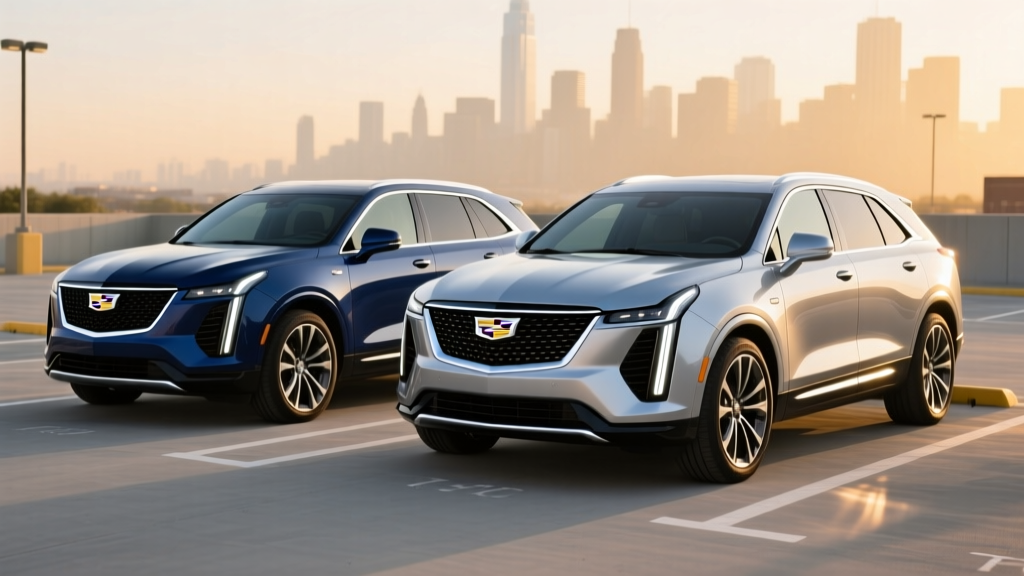
Cadillac currently offers two 3-row electric SUVs: the 2026 Vistiq (midsize, ~300 miles EPA range, starting at ~$58,595) and the Escalade IQ (full-size luxury flagship, ~300+ miles EPA range, starting around $129,990). Both use GM's Ultium platform with 85–200+ kWh usable battery capacity, support DC fast charging at up to 200–350 kW, and offer Level 2 Super Cruise driver assistance. For families replacing a gas Escalade or XT6, the Vistiq delivers the best value-to-space ratio, while the Escalade IQ targets buyers who want uncompromised luxury with electric torque. Neither qualifies for the full §30D federal tax credit due to MSRP caps and battery-sourcing rules, so plan your budget accordingly.
Cadillac's Electric SUV Lineup: Vistiq vs Escalade IQ at a Glance
Cadillac's electrification strategy centers on two distinct 3-row offerings. The Vistiq slots between the Lyriq (2-row midsize) and the Escalade IQ (full-size flagship), giving buyers a genuine family hauler without the six-figure price tag. Here's how they stack up on paper and in practice.
| Specification | 2026 Cadillac Vistiq | 2026 Cadillac Escalade IQ |
|---|---|---|
| EPA Range (est.) | ~300 miles | ~300–310 miles |
| Battery (usable) | ~102 kWh, NMC (Ultium) | ~200+ kWh, NMC (Ultium) |
| Peak DC Fast Charge | ~200 kW | ~350 kW (800V architecture) |
| 10–80% DC Charge Time | ~27 minutes | ~20–25 minutes |
| Level 2 AC Charge Rate | 11.5 kW (~37 mi/hr) | 19.2 kW (~52 mi/hr) |
| Horsepower | ~615 hp (AWD) | ~680–750 hp (AWD) |
| 0–60 mph | ~4.5 seconds | ~3.5–4.0 seconds |
| Seating | 3 rows / 6–7 passengers | 3 rows / 7 passengers |
| Cargo (behind 3rd row) | ~15–18 cu ft | ~22–25 cu ft |
| Starting MSRP | ~$58,595 | ~$129,990 |
| Battery/Powertrain Warranty | 8 yr / 100,000 mi | 8 yr / 100,000 mi |
| Driver Assistance | Super Cruise (Level 2) | Super Cruise (Level 2) |
Real-World Range Reality Check
The ~300-mile EPA estimate for the Vistiq assumes moderate temperatures, mixed driving, and speeds under 70 mph. In real-world highway testing at 75–80 mph, expect 240–270 miles before needing a charge. In freezing temperatures (below 30°F), range can drop 20–30%, meaning a worst-case winter highway range of roughly 200–220 miles. The Escalade IQ's massive battery provides a larger buffer, but its heavier curb weight and brick-like aerodynamics eat into efficiency at speed. Plan road trips around 200-mile charging intervals to stay comfortable.
Electric vs Gas: Vistiq vs XT6 and Escalade IQ vs Escalade ESV
The most common cross-shop for these vehicles is their internal-combustion stablemates. Here's how the numbers compare when you put them side by side.
| Metric | Vistiq (EV) | XT6 (Gas) | Escalade IQ (EV) | Escalade ESV (Gas) |
|---|---|---|---|---|
| Starting MSRP | ~$58,595 | ~$51,095 | ~$129,990 | ~$89,595 |
| EPA Efficiency | ~80 MPGe | 23 MPG combined | ~70 MPGe | 16 MPG combined |
| Energy/Fuel Cost per Mile | ~$0.05–0.07 | ~$0.15–0.18 | ~$0.06–0.08 | ~$0.22–0.25 |
| Annual Fuel/Energy (15k mi) | ~$800–1,050 | ~$2,250–2,700 | ~$900–1,200 | ~$3,300–3,750 |
| Annual Maintenance (est.) | ~$300–500 | ~$800–1,200 | ~$300–500 | ~$900–1,400 |
| 0–60 mph | ~4.5 sec | ~6.7 sec | ~3.5 sec | ~5.8 sec |
The upfront price gap is real. The Vistiq commands roughly $7,500 more than a base XT6, and the Escalade IQ is $40,000+ above a gas Escalade ESV. But the operating cost math shifts quickly. According to fueleconomy.gov, the average U.S. electricity price of ~$0.16/kWh makes charging a Vistiq at home roughly $0.05–0.07 per mile, compared to $0.15–0.18 per mile for premium unleaded in the XT6. Over five years and 75,000 miles, that's a $6,000–$8,000 fuel savings for the Vistiq — and $12,000–$15,000 for the Escalade IQ vs. the gas Escalade ESV.
Real Ownership Costs: 5-Year Breakdown
Purchase price is only the start. Here's what a realistic 5-year / 75,000-mile ownership cycle looks like for the Vistiq compared to the XT6, assuming home Level 2 charging and mixed driving.
| Cost Category (5 yr / 75k mi) | Vistiq (EV) | XT6 (Gas AWD) |
|---|---|---|
| Purchase Price (base) | $58,595 | $51,095 |
| Federal Tax Credit (§30D) | $0–$3,750* | $0 |
| Energy/Fuel | $4,500 | $12,000 |
| Maintenance | $2,000 | $5,000 |
| Insurance (est. avg) | $12,500 | $9,500 |
| Home Charger Install | $1,200–2,500 | $0 |
| Estimated Depreciation | $28,000 | $22,000 |
| Approx. 5-Yr Total | ~$96,000–$99,000 | ~$99,500 |
*The Vistiq's §30D credit eligibility depends on battery critical-mineral and component sourcing per current IRS rules. The $58,595 MSRP falls under the $80,000 SUV cap, and buyer income limits ($300k MFJ / $150k single) apply. The Escalade IQ exceeds the $80,000 MSRP cap entirely and does not qualify for §30D. Consult a tax professional for your specific situation.
The key takeaway: the Vistiq roughly breaks even with the XT6 over five years despite a higher sticker, thanks to dramatically lower fuel and maintenance costs. The Escalade IQ, however, remains a premium purchase — buyers are paying for performance, luxury, and silence, not pure economics.
Charging at Home and on the Road: What You Actually Need
Both the Vistiq and Escalade IQ use the NACS (Tesla-style) connector as standard for 2026, giving access to Tesla Superchargers via native plug plus the broader Electrify America, EVgo, and ChargePoint networks.
Home Charging Setup
For daily driving, Level 2 home charging is essential. Here's what to budget:
| Item | Cost Range | Notes |
|---|---|---|
| Level 2 Charger (48A, hardwired) | $500–$800 | ChargePoint Home Flex, Wallbox Pulsar Plus, or GM-branded |
| Electrical Permit | $50–$200 | Varies by municipality |
| Electrician Labor (240V/60A circuit) | $600–$1,500 | Depends on panel proximity and conduit run |
| Panel Upgrade (if needed) | $1,500–$3,500 | Required if your panel is 100A or near capacity |
| Total Install | $1,150–$6,000 | Most homes with 200A panels: $1,200–$2,500 |
The Vistiq's 11.5 kW onboard charger adds roughly 37 miles of range per hour of Level 2 charging — an overnight session (8 hours) restores ~296 miles, essentially a full battery. The Escalade IQ's 19.2 kW onboard charger is even faster at ~52 miles per hour, but its much larger battery still requires 10–12 hours for a full charge.
DC Fast Charging on Road Trips
On a 350 kW-capable station, the Escalade IQ's 800V architecture allows peak charging near 350 kW, reaching 10–80% in approximately 20–25 minutes. The Vistiq, limited to ~200 kW, takes about 27 minutes for the same 10–80% session. Both vehicles exhibit typical charge-curve taper: charging slows significantly above 80% SoC to protect battery health. On long trips, plan stops at 15–20% remaining and charge to 80% for the best time efficiency.
Common Misconceptions About Cadillac's Electric SUVs
| Myth | Fact |
|---|---|
| "Super Cruise means I don't have to pay attention." | Super Cruise is SAE Level 2 — a driver-assist system. You must remain engaged, eyes on the road (monitored by a driver-facing camera). It is not self-driving. |
| "The battery will need replacing in 5 years." | GM's Ultium batteries carry an 8-year/100,000-mile warranty guaranteeing at least 70% capacity retention. Industry data shows NMC batteries typically retain 85–90% capacity at 100k miles with normal use. |
| "I'll get the full $7,500 tax credit." | The Escalade IQ exceeds the MSRP cap and doesn't qualify at all. The Vistiq's credit depends on battery sourcing requirements that change annually — verify current-year eligibility on IRS.gov. |
| "Public charging is unreliable everywhere." | Reliability varies widely. Tesla Superchargers (now accessible to Cadillacs via NACS) consistently report 95%+ uptime. Electrify America and others have improved but can still have out-of-service stalls — always have a backup station on road trips. |
| "Cold weather makes these unusable." | Range drops 20–30% in sub-freezing temps, but preconditioning the battery while plugged in mitigates charging-speed loss. Both vehicles have heat pumps to reduce cabin-heating energy draw. |
SAE Automation Level: What Super Cruise Actually Is
GM's Super Cruise is classified as SAE Level 2 — partial driving automation. It handles steering, acceleration, and braking on pre-mapped divided highways (~750,000+ miles of compatible roads in North America). However, the driver must remain alert and ready to take over at any moment. This is fundamentally different from Level 4 robotaxi services like Waymo, which operate without a human driver in geofenced areas. Never treat Super Cruise as a substitute for attentive driving.
Decision Framework: Which Cadillac 3-Row Electric SUV Is Right for You?
Choose the Cadillac Vistiq If:
- Your budget is under $70,000 (before options) and you need three rows for school runs, carpools, or weekend family trips.
- You want to save $1,500–$2,000/year on fuel vs. a gas XT6 and are willing to install a Level 2 home charger.
- You value the instant torque and quiet ride of an EV but don't need full-size SUV cargo volume.
- Your daily commute is under 100 miles round-trip, meaning home charging alone covers 95% of your driving.
Choose the Escalade IQ If:
- You're cross-shopping a gas Escalade ESV ($90k–$110k loaded) and want superior acceleration (sub-4-second 0–60), 800V fast charging, and the latest Cadillac luxury tech.
- You regularly tow (the IQ is rated for up to ~8,000 lbs) or need maximum third-row and cargo space.
- Budget is not the primary constraint and you accept that the §30D tax credit will not apply.
- You want the prestige of Cadillac's flagship with zero tailpipe emissions in daily use.
Consider Sticking with Gas or a PHEV If:
- You lack access to home or workplace Level 2 charging and rely entirely on public infrastructure in an area with sparse DC fast chargers.
- You regularly drive 400+ miles in a single day through rural regions (e.g., Great Plains, rural Mountain West) where charging gaps exceed 150 miles.
- Your household electrical service is 100A with no feasible upgrade path, making home charging impractical.
What First-Time EV Buyers Should Know Before Ordering
If this is your first electric vehicle, a few practical realities matter more than the spec sheet:
1. Home charging is non-negotiable for satisfaction. Owners who charge at home report dramatically higher satisfaction than those relying solely on public charging. Before ordering, confirm your electrical panel has room for a 60A breaker and hire a licensed electrician for a site assessment. Budget $1,200–$2,500 for a straightforward install, or up to $6,000 if a panel upgrade is needed.
2. Your driving pattern determines whether range is an issue. If 90% of your miles are under 200 per day, the Vistiq's ~300-mile EPA range means you'll charge at home overnight and rarely think about it. Road trips require planning — use apps like A Better Routeplanner to map DC fast-charger stops.
3. Insurance costs are higher. EV insurance premiums run 15–25% above comparable gas models due to higher repair costs and battery replacement expense. Get quotes from your provider before committing — the Vistiq's annual premium averages $2,200–$2,800 depending on your state and driving record.
4. Tire wear accelerates. The instant torque and heavier curb weight of electric SUVs wear tires 20–30% faster than gas equivalents. Budget for a tire replacement every 25,000–35,000 miles (~$1,200–$1,800 for a set of four on the Vistiq).
5. Resale values are still settling. EV depreciation has been steeper than gas vehicles in recent years, partly due to price wars and rapidly improving new models. Lease incentives or strong purchase discounts can offset this risk.
Frequently Asked Questions
Does the Cadillac Vistiq qualify for the $7,500 federal EV tax credit?
Potentially, but not automatically. The Vistiq's MSRP falls under the §30D SUV cap of $80,000, and buyer income limits apply ($300,000 married filing jointly, $150,000 single). However, the credit amount depends on battery critical-mineral and component sourcing requirements that the IRS updates annually. Some configurations may qualify for $3,750 (half credit) or the full $7,500, while others may not qualify at all. Always check the latest eligible vehicle list on fueleconomy.gov and consult a tax professional.
How long does it take to charge the Vistiq or Escalade IQ at home?
On a Level 2 home charger (240V), the Vistiq charges at 11.5 kW, adding ~37 miles of range per hour. A full charge from 10% to 100% takes approximately 8–9 hours — easily done overnight. The Escalade IQ charges at 19.2 kW (~52 mi/hr) but has a much larger battery, so a full charge still takes 10–12 hours. On a standard 120V outlet (Level 1), expect only 3–4 miles per hour — useful for topping off, not for daily replenishment from low states of charge.
Can I tow with the Cadillac Vistiq or Escalade IQ?
Yes. The Escalade IQ is rated for up to approximately 8,000 lbs when properly equipped, making it competitive with the gas Escalade. The Vistiq's towing capacity is lower — expect roughly 4,000–5,000 lbs — adequate for a small boat or light utility trailer but not a large camper. Towing significantly reduces range (expect 30–50% loss depending on trailer weight and aerodynamics), so plan charging stops accordingly.
What happens if the battery degrades or fails?
GM covers the Ultium battery pack for 8 years or 100,000 miles (whichever comes first), warranting at least 70% of original capacity. Real-world data from earlier Ultium vehicles suggests typical degradation of 5–10% over the first 100,000 miles under normal use. If a full out-of-warranty replacement were ever needed, industry estimates for large Ultium packs range from $15,000 to $25,000+ depending on capacity — a significant cost, but one that most owners will never face during typical ownership periods.
Is the NACS connector standard, or do I need an adapter?
For 2026, both the Vistiq and Escalade IQ come with the NACS charge port as standard. This means you can plug directly into Tesla Superchargers (now open to non-Tesla EVs) without any adapter. For older CCS-equipped public chargers, you may need a CCS-to-NACS adapter — Cadillac includes or offers one, and most new public stations are transitioning to NACS.
How does Super Cruise compare to Tesla Autopilot or Ford BlueCruise?
All three are SAE Level 2 systems requiring driver supervision. Super Cruise differentiates itself by using lidar-mapped highway data for smoother, more confident lane-keeping on compatible roads (750,000+ miles mapped). Tesla Autopilot/FSD (Supervised) works on more road types but has drawn more regulatory scrutiny. Ford BlueCruise is similar in concept to Super Cruise with hands-free operation on pre-mapped highways. Independent reviews consistently rate Super Cruise among the smoothest and most predictable of the three for highway cruising.
Sources: Cadillac Official EV Page, fueleconomy.gov (EPA), IRS §30D Clean Vehicle Credit Rules. All specifications are based on manufacturer-published data for 2026 model-year vehicles and are subject to change. Verify final specs and pricing with your dealer before purchase.