What Is the CA EV Mandate?
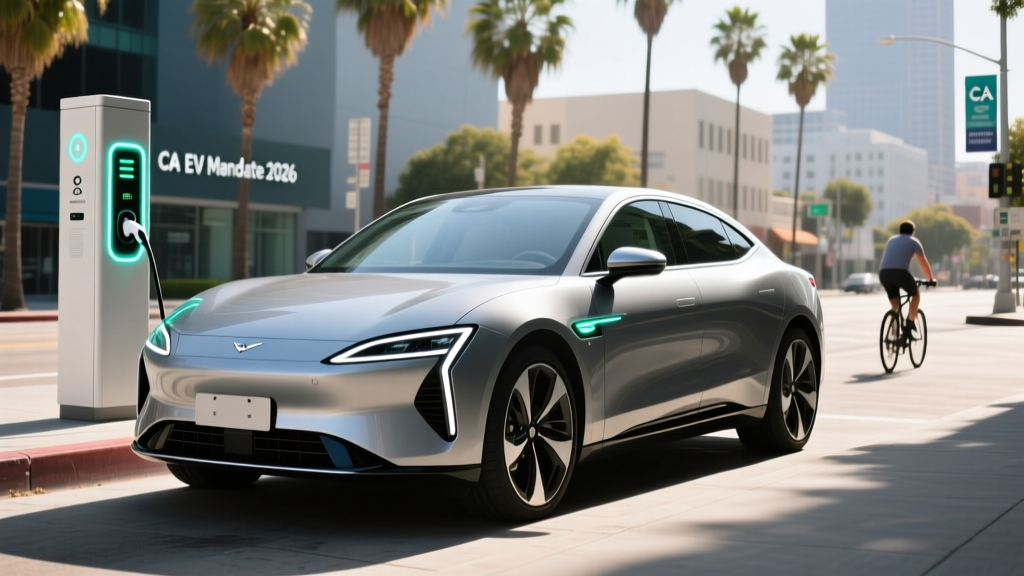
California's Advanced Clean Cars II (ACC II) regulation, adopted by the California Air Resources Board (CARB) in 2022, requires that 35% of all new passenger cars, trucks, and SUVs sold in California for the 2026 model year must be zero-emission vehicles (ZEVs). This includes battery-electric vehicles (BEVs), hydrogen fuel-cell vehicles, and plug-in hybrids (PHEVs) with at least 50 miles of electric range. The mandate ramps up to 68% by 2030 and 100% by 2035. This is a sales requirement on automakers, not a ban on owning or driving gas cars — your existing gasoline vehicle remains perfectly legal.
How the 2026 ZEV Requirement Actually Works
The mandate targets manufacturers, not individual buyers. Automakers selling new vehicles in California must ensure that a defined percentage of their fleet meets ZEV criteria. For 2026, that threshold is 35%. Here's the full ramp:
| Model Year | ZEV Sales Requirement | Eligible Vehicle Types |
|---|---|---|
| 2026 | 35% | BEV, FCEV, PHEV (50+ mi range) |
| 2028 | 51% | BEV, FCEV, PHEV (50+ mi range) |
| 2030 | 68% | BEV, FCEV, PHEV (50+ mi range) |
| 2032 | 82% | BEV, FCEV, PHEV (50+ mi range) |
| 2035 | 100% | BEV, FCEV only (PHEVs phased out) |
Critically, PHEVs can only count for up to 20% of an automaker's ZEV obligation in any given year, meaning the bulk of compliance must come from full battery-electric or hydrogen vehicles. California's rules also apply in other states that have adopted CARB standards, including Colorado, Maryland, Massachusetts, New York, Oregon, Vermont, Virginia, and Washington.
EV vs. Gas vs. Hybrid: The Real Cost Comparison
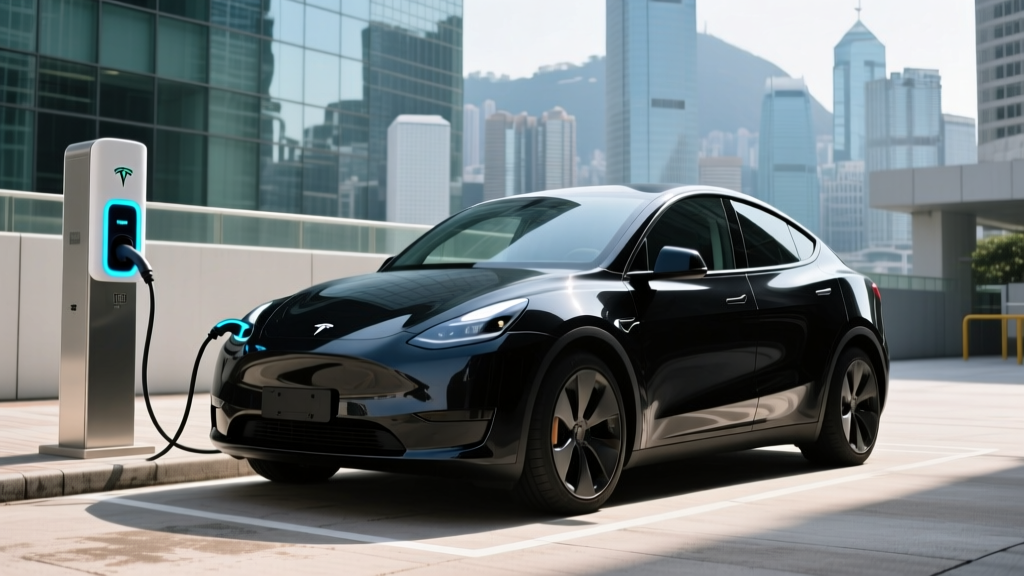
The mandate expands EV selection and drives competition, but the purchase decision still comes down to total cost. Here's a concrete 5-year comparison using representative 2026 models — a Tesla Model 3 RWD (BEV), a Toyota Camry LE (gas), and a Toyota RAV4 Prime (PHEV):
| Cost Factor | Tesla Model 3 RWD (BEV) | Toyota Camry LE (Gas) | Toyota RAV4 Prime (PHEV) |
|---|---|---|---|
| Base MSRP | $38,990 | $28,855 | $43,690 |
| Federal Tax Credit (§30D) | Up to $7,500* | $0 | Up to $7,500* |
| Effective Purchase Price | ~$31,490 | $28,855 | ~$36,190 |
| Fuel/Energy (5 yr, 60k mi) | $3,600 (home L2, $0.16/kWh) | $9,000 ($3.50/gal, 32 MPG) | $4,800 (mix of electric + gas) |
| Maintenance (5 yr) | ~$1,200 | ~$3,500 | ~$2,800 |
| Insurance (5 yr avg) | ~$11,500 | ~$8,200 | ~$9,400 |
| 5-Year Total Cost | ~$47,790 | ~$49,555 | ~$53,190 |
*§30D federal tax credit eligibility depends on MSRP caps ($55,000 for sedans, $80,000 for SUVs/trucks), buyer income limits ($150K single / $300K joint MAGI), battery critical-mineral sourcing, and North American assembly. Verify current rules at IRS.gov or with a tax professional. Point-of-sale transfer is available at participating dealers.
The BEV wins on 5-year total cost primarily through fuel and maintenance savings, but only if you can charge at home. Public DC fast charging at $0.40-$0.60/kWh erases much of the energy-cost advantage. Insurance premiums for EVs run 15-30% higher on average due to repair complexity and battery replacement costs.
Real-World Ownership: What the Sticker Doesn't Tell You
Range Reality vs. EPA Estimates
EPA range figures are measured under controlled conditions. In real-world driving, expect variation:
- Highway driving at 75+ mph: Subtract 10-20% from EPA range. A Model 3 with 341 miles EPA may deliver 270-300 miles at sustained interstate speeds.
- Cold weather (below 40°F): Expect 15-30% range loss depending on severity, cabin heating use, and whether the vehicle has a heat pump. Northern California and mountain passes will see more impact than coastal areas.
- Elevation gain: California's mountainous terrain (I-5 through the Grapevine, US-395) increases consumption significantly on climbs, though regenerative braking recovers some energy on descents.
Charging Access: The Make-or-Break Factor
Home charging is the single biggest determinant of EV satisfaction. If you have a garage or driveway with access to a 240V circuit (or can install one), daily charging takes zero extra time — you plug in at night and wake up with a full battery.
| Charging Level | Power (kW) | Miles Added per Hour | Typical Use Case |
|---|---|---|---|
| Level 1 (120V outlet) | 1.4 kW | 3-5 mi/hr | Overnight top-up, low daily mileage |
| Level 2 (240V home) | 7.2-11.5 kW | 25-44 mi/hr | Daily home charging, full overnight |
| DC Fast Charge | 50-350 kW | 150-1,200 mi/hr (peak) | Road trips, apartment dwellers |
Home Level 2 installation typically costs $800-$2,500 for the charger and electrical work, but can reach $4,000-$8,000 if your electrical panel needs upgrading from 100A to 200A service. Renters and condo owners face additional barriers — check whether your building has EV charging infrastructure or whether your landlord permits installation.
California's public charging network is the most developed in the US, with Tesla Superchargers (now opening to NACS-equipped non-Tesla EVs), Electrify America, and EVgo stations along major corridors. However, reliability remains inconsistent — a 2025 study found roughly 20% of non-Tesla public chargers experienced out-of-service issues. Plan road trips with backup charging stops.
Common Misconceptions About the CA EV Mandate
| Myth | Fact |
|---|---|
| "Gas cars will be illegal after 2035" | The mandate targets new vehicle sales. You can keep, buy used, and drive gas-powered vehicles indefinitely. Gas stations will remain operational. |
| "All new cars must be electric in 2026" | Only 35% of new sales must be ZEVs in 2026. Gasoline and conventional hybrid models will still be widely available from dealers. |
| "EVs are worse for the environment because of battery mining" | Lifecycle analyses consistently show BEVs produce fewer total emissions than gas cars over their lifetime, even accounting for battery manufacturing. California's grid is 59% renewable as of 2025, further reducing upstream emissions. See Union of Concerned Scientists data. |
| "Batteries need replacing every few years" | Modern LFP and NMC batteries are warrantied for 8 years/100,000 miles (federally mandated minimum) with capacity retention above 70%. Real-world degradation data from Tesla and other manufacturers shows typical loss of 10-15% over 200,000 miles. |
| "The power grid can't handle mass EV adoption" | Most charging happens overnight during off-peak hours when grid capacity is underutilized. California utilities offer time-of-use rates that incentivize off-peak charging. Smart charging and V2G technology further manage demand. |
Who Should Buy an EV Now vs. Who Should Wait
Buy a BEV Now If:
- You have home charging access (garage, driveway with 240V outlet, or landlord-approved installation)
- Your daily commute is under 80 miles round-trip (covers 95%+ of trips on a single charge)
- You qualify for the §30D federal tax credit (income under $150K single/$300K joint, vehicle under MSRP cap)
- You want to lock in current pricing before potential tariff or incentive changes
- You drive in a California metro area with robust public charging (LA, SF Bay Area, San Diego, Sacramento)
Consider a PHEV Now If:
- You lack reliable home charging but want electric driving for short commutes
- You regularly take long road trips through areas with sparse charging (rural NorCal, Eastern Sierra, cross-state)
- You want EV-like daily driving with zero range anxiety — the RAV4 Prime delivers 42 miles electric, then operates as a 38 MPG hybrid
- PHEVs still count toward the ZEV mandate (up to 20% of automaker compliance), so selection will remain strong through 2034
Stick with a Gas Car or HEV If:
- You live in an apartment with no charging option and your workplace lacks chargers
- Your budget is strictly under $25,000 (the used EV market has options, but new BEVs still start around $30K before credits)
- You frequently tow heavy loads — EV towing range drops 40-50%, and few models offer robust towing capacity
- You're in a region with extreme cold and no garage — battery performance and cabin heating demands compound range loss
California-Specific Incentives Beyond the Federal Credit
California offers additional incentives that stack with the federal §30D credit, though availability and amounts vary by program year and funding:
- Clean Vehicle Rebate Project (CVRP): Historically offered up to $2,000 for income-qualified buyers. Funding has been intermittent — check California Energy Commission for current status.
- Clean Cars 4 All: Targets low-income residents in disadvantaged communities with up to $9,500 toward a new or used EV when scrapping an older gas car.
- Utility rebates: PG&E, SCE, and SDG&E offer $500-$1,500 rebates for home charger installation and discounted time-of-use electricity rates for EV owners.
- HOV lane access: California's Clean Air Vehicle decals grant solo carpool lane access to qualifying ZEVs and PHEVs — a significant commute benefit in LA and Bay Area traffic. Decal availability has program caps and expiration dates.
Always verify current incentive availability directly with the administering agency. State programs frequently exhaust funding or change eligibility criteria mid-year.
The Bottom Line for California Car Buyers
The CA EV mandate is reshaping what's available on dealer lots — more EV models, more competitive pricing, and better charging infrastructure year over year. But the right choice still depends on your specific situation: charging access, driving patterns, budget, and household needs. The mandate doesn't force your hand; it simply ensures you'll have more electrified options to choose from. Run your own numbers using the cost framework above, test-drive with your actual commute in mind, and make the decision that works for your household — not the headline.
Frequently Asked Questions
Can I still buy a new gas car in California in 2026?
Yes. The 35% ZEV requirement means 65% of new vehicles sold can still be gasoline or conventional hybrid models. You'll have no shortage of gas-powered options at dealerships.
Will gas stations disappear because of the mandate?
No. The mandate affects new vehicle sales only. Millions of gas-powered vehicles will remain on California roads for decades. Gas stations will continue operating, though some may add EV chargers to diversify.
Does the mandate apply to used cars?
No. The ACC II regulation covers only new vehicle sales. The used car market — including used gas vehicles — is entirely unaffected.
What happens if I move out of California with a gas car?
Nothing. You can drive, register, and sell your gas car in any state. The mandate has no jurisdiction over vehicle ownership, only over what manufacturers can sell as new within California.
Are PHEVs a loophole that will close?
PHEVs with 50+ miles of electric range count toward the mandate but are capped at 20% of an automaker's ZEV obligation. By 2035, PHEVs are excluded entirely — only BEVs and hydrogen fuel-cell vehicles will qualify as new ZEV sales.
How do I know if I qualify for the federal EV tax credit?
The §30D credit has multiple requirements: vehicle MSRP under $55,000 (sedans) or $80,000 (SUVs/trucks), buyer modified adjusted gross income under $150,000 (single) or $300,000 (joint), North American final assembly, and battery components/critical minerals meeting phased sourcing thresholds. Check the official fueleconomy.gov EV tax credit tool for specific vehicle eligibility and consult a tax professional for your personal situation.