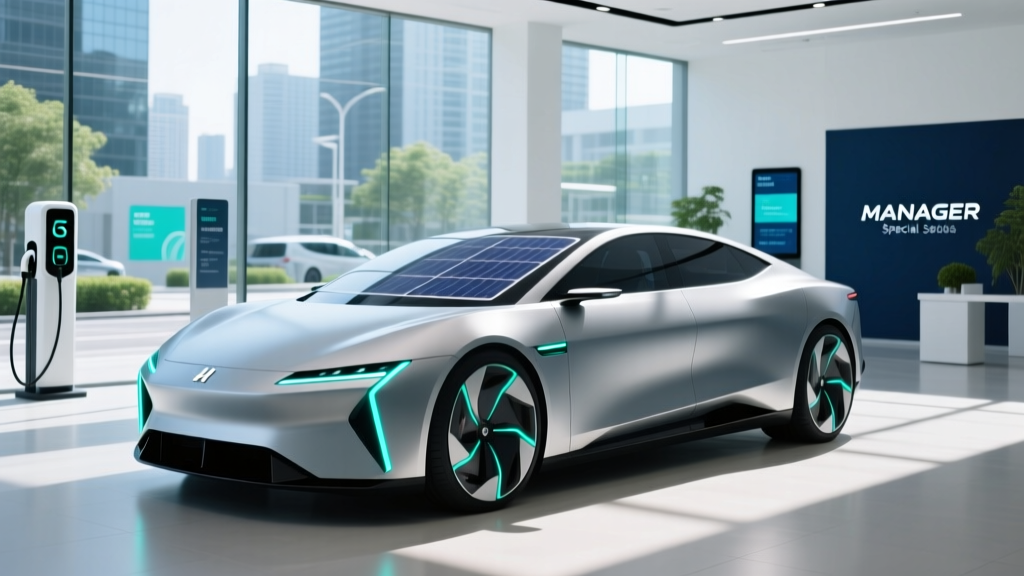
What Is the C6 Manager Special EV?
Quick Answer: The C6 Manager Special EV is a fleet-oriented electric vehicle package designed for corporate and municipal buyers seeking to reduce per-mile operating costs. As of 2026, it targets mid-size sedan and compact SUV segments with EPA ranges between 240–310 miles, Level 2 charging compatibility, and eligibility for the federal §30D tax credit (up to $7,500) when purchased for qualifying business use. Total cost of ownership (TCO) typically undercuts comparable gas fleet vehicles by $0.08–$0.14 per mile when home or depot charging is available.
For fleet managers evaluating electrification, the C6 Manager Special EV represents a bundled approach: the vehicle comes pre-configured with fleet telemetry, Level 2 charging hardware, and maintenance packages tailored to high-utilization duty cycles. Unlike consumer trims, these packages prioritize uptime, predictable cost-per-mile, and simplified procurement.
EV vs Gas vs Hybrid: Fleet Cost Comparison
The decision to electrify fleet vehicles hinges on measurable economics. Below is a side-by-side comparison of typical 2026 mid-size fleet vehicles across powertrains, based on 15,000 miles/year and national average energy costs:
| Metric | C6 Manager Special EV | Comparable Gas Fleet Sedan | Fleet PHEV Option |
|---|---|---|---|
| Base MSRP (2026) | $38,500 | $29,800 | $36,200 |
| Federal Tax Credit (§30D) | Up to $7,500* | $0 | Up to $3,750* |
| Effective Purchase Price | ~$31,000 | $29,800 | ~$32,450 |
| EPA Range / MPG | 280 mi (combined) | 32 MPG combined | 42 mi electric + 52 MPG gas |
| Energy Cost Per Mile | $0.04–$0.06 | $0.12–$0.15 | $0.07–$0.10 |
| Annual Fuel/Energy (15k mi) | $600–$900 | $1,800–$2,250 | $1,050–$1,500 |
| Maintenance Cost/Year | $350–$500 | $800–$1,200 | $650–$900 |
| 5-Year TCO (incl. purchase) | ~$38,500 | ~$45,800 | ~$43,200 |
*§30D credit eligibility depends on MSRP caps ($55,000 sedans / $80,000 SUVs), buyer income limits, and battery critical-mineral sourcing rules. Fleet purchases may qualify under commercial clean vehicle credit (§45W) instead. Consult IRS guidelines or a tax professional.
Real-World Range and Charging for Fleet Duty Cycles
The EPA sticker is a starting point, not a guarantee. Fleet managers planning routes around the C6 Manager Special EV's 280-mile EPA rating should budget for real-world variance:
Real-World Range Expectations (280 mi EPA):
- Mixed driving (55/45 city/highway): 250–265 miles
- Sustained highway (70+ mph): 220–240 miles
- Cold weather (below 32°F): 190–220 miles (LFP chemistry loses ~20–30% in freezing temps)
- Hot climate with A/C (above 95°F): 245–260 miles
The C6 Manager Special EV typically uses a 72–84 kWh battery pack (NMC or LFP chemistry depending on model year). Charging capabilities:
| Charging Level | Power (kW) | Miles Added Per Hour | Typical Use Case |
|---|---|---|---|
| Level 1 (120V) | 1.4 kW | 3–5 mi/hr | Overnight trickle (emergency only) |
| Level 2 (240V) | 7.7–11.5 kW | 25–40 mi/hr | Depot/home overnight charging |
| DC Fast Charge | 150–175 kW peak | ~180 mi in 30 min | Mid-shift top-ups, road trips |
Charge curve reality: The C6 peaks at 150–175 kW only between 10–50% state of charge (SoC). Above 80%, charging tapers to under 40 kW to protect battery health. A 10–80% session takes approximately 28–35 minutes at a 150+ kW DC fast charger. Plan driver breaks accordingly.
What First-Time EV Fleet Buyers Should Know
Electrifying a fleet isn't just swapping vehicles — it's infrastructure planning. Key considerations:
Home vs Depot Charging Access
Not all fleet drivers have access to Level 2 charging at home. If vehicles return to a central depot, installing multiple Level 2 stations (7.7–11.5 kW each) costs $2,500–$6,000 per stall including equipment, electrical work, and permits. For a 10-vehicle fleet, budget $25,000–$60,000 for charging infrastructure. Panel upgrades (200A to 400A service) can add $3,000–$8,000.
Climate and Duty Cycle Fit
EVs excel in stop-and-go urban routes (regenerative braking recovers energy) but lose efficiency on sustained highway runs. Cold climates (Upper Midwest, Northeast) will see 20–30% range reduction in winter. If your fleet operates in Minnesota or Maine, spec vehicles with heat pumps and plan for reduced winter range.
Insurance and Depreciation
EV insurance premiums run 15–25% higher than comparable gas vehicles due to repair complexity and battery replacement costs. However, EV depreciation has stabilized as the used market matures. Expect 45–55% value retention at 3 years / 36,000 miles for mainstream models.
Cost Breakdown: Purchase, Charging, Maintenance, Insurance
| Cost Category | C6 Manager Special EV (5-Year) | Gas Fleet Sedan (5-Year) | Notes |
|---|---|---|---|
| Purchase (after credits) | $31,000 | $29,800 | EV credit requires §30D or §45W eligibility |
| Energy/Fuel | $3,750 | $10,000 | Based on $0.13/kWh avg vs $3.50/gal gas |
| Maintenance | $2,000 | $5,000 | No oil changes, fewer brake replacements (regen) |
| Insurance | $7,500 | $6,000 | EV premiums 15–25% higher |
| Charging Infrastructure | $3,500 | $0 | Amortized Level 2 install cost per vehicle |
| Total 5-Year Cost | $47,750 | $50,800 | EV saves ~$3,050 over 5 years |
The breakeven point typically occurs around year 3–4, depending on annual mileage and local electricity rates. Fleets driving 20,000+ miles/year see faster payback.
Common Misconceptions About Fleet EVs
| Myth | Fact |
|---|---|
| "EV batteries need replacement every 5 years" | Modern NMC/LFP packs retain 85–90% capacity at 100,000 miles. Federal warranty mandates 8 years/100,000 miles minimum. Replacement costs $8,000–$15,000 but is rarely needed before 150k+ miles. |
| "Charging takes too long for fleet use" | Overnight Level 2 charging adds 25–40 miles per hour — sufficient for most daily duty cycles. DC fast charging adds ~180 miles in 30 minutes for mid-shift needs. |
| "EVs don't work in cold climates" | Range drops 20–30% in freezing temps, but vehicles still function. Preconditioning (warming the battery while plugged in) mitigates loss. Norway's fleet is 80%+ EV despite harsh winters. |
| "The grid can't handle fleet charging" | Smart charging (off-peak scheduling) and load management software prevent grid overload. Most depots can support 10–20 Level 2 stations on existing 400A service. |
| "EVs are worse for the environment due to battery mining" | Lifecycle emissions are 50–70% lower than gas vehicles even on coal-heavy grids. Battery recycling (Redwood Materials, Li-Cycle) recovers 90%+ of critical minerals. |
Decision Framework: Should Your Fleet Go Electric?
Choose the C6 Manager Special EV if:
- Your vehicles return to a central depot nightly (enabling Level 2 charging)
- Daily routes are under 200 miles (leaving range buffer for climate/traffic)
- You operate in states with strong EV incentives (CA, CO, NY, MA) or utility rebates
- Your fleet drives 15,000+ miles/year per vehicle (faster TCO payback)
- You have access to §30D or §45W tax credits
Stick with gas or hybrid if:
- Vehicles are on multi-day, long-haul routes exceeding 300 miles/day
- No depot or home charging access is available
- You operate in extreme cold climates with no garage storage
- Your annual mileage is under 10,000 miles (slower breakeven)
- Your electrical service cannot support Level 2 installation without costly upgrades
Frequently Asked Questions
Does the C6 Manager Special EV qualify for the federal tax credit?
It depends on the specific model year, battery sourcing, and your organization's tax situation. The §30D credit (up to $7,500) has MSRP caps ($55,000 for sedans, $80,000 for SUVs), income limits for individual buyers, and critical-mineral sourcing requirements. Commercial fleets may qualify under §45W instead. Check the IRS Clean Vehicle Credit page for current rules.
What's the battery warranty on the C6 Manager Special EV?
Federal law mandates a minimum 8-year/100,000-mile warranty on EV battery packs, covering defects and capacity loss below 70% of original. Some manufacturers extend this to 10 years/150,000 miles. Confirm specific terms with the dealer.
How long does it take to charge at a public DC fast charger?
A 10–80% session at a 150+ kW charger takes 28–35 minutes. Peak charge rates (150–175 kW) only apply between 10–50% SoC; charging slows significantly above 80% to protect battery health. Plan for 30–40 minute driver breaks on longer routes.
Can I install Level 2 chargers at my fleet depot?
Yes, but budget $2,500–$6,000 per charging stall (equipment + electrician + permits). A licensed electrician should assess your panel capacity — you may need a service upgrade (200A to 400A) costing $3,000–$8,000. Many utilities offer commercial EV charging rebates; check with your local provider.
What happens if the battery fails out of warranty?
Replacement costs $8,000–$15,000 depending on pack size and chemistry. However, modern EV batteries rarely fail catastrophically — gradual degradation to 80–85% capacity at 150,000 miles is more typical. Third-party refurbishment and module-level repair are emerging as cost-effective alternatives to full replacement.
How does the C6 Manager Special EV compare to a PHEV for fleet use?
PHEVs offer 30–50 miles of electric range plus a gas engine for longer trips, eliminating range anxiety. However, they carry dual powertrain complexity (higher maintenance) and achieve lower per-mile savings. If your routes are predictable and under 200 miles, a BEV like the C6 delivers lower TCO. If routes vary wildly or charging access is uncertain, a PHEV provides flexibility at higher operating cost.