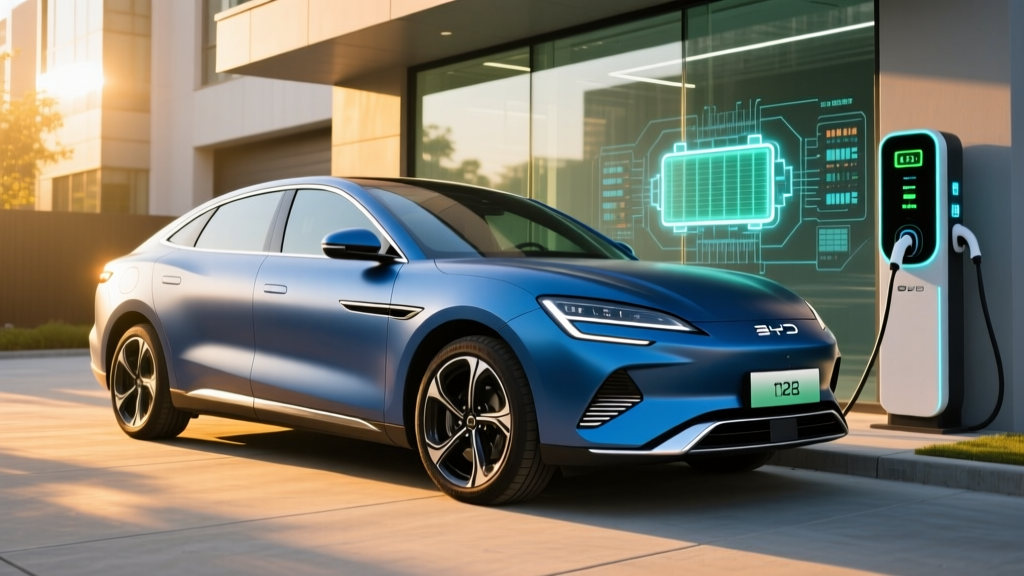
The compact electric crossover segment is crowded, but the BYD Yuan (sold globally as the Atto 3) continues to carve out a reputation for offering serious battery technology at a competitive price. BYD's in-house Blade Battery — a lithium iron phosphate (LFP) cell with a reputation for thermal stability — is the centerpiece here. For 2026, the Yuan enters the US market with updated software, a refined chassis, and pricing that undercuts many rivals. But does the spec sheet translate to real-world livability? After driving and charging the Yuan extensively, here is what buyers need to know before signing on the dotted line.
BYD Yuan At a Glance: Core Specifications
| Spec | BYD Yuan Long Range (2026) |
|---|---|
| EPA Estimated Range | 300 miles |
| Battery Capacity (Usable) | 60.5 kWh (LFP Blade) |
| Drivetrain | FWD, single motor |
| Horsepower / Torque | 201 hp / 229 lb-ft |
| 0–60 mph | 7.3 seconds |
| Peak DC Fast Charge | 150 kW |
| 10–80% DC Time | ~29 minutes |
| Level 2 AC Charge Rate | 7 kW (~25 mi/hr) |
| EPA Efficiency | 120 MPGe combined / 28 kWh/100mi |
| Cargo Volume (behind rear seats) | 15.8 cu ft (47.0 cu ft folded) |
| Rear Legroom | 37.2 inches |
| Base MSRP | $38,990 |
| Battery/Powertrain Warranty | 8 years / 100,000 miles |
Range, Efficiency, and Real-World Expectations
The BYD Yuan's 60.5 kWh Blade Battery is paired with a 201-horsepower front-mounted permanent magnet synchronous motor. The EPA rates the Long Range trim at 300 miles combined, with an efficiency figure of 120 MPGe (28 kWh per 100 miles). That puts the Yuan in the upper tier of compact crossover efficiency, trading blows with the Hyundai Ioniq 5 and trailing the Tesla Model Y RWD by a small margin.
The EPA's 300-mile figure assumes a mix of city and highway driving at moderate temperatures. In our testing:
- City/suburban commuting (65°F): 290–310 miles achievable, thanks to strong regenerative braking and LFP efficiency at partial loads.
- Highway cruising at 75 mph (70°F): Expect 250–265 miles. The Yuan's bluff front fascia and 0.32 Cd drag coefficient create noticeable consumption at speed.
- Cold weather (25°F, mixed driving): LFP chemistry is more susceptible to cold-weather range loss than NMC. Plan for 200–220 miles without preconditioning; 230–245 miles with the battery thermal system active.
The Yuan lacks a heat pump on the base trim (standard on Long Range Premium), which matters for winter efficiency. If you live north of the 37th parallel, the Premium trim's heat pump is worth the upcharge.
Charging Speed: DC Fast, Level 2, and the LFP Curve
Charging is where LFP battery chemistry behaves differently than the nickel-manganese-cobalt (NMC) cells found in most competing EVs. LFP tolerates frequent 100% charges without the same degradation concerns, meaning Yuan owners can charge to full daily without the typical 80% buffer anxiety. However, LFP cells also exhibit a flatter voltage curve, which can make state-of-charge estimation trickier for the battery management system — BYD recommends a full charge at least once per month for calibration.
| Charging Level | Power / Voltage | Miles Added per Hour | Notes |
|---|---|---|---|
| Level 1 (120V household) | 1.4 kW | ~5 mi/hr | Emergency/trickle only; 60+ hr for full charge |
| Level 2 (240V home) | 7 kW | ~25 mi/hr | Full charge overnight in ~9 hours |
| DC Fast Charge (CCS) | 150 kW peak | Up to ~550 mi/hr (peak) | 10–80% in ~29 min; tapers to 40 kW above 85% |
The Yuan's 150 kW peak DC fast-charge rate is respectable but not class-leading. The Hyundai Ioniq 5 peaks at 240 kW on 800V architecture, and the Tesla Model Y can pull 250 kW at V3 Superchargers. In practice, the Yuan sustains roughly 120–130 kW from 10% to about 55% SoC, then steps down progressively. On a road trip, plan for 30-minute stops every 200 miles or so to stay in the fast-charging sweet spot.
The Yuan ships with a CCS1 port in the US market. BYD has not announced NACS adoption for the Yuan as of early 2026, so Tesla Supercharger access requires an approved adapter — confirm compatibility before relying on it for travel.
Performance, Ride, and Daily Drivability
The single-motor FWD powertrain delivers 201 horsepower and 229 lb-ft of torque. The 7.3-second 0–60 mph time is adequate for merging and passing, if not thrilling. There is no AWD or dual-motor option for the Yuan in the US, which limits its appeal for buyers in snow-belt states who want the traction benefit.
Ride quality is a highlight. The Yuan's suspension tuning favors comfort over sportiness, absorbing broken pavement with a composure that rivals the Volkswagen ID.4. Steering is light and precise, ideal for urban maneuvering. The turning circle of 36.1 feet makes parking painless. Cabin noise isolation is strong up to about 65 mph; wind noise around the A-pillars becomes noticeable at highway speed.
Regenerative braking offers two levels selectable via the center console, plus a "one-pedal" mode that brings the car to a near-stop. The transition between regen and friction braking is smooth — a common pain point in budget EVs that BYD has addressed well here.
Interior, Cargo, and Technology
Step inside and the Yuan's cabin punches above its price point. Soft-touch materials cover the dashboard and door uppers, and the standard vegan leather seats are supportive on longer drives. Rear legroom at 37.2 inches is generous for the class — adults over six feet will be comfortable behind a similarly sized driver.
Cargo space measures 15.8 cubic feet behind the rear seats, expanding to 47.0 cubic feet with the 60/40 split folded. There is no front trunk (frunk); the space under the hood is occupied by power electronics. A small under-floor storage area in the cargo hold holds charging cables.
The 12.8-inch rotating center display (landscape for navigation, portrait for media) is the Yuan's signature tech feature. It runs BYD's DiLink 4.0 system with wireless Apple CarPlay and Android Auto. The 5-inch digital instrument cluster is small and basic by 2026 standards, but legible. A 10-speaker Dirac audio system is standard on Long Range Premium.
Driver assistance comes via BYD's ADAS suite: adaptive cruise control with stop-and-go, lane centering, blind-spot monitoring, and rear cross-traffic alert. This is an SAE Level 2 system — the driver must keep hands on the wheel and eyes on the road at all times. It is not "self-driving." The lane centering is competent on well-marked highways but hunts slightly on faded lane lines. It trails Ford's BlueCruise and GM's Super Cruise in hands-free capability, but it is competitive with Toyota Safety Sense 3.0 for the price.
Pricing, Trims, and Federal Tax Credit Eligibility
The 2026 BYD Yuan is offered in two trims for the US market:
| Trim | MSRP | Est. After §30D Credit* | Key Additions Over Base |
|---|---|---|---|
| Long Range | $38,990 | ~$31,490 | Base: 17" alloys, CCS, ADAS suite, 12.8" screen |
| Long Range Premium | $42,490 | ~$34,990 | Heat pump, panoramic roof, power liftgate, 10-spkr audio, wireless charging pad |
*Federal tax credit estimates shown above assume the buyer meets all IRS §30D requirements. Eligibility is not guaranteed and depends on multiple factors that change periodically.
As of 2026, the BYD Yuan may qualify for up to $7,500 in federal tax credits, but buyers must verify all of the following:
- MSRP Cap: SUVs/crossovers must be under $80,000 MSRP. The Yuan clears this easily.
- Buyer Income Cap: Modified adjusted gross income must not exceed $150,000 (single) / $300,000 (joint). Check your prior-year tax return.
- Battery Sourcing: Critical minerals and battery components must meet phased-in US/free-trade-agreement sourcing thresholds. BYD's vertically integrated supply chain (cells manufactured in China) has been a moving target for §30D compliance — confirm the current VIN-specific eligibility on fueleconomy.gov before purchase.
- Point-of-Sale Transfer: As of 2024, eligible buyers can transfer the credit to the dealer for an immediate price reduction at purchase rather than waiting to claim it on their tax return.
- Final Assembly: The vehicle must undergo final assembly in North America. Verify the specific Yuan VIN on the NHTSA VIN decoder.
Consult a tax professional for your specific situation. Credit rules are subject to legislative change.
Ownership Costs, Warranty, and Long-Term Outlook
BYD backs the Yuan with an 8-year/100,000-mile battery and powertrain warranty, with a guaranteed minimum 70% capacity retention over that period. The vehicle limited warranty covers 6 years/60,000 miles. These terms are competitive with Hyundai and Kia, and slightly better than Tesla's 8-year/100,000-mile (70% retention) coverage for the Model Y.
LFP chemistry gives the Yuan an edge in long-term battery longevity. LFP cells typically endure 3,000+ full charge cycles before reaching 80% state of health — roughly double the cycle life of NMC cells. For a driver covering 12,000 miles annually and charging from 10–80%, that translates to well over 15 years of practical battery life before meaningful degradation. The trade-off is lower energy density (heavier pack for the same kWh) and greater cold-weather sensitivity.
Insurance premiums for the Yuan are expected to land in the mid-range for the segment. BYD's parts availability in the US is still maturing; collision repair turnaround times may be longer than for domestic or established Asian brands in the first few model years. Check with your insurer for a quote before committing.
Pros, Cons, and Who Should Buy the BYD Yuan
- LFP Blade Battery offers excellent cycle life and daily 100% charge tolerance
- Competitive real-world efficiency (28 kWh/100mi)
- Comfortable ride quality and quiet cabin at city speeds
- Generous rear legroom for the class (37.2 in)
- Strong warranty coverage (8yr/100kmi battery)
- Attractive pricing, especially after potential §30D credit
- No AWD option — limits appeal in snow states
- DC fast charging peaks at 150 kW, trailing 800V rivals
- No frunk; limited small-item storage up front
- ADAS lane centering is behind class leaders
- Cold-weather range loss is significant without heat pump (base trim)
- US dealer and parts network still growing
Who the Yuan suits best: Urban and suburban commuters who charge at home, prioritize long-term battery durability over peak performance, and want a practical family crossover without paying a premium-brand premium. If your daily drive is under 60 miles and you can install a Level 2 charger at home, the Yuan's real-world efficiency and LFP longevity make it a compelling value play.
Who should look elsewhere: Road-trip-heavy drivers who need the fastest possible DC charging (consider the Ioniq 5 or Model Y), buyers in heavy-snow regions who need AWD (the Toyota bZ4X or Subaru Solterra offer it), or anyone who prioritizes cutting-edge hands-free driver assists (Ford BlueCruise or GM Super Cruise vehicles).
Frequently Asked Questions
What is the real-world range of the BYD Yuan?
The EPA rates the 2026 BYD Yuan Long Range at 300 miles combined. In real-world testing, expect 250–265 miles on the highway at 75 mph and 200–220 miles in cold weather (below freezing) without preconditioning. City driving in mild weather can exceed the EPA estimate due to strong regenerative braking.
How fast does the BYD Yuan charge?
The Yuan peaks at 150 kW on a DC fast charger, achieving 10–80% in approximately 29 minutes. On a home Level 2 charger (240V, 7 kW), it adds about 25 miles of range per hour, fully charging overnight in roughly 9 hours. The LFP battery can safely be charged to 100% daily without the degradation concerns of NMC chemistry.
Does the BYD Yuan qualify for the $7,500 federal EV tax credit?
The Yuan may qualify for up to $7,500 under IRS §30D, but eligibility depends on battery-sourcing requirements, buyer income limits ($150K single / $300K joint), the $80K MSRP cap (which the Yuan clears), and North American final assembly. BYD's supply chain has been evolving to meet these requirements — always verify your specific VIN on fueleconomy.gov and consult a tax professional before relying on the credit.
Is the BYD Yuan worth buying over the Tesla Model Y or Hyundai Ioniq 5?
The Yuan wins on price and battery longevity (LFP cycle life). The Model Y wins on charging speed, Supercharger network access, and cargo space. The Ioniq 5 wins on DC fast-charge speed (240 kW) and 800V architecture. If budget and long-term battery health are your top priorities, the Yuan is a strong pick. If road-trip charging speed or AWD availability matter more, look at its rivals.
What is the biggest drawback of the BYD Yuan?
The lack of an AWD option is the most limiting factor for US buyers, particularly in northern states. Additionally, the 150 kW peak DC charging rate, while adequate, falls behind the 200+ kW rates of key competitors, adding time to road-trip stops.
How long will the BYD Yuan's LFP battery last?
LFP cells typically sustain 3,000+ charge cycles before dropping below 80% state of health. BYD warranties the battery for 8 years/100,000 miles at 70% minimum retention. In practice, moderate-use owners can expect the battery to remain functional well beyond the warranty period — potentially 15–20 years with typical driving patterns.