Quick Verdict: A Global Value Contender With Caveats for US Buyers
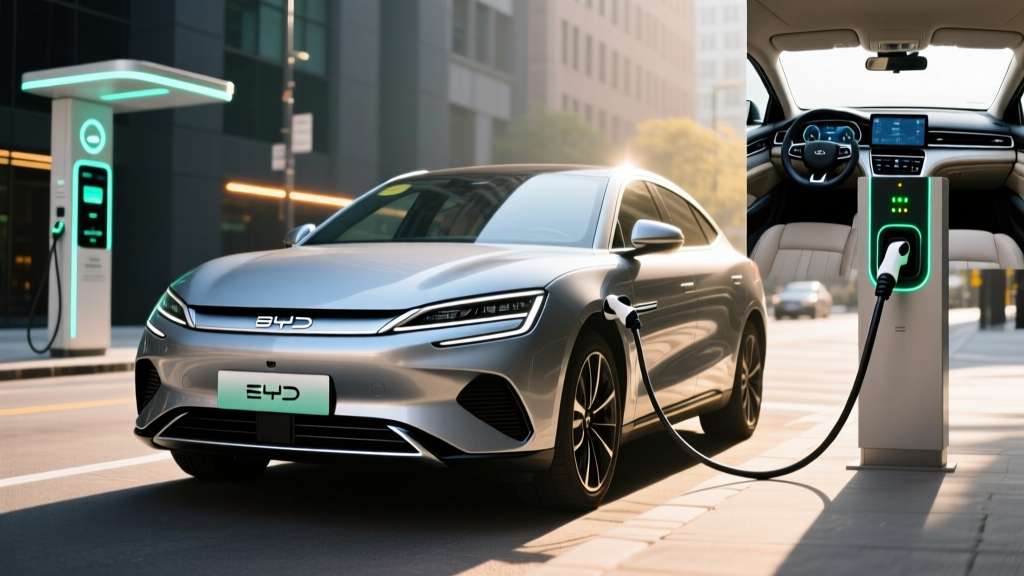
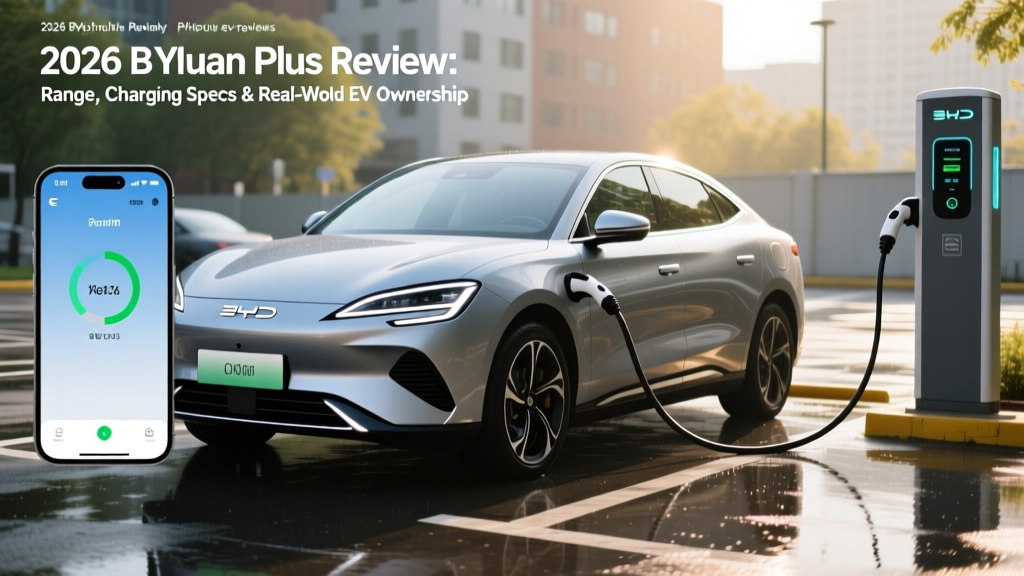
The BYD Yuan Plus — sold in many export markets as the BYD Atto 3 — is one of the best-selling electric vehicles on the planet. Built on BYD's e-Platform 3.0 with its signature lithium iron phosphate (LFP) Blade Battery, it targets the compact crossover segment with an approachable price, competitive range, and a tech-forward interior. For 2026, the Yuan Plus continues to evolve with minor software and trim updates, though its core powertrain remains the proven 58.5 kWh or 49.92 kWh battery pack paired with a single front-mounted motor.
Here's the critical caveat for US readers: BYD does not currently sell the Yuan Plus in the United States. The brand has not entered the US passenger-vehicle market due to a combination of tariff structures (including Section 301 tariffs on Chinese-made EVs that can exceed 100%), dealership infrastructure requirements, and geopolitical trade barriers. This review covers the Yuan Plus as it is sold in international markets (Australia, Southeast Asia, Europe, Latin America, and the Middle East), providing a comprehensive look at what this platform offers — and what US buyers are missing or can approximate from competitors.
If you're reading from outside the US, or you're a US-based enthusiast benchmarking the global compact EV landscape, this profile gives you the exact numbers you need.
Range & Efficiency: EPA Equivalents and Real-World Reality
The BYD Yuan Plus is offered with two battery options depending on market:
- Standard Range: 49.92 kWh usable capacity — rated at approximately 345 km (214 miles) under China's CLTC cycle
- Extended Range: 58.56 kWh usable capacity — rated at approximately 430 km (267 miles) under CLTC
CLTC (China Light-Duty Vehicle Test Cycle) tends to be more generous than the EPA's testing protocol or Europe's WLTP. When converted to WLTP, the Extended Range model typically achieves around 420 km (261 miles). Under EPA-equivalent testing conditions — which include higher average speeds, air conditioning load, and a cold-start component — expect a rating closer to 210–240 miles for the Extended Range variant.
| CLTC Sticker (China) | ~267 miles (430 km) |
| WLTP (Europe) | ~261 miles (420 km) |
| EPA-Equivalent Estimate | ~210–240 miles |
| Real-World Highway (70 mph) | ~175–200 miles |
| Real-World City / Mixed | ~210–230 miles |
| Cold Weather (below 32°F / 0°C) | ~150–180 miles (25–35% loss) |
LFP chemistry holds up well over time but is more susceptible to cold-weather range loss than NMC cells. The Yuan Plus uses a liquid-cooled thermal management system, but it lacks a dedicated heat pump in many markets, meaning cabin heating draws directly from the traction battery in winter — a significant range penalty.
Efficiency for the Extended Range model runs approximately 13.5–14.5 kWh/100 km (roughly equivalent to 125–135 MPGe) under mixed driving, which is competitive for the segment but not class-leading. The Hyundai Kona Electric and Chevrolet Equinox EV achieve slightly better efficiency figures thanks to more aggressive aero and heat-pump standardization.
Battery Technology: The LFP Blade Advantage
The Yuan Plus uses BYD's proprietary Blade Battery, a cell-to-pack lithium iron phosphate (LFP) design. LFP chemistry trades energy density for durability and safety:
| Attribute | LFP (BYD Blade) | NMC (Typical) |
|---|---|---|
| Energy Density | Lower (~160 Wh/kg cell) | Higher (~220–260 Wh/kg) |
| Cycle Life | 3,000–5,000+ cycles | 1,000–2,000 cycles |
| Thermal Stability | Excellent — resists thermal runaway | Good — requires more active cooling |
| Cold Performance | Weaker range retention | Better cold-weather output |
| Cost | Lower (no cobalt/nickel) | Higher |
| Recommended SoC | Can charge to 100% regularly | Best kept at 80% daily |
The Blade Battery's cell-to-pack architecture eliminates modules, improving volumetric utilization by roughly 50% compared to traditional pack designs. BYD's nail-penetration test — where a steel nail is driven through a fully charged cell — demonstrates no fire or explosion, a key safety claim for the chemistry. The 58.56 kWh pack weighs approximately 410 kg (904 lbs).
BYD warranties the Blade Battery for 8 years or 160,000 km (100,000 miles) in most markets, with a capacity retention threshold of 70%. Some markets offer extended coverage or unlimited mileage on the battery for the first owner.
Charging Speeds: DC Fast, Level 2, and the 80 kW Ceiling
Charging is where the Yuan Plus shows its budget-oriented engineering. The DC fast-charging ceiling is 80 kW peak on the Extended Range model (Standard Range peaks at approximately 70 kW). That's below competitors like the Hyundai Kona Electric (100+ kW) or the Volkswagen ID.4 (up to 170 kW).
| Charging Level | Power | Time / Rate | Connector |
|---|---|---|---|
| DC Fast Charge (peak) | 80 kW | 10–80% in ~29–34 min | CCS2 (intl) / GB/T (China) |
| DC Fast Charge (sustained avg) | ~55–60 kW | Avg over 10–80% session | CCS2 / GB/T |
| Level 2 (AC home/wallbox) | 7 kW (single-phase) / 11 kW (three-phase) | ~9–10 hrs (0–100%, 7 kW) | Type 2 (intl) / GB/T (China) |
| Level 1 (portable cord) | ~1.8 kW (10A) | ~32+ hrs (0–100%) | Standard outlet adapter |
The 10–80% DC fast-charge time of approximately 29–34 minutes is acceptable for urban and suburban use but will feel slow on road trips. The charge curve is relatively flat — BYD's battery management system keeps the rate steady rather than spiking to peak and dropping off sharply. That means the sustained average of 55–60 kW is closer to what you'll actually experience across a full session.
For home charging, a 7 kW single-phase wallbox (common in many markets) adds roughly 25–28 miles of range per hour. Owners with access to three-phase power can spec an 11 kW onboard charger for faster top-ups. The Yuan Plus does not support vehicle-to-load (V2L) in most markets, though some regional variants include a discharge adapter.
Performance & Drivetrain
The Yuan Plus is a front-wheel-drive-only vehicle with a single permanent-magnet synchronous motor. There is no AWD or dual-motor option.
| Spec | Value |
|---|---|
| Motor Output | 150 kW (201 hp) |
| Torque | 310 Nm (229 lb-ft) |
| 0–100 km/h (0–62 mph) | 7.3 seconds |
| 0–60 mph (estimated) | ~7.0 seconds |
| Top Speed | 160 km/h (99 mph, electronically limited) |
| Drivetrain | FWD, single-speed reduction gear |
| Curb Weight (Extended Range) | ~1,610 kg (3,549 lbs) |
| Towing Capacity | Not rated / Not recommended |
The 7.0-second 0–60 mph time is brisk for daily driving and highway merging but doesn't challenge sportier EVs. Regenerative braking offers two levels (standard and high) but does not provide true one-pedal driving — the car creeps at low speeds rather than coming to a full stop when you lift off the accelerator. This is a deliberate choice by BYD and a frequent complaint from drivers accustomed to stronger regen in Teslas or the Nissan Leaf.
Interior, Tech & Cargo Space
The Yuan Plus interior is where BYD tries to punch above its price class. The cabin features:
- Rotating 12.8-inch touchscreen (15.6-inch on higher trims) that pivots between landscape and portrait orientation
- 5-inch digital instrument cluster behind the steering wheel
- Synthetic leather upholstery with sport-bucket front seats
- Panoramic glass roof (on higher trims, no shade — a heat concern in summer)
- Ambient lighting with 32+ color options
- Wireless phone charging pad (15W)
- 6-speaker audio system (Dirac tuning on some trims)
The infotainment system runs BYD's DiLink software. It's feature-rich but can feel cluttered. Apple CarPlay and Android Auto are supported via USB in most markets, though some regions require a wired connection rather than wireless.
Driver Assistance (ADAS): The Yuan Plus includes BYD's DiPilot suite on mid-to-high trims:
- Adaptive cruise control with stop-and-go
- Lane-keeping assist and lane-centering
- Automatic emergency braking (front and rear)
- Blind-spot monitoring
- 360-degree surround-view camera
This is a Level 1 to Level 2 (SAE) driver-assistance system. The driver must remain fully engaged at all times. There is no hands-free or eyes-off capability.
Cargo and Passenger Dimensions:
| Front Headroom | ~39.4 in (1,000 mm) |
| Front Legroom | ~41.3 in (1,049 mm) |
| Rear Headroom | ~38.6 in (980 mm) |
| Rear Legroom | ~37.4 in (950 mm) |
| Cargo Volume (rear seats up) | 15.7 cu ft (440 L) |
| Cargo Volume (rear seats folded) | 47.3 cu ft (1,338 L) |
| Frunk (front trunk) | None |
Cargo space is average for the compact crossover class. The lack of a frunk is a missed opportunity given the e-Platform 3.0 architecture. Rear legroom is generous, making this a viable family vehicle for two adults and two children on daily commutes.
Pricing, Trims & Tax Credit Reality
Pricing varies dramatically by market due to local taxes, import duties, and subsidies. Here's a representative breakdown for key international markets (2026 model year):
| Market | Trim | Local Price | USD Equivalent |
|---|---|---|---|
| China | Standard Range | ¥119,800 | ~$16,500 |
| China | Extended Range | ¥139,800 | ~$19,300 |
| Australia | Essential (Std) | A$39,990 | ~$25,400 |
| Australia | Premium (Ext) | A$44,990 | ~$28,600 |
| UK | Design | £37,695 | ~$47,800 |
| Thailand | Extended Range | ฿1,199,900 | ~$33,500 |
US Federal Tax Credit (§30D): Because the BYD Yuan Plus is not sold in the United States, the IRS §30D Clean Vehicle Credit does not apply. Even if it were available, Chinese-manufactured EVs face significant barriers under current §30D rules:
- MSRP Caps: $55,000 for SUVs / $55,000 for sedans — the Yuan Plus would clear this
- Buyer Income Caps: $150,000 single / $300,000 joint — buyer-dependent
- Battery Sourcing: Critical minerals and battery components must meet phased percentage thresholds from US or FTA-partner countries — BYD's vertically integrated Chinese supply chain would likely fail this requirement
- Final Assembly: Must occur in North America — the Yuan Plus is assembled in China, Thailand, Brazil, and other non-US locations
- FEOC Exclusion: Vehicles with battery components from a Foreign Entity of Concern (which includes many Chinese state-linked manufacturers) are disqualified entirely
Bottom line: the Yuan Plus would almost certainly not qualify for the $7,500 credit even if BYD entered the US market under current trade and sourcing rules.
Competitor Comparison: How It Stacks Up
For international buyers, the Yuan Plus competes directly with several well-established compact electric crossovers:
| Spec | BYD Yuan Plus (Ext) | MG4 EV (Extended) | Hyundai Kona Electric | Kia Niro EV |
|---|---|---|---|---|
| Battery (kWh) | 58.56 | 77 | 65.4 | 64.8 |
| WLTP Range | 420 km | 520 km | 514 km | 463 km |
| Power | 201 hp | 204 hp | 201 hp | 201 hp |
| 0–100 km/h | 7.3s | 7.9s | 7.8s | 7.8s |
| DC Fast Charge | 80 kW | 140 kW | 100+ kW | 77 kW |
| Chemistry | LFP | NMC | NMC | NMC |
| Heat Pump | No (most markets) | Optional | Standard | Standard |
The Yuan Plus undercuts most rivals on price in markets where it's locally assembled or benefits from low import duties. Its LFP battery offers superior cycle life and safety. However, the 80 kW charging ceiling, absence of a heat pump, and shorter WLTP range put it at a disadvantage against the MG4 EV Extended Range and Hyundai Kona Electric for road-trip-heavy buyers.
Pros
- LFP Blade Battery — exceptional longevity and thermal safety
- Competitive pricing in most international markets
- Rotating center screen and feature-rich interior
- Generous rear legroom for the segment
- Can charge to 100% daily without degradation concern (LFP)
- Strong build quality and fit/finish for the price point
Cons
- 80 kW DC fast-charge ceiling is slow for 2026
- No heat pump in most markets — significant winter range loss
- Weak regenerative braking; no true one-pedal driving
- CLTC range ratings are optimistic vs real-world
- Not available in the United States
- Panoramic glass roof without shade causes cabin heat
- Infotainment UI can feel cluttered and slow
Who Should Buy the BYD Yuan Plus?
Best for: Urban and suburban commuters in international markets who prioritize battery longevity, safety, and value over maximum range and fast-charging speed. The LFP chemistry makes it ideal for owners who charge at home nightly and want a battery that will outlast the vehicle itself.
Not ideal for: Road-trip-heavy drivers, cold-climate owners without garage parking, or anyone who needs DC fast-charging speeds above 80 kW. If your typical drive exceeds 200 miles between charging stops, the Kona Electric or MG4 Extended Range are better choices.
US buyers: The closest domestic alternatives in terms of size, price positioning, and daily usability include the Chevrolet Equinox EV (EPA range up to 319 miles, eligible for the §30D credit) and the Hyundai Kona Electric (EPA range 261 miles). Neither matches the Yuan Plus on price in their home markets, but both offer faster charging, heat pumps, and full US warranty and service infrastructure.
Frequently Asked Questions
What is the real-world range of the BYD Yuan Plus?
The Extended Range (58.56 kWh) model delivers approximately 210–230 miles in mixed city/highway driving under moderate temperatures. At sustained highway speeds of 70 mph, expect 175–200 miles. In freezing conditions (below 32°F / 0°C), range drops to roughly 150–180 miles due to LFP chemistry sensitivity and the lack of a heat pump in most markets.
How fast does the BYD Yuan Plus charge?
On a DC fast charger, the Yuan Plus peaks at 80 kW and averages around 55–60 kW across a 10–80% session, taking approximately 29–34 minutes. At home on a 7 kW Level 2 wallbox, a full charge from empty takes about 9–10 hours, adding roughly 25–28 miles of range per hour of charging.
Does the BYD Yuan Plus qualify for the US federal EV tax credit?
No. The Yuan Plus is not sold in the United States, and even if it were, it would likely fail the §30D credit requirements for North American final assembly, critical-mineral sourcing, battery-component origin, and FEOC (Foreign Entity of Concern) rules. See IRS.gov for current eligibility criteria.
Is the BYD Yuan Plus worth buying over competitors?
In markets where it's priced below $30,000 USD equivalent, the Yuan Plus offers excellent value thanks to its durable LFP battery, solid build quality, and strong feature content. However, buyers who prioritize fast charging, cold-weather range, or longer highway range should compare it against the MG4 EV Extended Range, Hyundai Kona Electric, or Kia Niro EV — all of which offer faster DC charging and heat pumps.
What is the BYD Yuan Plus battery warranty?
BYD provides an 8-year / 160,000 km (100,000 miles) warranty on the Blade Battery in most international markets, guaranteeing at least 70% capacity retention. Some markets offer extended or unlimited-mileage coverage for the first registered owner. Always confirm specific warranty terms with your local BYD dealer.
Does the BYD Yuan Plus have all-wheel drive?
No. The Yuan Plus is exclusively front-wheel drive with a single 150 kW (201 hp) motor. BYD has not announced an AWD variant for this platform.
Can the BYD Yuan Plus tow a trailer?
The Yuan Plus does not have an official towing rating in most markets and is not recommended for towing. Its compact crossover design and single-motor FWD layout make it unsuitable for trailer duty.