The BYD Yuan Plus EV: A Global Bestseller With US Availability Caveats
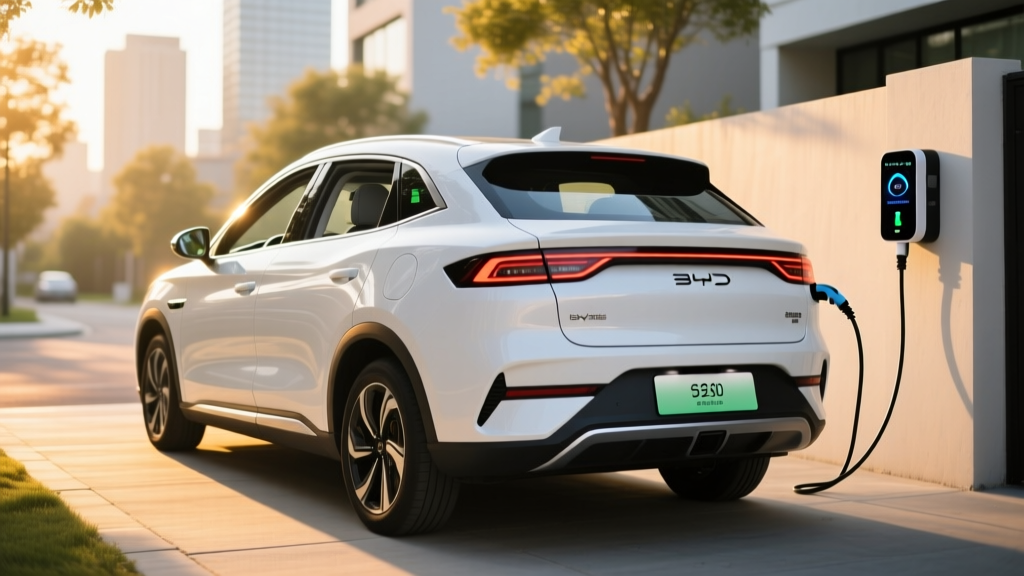
The BYD Yuan Plus — marketed as the BYD Atto 3 in most international markets — is one of the world's best-selling compact electric crossovers. With over a million units sold globally since its launch, it has proven itself as a practical, affordable EV in Europe, Australia, Southeast Asia, and Latin America. But for US-based shoppers searching for the BYD Yuan Plus EV, the picture is more complicated: as of early 2026, BYD does not sell passenger vehicles in the United States, and no confirmed timeline for a US market entry exists.
This review covers the Yuan Plus based on its global specifications and real-world testing from international markets, translated into the metrics US buyers care about: EPA-equivalent range estimates, kWh charging speeds, and dollar-value pricing. If BYD announces a US launch, specs and pricing will shift to meet American regulatory requirements — and we'll update this review accordingly.
Range, Battery, and Efficiency: What the Numbers Say
The BYD Yuan Plus is built on BYD's e-Platform 3.0 and uses the company's proprietary Blade Battery — a lithium iron phosphate (LFP) cell known for thermal stability and long cycle life. Two battery sizes are offered globally:
| Specification | Standard Range | Extended Range |
|---|---|---|
| Battery Chemistry | LFP (Blade Battery) | LFP (Blade Battery) |
| Usable Capacity | 49.92 kWh | 58.56 kWh |
| WLTP Range | ~211 miles (340 km) | ~261 miles (420 km) |
| Estimated EPA Range* | ~190–200 miles | ~230–245 miles |
| Efficiency (WLTP) | ~26 kWh/100 mi | ~24 kWh/100 mi |
*EPA estimates are projected based on typical WLTP-to-EPA conversion ratios (~10–15% reduction). Official EPA figures will only be available if BYD certifies the vehicle for US sale.
Real-World Range Expectations
Extended Range (58.56 kWh) — Projected Real-World:
- City/commute driving (mild weather): ~220–240 miles
- Highway cruising (70 mph, mild weather): ~180–200 miles
- Cold weather (below 32°F, mixed driving): ~150–175 miles
LFP batteries tend to experience slightly more cold-weather range loss than NMC chemistries — plan for a 25–35% reduction in freezing conditions. The Yuan Plus does offer a heat pump on higher trims, which helps mitigate winter losses by ~5–8% compared to resistive cabin heating.
The LFP chemistry choice is deliberate: BYD's Blade Battery is rated for over 3,000 charge cycles before reaching 80% capacity retention — that's roughly 500,000+ miles of driving on the extended-range pack. The trade-off is lower energy density compared to NMC cells, which is why the Yuan Plus's range figures trail competitors like the Hyundai Kona Electric (261 mi EPA) and Chevrolet Equinox EV (~315 mi EPA) despite a competitive battery size.
Charging Speeds: DC Fast Charging and Home Level 2
Charging capability is where the Yuan Plus shows its budget-EV positioning. It's adequate for daily use but won't compete with 800V-architecture vehicles for road-trip speed.
| Charging Level | Max Power | Speed / Time |
|---|---|---|
| Level 1 (120V household) | ~1.4 kW | ~4–5 mi/hr of range |
| Level 2 (240V home/public) | 7 kW (single-phase) / 11 kW (three-phase) | ~22–28 mi/hr (7 kW) / ~35 mi/hr (11 kW) |
| DC Fast Charging (CCS2) | 88 kW peak | 10–80% in ~29 minutes |
Charging curve reality check: The 88 kW peak rate is sustained roughly from 10% to 50% State of Charge. Above 60%, the curve tapers significantly — expect ~55 kW through 80%, and a crawl above 85%. This means a 10–80% session takes about 29 minutes at a sufficiently powerful DC charger, but a 10–95% session can stretch past 50 minutes. For road trips, plan your stops around the 10–80% sweet spot.
The 7 kW AC onboard charger is standard for this class, though some competitors (like the Volkswagen ID.4) offer an optional 11 kW charger for faster Level 2 top-ups. Note that US homes typically have single-phase 240V power, so the 7 kW rate would be the relevant figure for American buyers — roughly 7–8 hours for a full 0–100% charge overnight.
Performance and Driving Dynamics
| Metric | Value |
|---|---|
| Drivetrain | Front-wheel drive (single motor) |
| Motor Output | 150 kW (201 hp) / 229 lb-ft torque |
| 0–62 mph (0–100 km/h) | 7.3 seconds |
| 0–60 mph (estimated) | ~7.0 seconds |
| Top Speed | ~99 mph (electronically limited) |
| Regenerative Braking | Two levels + coasting; no true one-pedal mode |
The Yuan Plus is a single-motor, front-wheel-drive crossover. There is no AWD or dual-motor option. The 201-hp output and ~7.0-second 0–60 time place it squarely in the "adequate for commuting" category — it's not a performance EV, and it doesn't pretend to be. For comparison, the Hyundai Kona Electric (201 hp, 7.2 sec 0–60) offers nearly identical acceleration, while the Kia EV6 (167 hp base RWD, 218 hp AWD) provides more drivetrain variety.
Ride quality, based on international reviews, is tuned for comfort over sportiness. The multi-link rear suspension absorbs urban bumps well, and the low center of gravity from the underfloor Blade Battery pack keeps body roll reasonable in corners. Road noise at highway speeds is the most commonly cited refinement complaint.
Interior, Cargo, and Technology
The Yuan Plus seats five with a cabin that punches above its price point in materials and design. BYD has moved away from the budget-plastic interiors of its earlier models, and the Yuan Plus features soft-touch surfaces, a panoramic glass roof (on higher trims), and an unusual guitar-string motif on the door panels.
| Dimension | Measurement |
|---|---|
| Wheelbase | 106.3 in (2,700 mm) |
| Front Legroom | ~41.5 in |
| Rear Legroom | ~37.0 in |
| Cargo Volume (rear seats up) | 15.7 cu ft (440 L) |
| Cargo Volume (rear seats folded) | 47.3 cu ft (1,338 L) |
| Frunk | None |
Cargo space is competitive with the Kona Electric (16.0 cu ft) but trails the larger Volkswagen ID.4 (30.3 cu ft). The absence of a frunk is a missed opportunity given the e-Platform 3.0's packaging flexibility.
Tech highlights:
- 12.8-inch rotating touchscreen — a BYD signature. The display physically rotates between portrait and landscape orientation depending on the app.
- 5.0-inch digital instrument cluster — small but legible.
- Wireless Apple CarPlay and Android Auto — on most trims.
- BYD DiPilot ADAS suite — includes adaptive cruise control, lane-keeping assist, automatic emergency braking, and blind-spot monitoring. This is a SAE Level 2 driver-assistance system, not autonomous driving — the driver must remain fully engaged at all times.
- Vehicle-to-Load (V2L) — the Yuan Plus can output up to 2.2 kW of AC power to run external devices, useful for camping or emergency backup.
Notable drawbacks: The DiPilot system is less refined than competitors like Hyundai's Highway Driving Assist or GM's Super Cruise. International reviewers have noted intrusive lane-keeping intervention and a tendency for the adaptive cruise to brake abruptly. The infotainment system, while feature-rich, has a learning curve and some translation quirks in non-Chinese markets.
Pricing, Trims, and Tax Credit Eligibility
In international markets, the BYD Yuan Plus is priced aggressively — typically between €35,000–€42,000 in Europe (~$38,000–$46,000 USD) depending on trim and battery size. This positions it below the Volkswagen ID.4 and roughly alongside the MG4 and base Hyundai Kona Electric.
| Trim (Projected) | Battery | Estimated US MSRP | After Potential §30D Credit |
|---|---|---|---|
| Standard Range | 49.92 kWh LFP | ~$33,000–$36,000 | ~$25,500–$28,500 |
| Extended Range | 58.56 kWh LFP | ~$38,000–$42,000 | ~$30,500–$34,500 |
Federal tax credit outlook: If BYD were to sell the Yuan Plus in the US, eligibility for the IRS §30D Clean Vehicle Credit (up to $7,500) would depend on several factors that are currently unfavorable:
- MSRP cap: SUVs/crossovers must be priced under $80,000 — the Yuan Plus would easily clear this.
- Buyer income cap: AGI must not exceed $150,000 (single) / $300,000 (joint) — buyer-dependent.
- Battery sourcing requirements: A percentage of critical minerals must be sourced from the US or free-trade-agreement countries, and battery components must be manufactured/assembled in North America. BYD's supply chain is heavily China-based, which would likely disqualify the Yuan Plus from the full $7,500 credit under current IRS rules.
- Foreign Entity of Concern (FEOC): Vehicles with battery components from a FEOC (which includes many Chinese manufacturers) are excluded entirely from the credit beginning in 2024–2025.
Bottom line: even if BYD launches in the US, the Yuan Plus would likely not qualify for the federal EV tax credit due to battery-sourcing and FEOC restrictions. This would significantly undercut its price advantage versus credit-eligible competitors.
Warranty and Long-Term Ownership
| Component | Coverage |
|---|---|
| Vehicle (bumper-to-bumper) | 6 years / 150,000 km (~93,000 mi) |
| Battery Pack (Blade Battery) | 8 years / 160,000 km (~100,000 mi) |
| Battery Capacity Guarantee | ≥70% retention within warranty period |
| Electric Motor/Powertrain | 8 years / 160,000 km (~100,000 mi) |
BYD's battery warranty is competitive with industry standards (most manufacturers offer 8 years/100,000 miles). The 70% capacity retention threshold is typical, though some competitors like Hyundai guarantee 70% on a more generous 10-year/100,000-mile basis. The LFP Blade Battery's inherent longevity (3,000+ cycles) suggests that most owners will never approach the warranty limit under normal use.
Long-term ownership costs would depend heavily on whether BYD establishes a US dealer and service network — a significant unknown. Without accessible service centers and parts availability, even a reliable vehicle can become expensive to maintain.
How It Compares: BYD Yuan Plus vs. US-Market Alternatives
| Spec | BYD Yuan Plus (Ext.) | Hyundai Kona Electric | Chevy Equinox EV | Volkswagen ID.4 |
|---|---|---|---|---|
| EPA Range | ~235 mi (est.) | 261 mi | ~315 mi | 275 mi |
| Battery (kWh) | 58.56 LFP | 65.4 NMC | 85.0 NMC | 82.0 NMC |
| DC Fast Charge (peak kW) | 88 kW | 100 kW | 150 kW | 175 kW |
| 10–80% DC Time | ~29 min | ~43 min | ~30 min | ~28 min |
| 0–60 mph | ~7.0 sec | 7.2 sec | ~7.9 sec | 7.7 sec (RWD) |
| Horsepower | 201 hp | 201 hp | 213 hp | 282 hp (AWD) |
| Base MSRP (2025/2026) | N/A (not in US) | $32,975 | $33,600 | $39,735 |
| §30D Tax Credit | Likely ineligible | Up to $7,500 | Up to $7,500 | Up to $7,500 |
The comparison reveals the Yuan Plus's core challenge: even if it arrived in the US at an attractive MSRP, the lack of tax credit eligibility would erase much of its price advantage. A $38,000 Yuan Plus with no credit competes against a $33,000 Kona Electric that nets ~$25,500 after the $7,500 credit. The Kona and Equinox EV also offer superior range, faster DC charging, and established US service networks.
Who Should Consider the BYD Yuan Plus?
Decision Framework
Wait for the BYD Yuan Plus if:
- You live in a market where it's already available (Europe, Australia, Southeast Asia, Latin America)
- You prioritize battery longevity (LFP) and safety over maximum range
- You want V2L capability for outdoor/camping use
- You're a budget-conscious buyer who doesn't need 300+ miles of range
Look at US-market alternatives if:
- You need a vehicle you can buy and service in the United States today
- You want to claim the $7,500 federal EV tax credit
- You regularly take highway road trips and need faster DC charging
- You want a proven US dealer/service network for long-term ownership
Frequently Asked Questions
What is the real-world range of the BYD Yuan Plus EV?
For the extended-range 58.56 kWh model, expect approximately 220–240 miles in city driving during mild weather, 180–200 miles on the highway at 70 mph, and 150–175 miles in cold weather below freezing. The LFP battery is more susceptible to cold-weather losses than NMC alternatives.
How fast does the BYD Yuan Plus charge?
DC fast charging peaks at 88 kW, achieving a 10–80% charge in about 29 minutes at a capable station. Home Level 2 charging at 7 kW (standard US 240V single-phase) adds roughly 22–28 miles of range per hour, meaning a full overnight charge takes 7–8 hours.
Can I buy the BYD Yuan Plus in the United States?
No. As of early 2026, BYD does not sell passenger vehicles in the US market. There is no confirmed timeline for a US launch. BYD has focused its US efforts on commercial vehicles (electric buses and trucks) rather than consumer cars.
Does the BYD Yuan Plus qualify for the federal EV tax credit?
Even if BYD began US sales, the Yuan Plus would likely be ineligible for the §30D Clean Vehicle Credit due to battery-sourcing requirements and Foreign Entity of Concern (FEOC) rules that restrict credits for vehicles with Chinese-manufactured battery components.
Is the BYD Yuan Plus worth buying over competitors?
In markets where it's available, yes — it offers strong value, excellent battery longevity, and competitive features for the price. For US buyers, however, credit-eligible alternatives like the Hyundai Kona Electric, Chevrolet Equinox EV, and Volkswagen ID.4 offer better range, faster charging, established service networks, and up to $7,500 in federal tax credits, making them more practical choices.
What is the BYD Blade Battery and why does it matter?
The Blade Battery is BYD's proprietary LFP (lithium iron phosphate) cell design. It uses a unique blade-like form factor that improves space utilization and thermal management. LFP chemistry offers superior cycle life (3,000+ charges), excellent thermal stability (very low risk of thermal runaway), and no cobalt — but trades off energy density, which is why the Yuan Plus's range is modest relative to its battery size.