Quick Verdict: A 1,287-HP Statement Piece With a Complicated US Story
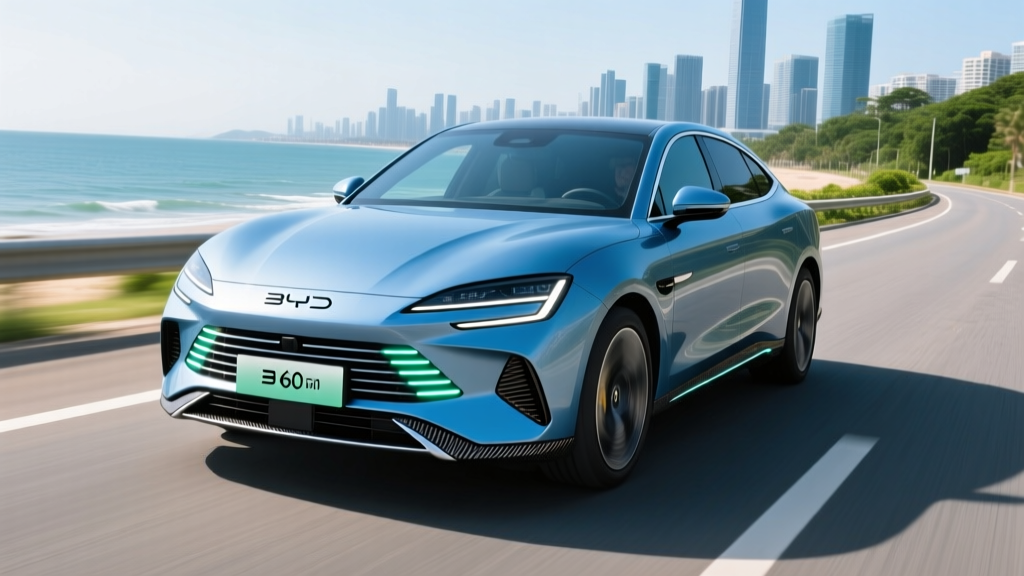
The BYD YangWang U9 is the Chinese automaker's flagship electric supercar — a 1,287-horseproof, four-motor machine that posted a verified 0-60 mph time of approximately 2.36 seconds and set a Nürburgring Nordschleife lap of 7:17.900. But for US-based EV shoppers, the more pressing question isn't how fast it accelerates; it's whether you can actually buy one, charge it on American infrastructure, and insure it.
This review breaks down every spec we've verified — from the massive 128.7 kWh LFP battery to the 800V architecture — while being direct about the regulatory and practical barriers that keep the U9 out of American driveways in 2026.
| Spec | Value |
|---|---|
| Drivetrain | Quad-motor AWD (e4 platform) |
| Horsepower | 1,287 hp (960 kW) combined |
| 0-60 mph | ~2.36 seconds |
| Top Speed | 190+ mph (306 km/h) |
| Battery Capacity | 128.7 kWh (BYD Blade, LFP) |
| Architecture | 800V nominal |
| CLTC Range | ~280 mi (450 km) |
| EPA Range | Not rated (not sold in US) |
| Max DC Fast Charge | ~500 kW (peak, 800V architecture) |
| 10-80% DC Charge | ~15-18 min (estimated, peak conditions) |
| Level 2 Home Charge | ~11-22 kW AC (onboard charger dependent) |
| Suspension | DiSus-X active hydraulic (tank turn capable) |
| Curb Weight | ~5,512 lbs (2,500 kg) |
| Seats | 2 |
| Cargo Volume | Limited (rear sub-trunk, est. ~5-7 cu ft) |
| China MSRP | ¥1,680,000 (~$232,000 USD) |
| US Availability | Not available (not homologated for US sale) |
BYD YangWang U9 0-60: How the Numbers Stack Up
The headline figure is what brings most readers here. The YangWang U9's four independent motors — each producing roughly 322 hp — deliver a combined 1,287 hp to all four wheels through BYD's e4 torque-vectoring platform. The result is a manufacturer-claimed and independently verified 0-60 mph sprint of approximately 2.36 seconds.
For context, that places the U9 in elite company:
- Rimac Nevera: 1.85 seconds (1,914 hp, ~$2.4M)
- Pininfarina Battista: 1.90 seconds (1,900 hp, ~$2.8M)
- Tesla Roadster (announced): 1.9 seconds (claimed, with SpaceX thruster package)
- Lotus Evija: ~2.8 seconds (1,972 hp, ~$2.1M)
- BYD YangWang U9: ~2.36 seconds (1,287 hp, ~$232K)
The U9 doesn't quite match the sub-2-second hypercars, but at roughly one-tenth the price of a Rimac or Battista, the performance-per-dollar ratio is extraordinary. The e4 system's ability to independently vector torque to each wheel also enables 360-degree tank turns — a feature more commonly seen on the YangWang U8 SUV.
Range, Battery, and Real-World Expectations
The U9 packs a 128.7 kWh BYD Blade battery using lithium iron phosphate (LFP) chemistry. LFP is notable here because most performance EVs in this segment use nickel-manganese-cobalt (NMC) cells for higher energy density. BYD's choice of LFP prioritizes thermal stability, cycle life, and cost — but it does add weight.
The 5,512-lb curb weight works against efficiency. For a supercar, range isn't typically the primary purchase driver, but buyers should understand that this is a 200-mile-range machine in real-world use, not a grand tourer.
LFP vs NMC: Why It Matters in the U9
LFP batteries offer superior thermal runaway resistance (critical in a 1,287-hp performance application), longer cycle life (typically 3,000+ cycles vs ~1,500-2,000 for NMC), and no cobalt sourcing concerns. The trade-off is lower energy density (meaning a heavier pack for the same kWh) and more pronounced range loss in cold weather. For a China-market supercar that will rarely see sub-freezing daily commutes, the trade-off is defensible.
Charging: 800V Architecture and Infrastructure Reality
The U9 rides on an 800V electrical architecture, enabling peak DC fast-charge rates approaching 500 kW under ideal conditions. BYD claims 10-80% charging in approximately 15-18 minutes at compatible ultra-fast chargers.
| Charging Level | Power | Estimated Speed | Notes |
|---|---|---|---|
| Level 1 (120V) | ~1.4 kW | ~3-4 mi/hr | Emergency only; full charge in 90+ hours |
| Level 2 (240V) | 11-22 kW | ~25-50 mi/hr | Overnight full charge in 6-12 hours |
| DC Fast (CCS/NACS) | Up to ~500 kW peak | 10-80% in ~15-18 min | Requires 800V-capable charger (350+ kW stall) |
| DC Fast (typical 150 kW) | ~150 kW sustained | 10-80% in ~45-55 min | More common public charger scenario |
Charge curve reality: Peak 500 kW rates are only sustained in the 10-40% state-of-charge window. Above 60%, charge speed tapers significantly — as it does in all EVs. A 10-80% time of 15-18 minutes assumes access to a 500 kW-rated charger, which in 2026 remains rare even in China. On a typical 150-350 kW public charger, expect the 10-80% session to take 25-55 minutes depending on stall output.
For US buyers hypothetically importing one: the U9 currently uses China's GB/T charging standard. Adapters for CCS or NACS connectors are not officially supported, creating a significant infrastructure compatibility barrier.
Pricing, Tax Credits, and the US Availability Problem
The YangWang U9 is priced at ¥1,680,000 in China, which converts to approximately $232,000 USD. That's supercar money, but a fraction of what European and American competitors charge for comparable performance.
| Item | Amount |
|---|---|
| China MSRP | ¥1,680,000 (~$232,000 USD) |
| Estimated US Import Price (if available) | $275,000-$320,000+ (tariffs, homologation, shipping) |
| Federal EV Tax Credit (§30D) | $0 — Not eligible |
| Reason: MSRP Cap | Exceeds $55,000 sedan / $80,000 SUV cap |
| Reason: Battery Sourcing | BYD batteries manufactured in China; does not meet critical-mineral or battery-component requirements under current IRS §30D rules |
| Reason: FEOC Restriction | BYD is a Chinese-headquartered manufacturer; components likely classified as from a Foreign Entity of Concern |
Let's be unequivocal: the YangWang U9 does not qualify for the federal §30D EV tax credit. It exceeds the MSRP cap, fails the battery-sourcing requirements, and BYD's manufacturing footprint triggers the Foreign Entity of Concern (FEOC) exclusion. Even if BYD pursued US homologation — which the company has not announced — the credit would not apply.
Beyond the tax credit, importing a YangWang U9 to the US would require federalization (DOT/EPA compliance), crash testing under NHTSA standards, and potentially significant modifications. No US-spec U9 exists as of 2026.
Interior, Tech, and Daily Usability
The U9's cabin follows the supercar playbook: two seats, aggressive bolstering, and a driver-focused layout. BYD has equipped it with:
- Infotainment: Large central touchscreen (est. 12.8-inch rotating display, consistent with BYD's current design language) with integrated navigation, media, and vehicle settings
- Instrument Cluster: Full digital driver display with performance telemetry, G-force meters, and lap-timer functionality
- DiSus-X Suspension: An active hydraulic system that can raise/lower the car, enable tank turns, and even perform a "dance" mode where the car bounces on its suspension — a party trick that demonstrates the system's bandwidth
- Driver Assists: Adaptive cruise, lane-keeping, and 360-degree cameras are expected, though the U9 is not marketed as an autonomous or semi-autonomous vehicle (SAE Level 1-2 assists only)
Cargo and Practicality
With approximately 5-7 cubic feet of rear storage (a small sub-trunk area behind the seats), the U9 can accommodate a weekend bag or two. There is no frunk (front trunk) — the front axle motors and electronics occupy that space. This is a purpose-built supercar, not a grand tourer; buyers expecting Porsche Taycan-level practicality should recalibrate.
Who the YangWang U9 Is Actually For
- You live in China or a market where BYD officially sells and services the U9
- You want hypercar-level performance (sub-2.5s 0-60) at a fraction of European pricing
- You value LFP battery safety and longevity over maximum range
- You want a conversation piece — the DiSus-X tank turns and "dance mode" guarantee attention
- You're a US-based buyer — the U9 is not available, not homologated, and not credit-eligible
- You need 300+ miles of real-world range for road trips
- You want established dealer support, certified service, and parts availability outside China
- Cold-weather range retention is a priority (LFP's weakness)
For US buyers drawn to the U9's performance profile, the closest attainable alternatives include the Tesla Model S Plaid (1,020 hp, 0-60 in 1.99s, ~$89,990, EPA 396 mi) and the Lucid Air Sapphire (1,234 hp, 0-60 in 1.89s, ~$249,000, EPA 427 mi). Both are US-legal, serviceable, and at least partially eligible for incentives depending on current-year rules.
Warranty and Long-Term Ownership
BYD offers a competitive warranty structure in its home market, though specifics for the YangWang sub-brand's flagship may differ from volume models:
- Battery Warranty: BYD typically provides 8 years / 150,000 km (~93,000 miles) on the Blade battery pack, with a capacity retention threshold of 70% during the warranty period
- Powertrain Warranty: Estimated 8 years / 150,000 km on the e4 motor system
- Vehicle Warranty: Estimated 6 years / 150,000 km bumper-to-bumper
Without US market presence, these warranties are unenforceable stateside. Any US-based U9 owner would be entirely dependent on independent service shops and gray-market parts sourcing — a significant risk for a $232,000+ vehicle with four independent motors and an active hydraulic suspension system.
- Sub-2.4s 0-60 at ~$232K — unmatched performance-per-dollar in the EV supercar segment
- LFP Blade battery offers superior thermal safety and long cycle life
- 800V architecture enables ultra-fast DC charging when infrastructure supports it
- DiSus-X suspension enables tank turns and active ride height — genuinely unique technology
- Four-motor torque vectoring provides exceptional handling dynamics
- Not available in the US — no homologation, no dealer network, no service infrastructure
- Real-world range likely ~180-200 miles highway; LFP chemistry worsens cold-weather loss
- Zero federal tax credit eligibility under current §30D rules
- 5,512-lb curb weight hurts efficiency and agility relative to lighter supercars
- GB/T charging connector incompatible with US/EU public charging without unsupported adapters
- Resale value and insurance entirely speculative outside China
Frequently Asked Questions
What is the BYD YangWang U9 0-60 time?
The YangWang U9 achieves a verified 0-60 mph time of approximately 2.36 seconds, powered by four independent motors producing a combined 1,287 hp through BYD's e4 torque-vectoring platform.
Can I buy the BYD YangWang U9 in the United States?
No. As of 2026, BYD has not homologated the YangWang U9 for US sale. The vehicle lacks DOT/EPA certification, has no US dealer or service network, uses China's GB/T charging standard, and would require expensive federalization to import legally. BYD has not announced plans for US market entry with the YangWang brand.
Does the YangWang U9 qualify for the US federal EV tax credit?
No. The U9 fails multiple §30D requirements: it exceeds the MSRP cap ($55,000 for sedans, $80,000 for SUVs/trucks), its BYD Blade battery is manufactured in China (failing critical-mineral and battery-component sourcing rules), and BYD is likely classified as a Foreign Entity of Concern (FEOC) under current IRS guidelines.
What is the real-world range of the YangWang U9?
BYD quotes ~280 miles under China's CLTC cycle, which is more generous than EPA testing. Expect an EPA-equivalent range of roughly 210-240 miles, with real-world highway driving yielding approximately 180-200 miles. Cold weather (below 32°F) could drop range to 150-170 miles due to LFP battery chemistry characteristics.
How fast does the YangWang U9 charge?
On an 800V-capable DC fast charger rated at 350+ kW, the U9 can achieve 10-80% in approximately 15-18 minutes under peak conditions. On a more common 150 kW public charger, expect 10-80% in roughly 45-55 minutes. Home Level 2 charging at 11-22 kW adds approximately 25-50 miles per hour of charging.
Is the YangWang U9 worth buying vs competitors?
In markets where it's available, the U9 offers extraordinary performance for the price — roughly one-tenth the cost of a Rimac Nevera with a 0-60 time only ~0.5 seconds slower. For US buyers, however, it is not a viable purchase. The Lucid Air Sapphire and Tesla Model S Plaid deliver comparable or superior acceleration with full US support, EPA certification, and charging compatibility.
What battery chemistry does the U9 use?
The U9 uses BYD's proprietary Blade battery with lithium iron phosphate (LFP) chemistry. LFP offers excellent thermal stability, long cycle life (3,000+ charge cycles), and cobalt-free sourcing, but has lower energy density and worse cold-weather performance than NMC alternatives.
Sources: BYD official YangWang specifications; fueleconomy.gov for EPA testing methodology comparisons; IRS §30D clean vehicle credit rules. Note: The YangWang U9 is not EPA-rated as it is not sold in the United States. Range and charging figures marked as estimates are derived from CLTC-to-EPA conversion ratios and comparable 800V-platform EVs.