Quick Verdict: A 1,180-HP Floating Fortress, But Not for US Buyers
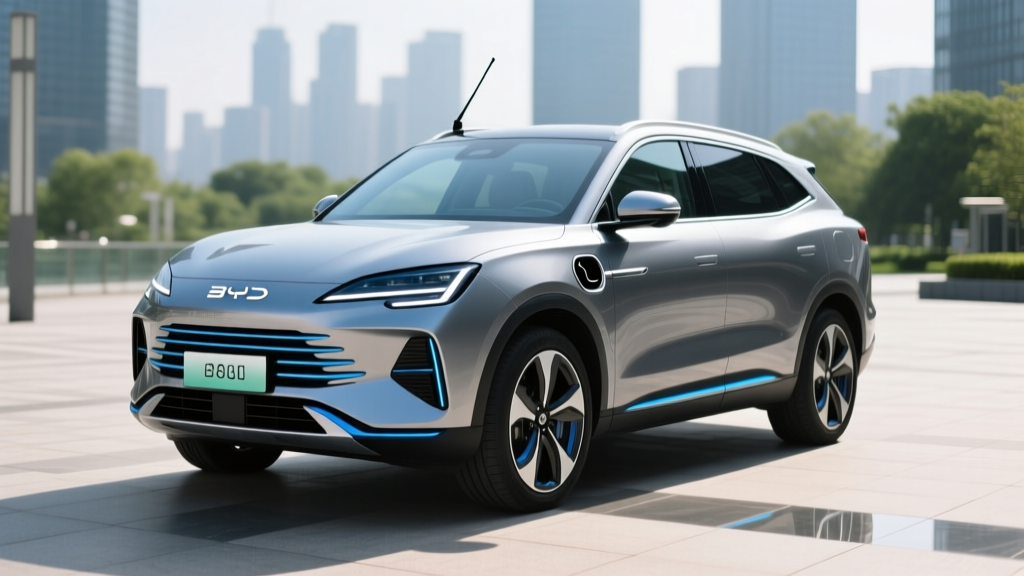
The BYD YangWang U8L is the extended-wheelbase variant of BYD's flagship luxury off-road SUV, sold under the YangWang sub-brand that competes directly with the Mercedes G-Class and Land Rover Range Rover. Unlike a conventional battery-electric vehicle, the U8L uses an extended-range electric vehicle (EREV) architecture: four independent electric motors drive the wheels while a 2.0-liter turbocharged inline-four acts solely as a range-extending generator. The result is a combined output of roughly 1,180 horsepower (880 kW) and a manufacturer-claimed total range exceeding 620 miles (1,000 km) under China's CLTC testing cycle.
However, US buyers need to know upfront: BYD does not currently sell passenger vehicles in the United States, and the YangWang U8L carries no EPA certification, no NHTSA safety ratings, and no eligibility for the federal §30D EV tax credit. This review evaluates the U8L on its published specifications and Chinese-market performance data, translating CLTC figures into realistic US-equivalent expectations for readers tracking global EV technology or considering import pathways.
Powertrain and Performance: Four Motors, One Generator
The U8L's e4 (electric four) platform gives each wheel its own independent motor, enabling torque vectoring at a resolution that mechanical AWD systems cannot match. BYD quotes the following performance figures:
| Specification | BYD YangWang U8L |
|---|---|
| Powertrain Type | EREV (Extended-Range Electric Vehicle) |
| Drive Motors | Quad-motor AWD (one per wheel) |
| Total System Output | ~1,180 hp (880 kW) |
| Range Extender Engine | 2.0L turbocharged inline-four (generator only) |
| 0–62 mph (0–100 km/h) | ~3.6 seconds (estimated, LWB) |
| Top Speed | Electronically limited, ~124 mph |
| Towing Capacity | Not yet published (standard U8: ~7,700 lb) |
The standard-wheelbase U8 achieves a claimed 0–62 mph in 3.6 seconds. The U8L's extended wheelbase adds curb weight (estimated above 7,500 lb / 3,400 kg), so expect a marginally slower sprint — likely in the 3.8–4.0 second range. What matters more in practice is the instantaneous torque response from four electric motors, which delivers seamless acceleration without the turbo lag or gear-shift interruption inherent to conventional powertrains.
The e4 platform also enables the U8L's headline party trick: a 360-degree tank turn, where opposing wheels spin in opposite directions to rotate the vehicle on its own axis. This is genuinely useful for tight trail maneuvering, not merely a demo-mode novelty.
Battery, Range, and Efficiency: EREV Math Explained
The YangWang U8L carries a massive BYD Blade battery pack — an LFP (lithium iron phosphate) unit with approximately 173 kWh of usable capacity. This is among the largest battery packs fitted to any production passenger vehicle globally. LFP chemistry trades some energy density for superior thermal stability, longer cycle life (typically 3,000+ cycles before significant degradation), and lower cobalt/nickel content.
Range Reality Check: BYD claims a pure-electric range of roughly 124 miles (200 km) under China's CLTC cycle, and a combined EREV range (electric + generator) exceeding 620 miles (1,000 km) CLTC. CLTC is notably optimistic compared to the US EPA cycle. Translated to EPA-equivalent estimates:
- Electric-only range (EPA-estimated): ~95–105 miles
- Combined EREV range (EPA-equivalent): ~480–530 miles
- Highway driving (70+ mph): Expect electric-only range to drop to ~75–85 miles; combined EREV range to ~400–450 miles
- Cold weather (below 32°F): LFP batteries suffer 15–25% range reduction in freezing temps; plan for ~70–80 miles electric-only and ~380–420 miles combined
Because the gasoline generator can recharge the battery on the move, range anxiety is largely eliminated — you can refuel at any gas station and keep driving.
Efficiency for an EREV is measured differently than a pure BEV. When operating on battery alone, expect consumption in the range of 55–65 kWh/100 miles given the U8L's weight and aerodynamic profile. Once the range extender engages, fuel economy drops to an estimated 18–22 MPG combined — acceptable for a 7,500-lb luxury off-roader, but far from economical.
Charging Speed: DC Fast and Level 2 Breakdown
Charging a 173 kWh battery pack is an exercise in patience, even with high-power DC fast charging. Here is what BYD specifies for the YangWang U8 platform:
| Charging Level | Power / Rate | Time / Range Added |
|---|---|---|
| DC Fast Charge (peak) | ~110 kW (dual-gun capable) | 30–80% in approximately 18 minutes (BYD claim, standard U8) |
| DC Fast Charge (sustained avg.) | ~80–90 kW | 10–80% in approximately 40–50 minutes |
| Level 2 (240V, 48A) | ~11.5 kW | ~16–18 miles of electric range per hour; full charge in ~16–18 hours |
| Level 1 (120V, 12A) | ~1.4 kW | ~2 miles of electric range per hour; impractical for full charge |
A few practical notes for anyone evaluating this platform:
- Peak vs. sustained charging: The 110 kW peak rate applies only in a narrow state-of-charge window (typically 10–30%). Above 50% SoC, the charge curve tapers significantly. A 10–80% session will realistically take 40–50 minutes, not 18.
- Dual-gun charging: BYD supports simultaneous connection of two DC charge cables to split the load and reduce total charge time. This feature is common in the Chinese market but rarely supported by US charging networks (Electrify America, EVgo, Tesla Supercharger).
- LFP charging behavior: LFP batteries tolerate regular 100% charging better than NMC chemistries. BYD recommends periodic full charges to recalibrate the battery management system — an advantage for daily usability.
- The generator as a "charger": In practice, most U8/U8L owners will rely on the range-extending engine for longer trips rather than waiting for DC fast charging. A full tank of gasoline refuels the system faster than any charger.
Interior, Cargo, and Technology
The U8L's "L" designation denotes an extended wheelbase, adding approximately 200 mm (7.9 inches) to the standard U8's wheelbase. This translates primarily to rear-seat legroom, which BYD positions as a chauffeur-class luxury experience. Key interior specifications include:
- Seating: 5-passenger (standard); executive rear-seat package available with reclining, heated, ventilated, and massaging outboard seats
- Rear legroom (estimated): ~42–44 inches with extended wheelbase
- Cargo volume: Approximately 35–40 cu ft behind the second row (estimated; BYD has not published official U8L cargo figures separately from the standard U8)
- Infotainment: Triple-screen dashboard layout — 12.3-inch instrument cluster, 12.8-inch (or larger) rotating center touchscreen, and a front-passenger entertainment display. Runs BYD's DiLink system with 5G connectivity in the Chinese market.
- Audio: Dynaudio or Naim premium system (market-dependent), 22 speakers
- Unique features: Emergency water flotation mode (IP68-rated waterproofing allows the vehicle to float and navigate shallow water crossings at up to ~1.4 meters depth); 360-degree tank turn; drone launch pad option on the roof rack
The water flotation feature, while attention-grabbing, is designed for emergency flood scenarios and controlled water crossings — not recreational boating. BYD explicitly warns against intentional submersion.
Pricing, Tax Credit Eligibility, and US Availability
The YangWang U8L is sold exclusively in China as of early 2026. Pricing in the Chinese market starts at approximately ¥1,098,000 RMB for the standard U8, with the U8L commanding a premium that places it in the ¥1,200,000–1,400,000 RMB range. Converted to US dollars at prevailing exchange rates, that equates to roughly $165,000–$195,000 USD before any import duties, shipping, or compliance modifications.
| Cost Factor | Estimated Amount |
|---|---|
| Chinese-market MSRP (U8L, base) | ~¥1,200,000 RMB (~$165,000 USD) |
| Chinese-market MSRP (U8L, fully loaded) | ~¥1,400,000 RMB (~$195,000 USD) |
| Federal §30D EV Tax Credit | $0 — Not eligible (BYD is not sold in the US; vehicle lacks EPA certification; battery sourcing does not meet US critical-mineral requirements) |
| US import duty (if imported) | 27.5% tariff on Chinese-manufactured vehicles (current rate) + potential Section 301 tariffs |
| Estimated landed US cost (if importable) | $210,000–$260,000+ after tariffs and compliance |
Regarding the IRS §30D federal EV tax credit: the YangWang U8L does not qualify. The credit requires the vehicle to be manufactured by an OEM that sells in the US market, assembled in North America (for new vehicles post-2024), and equipped with battery components and critical minerals meeting specific sourcing thresholds. BYD meets none of these criteria for US sales. Additionally, the §30D credit carries MSRP caps ($80,000 for SUVs) and buyer income limits ($300,000 joint / $150,000 single) — both of which the U8L would exceed regardless.
As of 2026, BYD has not announced any plans to sell the YangWang brand or the U8/U8L in the United States. BYD's US presence is limited to commercial vehicles (electric buses and trucks) manufactured at its Lancaster, California facility.
Warranty and Long-Term Ownership
In the Chinese market, BYD provides the following warranty coverage for the YangWang line:
- Battery warranty: 8 years / 150,000 km (~93,000 miles) with a capacity retention threshold of 70%
- Powertrain warranty: 8 years / 150,000 km for the electric drive system
- Vehicle warranty: 6 years / 150,000 km bumper-to-bumper
- Range extender engine: Covered under the powertrain warranty
For a vehicle of this price, the warranty terms are adequate but not exceptional. Competitors like Mercedes-Benz offer comparable coverage on the G-Class, while Rivian's 8-year/175,000-mile battery warranty on the R1S provides slightly more mileage protection. The LFP chemistry in the Blade battery is a longevity positive — LFP cells historically degrade more slowly than NMC equivalents, often retaining 85–90% capacity after 1,000 full cycles.
Pros, Cons, and Competitor Comparison
Pros
- 1,180 hp from four independent motors delivers extraordinary performance for a 7,500-lb vehicle
- EREV architecture eliminates range anxiety — 480+ miles combined (EPA-equivalent) with gasoline backup
- LFP Blade battery offers superior thermal safety and longer cycle life vs. NMC
- 360-degree tank turn and water flotation are genuinely unique capabilities
- Extended wheelbase provides limousine-grade rear-seat space
- BYD's vertical integration (battery + motors + semiconductors) controls costs at a level legacy OEMs cannot match
Cons
- Not available in the US market — no sales, service, or parts infrastructure
- No EPA certification, NHTSA ratings, or IIHS testing
- Zero federal or state EV tax credit eligibility
- 173 kWh battery makes DC fast charging slow relative to pack size (~40–50 min for 10–80%)
- Fuel economy on the range extender (~18–22 MPG) is poor, even for the segment
- Curb weight above 7,500 lb increases tire wear, braking distances, and energy consumption
- Chinese-market infotainment (DiLink) lacks Apple CarPlay/Android Auto integration familiar to US buyers
Against its intended competitors, the U8L occupies a unique niche:
| Attribute | BYD YangWang U8L | Mercedes G 580 (EQG) | Rivian R1S (Tri-Motor) | Land Rover Range Rover P550e | |
|---|---|---|---|---|---|
| Powertrain | EREV (quad-motor + gas generator) | BEV (quad-motor) | BEV (tri-motor) | PHEV (I-6 + electric) | |
| Horsepower | ~1,180 hp | ~579 hp | ~850 hp | ~542 hp | |
| Electric-Only Range | ~95–105 mi (EPA-est.) | ~240 mi (EPA-est.) | ~330 mi (EPA-est.) | ~48 mi (EPA-est.) | |
| Total Range | ~480–530 mi (EREV) | ~240 mi (BEV) | ~330 mi (BEV) | ~460 mi (PHEV) | |
| US Availability | Not available | Available | Available | Available | |
| Base Price (USD) | ~$165,000 (China) | ~$160,000 | ~$99,900 | ~$125,000 | |
| Federal Tax Credit | None | Eligibility varies | Up to $7,500 (trim-dependent) | Up to $7,500 |
Who Should Consider the BYD YangWang U8L?
The honest answer for US-based readers: almost no one, at least not today. The U8L is a remarkable engineering showcase — a vehicle that demonstrates BYD's ability to compete at the apex of luxury SUV performance and technology. But without US homologation, a dealer network, service infrastructure, or tax credit eligibility, it remains a China-market exclusive that American buyers can admire but not purchase through normal channels.
The U8L matters to US readers for three reasons:
- Technology benchmarking: The e4 quad-motor platform, LFP Blade battery at 173 kWh, and EREV architecture represent the cutting edge of what Chinese OEMs are delivering at scale. Competitors in the US market will need to match these capabilities.
- EREV validation: As range-extender architectures gain traction globally (see the Ram 1500 REV EREV variant, Mazda's MX-30 R-EV), the U8L proves the concept at the luxury end of the market.
- Future import potential: If geopolitical and tariff conditions shift, or if BYD establishes a US passenger-vehicle presence (as it has hinted for other markets), vehicles like the U8L could reshape the luxury SUV segment.
For US buyers who want a high-performance electric or electrified luxury SUV today, the Rivian R1S, Mercedes G 580 with EQ Technology, BMW iX M60, or Land Rover Range Rover PHEV are the realistic alternatives — all with US warranties, EPA certification, dealer service, and (in some cases) federal tax credit eligibility.
Frequently Asked Questions
What is the real-world range of the BYD YangWang U8L?
On battery power alone, expect approximately 95–105 miles of electric-only range under EPA-equivalent conditions, dropping to 75–85 miles at sustained highway speeds. With the gasoline range extender operating, total combined range reaches approximately 480–530 miles. In cold weather (below 32°F), reduce these figures by 15–25% for electric-only driving.
How fast does the YangWang U8L charge?
DC fast charging peaks at approximately 110 kW, but the massive 173 kWh battery means a 10–80% session takes roughly 40–50 minutes in practice due to charge-curve tapering. On a Level 2 home charger (11.5 kW), a full charge requires 16–18 hours — realistic only for overnight top-ups between daily electric commutes.
Does the BYD YangWang U8L qualify for the US federal EV tax credit?
No. The IRS §30D credit requires the vehicle to be sold in the US by a qualifying manufacturer, assembled in North America (for vehicles delivered after 2024), and to meet battery component and critical mineral sourcing thresholds. BYD does not sell passenger vehicles in the US, and the U8L is manufactured in China. The credit's MSRP cap of $80,000 for SUVs and buyer income limits would also disqualify most U8L transactions even if the vehicle were available.
Is the BYD YangWang U8L available in the United States?
Not through any official channel. BYD has not announced US passenger vehicle sales as of 2026. Importing a U8L privately would incur a 27.5% tariff on Chinese-manufactured vehicles, potential Section 301 additional tariffs, and significant costs to achieve EPA and NHTSA compliance — making the total landed cost likely exceed $250,000.
How does the U8L compare to the Mercedes G-Wagen or Rivian R1S?
The U8L exceeds both in raw horsepower (1,180 hp vs. 579 hp for the G 580 and 850 hp for the R1S Tri-Motor) and offers EREV range extension that pure BEVs cannot match. However, the Rivian R1S provides superior US-market charging infrastructure compatibility, a longer pure-electric range (~330 miles EPA), a more mature software ecosystem, and a significantly lower starting price (~$99,900). The Mercedes G 580 offers comparable prestige and US availability but less total range as a BEV.
What is BYD's Blade battery, and why does it use LFP chemistry?
The Blade battery is BYD's proprietary cell-to-pack design using LFP (lithium iron phosphate) chemistry. LFP sacrifices some energy density compared to NMC (nickel manganese cobalt) but gains substantially in thermal stability (far less prone to thermal runaway), cycle life (3,000+ cycles vs. ~1,500–2,000 for NMC), and cost. For a 173 kWh pack, LFP's weight penalty is manageable given the U8L's already substantial mass, and the safety benefits are significant for a vehicle designed for off-road and water-crossing use.