Quick Verdict: The BYD U9 Xtreme in 2026
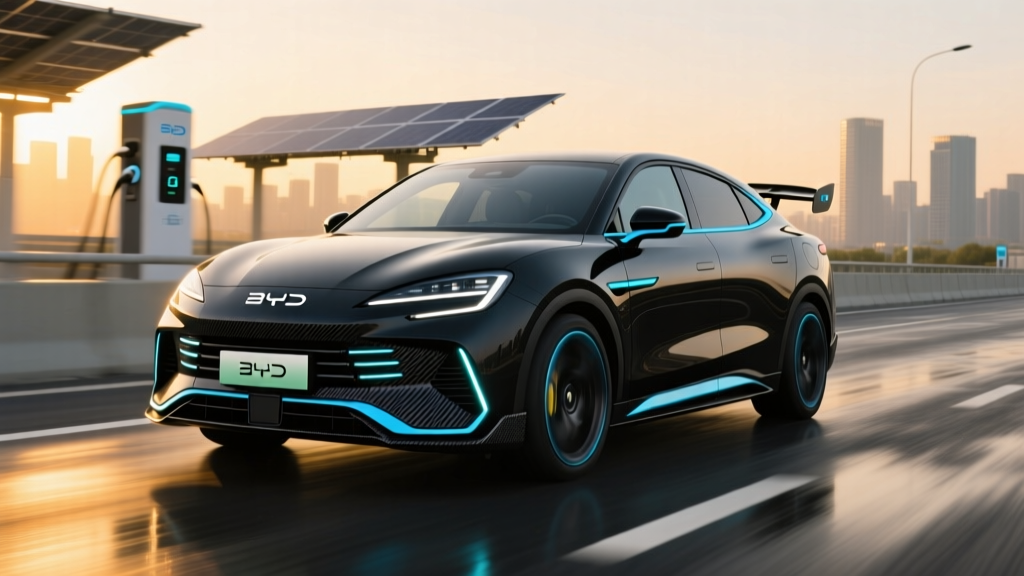
The BYD U9 Xtreme is a limited-production electric hypercar that exists in a category almost entirely its own: a four-motor, 1,300+ horsepower machine that aims to rival the Rimac Nevera and Lotus Evija on raw performance while undercutting them on price. Announced in late 2024 and beginning limited deliveries in select global markets through 2025–2026, the U9 Xtreme is not currently sold in the United States. BYD has no confirmed U.S. retail presence for passenger vehicles as of early 2026, which makes this review an analysis of global-market specifications, real-world testing data from international outlets, and what U.S. buyers would face if import pathways open.
If you're researching the BYD U9 Xtreme from the U.S., you're likely a hypercar collector or EV enthusiast tracking the global landscape. Here's everything we know — with exact numbers, not marketing gloss.
CLTC rated range: ~450 km (280 miles) — China's CLTC cycle is optimistic.
Estimated EPA-equivalent range: ~220–240 miles (if U.S.-certified).
Real-world highway (70 mph): Expect ~170–190 miles. High-performance EVs with wide tires and aggressive aero suffer significant range loss at sustained speed.
Cold weather (30°F / -1°C): Subtract 20–30%, yielding ~130–150 miles. Battery preconditioning helps but cannot fully offset chemistry losses.
Range is not the U9 Xtreme's selling point. This is a track-capable hypercar, and buyers in this segment prioritize lap times over mileage. Still, the relatively short range — a consequence of extreme power draw and a heavy vehicle — is the single biggest practical limitation.
Battery, Chemistry, and Energy Storage
The U9 Xtreme uses BYD's proprietary Blade Battery architecture in a high-output configuration:
| Spec | Value |
|---|---|
| Battery Chemistry | LFP (Lithium Iron Phosphate) — Blade cell format |
| Usable Capacity | ~120 kWh (estimated, BYD has not published exact usable figure) |
| Pack Architecture | Cell-to-Body (CTB) integration, structural battery |
| Thermal Management | Liquid cooling with active preconditioning |
| 800V Architecture | Yes — e-platform 3.0 Evo |
Why LFP matters here: BYD's Blade Battery uses LFP chemistry, which trades energy density for exceptional thermal stability and cycle life. In a hypercar context, this means the pack can endure repeated high-discharge launches without the thermal runaway risk associated with NMC cells. The trade-off is weight — the U9 Xtreme tips the scales at approximately 5,500 lbs (2,500 kg), significantly heavier than the Rimac Nevera (~4,740 lbs). That mass affects handling agility and range.
LFP batteries also exhibit slower degradation over time. BYD rates its Blade cells for 3,000+ charge cycles before reaching 80% state of health (SoH), which translates to well over 300,000 miles in normal use — though "normal use" rarely applies to a 1,300-hp hypercar.
Charging Speed: DC Fast Charge and Home Level 2
Charging a 120 kWh pack in a hypercar is a different proposition than topping off a commuter sedan. Here's what the U9 Xtreme delivers:
| Charging Level | Power / Rate | Time / Recovery |
|---|---|---|
| DC Fast Charge (peak) | ~270 kW (800V architecture) | 10–80% in approximately 25–28 minutes |
| DC Fast Charge (sustained avg.) | ~180–200 kW average through curve | Charge curve tapers significantly above 80% SoC |
| Level 2 AC (home/public) | 11 kW onboard charger | ~30 miles per hour of charging; 0–100% in ~12 hours |
| Level 1 (120V emergency) | ~1.4 kW | ~4 miles per hour — impractical for this vehicle |
Charging curve reality: The 270 kW peak is achievable only between roughly 10–40% state of charge on a compatible 350 kW charger. Beyond 60%, the curve tapers to protect the LFP cells, dropping below 100 kW past 80%. This is standard behavior for high-capacity packs but means a "quick top-up" from 50–90% will still take 20+ minutes. For track-day use, plan charging stops accordingly.
The U9 Xtreme uses the GB/T charging standard in China. European-market units are expected to use CCS2. There is no confirmed NACS (Tesla Supercharger) compatibility, which is largely irrelevant given the vehicle's non-U.S. status and the fact that most Supercharger stalls max out at 250 kW (V3) or 350 kW (V4) — the U9 can use the latter if adapters are provided.
Performance: Four Motors, 1,300+ Horsepower
This is where the U9 Xtreme justifies its existence. The four-motor all-wheel-drive powertrain — one motor per wheel — enables torque vectoring at a resolution impossible with mechanical differentials.
| Performance Spec | Value |
|---|---|
| Drivetrain | Quad-motor AWD (individual wheel torque vectoring) |
| Total System Power | ~1,300 hp (960 kW) — peak output |
| 0–60 mph | ~2.0 seconds (manufacturer claim, rollout-adjusted) |
| 0–124 mph (200 km/h) | ~6.5 seconds |
| Top Speed | ~190 mph (305 km/h) — electronically limited |
| Curb Weight | ~5,500 lbs (2,500 kg) |
| Suspension | DiSus-X active hydraulic system (3-wheel driving capability) |
The DiSus-X suspension is the U9's party trick. The active hydraulic system can lift individual wheels, allowing the car to drive on three wheels if one tire is damaged, and can even perform controlled jumps (demonstrated in BYD's reveal events). On a track, it enables roll cancellation and dive/squat control that keeps the chassis flat through aggressive cornering and braking.
The ~2.0-second 0–60 time places the U9 Xtreme in elite hypercar territory, matching the Rimac Nevera. However, the ~800 lb weight disadvantage compared to the Nevera means the BYD will likely trail in sustained lateral grip and braking performance — areas where mass is the enemy regardless of powertrain sophistication.
Pricing, Availability, and U.S. Tax Credit Status
| Market / Trim | Price |
|---|---|
| China (base MSRP) | ¥1,680,000 (~$232,000 USD at early 2026 exchange rates) |
| Europe (estimated, if exported) | €250,000–€300,000 (estimated with tariffs and homologation) |
| United States | Not available — no confirmed U.S. sales |
| Federal EV Tax Credit (§30D) | Not eligible — vehicle not sold in U.S.; exceeds $125,000 sports car MSRP cap; BYD battery sourcing does not meet critical-mineral requirements |
Tax credit breakdown: Even if BYD were to import the U9 Xtreme to the U.S., it would fail multiple IRS §30D requirements. The sports car MSRP cap is $125,000; the U9's price exceeds that by roughly $100,000. Additionally, BYD's vertically integrated battery supply chain is predominantly China-sourced, which disqualifies it under the critical minerals and battery component sourcing rules that have tightened annually through 2026. No point-of-sale transfer would be available.
For U.S. collectors, the only legal pathway would be under the NHTSA show-or-display exemption (limited to 500 miles/year) or the 25-year import rule — neither of which is practical for a brand-new vehicle.
Interior, Tech, and Daily Usability
The U9 Xtreme's cabin reflects its dual identity as a hypercar and a technology showcase:
- Displays: 12.3-inch digital instrument cluster, 12.8-inch rotating center touchscreen (BYD's signature), and a passenger-side entertainment screen
- Infotainment: BYD DiLink system with 5G connectivity, over-the-air updates, voice control, and integrated navigation with charging-stop routing
- Audio: Dynaudio premium surround system (14+ speakers)
- Seats: Carbon-fiber-backed sport buckets with Alcantara/leather upholstery; 4-point harness provisions
- Cargo: Minimal — a small front trunk (frunk) of approximately 2.5 cubic feet and a rear shelf behind the seats. This is a hypercar, not a grand tourer.
- Driver assists: Level 2 ADAS including adaptive cruise control, lane-keeping assist, automatic emergency braking, and a 360° camera system. This is not autonomous driving — the driver must remain engaged at all times (SAE Level 2).
Notable drawbacks: The infotainment system, while feature-rich, is optimized for the Chinese market. App ecosystems, navigation mapping, and voice recognition are calibrated for Mandarin and Chinese services. European-market units may see localization improvements, but U.S.-spec software does not exist. The rotating center screen, a BYD hallmark, can feel gimmicky in a vehicle at this price point.
Warranty and Long-Term Ownership
BYD's global warranty structure varies by market, but based on their premium-tier offerings:
- Battery warranty: 8 years / 150,000 km (~93,000 miles), with a capacity retention threshold of 70% SoH
- Powertrain warranty: 6 years / 150,000 km (~93,000 miles)
- Vehicle (bumper-to-bumper): 4 years / 100,000 km (~62,000 miles)
For a hypercar, these terms are reasonable but not exceptional. Rimac offers a comparable 4-year/unlimited-mileage vehicle warranty with 8 years on the battery. The critical concern for U9 Xtreme owners will be service infrastructure. BYD has no hypercar-certified service centers outside China, and the quad-motor/active-suspension system requires specialized diagnostic equipment and trained technicians. Battery replacement cost, if ever needed out of warranty, is estimated at $25,000–$35,000 based on the pack size and LFP cell costs.
How It Compares: U9 Xtreme vs. the Hypercar Field
| Spec | BYD U9 Xtreme | Rimac Nevera | Lotus Evija |
|---|---|---|---|
| Power | ~1,300 hp | 1,914 hp | 2,012 hp |
| 0–60 mph | ~2.0 sec | 1.85 sec | <2.0 sec (claimed) |
| Battery | ~120 kWh LFP | 120 kWh NMC | 70 kWh NMC |
| Range (est. real-world) | ~170–190 mi | ~200–220 mi | ~150–170 mi |
| Weight | ~5,500 lbs | ~4,740 lbs | ~4,160 lbs |
| Price | ~$232,000 | ~$2,200,000 | ~$2,300,000 |
The U9 Xtreme's value proposition is stark: it delivers 65–70% of the Nevera's performance for roughly 10% of the price. The gap is real — the Nevera is lighter, more powerful, and developed with a decade of Rimac's hypercar expertise — but the price differential is so enormous that the BYD becomes the rational choice for someone who wants 2-second 0–60 times without committing eight figures.
- Sub-$250K price demolishes hypercar competition on value
- Quad-motor torque vectoring with DiSus-X active suspension
- LFP Blade Battery offers superior thermal safety and cycle life
- 800V architecture enables 270 kW peak DC charging
- Unique 3-wheel driving capability (party trick + emergency use)
- Not available in the U.S. — no sales or service network
- ~5,500 lbs curb weight hurts handling vs. lighter rivals
- Range limited to ~170–190 miles real-world; impractical for road trips
- Chinese-market infotainment and software ecosystem
- No NHTSA/IIHS crash testing; unknown structural safety performance
- LFP chemistry = lower energy density = heavier pack for same kWh
Who Is the BYD U9 Xtreme For?
This EV suits: Hypercar collectors in China, the Middle East, and select European markets who want a conversation-starting electric supercar at a fraction of the Rimac/Lotus/Pininfarina price. It's a garage addition for someone who already has a daily driver and wants weekend track toy or show-piece status.
This EV does not suit: U.S. buyers (legally unavailable), anyone needing daily-driver range or practicality, drivers who prioritize chassis agility over straight-line speed, or anyone who needs manufacturer service infrastructure outside major Chinese cities.
Frequently Asked Questions
What is the real-world range of the BYD U9 Xtreme?
Based on its ~120 kWh LFP pack, 5,500-lb weight, and high-performance drivetrain, expect approximately 170–190 miles of real-world highway driving at moderate speeds. City driving with regenerative braking may extend this to 200–220 miles. Cold weather (below 40°F) reduces range by 20–30%. The CLTC-rated 280 miles is optimistic and not comparable to EPA testing methodology.
How fast does the U9 Xtreme charge at home and on DC fast chargers?
On a compatible 350 kW DC fast charger, the U9 Xtreme peaks at approximately 270 kW, achieving a 10–80% charge in roughly 25–28 minutes. Sustained average through the charge curve is closer to 180–200 kW. At home on Level 2 (11 kW AC), you'll recover about 30 miles of range per hour, meaning a full charge from empty takes approximately 12 hours — plan for overnight charging.
Does the BYD U9 Xtreme qualify for the U.S. federal EV tax credit?
No. The U9 Xtreme is not sold in the United States, which alone disqualifies it. Even if imported, it would fail the IRS §30D sports car MSRP cap of $125,000 (the U9 costs ~$232,000), and BYD's China-sourced battery supply chain does not meet the critical minerals and battery component requirements that apply in 2026. The point-of-sale transfer option is also unavailable.
Is the BYD U9 Xtreme worth buying vs. a Rimac Nevera or Lotus Evija?
If you can purchase one. The U9 Xtreme delivers roughly 70% of the Nevera's performance envelope for about 10% of the price — an extraordinary value ratio. However, the Rimac and Lotus offer established global service networks, Western-market software, crash-test data, and the prestige factor that drives hypercar resale values. The BYD is the smart buy for performance-per-dollar; the European alternatives are the safe buy for ownership experience and long-term value retention.
Can I import a BYD U9 Xtreme to the United States?
Not for normal road use. The NHTSA's show-or-display exemption permits limited imports of vehicles not meeting FMVSS standards, but restricts driving to 500 miles per year and requires the vehicle to be of "historical or technological significance." The 25-year import rule is irrelevant for a new vehicle. Grey-market importation and federalization is theoretically possible but would cost tens of thousands of dollars with no guarantee of approval.
What is the BYD U9 Xtreme's battery warranty?
BYD provides an 8-year / 150,000 km (~93,000 mile) warranty on the Blade Battery pack with a 70% state-of-health retention threshold. The powertrain is covered for 6 years / 150,000 km, and the vehicle bumper-to-bumper warranty is 4 years / 100,000 km. Out-of-warranty battery replacement is estimated at $25,000–$35,000.