Quick Verdict: What the BYD Tang Gets Right (and Where It Falls Short)
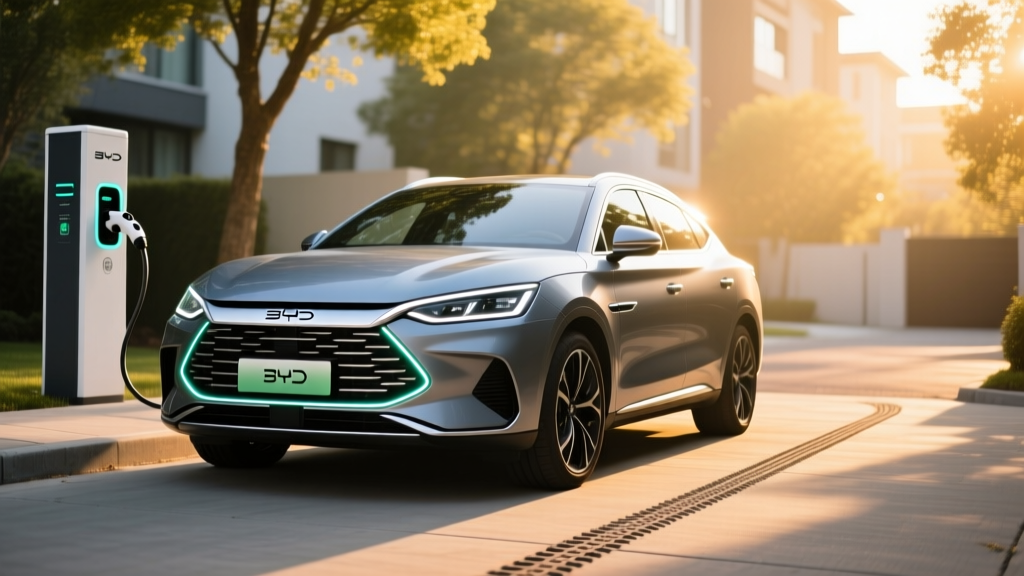
The BYD Tang is a three-row electric SUV that targets families who want serious power, competitive range, and a price point undercutting most rivals in the midsize EV segment. With dual-motor all-wheel drive standard, a Blade Battery (LFP chemistry), and seating for seven, the Tang positions itself as a pragmatic alternative to the Tesla Model X, Kia EV9, and Rivian R1S. But availability remains the elephant in the room: as of early 2026, BYD has not officially launched the Tang in the United States, meaning this review reflects announced and international-market specifications that may shift before a confirmed US debut.
For buyers in markets where the Tang is sold — including China, parts of Europe, and Latin America — it delivers a compelling spec sheet. For US shoppers watching from the sidelines, it represents what could be a segment disruptor if BYD clears the regulatory and tariff hurdles.
Range and Efficiency: EPA Estimates vs Real-World Driving
EPA Estimated Range: Not yet rated (no US launch confirmed). International WLTP rating: ~280 miles (450 km) for the Long Range AWD variant with the 108.8 kWh battery pack.
Real-World Expectation: WLTP figures run 10-15% higher than EPA equivalents. Expect an EPA-equivalent range of approximately 240-255 miles in mixed driving. Highway-only driving at 70+ mph may drop this to 210-225 miles. In cold weather (below 32°F), LFP chemistry typically sees 20-30% range reduction, putting winter range closer to 170-200 miles without preconditioning.
The Tang's efficiency lands around 89 MPGe combined (estimated EPA equivalent), or roughly 38 kWh per 100 miles. That's less efficient than the Tesla Model X (102 MPGe combined) but on par with the Kia EV9 AWD (89 MPGe). The Tang's weight — approximately 5,400 lbs — works against it on the efficiency front, though the LFP Blade Battery's thermal stability helps mitigate cold-weather degradation compared to some NMC packs.
Battery, Charging Speed, and Home Charging
The Tang uses BYD's proprietary Blade Battery, a lithium iron phosphate (LFP) cell arranged in a structural pack. LFP chemistry trades some energy density for superior thermal stability, longer cycle life (typically 3,000+ cycles before significant degradation), and no cobalt. The trade-off: LFP packs are heavier for the same kWh capacity, and they charge more slowly at the top and bottom of the state-of-charge curve.
| Spec | Value |
|---|---|
| Battery Chemistry | LFP (Blade Battery) |
| Usable Capacity | 108.8 kWh |
| Max DC Fast Charge Rate | ~170 kW (peak) |
| 10-80% DC Fast Charge Time | ~30 minutes (estimated) |
| Level 2 Home Charging (AC) | 7 kW (single-phase) / 11 kW (three-phase, where available) |
| Level 2 Miles Added per Hour | ~20-22 mi/hr (7 kW) / ~30-33 mi/hr (11 kW) |
| Charge Port (International) | CCS2 (Type 2 Combo) / GB/T (China) |
At 170 kW peak, the Tang's DC fast-charging speed is adequate but not class-leading. The Kia EV9 peaks at 236 kW on an 800V architecture (10-80% in ~18 minutes), and the Tesla Model X can accept up to 250 kW. The Tang's LFP charge curve also tapers more aggressively above 80% state of charge, meaning topping off on a road trip takes noticeably longer than an NMC pack. Plan to charge to 80% and go rather than waiting for a full battery.
For home charging on a standard 240V Level 2 setup at 7 kW (32A), a full charge from 10% takes roughly 14-15 hours — fine for overnight charging if you start with 30-40% remaining. US homes with 48A circuits (11.5 kW) could reduce this, assuming the Tang's onboard charger supports it in a US-spec configuration.
Performance and Drivetrain
The Tang's dual-motor AWD setup produces approximately 510 horsepower (380 kW) and 516 lb-ft of torque in its top performance trim. That's enough for a 0-60 mph time of roughly 4.4 seconds — impressive for a 5,400-lb family hauler. For context, the Kia EV9 GT-Line AWD hits 60 mph in 4.9 seconds (379 hp), while the Tesla Model X Plaid does it in 2.5 seconds (1,020 hp, at a significant price premium).
The standard Tang variant (in some markets) uses a single front motor producing 228 hp — adequate for commuting but far less exciting. US buyers, if the Tang arrives, would likely see the dual-motor AWD as the primary offering given American preference for all-wheel drive.
Ride quality is tuned for comfort over sportiness. The suspension absorbs highway imperfections well, and cabin noise is low at speed. However, the Tang's weight is noticeable during hard cornering — body roll is more pronounced than in the lighter Model X or the air-suspension-equipped Rivian R1S.
Interior, Cargo Space, and Technology
The Tang seats up to seven passengers in a 2-3-2 layout (some markets offer a 2-2-2 six-seat option with captain's chairs). Interior materials are a step above BYD's earlier offerings, with soft-touch surfaces on the dashboard and door panels, though hard plastics appear on lower trim pieces. The second row offers generous legroom — approximately 37.8 inches — while the third row is best suited for children or short trips, with about 29.5 inches of legroom.
| Dimension | Value |
|---|---|
| Length | 192.1 in (4,870 mm) |
| Wheelbase | 110.6 in (2,820 mm) |
| Cargo (behind 3rd row) | ~8.3 cu ft |
| Cargo (3rd row folded) | ~33 cu ft |
| Cargo (all rear seats folded) | ~67 cu ft |
| Front Headroom | ~39.4 in |
| 2nd Row Legroom | ~37.8 in |
| 3rd Row Legroom | ~29.5 in |
Cargo space is the Tang's weakness versus rivals. The Kia EV9 offers 20.2 cu ft behind the third row and 81.7 cu ft with all rear seats folded — significantly more. The Tang's 8.3 cu ft behind the third row barely fits a couple of carry-on bags, making it impractical for seven-passenger airport runs without a roof box.
Technology highlights include a 15.6-inch rotating center touchscreen (a BYD signature — it pivots between landscape and portrait), a 12.3-inch digital instrument cluster, and wireless Apple CarPlay/Android Auto. The infotainment system runs BYD's DiLink software, which is feature-rich but can feel cluttered. Voice control handles navigation, climate, and media, though response accuracy lags behind Tesla's and Google Built-in systems.
Driver assistance includes adaptive cruise control with stop-and-go, lane-keeping assist, automatic emergency braking, and a 360-degree camera. These are SAE Level 2 features — the driver must remain attentive and keep hands on the wheel. There is no hands-free driving system comparable to GM's Super Cruise or Ford's BlueCruise.
Pricing, Trims, and Tax Credit Eligibility
Because BYD has not confirmed US pricing, the figures below reflect international-market MSRPs converted to USD and adjusted for estimated US positioning:
| Trim | Est. MSRP | Federal Credit (§30D) | Effective Price |
|---|---|---|---|
| Standard (FWD, smaller battery) | ~$42,000 | Uncertain* | ~$42,000+ |
| Long Range AWD | ~$49,000 | Uncertain* | ~$49,000+ |
| Flagship AWD | ~$54,000 | Uncertain* | ~$54,000+ |
*Federal tax credit eligibility under IRS §30D is highly uncertain for BYD. The credit requires battery components and critical minerals to meet US-sourcing thresholds that phase up annually. Given BYD's vertically integrated Chinese supply chain and ongoing US-China trade tensions, the Tang is unlikely to qualify for the full $7,500 credit — or potentially any credit — if it launches in the US. Additionally, the §30D credit has MSRP caps ($80,000 for SUVs) and buyer income limits ($300,000 joint / $150,000 single), which the Tang would likely clear, but battery sourcing is the primary barrier.
For comparison, the Kia EV9 starts around $54,900 and qualifies for partial or full credit depending on trim and sourcing year. The Tesla Model X starts at $79,990 (above the SUV MSRP cap for some buyers' consideration) and no longer qualifies for the full credit.
Warranty and Long-Term Ownership
BYD offers competitive warranty coverage in international markets, typically:
- Vehicle warranty: 6 years / 150,000 km (~93,000 miles)
- Battery warranty: 8 years / 150,000 km (~93,000 miles), with a capacity retention threshold of 70%
The Blade Battery's LFP chemistry is a longevity advantage. LFP cells degrade more slowly than NMC, typically retaining 80%+ capacity after 2,000 full charge cycles — equivalent to roughly 400,000+ miles of driving before hitting the warranty threshold. In practice, most LFP packs outlast the vehicles they're installed in.
However, long-term US ownership depends on BYD establishing a dealer and service network, parts availability, and software update infrastructure. Without a US presence, early adopters would face significant uncertainty around service access and resale value.
How It Stacks Up: Tang vs the Competition
| Spec | BYD Tang AWD | Kia EV9 AWD | Tesla Model X | Rivian R1S (Dual) |
|---|---|---|---|---|
| EPA Range (est.) | ~240-255 mi | 279 mi | 335 mi | 352 mi |
| Battery | 108.8 kWh LFP | 100 kWh NMC | 100 kWh NMC | 128.9 kWh NMC |
| DC Fast Charge (peak) | ~170 kW | 236 kW | 250 kW | 220 kW |
| 10-80% Time | ~30 min | ~18 min | ~20 min | ~22 min |
| 0-60 mph | 4.4 sec | 4.9 sec | 3.8 sec | 5.0 sec |
| Seating | 7 | 6-7 | 5-7 | 7 |
| Max Cargo | ~67 cu ft | 81.7 cu ft | 88.1 cu ft | 104.7 cu ft |
| Est. Starting Price | ~$49,000 | $59,900 | $79,990 | $75,900 |
The Tang's primary advantage is price. If BYD can bring it to the US near the projected $49,000 mark, it undercuts every three-row EV rival by $10,000-$30,000. The trade-offs are clear: less range, slower charging, less cargo space, and no established service network. For budget-conscious families who drive under 200 miles daily and charge at home, the Tang's value proposition is strong — if it arrives.
Who Should Buy the BYD Tang?
Choose the BYD Tang if:
- You need a 7-seat EV at the lowest possible price point
- You charge at home nightly and rarely road-trip beyond 200 miles
- You value LFP battery longevity and thermal safety over maximum range
- You live in a market where BYD has an established dealer and service network
Look elsewhere if:
- You regularly take road trips exceeding 250 miles (the 170 kW charge rate and ~240-mile range add stops and time)
- You need maximum cargo space (the EV9 and R1S offer far more)
- You want hands-free highway driving (no Super Cruise/BlueCruise equivalent)
- You're in the US and need service infrastructure and resale-value predictability
Pros
- Competitive pricing — potentially $10K+ less than rivals
- LFP Blade Battery: excellent longevity, thermal safety, no cobalt
- Strong dual-motor performance (4.4 sec 0-60)
- Rotating 15.6" touchscreen is genuinely useful
- Standard AWD on upper trims
Cons
- Limited cargo space, especially behind the third row
- Slower DC charging vs 800V rivals (170 kW vs 236+ kW)
- No confirmed US availability or service network
- Federal tax credit unlikely due to battery-sourcing rules
- Third-row legroom tight for adults
- DiLink infotainment can feel cluttered
Frequently Asked Questions
What is the real-world range of the BYD Tang?
The Tang's WLTP rating is approximately 280 miles (450 km), but real-world driving — especially at highway speeds — will likely yield 210-255 miles depending on conditions. Cold weather can push this below 200 miles. The LFP battery's lack of a heat pump in some trims exacerbates winter range loss.
How fast does the BYD Tang charge?
On a DC fast charger, the Tang peaks at approximately 170 kW, achieving a 10-80% charge in roughly 30 minutes. At home on a 7 kW Level 2 charger, expect about 20-22 miles of range added per hour, or a full overnight charge from moderate state of charge.
Does the BYD Tang qualify for the US federal EV tax credit?
Almost certainly not, if it launches in the US. The IRS §30D credit requires battery components and critical minerals to meet escalating US-sourcing thresholds. BYD's supply chain is overwhelmingly China-based, making credit qualification unlikely under current rules. Always verify current-year eligibility on the IRS website before purchasing.
Is the BYD Tang worth buying over the Kia EV9 or Tesla Model X?
On price alone, the Tang is compelling — potentially $10,000-$30,000 less than rivals. But the EV9 offers more range (279 mi EPA), faster charging (236 kW), vastly more cargo room, and an established US dealer network. The Model X delivers superior range and access to the Supercharger network. The Tang makes sense only if price is the dominant factor and you accept the trade-offs in charging speed, space, and service access.
What are the biggest drawbacks of the BYD Tang?
Tight cargo space (67 cu ft max vs 81+ for rivals), slower 170 kW DC charging, no US availability or service network, unlikely tax credit eligibility, and a cluttered infotainment interface. The third row also fits children better than adults.
How long will the BYD Tang's Blade Battery last?
LFP Blade Batteries are among the most durable in the industry, with cycle life exceeding 3,000 full cycles. In practical terms, that's well over 400,000 miles before significant degradation. BYD warranties the battery for 8 years / ~93,000 miles at 70% capacity retention — conservative given the chemistry's track record.