Quick Verdict: BYD's Performance Flagship, If You Can Get One
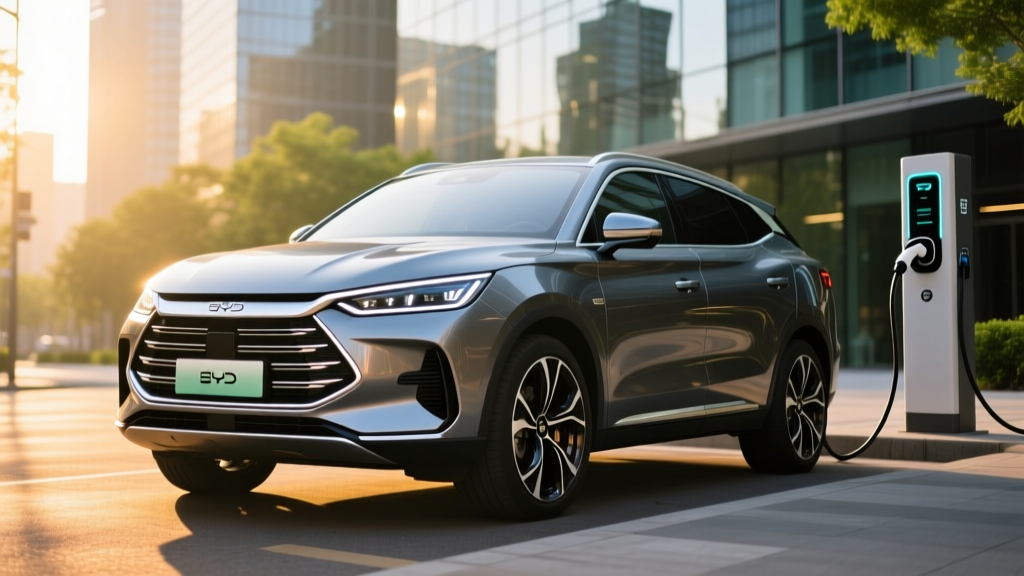
The BYD Tang has earned global attention as the 643-horsepower BYD SUV that challenges established electric crossovers on performance and price. In its top dual-motor configuration, it delivers supercar-rivaling acceleration, a roomy three-row cabin, and BYD's proprietary Blade Battery. But for U.S. buyers, the story is complicated: as of 2026, BYD has not officially entered the American passenger-vehicle market, meaning the Tang is available primarily through gray-market imports or in select international markets (Europe, Southeast Asia, Latin America, Australia). This review covers the latest international-spec Tang EV with full performance data, while clearly flagging what U.S. buyers need to know about availability, servicing, and tax-credit ineligibility.
Spec Sheet: The 643-HP BYD Tang at a Glance
| Spec | BYD Tang EV (AWD Flagship) |
|---|---|
| Horsepower | 643 hp (combined dual-motor) |
| 0–60 mph | 4.4 seconds (manufacturer claim) |
| Drivetrain | Dual-motor AWD (front 180 kW + rear 200 kW) |
| Battery Capacity | 108.8 kWh (usable), LFP Blade Battery |
| WLTP Range | ~330 miles (530 km) |
| EPA-Est. Range (projected) | ~295–310 miles (not EPA-certified) |
| Max DC Fast Charge | ~120 kW peak |
| 10–80% DC Charge | ~35–40 minutes |
| Level 2 AC Charge | 7 kW (single-phase) / 11 kW (three-phase) |
| Efficiency (WLTP) | ~34 kWh/100 mi (~97 MPGe est.) |
| Cargo (behind 3rd row) | ~8.5 cu ft / ~23.5 cu ft (row 3 folded) |
| Seating | 7 passengers (2-3-2 layout) |
| Int'l Base Price | ~$52,000–$58,000 USD equivalent (varies by market) |
| U.S. Federal Tax Credit | Not eligible (no U.S. sales) |
| Battery Warranty | 8 years / 150,000 km (~93,000 mi) international |
Range and Efficiency: WLTP vs. Real-World Expectations
The Tang EV's 108.8 kWh Blade Battery is one of the largest LFP packs in any production SUV. BYD rates the AWD variant at approximately 530 km (330 miles) under the WLTP cycle used in Europe and most export markets. However, the EPA testing cycle used in the U.S. is more conservative, typically yielding figures 10–15% lower than WLTP for vehicles of this size and weight.
WLTP sticker: ~330 miles
Projected EPA-equivalent: ~295–310 miles
Highway driving (70–75 mph): expect ~250–270 miles
Cold weather (below 32°F / 0°C): expect ~220–245 miles (LFP chemistry is more cold-sensitive than NMC)
City/mixed moderate driving: ~290–310 miles achievable
The Tang's 5,000+ lb curb weight and boxy three-row profile work against highway efficiency. LFP batteries also experience greater range loss in freezing temps compared to NMC packs. Preconditioning the battery before driving helps, but the Tang's thermal management system is less aggressive than Tesla's or Hyundai's in extreme cold.
For context, the Tesla Model X Long Range achieves an EPA-rated 348 miles with a slightly smaller battery but superior aerodynamics and a heat pump standard. The Tang trades some range efficiency for its massive battery capacity and performance output.
Charging Speed: 120 kW Peak, but the Curve Tells the Full Story
The Tang EV supports DC fast charging at up to approximately 120 kW via CCS2 (international) or GB/T (China) connectors. That peak rate is competitive with many 2024-era EVs but trails the 250+ kW capability of Hyundai's E-GMP platform or Tesla's latest V4 Superchargers.
| Charging Level | Power / Rate | Miles Added per Hour | Notes |
|---|---|---|---|
| Level 1 (120V household) | ~1.4 kW | ~3–4 mi/hr | Emergency only; full charge in 70+ hours |
| Level 2 (240V, 32A) | 7 kW | ~18–20 mi/hr | Full charge in ~15 hours |
| Level 2 (240V, 3-phase 16A) | 11 kW | ~28–30 mi/hr | Full charge in ~10 hours; requires 3-phase supply |
| DC Fast (CCS2) | 120 kW peak | ~200+ mi/hr (peak) | 10–80% in ~35–40 min; tapers significantly above 80% |
Charging curve reality: The Tang holds near-peak 120 kW from roughly 10% to 50% State of Charge, then begins a gradual taper. From 50–80%, expect average rates around 70–85 kW. Above 80%, charging slows dramatically to protect the LFP cells — a full 80–100% top-off can add another 30+ minutes. For road trips, plan your stops around the 10–80% window for the best time efficiency.
One advantage of LFP chemistry: BYD recommends regularly charging to 100% (unlike NMC batteries, which prefer 80% daily limits). This means your full 108.8 kWh is practically usable on a daily basis, partially offsetting the slower charge speed.
Performance: What 643 Horsepower Feels Like in a Three-Row SUV
The headline number is real: 643 horsepower (480 kW) from a dual-motor setup pairing a 180 kW front motor with a 200 kW rear motor. BYD claims a 0–60 mph time of 4.4 seconds — remarkable for a 7-seat SUV that weighs over 5,100 lbs. For comparison, the Tesla Model X Plaid hits 60 in 2.5 seconds, but starts at nearly double the Tang's international price. The Model X Long Range (348 mi EPA, 670 hp) does 0–60 in 3.8 seconds at roughly $80,000+ MSRP.
In practice, the Tang's acceleration is thrilling off the line thanks to instant electric torque, but the vehicle's mass becomes apparent in sustained high-speed passing and cornering. The adaptive dampers (standard on the AWD Flagship trim) manage body roll competently, but this is a grand-touring cruiser, not a track weapon. The regenerative braking system offers two levels but does not enable true one-pedal driving — you will still use the brake pedal regularly.
Drivetrain detail: The dual-motor AWD system is full-time, with torque vectoring between axles. There is no mechanical locking differential; traction management is entirely software-controlled. Towing capacity is rated at approximately 2,500 kg (5,500 lbs) braked in international markets, though this figure has not been validated under U.S. SAE J2807 standards.
Interior, Cargo, and Technology
The Tang's cabin seats seven in a 2-3-2 configuration. Front and second-row space is generous — second-row legroom measures approximately 35.4 inches, adequate for adults on longer trips. The third row is best suited for children or short trips, with roughly 28 inches of legroom.
Cargo volume:
- Behind 3rd row: ~8.5 cu ft (tight for a three-row SUV; rivals like the Kia EV9 offer ~14 cu ft)
- 3rd row folded: ~23.5 cu ft
- All rear rows folded: ~57 cu ft (estimated)
The 15.6-inch rotating center touchscreen is the Tang's signature tech feature — it pivots between landscape and portrait orientation depending on the app. The infotainment system runs BYD's DiLink platform with wireless Apple CarPlay and Android Auto, built-in navigation, and over-the-air updates. A 12.3-inch digital instrument cluster and a head-up display round out the driver-facing tech.
Driver assistance: The Tang includes BYD's DiPilot suite — adaptive cruise control, lane-keeping assist, automatic emergency braking, blind-spot monitoring, and a 360-degree camera. This is an SAE Level 2 driver-assist system, meaning the driver must remain fully engaged at all times. It is not a self-driving or hands-free system like GM's Super Cruise or Ford's BlueCruise.
BYD DiPilot is a Level 2 system requiring continuous driver supervision. It does not support hands-free highway driving, automatic lane changes on command, or navigation-guided autopilot. Performance in heavy rain or faded lane markings is degraded. Always keep hands on the wheel and eyes on the road.
Pricing, Trims, and Tax Credit Reality
In international markets where the Tang EV is sold (Europe, Australia, parts of Asia and Latin America), the AWD Flagship trim typically prices between $52,000 and $58,000 USD equivalent, depending on local taxes and import duties. Lower-output FWD variants are available from approximately $42,000.
For U.S. buyers, the critical issue is availability and incentives:
- U.S. sales: BYD has not announced a U.S. passenger-vehicle launch as of 2026. The brand sells electric buses and commercial vehicles in the U.S., but not consumer SUVs.
- Federal tax credit (IRS §30D): Even if imported, the Tang would not qualify for the up-to-$7,500 federal clean vehicle credit. The credit requires the vehicle to be on the IRS qualified-vehicles list, assembled in North America (or meeting specific trade-agreement exceptions), and subject to MSRP caps ($80,000 for SUVs), buyer income caps ($300K joint / $150K single), and critical-mineral/battery-component sourcing rules.
- Gray-market import: Importing a Tang independently would mean no U.S. warranty coverage, no BYD service centers, potential non-compliance with FMVSS safety standards, and no eligibility for any federal or state EV incentives.
Pros and Cons
- 643 hp / 4.4s 0–60 in a 7-seat SUV — elite performance for the price
- 108.8 kWh LFP Blade Battery — excellent safety record, long cycle life
- 100% daily charging recommended (LFP advantage)
- Generous standard equipment at international pricing
- Rotating 15.6" screen, comprehensive DiPilot ADAS suite
- 5,500-lb towing capacity (international rating)
- Not sold in the U.S. — no dealer network, no warranty, no tax credit
- 120 kW peak DC charging trails 2026 competitors (250+ kW common)
- 35–40 min for 10–80% is slow for road-trip duty
- LFP cold-weather range loss is significant (~25–30%)
- Third-row and cargo space behind 3rd row are tight for the class
- No EPA certification — range/efficiency figures are WLTP projections
- DiPilot ADAS lags behind Tesla Autopilot, GM Super Cruise in capability
How It Compares: Tang vs. Rivals Available in the U.S.
| Spec | BYD Tang AWD | Tesla Model X LR | Kia EV9 GT-Line AWD |
|---|---|---|---|
| HP | 643 | 670 | 379 |
| 0–60 | 4.4s | 3.8s | 5.0s |
| Range (EPA / est.) | ~295–310 (est.) | 348 (EPA) | 270 (EPA) |
| Battery | 108.8 kWh LFP | ~100 kWh NMC | 100 kWh NMC |
| DC Charge Peak | 120 kW | 250 kW | 236 kW |
| 10–80% | ~35–40 min | ~25 min | ~24 min |
| Seats | 7 | 5–7 | 6–7 |
| U.S. MSRP | N/A | ~$81,630 | ~$63,900 |
| U.S. Tax Credit | Not eligible | Check IRS list | Eligible (verify sourcing) |
The Tang's international pricing undercuts both U.S. rivals significantly, but the absence of a U.S. sales channel negates that advantage for American buyers. The Kia EV9 offers the most practical U.S. alternative: three rows, competitive range, fast 800V charging, and federal tax-credit eligibility (subject to battery-sourcing rules and IRS income/MSRP caps).
Who Should Consider the BYD Tang — and Who Shouldn't
- You live in a market where BYD sells directly (Europe, Australia, SE Asia, Latin America)
- You want 643 hp performance at a sub-$60K price point
- You value LFP battery longevity and 100% daily charging flexibility
- You need 7 seats and 5,500-lb towing in an EV
- You are a U.S. buyer — no sales channel, no warranty, no credit, no service
- Fast DC charging is a priority for road trips (120 kW is slow for 2026)
- You need best-in-class cargo space behind the third row
- Cold-weather range retention is critical (LFP suffers in freezing temps)
Frequently Asked Questions
What is the real-world range of the 643-horsepower BYD SUV?
The BYD Tang AWD carries a WLTP range of ~330 miles. Since it is not EPA-certified, U.S. buyers should project an EPA-equivalent of ~295–310 miles. In real-world highway driving at 70+ mph, expect ~250–270 miles. In freezing temperatures, LFP chemistry can reduce range by 25–30%, dropping to ~220–245 miles.
How fast does the BYD Tang charge at home and on DC fast chargers?
On a DC fast charger, the Tang peaks at ~120 kW, reaching 10–80% in approximately 35–40 minutes. At home on a 240V Level 2 charger (32A), it charges at 7 kW, adding roughly 18–20 miles per hour — a full charge takes about 15 hours. Three-phase 11 kW AC reduces that to ~10 hours where available.
Does the BYD Tang qualify for the U.S. federal EV tax credit?
No. BYD does not sell the Tang in the United States as of 2026. Even if imported, it would not appear on the IRS qualified clean-vehicle list and would not meet North American assembly, battery-sourcing, or critical-mineral requirements under §30D. U.S. buyers cannot claim the credit.
Is the BYD Tang worth buying over the Tesla Model X or Kia EV9?
On paper, the Tang offers compelling performance-per-dollar in markets where it's sold. For U.S. buyers, it is not a viable option. The Kia EV9 is the closest U.S.-available alternative with three rows, fast charging, and tax-credit eligibility. The Tesla Model X offers more range and faster charging but at nearly double the Tang's international price.
What is the BYD Blade Battery, and how long will it last?
The Blade Battery is BYD's proprietary LFP (lithium iron phosphate) cell in a cell-to-pack structural format. LFP chemistry is known for excellent thermal stability (very low fire risk), long cycle life (3,000+ full cycles before significant degradation), and tolerance for 100% daily charging. BYD warranties the battery for 8 years / 150,000 km (~93,000 miles) in international markets, with a capacity-retention threshold typically set at 70%. Real-world data from BYD's taxi fleets in China suggests LFP Blade packs retain 80%+ capacity after 200,000+ miles.
Can I import a BYD Tang to the United States myself?
Technically, individuals can attempt to import vehicles under the 25-year rule or Show & Display exemption, but neither applies to a new Tang. Importing a new vehicle not certified to FMVSS (Federal Motor Vehicle Safety Standards) is extremely difficult, expensive, and would leave you with no warranty, no service network, and potential legal issues. It is not a practical path.